



The voting rights of special voters
In the process of building the socialist rule of law state in Vietnam, ensuring and promoting human rights is not only a political commitment but also a vivid practical action. One of the clearest pieces of evidence of this progress is ensuring the voting rights for special groups: those in temporary detention, temporary custody, and students at compulsory rehabilitation centers.
Latest
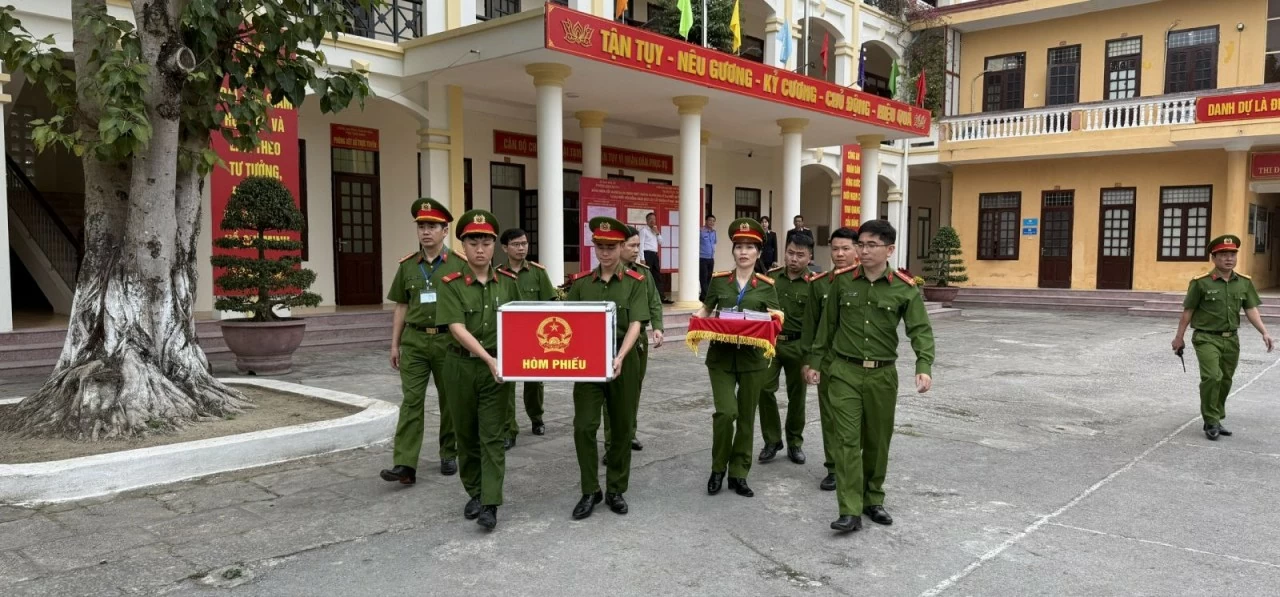 |
| The election team of the Thanh Hoa Provincial Police Detention Center brought the auxiliary ballot box directly into isolated areas for those in temporary detention and custody to exercise their civic rights and duties. (Photo: Thanh Hoa Provincial Police) |
Thanh Hoa – a strategic area with a large population, the implementation of ensuring voting rights for those in temporary detention, custody, and students at compulsory rehabilitation centers is not just about enforcing the law but also carries humanitarian significance, affirming the viewpoint of “leaving no one behind” in the country's political life.
Not separated by the "wall" of detention
In Vietnam's modern legal thinking, the 2013 Constitution (amended in 2025) has established a golden principle: Human rights and citizen rights are only restricted by law in necessary cases for reasons of national defense, national security, social order, social safety, social ethics, and public health.
| More from WVR |
 Completing legislation to ensure the rights of participants in legal proceedings according to the Méndez Principles Completing legislation to ensure the rights of participants in legal proceedings according to the Méndez Principles |
The right to vote and stand for election is a fundamental political right, allowing citizens aged 18 and over to directly elect members of the National Assembly and People's Councils, except in cases where this right is revoked by law (such as loss of civil act capacity, serving a prison sentence).
Article 29 of the 2015 Law on Election of National Assembly Deputies and People's Council Deputies stipulates: Voters who are in temporary detention, custody, or undergoing compulsory education or rehabilitation measures are listed as voters to elect deputies of the National Assembly and provincial People's Councils where they are detained, held, or undergoing compulsory measures.
Across the country in general, and in Thanh Hoa province in particular, this viewpoint is being concretized by respecting each ballot of those under investigation or undergoing compulsory rehabilitation. Ensuring their voting rights is not just about law enforcement but is an affirmation of human dignity.
For someone who has erred, holding a ballot is a powerful message: They are still part of the community, still have rights and responsibilities towards the country's future. The shift from the mindset of "management, isolation" to "ensuring rights and educating for reintegration" is a significant step forward in the democratization process at the local level. This is evidence that human rights in Vietnam are not abstract slogans but practical actions, placing humans at the center of all development policies.
Leaving no one behind
Thanh Hoa, with its vast area and large-scale detention and rehabilitation facilities, has established a "special" but absolutely lawful election organization process, ensuring the substantive nature of each ballot.
To prevent isolation from becoming an information barrier, facilities like the Detention Center and Drug Rehabilitation Center of the Provincial Police have implemented an internal multimedia communication model. The voter lists and brief biographies of candidates are prominently and publicly posted in accessible locations in the corridors of detention cells and common living areas. The internal broadcasting system is utilized to widely disseminate information about rights, duties, and candidate biographies. For voters with restricted rights or those who are ill and unable to move, staff will personally deliver leaflets and convey information to ensure that voters in special areas have enough data to "choose wisely", ensuring that choices are the result of personal awareness, not imposition.
Lieutenant Colonel Nguyen Tien Dung, Superintendent of the Provincial Police Detention Center, stated that the Detention Center currently has one main facility and nine detention sub-camps located in various areas of the province. In implementing legal regulations on voting rights for voters in temporary detention and custody, the unit has proactively coordinated closely with party committees, local authorities, and election committees at all levels to regularly review and update voter fluctuations, promptly supplementing the list according to regulations, ensuring no eligible case is missed.
Additionally, the Detention Center has developed specific plans, assigning forces to prepare all necessary conditions for organizing voters to exercise their voting rights in accordance with the law. The unit also focuses on propagating the significance and importance of the election, as well as the rights and duties of citizens, helping voters in temporary detention and custody understand their rights and responsibilities when participating in the great festival of the entire people.
"We determine that ensuring voting rights for voters in temporary detention and custody is not only about strictly implementing legal regulations but also clearly demonstrating the humanitarian and democratic nature of the regime. Therefore, every step from reviewing voter lists, preparing polling areas, and organizing voters to exercise their voting rights is tightly implemented according to the process, while ensuring absolute security and safety at the detention facilities," emphasized Lieutenant Colonel Nguyen Tien Dung.
The nature of detention and rehabilitation facilities is the continuous fluctuation of voters. In Thanh Hoa, the police force has closely coordinated with the election committee to update the voter list right up to the opening hour. Even those released or completing rehabilitation on election day are guided and supported to exercise their citizenship rights at the local or nearest polling station. At rehabilitation centers like facility number 1 and number 2, the list for hundreds of students is meticulously prepared, ensuring 100% of eligible individuals have a voter card in hand.
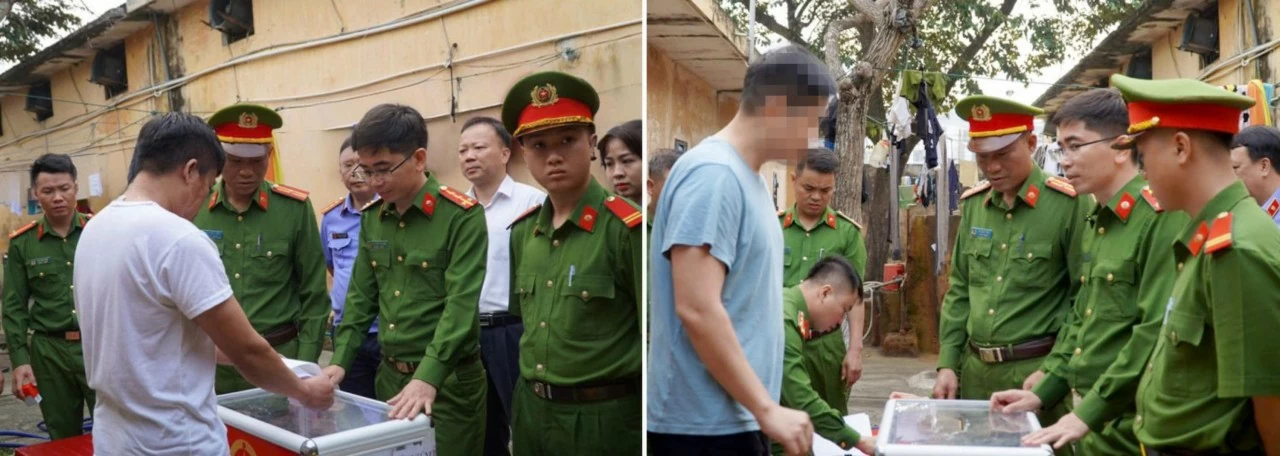 |
| Those in temporary detention and custody at the Thanh Hoa Provincial Police Detention Center exercise their voting rights. (Photo: Thanh Hoa Provincial Police) |
Major Nguyen Tuan Ngoc, Head of Drug Rehabilitation Center No. 1 in Thanh Hoa province, stated: Through the review process, Drug Rehabilitation Center No. 1 has listed 608 voters (including 533 students undergoing rehabilitation at the center) eligible to exercise their voting rights. For newly admitted students, the unit strives to coordinate to update the list and guide related legal procedures to ensure no one is missed. Additionally, it coordinates with local authorities where students reside to notify and list voters at their residences, ensuring the rights of students after reintegration into the community. The goal is that by March 15, the voter list must be accurately established, so that whether students are at the facility or have returned home, they can hold a ballot and exercise their citizenship rights.
For those subject to strict management measures or those who are ill and have limited mobility, the Detention Center and rehabilitation centers have prepared and arranged auxiliary ballot boxes to reach each detention cell and location where voters are, so they can exercise their rights and duties.
Each ballot is recorded in a private space and placed in a sealed ballot box under the supervision of the election team. Along with ensuring the voting rights of voters, security, safety, fire prevention, healthcare, and handling of arising situations on election day are meticulously prepared by the units to ensure that election day is truly a festival for the entire people.
Reality is the strongest answer
From an educational and humanitarian perspective, participating in elections at special facilities acts as a "special psychological therapy". For students undergoing rehabilitation or those in temporary detention and custody, the stigma of past mistakes is often the biggest barrier preventing them from returning to society.
Student N.V.T, at Drug Rehabilitation Center No. 1, shared: After being informed by the staff about my rights and duties, I felt both emotional and proud. Holding a ballot to directly vote for those I trust makes me feel like a useful citizen who is trusted.
Such shares show that the ballot at this time not only signifies choosing a representative but also carries the power of tolerance. It awakens self-esteem, affirms the personal value of each individual, helping them understand that society still trusts them. This is the most important premise for them to confidently reintegrate on the "right path".
Moreover, the transparency in elections in special areas in Thanh Hoa is a "sharp weapon" to directly counter the distorted rhetoric of hostile forces and ill-intentioned organizations.
Historically, whenever the country has major political events, especially elections, anti-government elements often claim that Vietnam "stages" results at detention centers. The reality in Thanh Hoa shows that the multi-layered supervision process from the Fatherland Front, the Election Team, and the voters themselves has created a barrier preventing any mistakes. The voluntary and enthusiastic participation of rehabilitation students and those in temporary detention and custody is the most vivid evidence refuting coercion.
Proactively bringing voting rights to those in temporary detention and custody – something that even many developed countries still limit – affirms that Vietnam not only protects the right to life and freedom but also the political rights of those who have erred.
On the morning of March 15, 100% of voters in temporary detention, custody, or undergoing compulsory drug rehabilitation at facilities in Thanh Hoa province completed their civic rights and duties. Each ballot of those in temporary detention, custody, or rehabilitation students is a mental medicine, a recognition of social status, helping them erase stigma to amend mistakes and strive to reintegrate into life. This is true human rights, linked to the traditional ethics and humanity of the Vietnamese nation.
Ensuring voting rights at detention centers and rehabilitation facilities in Thanh Hoa province is vivid evidence of the superiority of our regime. It is a harmonious combination of the strictness of the law and the warmth of humanity. The ballots from behind the gates of detention centers and rehabilitation facilities have "sown seeds" for faith in fairness, in the day of returning to fully exercise the rights and duties of a virtuous citizen. This is the core value of human rights that we are striving to nurture every day.
| Voters in Truong Sa special zone join nationwide election day Officers, soldiers and fishermen in the Truong Sa special zone of Khanh Hoa province joined voters nationwide on March 15 to cast their ballots in ... |
| National Assembly Election 2026: Voters nationwide actively participate from early morning Voters across the country enthusiastically participated in the election from early morning, demonstrating their civic responsibility in selecting representatives for the National Assembly and People's ... |
| Human rights communication: Harnessing the 'hearts and minds' of the people WVR - In recent years, media coverage of human rights in Vietnam has seen noteworthy shifts towards innovative thinking and approaches. |
| Religious communication crisis in the digital era: Impacts on human rights WVR - In recent years, the shift from traditional religious practices to the digital environment has created significant opportunities for spreading the ethical and humanitarian ... |
| Perfecting legislation to protect human rights in the digital era WVR - In the context of widespread digital transformation and cyberspace increasingly becoming an essential living environment for humans, the demand for cybersecurity linked to ... |