


Access to justice for women and girls
In modern society, access to justice is increasingly affirmed as an essential and foundational condition for the realization of human rights in practice.
Latest
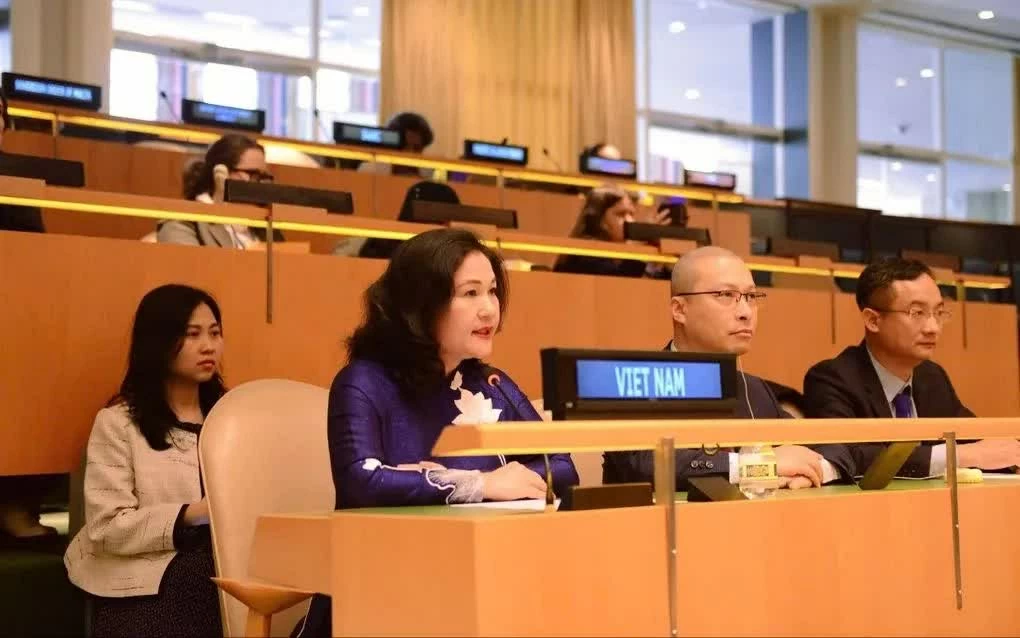 |
| Deputy Minister of Home Affairs Nguyen Thi Ha speaking at the 70th session of the United Nations Commission on the Status of Women (CSW), March 2026. (Photo: Anh Pham) |
For women and girls, ensuring this right holds special significance as they often face certain institutional, social, and cultural barriers, requiring appropriate protective mechanisms to access justice equally, safely, and effectively.
Legal framework on access to justice for women and girls
The right to access justice for women and girls is their right to access, participate in, and use legal mechanisms, institutions, and procedures equally, safely, appropriately, and effectively to demand recognition, protection, and restoration of their legitimate rights and interests when violated or at risk of being violated; while ensuring necessary conditions for this process to occur without discrimination, with gender sensitivity, child-friendliness, and leading to effective protective, supportive, or remedial measures.
| More from WVR |
 The right to rest for women The right to rest for women |
The current legal framework in Vietnam for ensuring access to justice for women and girls has been relatively clearly institutionalized. The 2013 Constitution simultaneously recognizes the principles of equality, non-discrimination (Article 16), gender equality, and child protection (Article 26, Article 37), demonstrating that access to justice is a constitutional right for everyone, including women and girls.
The 2006 Gender Equality Law is a guiding law, acknowledging measures to promote gender equality and requiring the integration of gender equality issues in the formulation and implementation of laws. The 2016 Law on Children and its guiding documents have expanded the approach from protection in proceedings to protection throughout the entire process of detection, support, and intervention, including legal aid (TGPL), counseling, psychological therapy, and other child protection services for children in special circumstances or those who have been abused.
For direct enforcement mechanisms, the 2017 Legal Aid Law identifies children as a group automatically entitled to legal aid; the law also designs mechanisms for immediate processing in emergencies and requires prosecuting agencies to notify the Legal Aid Center when the victim or accused entitled to assistance requests it.
The 2015 Criminal Procedure Code (amended and supplemented in 2021, 2025) has made progress in ensuring the right to defense, the right to be informed, the right to explain rights, and the right to appeal for individuals under 18 in proceedings. Notably, the 2024 Juvenile Justice Law has established a child-friendly justice system with principles designed to ensure the best interests of minors, prioritizing rehabilitative education, applying deprivation of liberty as a last resort, respecting honor, dignity, privacy, and enhancing the participation of minors.
However, in the implementation process, ensuring access to justice is influenced by many factors, including coordination mechanisms between relevant agencies, the professional capacity of the enforcement team, and local implementation conditions. Therefore, it is necessary to continue reviewing and improving the legal system and enhancing implementation effectiveness to improve the effectiveness of ensuring access to justice in practice.
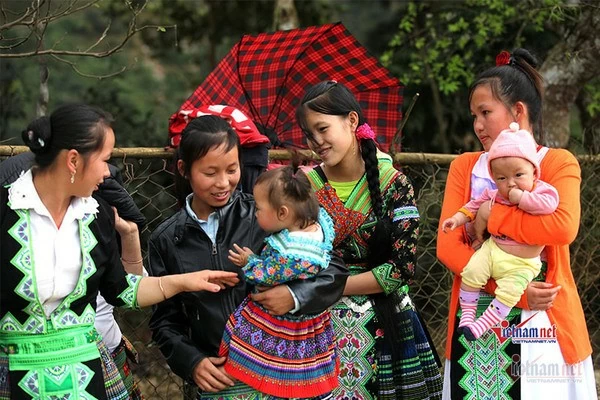 |
| The current legal framework in Vietnam for ensuring access to justice for women and girls has been relatively clearly institutionalized. (Photo: Vietnamnet) |
Practical implementation results
Access to justice for women and girls in Vietnam has made significant progress in three areas: (i) expanding access to legal services; (ii) strengthening mechanisms to protect victims of gender-based violence; (iii) improving social awareness of gender equality, human rights, and children's rights. Specifically:
Expanding legal aid coverage for vulnerable groups. From 2018 to the end of 2024, more than 27,000 children received legal aid, with approximately 15,000 cases involving legal aid through participation in proceedings. Some localities handled a large number of legal aid cases for victims of domestic violence (BLGĐ) and children, such as Hanoi (703 cases) and Ho Chi Minh City (549 cases). These figures indicate that the legal aid network has not only expanded in form but has also begun to cover women and girls who are victims of violence or abuse.
Shifting the approach to "victim-centered" mechanisms for protecting BLGĐ victims. The 2022 Law on Prevention and Control of Domestic Violence has redesigned the intervention chain with a trajectory prioritizing the safety and needs of those affected by violence, such as adding flexible forms of reporting (calls, texts, direct reports); stipulating emergency protective measures like stopping violent acts, prohibiting contact, arranging temporary shelters, supporting essential needs, and caring for and treating victims; and for the first time recognizing the "National Hotline for Domestic Violence Prevention and Control" alongside the 111 Child Protection Hotline. Additionally, the establishment of one-stop models and linkages between justice, police, healthcare, and women's unions, connecting hotlines and support centers, has contributed to reducing transaction costs for women and girls seeking support.
Social awareness of gender equality, human rights, and children's rights has improved, creating a social foundation for the implementation of access to justice rights. Through legal education and legal aid programs, the Ministry of Justice and localities have implemented numerous propaganda, training, and legal dialogue activities at the grassroots level for hundreds of thousands of people, focusing on women, ethnic minority children, and disadvantaged areas. The proportion of people, especially those in high-risk groups, who have become more knowledgeable about gender equality, domestic violence prevention, and children's rights has increased; the number of cases where women and children seek legal aid or protection agencies has tended to rise, reflecting a gradual shift from a "tolerant" mindset to actively seeking justice.
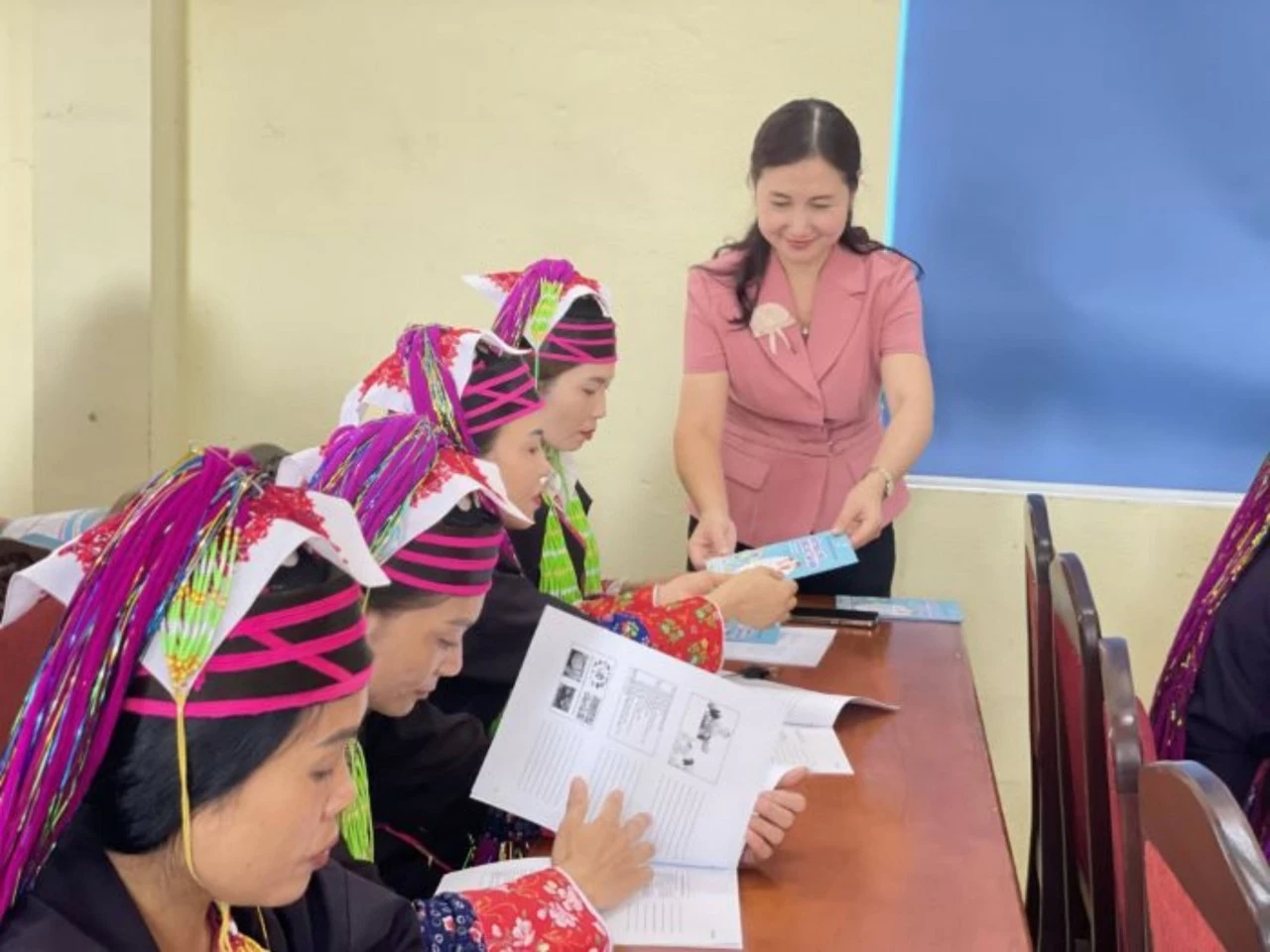 |
| Access to justice for women and girls in Vietnam has made significant progress. (Photo: Vietnam Women's Union) |
Alongside the achievements, ensuring access to justice for women and girls in Vietnam still faces several challenges:
There are certain disparities in access to justice among different regions and social groups. Ethnic minority children, children in remote areas, border regions, migrant workers, street children, etc., still face certain gaps in accessing healthcare, education, social protection, child protection, and child-friendly justice services. For women and girls from ethnic minority groups, language barriers, customs, geographical distance, and travel costs make the nominal enjoyment of rights not fully translate into practical access to judicial bodies and support services.
Resources and system capacity need to be further strengthened to better meet practical needs, where access to justice for some women and girls has not achieved the desired effectiveness. Specialized human resources and the network of collaborators are not evenly distributed across localities; limited funding affects the ability to expand services and implement specialized support. Meanwhile, national surveys show that more than half of women have experienced violence by their husbands, and nearly 90.4% do not seek support from any official service providers.
Gender barriers and the lack of child-friendly justice, especially for girls, remain issues of concern. According to the 2023 Government report on the implementation of national gender equality goals, in 2023, there were 3,193 victims of domestic violence in Vietnam, of which 2,628 were female, accounting for 82.3%. Victims of domestic violence are often women because many believe that family matters should be "kept private" or discussing these issues is shameful, leading to concealing abuse. Studies by the United Nations Entity for Gender Equality and the Empowerment of Women (UN Women), the United Nations Population Fund (UNFPA), and the United Nations Children's Fund (UNICEF) also note that victims are cautious about reporting due to social and psychological factors, facing procedural hurdles that may have undesirable psychological impacts. Meanwhile, UNICEF suggests that the lack of child-friendly mechanisms affects children's ability to effectively access justice.
To better ensure access to justice for women and girls, it is essential to strengthen gender-sensitive regulations throughout the entire process of receiving, resolving, and handling cases, especially in related fields; simultaneously, continue to improve the protection mechanism for those supported towards timely, interconnected, and practical needs, especially in cases of domestic violence, sexual abuse, and child abuse. Vietnamese law currently recognizes the right to legal aid and support measures for victims of domestic violence, but further specification in the implementation of these regulations is needed.
Along with legal improvements, attention should be paid to training judicial staff in gender equality knowledge, children's rights, and skills for working with victims needing support; enhancing legal dissemination so that women and girls are more aware of their rights and the available mechanisms to seek protection when necessary. Finally, expand legal aid in terms of access and eligibility, as legal aid is a direct tool to ensure human and citizen rights. Develop justice access mechanisms that are more suitable and friendly for women and girls, ensuring the justice system is truly accessible, safe, age-appropriate, and better meets needs.
| Ministry of Foreign Affairs celebrates International Women's Day on March 8 WVR - On the afternoon of March 8, the Department of External Relations and Cultural Diplomacy under Ministry of Foreign Affairs, in collaboration with the ... |
| Vietnamese women in Japan’s Kyushu keep Vietnamese culture and language alive abroad WVR - On the occasion of International Women's Day on March 8, the Vietnamese community in the Kyushu region, Japan, organized a commemorative program themed ... |

| Seminar: South-South experience exchange between Vietnam and African countries, promoting rights for women and girls WVR - On the afternoon of March 11, the United Nations Entity for Gender Equality and the Empowerment of Women (UN Women), in collaboration with ... |
| CSW70: Vietnam commits to promoting women's access to justice, joining hands to build a fair and inclusive world WVR - Speaking at CSW70 in New York, Deputy Minister Nguyen Thi Ha emphasized ensuring women's access to justice and shared Vietnam's experiences in legal ... |
| Launch of the Vietnamese Women's Business Association in Europe WVR - The event not only marks a milestone in the growth of the Vietnamese female entrepreneur community in Europe but also opens up opportunities ... |