



Ensuring sustainable employment from the perspective of multinational corporations' responsibility
In the context of multinational corporations increasingly playing a significant role in the global labor market, Vietnam needs to continue refining policies and laws to ensure sustainable employment and enhance corporate social responsibility in line with international standards set by the ILO and the United Nations.
Latest
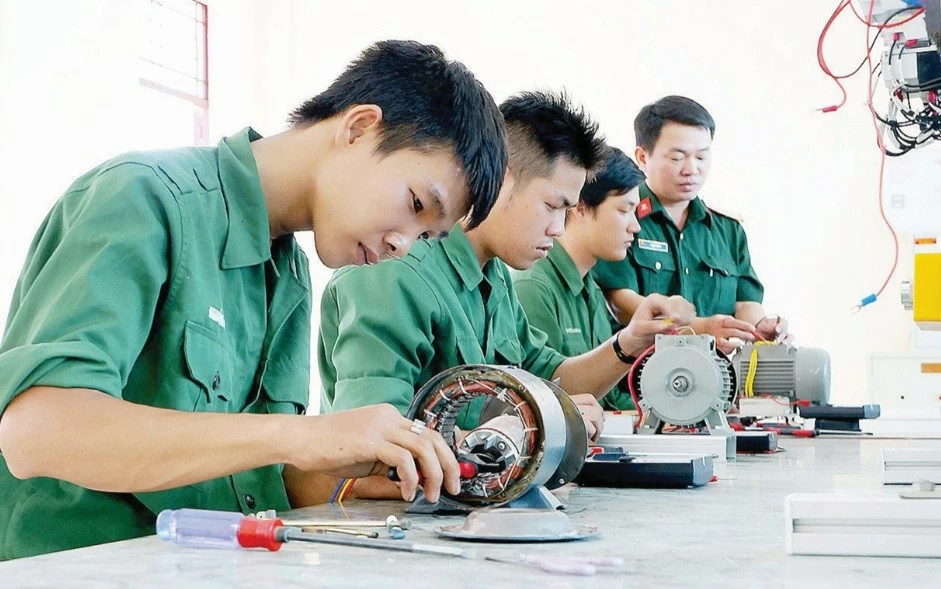 |
| Vietnam is pushing to perfect its legal framework on labour to align with international standards on sustainable employment and the social responsibility of multinational enterprises. |
To contribute to achieving Goal 8, one of the 17 United Nations Sustainable Development Goals (SDGs), which focuses on promoting sustained, inclusive, and sustainable economic growth, full and productive employment, and decent work for all; equal pay for work of equal value, the international community has established standards to promote the social responsibility of multinational enterprises (MNE), including the responsibility to create sustainable employment.
Currently, Vietnam has joined most of the ILO conventions on employment, but there are still gaps in Vietnam's mechanisms, policies, and laws compared to international standards regarding the responsibilities of MNEs in ensuring sustainable employment for workers.
The responsibility of MNE in ensuring sustainable employment
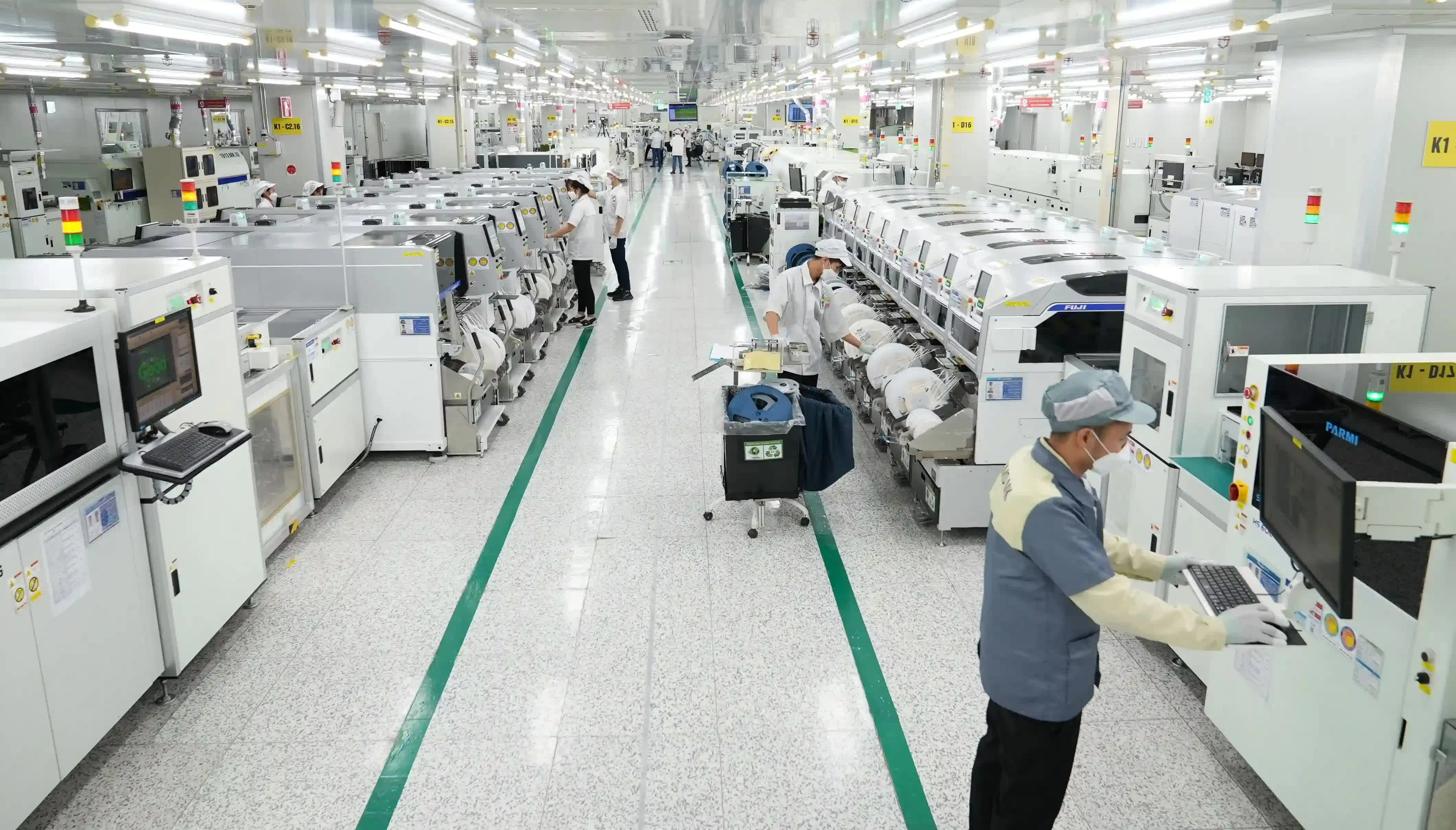 |
| Multinational enterprises are creating jobs for over 90 million workers globally, playing a crucial role in promoting sustainable labour standards as recommended by the ILO. |
There are approximately 65,000 MNEs worldwide, employing over 90 million workers, accounting for 1/20 of the global labour force. MNE make significant contributions to job creation and social policy for a large number of workers in many countries.
| More from WVR |
 Managing religious communication crises from a human rights perspective in the context of digital transformation Managing religious communication crises from a human rights perspective in the context of digital transformation |
Therefore, the Tripartite Declaration of Principles concerning Multinational Enterprises and Social Policy (MNE Declaration), adopted by the International Labour Organization (ILO) in November 1977 (most recently revised in March 2017), has urged ILO member states, employer and worker organizations, and MNEs to comply with the MNE Declaration to implement measures and actions, applying social policies as stipulated in national laws, ILO conventions, and recommendations to create sustainable employment.
The MNE Declaration is currently considered the only tool used by the ILO to directly guide how MNEs can contribute to realising the goal of sustainable employment for all, highlighting the central role of freedom of association and collective bargaining as well as labour relations and social dialogue.
Compliance with the MNE Declaration does not affect obligations arising from other ILO conventions, specifically:
Firstly, promoting employment, job security, and equality of opportunity and treatment: In addition to government policies promoting employment, MNE operating in developing countries need to ensure long-term development policies and job security by setting employment standards in line with the host country's social development policies. MNEs should engage with competent authorities, employer organisations, and worker representative organisations.
The MNE Declaration recommends that MNE consider contracting with local businesses to produce parts, equipment, and use local raw materials, and promote local raw material processing; proactively plan for stable employment for workers, and fulfil social security obligations. When there are changes in business operations (due to mergers, production transfers) affecting employment, MNE should fully inform the authorities and worker representatives in the enterprise to coordinate efforts to minimise negative impacts, especially in cases of staff reductions or mass layoffs.
During operations, MNE should implement the principle of non-discrimination in recruitment, personnel arrangement, training, and development for employees, based on qualifications, expertise, skills, and experience.
To prevent forced or compulsory labour, MNE and domestic businesses should respect the minimum age for employment or work and take immediate, effective measures within their authority to ensure the prohibition and elimination of forced labour and the worst forms of child labour as an urgent matter.
Secondly, labour training. The declaration focuses on the need to encourage MNE to "ensure the provision of appropriate training programs for workers at all levels in the host country" to help improve skills and career opportunities for each worker and support worker development in the country where they reside. When necessary, MNEs are willing to send skilled personnel to participate in training programs organised by the government as part of their contribution to the development of the countries.
Thirdly, working and living conditions. MNE should set regulations on wages, benefits, and working conditions, encouraging the best standards compared to those applied by employers in the host country. When providing basic amenities such as housing, medical care, or food, MNE should meet good standards. There should be compensation policies for workers injured at work or suffering from occupational diseases; inform stakeholders about hazards and labour protection measures related to new products or processes.
Fourthly, labour relations. Create mechanisms for dialogue between workers and MNE to promote worker participation and empower them to join representative organisations, protecting workers' rights when violated. Workers in MNEs as well as domestic enterprises have the right to freedom of association and the right to join worker protection organisations without prior permission. Enterprises should facilitate worker representatives in building effective collective labour agreements, such as not transferring workers from foreign branches to the host country to hinder negotiations or exercising workers' rights; provide necessary information for negotiations to take place in good faith, in accordance with local laws and practices.
Recommendations for Vietnam
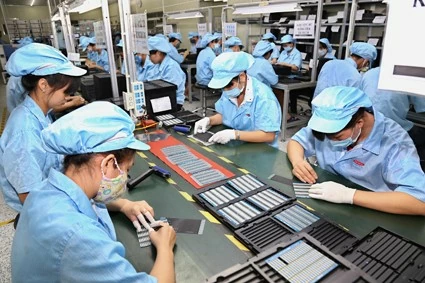 |
| Vietnam aims to perfect the legal framework and promote the social responsibility of multinational companies to ensure sustainable employment for workers. |
Although Vietnam faces challenges in achieving Goal 8 - decent work and economic growth, by 2030, it is expected to complete 5 out of 10 specific targets, including targets 8.1 (per capita GDP growth), targets 8.5, 8.6 (job creation), target 8.7 (elimination of forced labour, child labour), and target 8.10 (enhancing financial institutional capacity). Vietnam has set a roadmap for 2025 and 2030, such as the underemployment rate by 2025, and maintaining it until 2030.
Along with the MNE Declaration, current regulations in the 2013 Constitution, the 2019 labour Code, the 2020 Enterprise Law regarding the responsibilities of state agencies and employers aim to ensure the right to work, ensure working conditions, non-discrimination, and non-forced labour, Vietnam's policies and laws need adjustments and attention to the following contents to increase social responsibility for MNEs in Vietnam regarding ensuring sustainable employment, specifically:
Firstly, create a forum to raise awareness of the responsibilities of MNEs in Vietnam in implementing social responsibility and the contents of the MNE Declaration. Current Vietnamese legal regulations mainly provide general provisions on the obligations of MNEs when investing in Vietnam as foreign investors. However, foreign MNEs like Nestlé, Panasonic, Manpower… or Vietnamese MNE - economic groups like Vingroup, Sun Group, Thaco, Masan, FPT…, all have responsibilities in implementing sustainable employment policies issued by the Government.
Secondly, build a legal framework to form initiatives with the participation of MNE to "create sufficient employment" for workers with a minimum income to support themselves and their family members. MNEs are pioneers in building and managing labour quality, including technology chains and business know-how that help MNEs develop in the host country. Vietnam needs to actively promote the social responsibility of MNEs in Vietnam, including promoting participation in Employment Promotion Mechanisms, such as organising national job fairs, or through the Vietnam Chamber of Commerce and Industry, to build mechanisms to create high-level management jobs at MNE for local citizens.
Thirdly, innovate mechanisms and policies to encourage MNE to support higher education institutions in creating high-quality human resources and participate in local career guidance. MNEs in Vietnam, in particular, and globally, in general, often tend to recruit global employees when hiring for high-level positions, instead of participating in local training programs to source local human resources.
According to the assessment of general education quality and vocational training quality of FDI enterprises in Vietnam in 2022, 54% of FDI enterprises rated labour quality as average, with only 9% of FDI enterprises satisfied with the quality of the labour force. The difficulty in recruiting high-quality, high-productivity personnel in Vietnam also leads to the need for self-training and retraining by FDI enterprises, increasing business costs to over 5.69% in 2021 and 5.85% in 2022.
For a long-term strategy, it is necessary to build mechanisms to encourage MNE to participate in training programs at higher education institutions with high-quality training programs and participate in local career guidance to meet the short-term labour market requirements; establish cooperation between domestic vocational training institutions and MNEs to create a labour source before recruitment to work at MNE.
Fourthly, create resources for the workforce to monitor labour law compliance at MNE. Current Vietnamese labour laws have basically completed regulations on minimum wage, minimum working age, and on social security and labour safety. However, there is a lack of resources to carry out inspections and audits of labour law compliance at MNE, as incidents of violence against workers still occur.
Fifthly, labour laws need to be perfected towards building harmonious, stable, and progressive labour relations in enterprises. Worker representative organisations need to be more active to ensure workers' rights in the workplace; the state needs to prevent MNE from obstructing the establishment of trade unions or trade union activities to create "management-friendly unions", or dismissing trade union leaders…
The 2019 Labour Code recognises worker representative organisations at the grassroots level, not only including grassroots trade unions but also worker organisations in enterprises to establish mechanisms for dialogue and negotiation between workers and employers, not merely formal but gradually elevating the position of workers.
Currently, FDI enterprises in Vietnam are still "hesitant" about establishing trade unions in enterprises and are concerned that trade union activities may affect business operations. Additionally, there is no guidance from the Vietnam General Confederation of Labour on the presence of worker representative organisations in enterprises that are not trade unions…
Therefore, the Government needs to soon provide guidance on worker protection organisations at the grassroots level to facilitate workers' negotiations and propose solutions when MNE threaten to close businesses to pressure workers during negotiations.

| The right to rest for women WVR - The right to rest for women has been recognized in human rights standards, but in reality, it remains challenging to realize when women ... |

| Vietnam participates actively, proactively, and responsibly in the 61st session of the UNHRC: Ambassador Mai Phan Dung WVR - At the 61st Session of the United Nations Human Rights Council (UNHRC), Vietnam not only participated broadly but also contributed deeply through specific, ... |

| Perfecting legislation to protect human rights in the digital era WVR - In the context of widespread digital transformation and cyberspace increasingly becoming an essential living environment for humans, the demand for cybersecurity linked to ... |

| Completing legislation to ensure the rights of participants in legal proceedings according to the Méndez Principles WVR - To assist countries in effectively implementing the Convention Against Torture (CAT), the Méndez Principles have been developed as a guiding framework to promote ... |

| Human Rights in the 14th National Party Congress Documents: New Perceptions and Emerging Issues WVR - The 14th National Party Congress continues to consistently affirm the viewpoint of respecting, ensuring, and protecting human rights and citizens' rights. It also ... |