





Human Rights in the 14th National Party Congress Documents: New Perceptions and Emerging Issues
WVR - The 14th National Party Congress continues to consistently affirm the viewpoint of respecting, ensuring, and protecting human rights and citizens' rights. It also develops an approach that is more substantive, closely tied to the philosophy “The people are the root”, the construction of a modern socialist rule-of-law state, the effectiveness of national governance, and the requirement to improve the quality of life for the people.
Latest
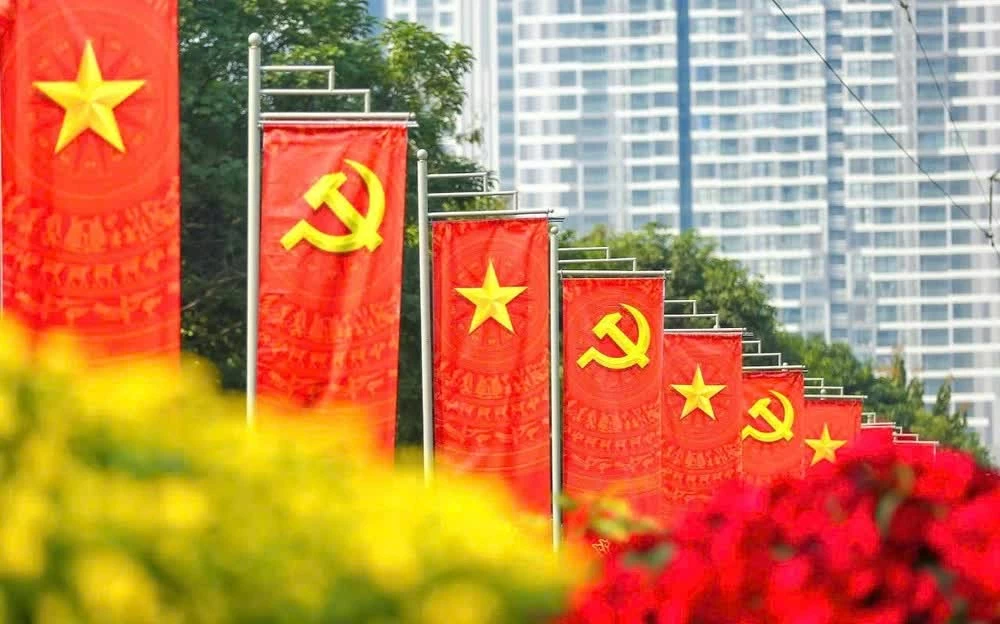 |
| The 14th Congress concretizes human rights with very clear goals on social welfare, healthcare, poverty reduction, and the right to development. (Photo: VOV) |
Compared to previous congresses, the new point of the 14th Congress is the inclusion of human rights as a measure of development, the quality of governance, and the effectiveness of implementation.
The 14th Party Congress: New perspectives on human rights
In the process of leading the Vietnamese revolution, human rights have always been placed by the Communist Party of Vietnam in an organic relationship with national independence, socialism, the people's sovereignty, and the goal of comprehensive human development.
| More from WVR |
 Perfecting legislation to protect human rights in the digital era Perfecting legislation to protect human rights in the digital era |
The foundational new point in the Documents of the 14th Congress is the positioning of human rights within the thought process of “The people are the root”, “the people are the subject, the center of the renewal, construction, and defense of the Fatherland”.
It also affirms that all policies and guidelines of the Party and the State must truly originate from the needs, aspirations, legitimate and legal rights and interests of the people; taking the respect, assurance, and protection of human rights, citizens' rights, happiness, and satisfaction of the people as the measure and goal of striving.
This approach shows that human rights are no longer just a principled orientation but are directly linked to the goal of serving the people, development effectiveness, and the legitimacy of governance activities.
Compared to previous Congresses, the 14th Congress both inherits and develops further. The 2011 Platform identified humans as the center of the development strategy and the subject of development; human rights must be respected and protected, linking human rights with the rights and interests of the nation, the country, and the people's sovereignty.
The 13th Congress advanced further by stating the requirement to “respect, ensure, protect human rights, and the rights and obligations of citizens according to the 2013 Constitution”, emphasizing that the people are the center, the subject of the renewal process.
Compared to these two milestones, the 14th Congress does not change the foundational perception but significantly expands in depth: Not only emphasizing assurance and protection but also making “the satisfaction of the people” a standard for verification. This is an important shift from an affirmation-oriented mindset to a verification-oriented mindset.
Another prominent new point of the 14th Congress is that human rights are more closely tied to the construction of a modern socialist rule-of-law state. The political report clearly defines the requirement to build a complete legal system, implemented strictly, ensuring and protecting justice, human rights, and citizens' rights. This indicates that human rights are no longer a separate content of legal policy but a constituent element of the rule-of-law state model in the new development phase.
The 14th Congress also clarifies the relationship between human rights and governance quality and implementation effectiveness. The political report emphasizes that the satisfaction and trust of the people and businesses, and the effectiveness of work must be the criteria for evaluating officials. This is a very noteworthy new feature.
Previously, the issue of human rights was often placed in the logic of protection and assurance through institutions. Now, the 14th Party Congress brings human rights closer to the standard for evaluating the capacity of the public apparatus. In this approach, governance effectiveness cannot be measured solely by reports or administrative targets but must be measured by the level of people's enjoyment, the perception of fairness, the quality of service, and social trust.
Another notable development is that the 14th Congress concretizes human rights with very clear goals on social welfare, healthcare, poverty reduction, and the right to development. The requirement to build a multi-layered, modern, flexible, and universally covered social welfare system; ensuring that all citizens have access to and enjoy basic, essential social services of quality; prioritizing vulnerable groups and the informal sector.
The 14th Congress also sets goals such as free health check-ups at least once a year for citizens, striving to basically eliminate poverty by 2030, and essentially free healthcare for all. Compared to previous congresses, this is a much higher level of concretization, showing that human rights are not only recognized in the political-civil aspect but are strongly expanded to economic, social rights and the right to development with policy targets that can be verified in practice.
The 14th Congress further expands the content of human rights in the context of digital transformation and non-traditional security challenges by addressing human security, cyber-data security, food security, energy security, and water security; while setting the requirement to develop a digital society, digital citizens, and enhance the digital access capacity of the people. This is an important new point compared to previous congresses, as it places human rights at the center of development and security thinking in the new context.
From the above aspects, it can be affirmed: the new, breakthrough point of the 14th Congress does not lie in changing the basic line of the Party on human rights but in developing that perception in a more substantive, measurable, governance-linked, and modern direction.
If the 2011 Platform was a step to affirm the foundation, the 13th Congress was a step to enhance awareness of assurance and protection according to the 2013 Constitution, then the 14th Congress is a step to strengthen the organizational implementation mindset, taking humans as both the center and the standard for evaluating development quality.
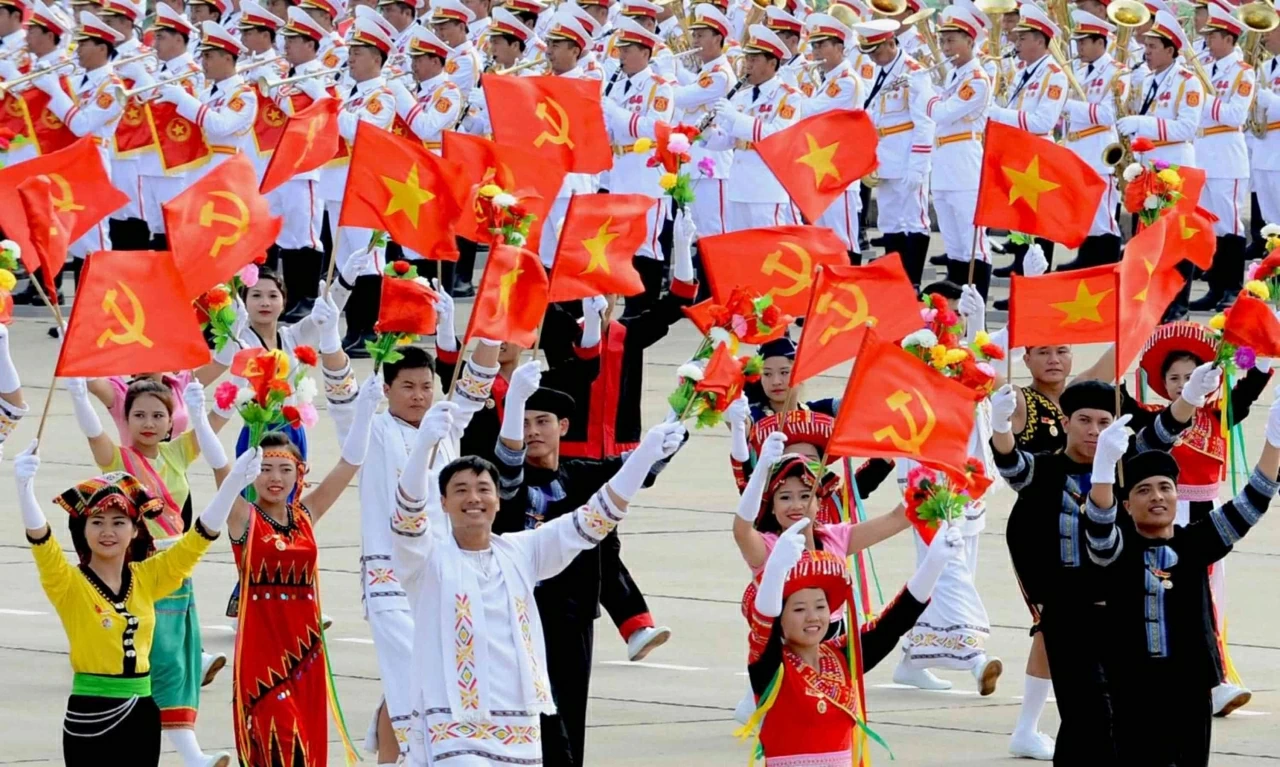 |
| The Documents of the 14th Party Congress mark a new development in the Party's perception of human rights. (Photo: National Defence Journal) |
Implementation challenges
From the correct viewpoint to effective implementation is always a gap that needs to be filled with institutions, organization, and governance capacity.
The first challenge is how to transform the very progressive requirements of the 14th Congress into a legal system, policies, and operational mechanisms that are sufficiently synchronized. Resolution No. 27-NQ/TW on continuing to build and perfect the socialist rule-of-law state of Vietnam has pointed out quite clearly the existing limitations: the mechanism to ensure the people's sovereignty, human rights, and citizens' rights has not been fully promoted; administrative and judicial reforms in some areas have not met the requirements; the supervisory role of the people and political-social organizations is sometimes not strong. These assessments show that the biggest obstacle is not the lack of guidelines but the lack of synchronization in institutionalization and inefficiency in implementation.
The second challenge is to profoundly innovate the legal construction mindset. In May 2025, in the article "Institutional and Legal Breakthroughs for National Development", General Secretary To Lam emphasized that quality institutions and laws, suitable to the practical development requirements and the people's aspirations, are the foremost factors determining success; and requires the legal system to recognize, respect, ensure, and effectively protect human rights, citizens' rights, and decisively abandon the mindset of "if it cannot be managed, then ban it".
This is a very important guideline for implementing the viewpoints of the 14th Congress. When the law is still heavily management-command oriented, slow to react to reality, or creates unnecessary procedural burdens, human rights cannot be fully ensured in real life. Therefore, renewing the legislative mindset towards taking the people, businesses, and long-term development interests as the center is an urgent requirement.
The third challenge is to strongly shift from an administrative management model to a service governance model. In his directive speech at the National Conference to study, learn, and implement the Resolution of the 14th Congress on February 7, General Secretary To Lam required not to evaluate the implementation of the resolution by formal reports or superficial targets, but to measure by development effectiveness, by improving people's lives, and by the genuine satisfaction of society.
However, to achieve this, a comprehensive change is needed from the evaluation of officials, power control, decentralization-delegation to public service culture, accountability, and mechanisms for receiving feedback from the people. If the apparatus does not change towards more transparency, more responsibility, taking service results as the standard, then the very progressive content on human rights in the documents will be difficult to bring to life.
The fourth challenge is ensuring human rights in the digital environment. The Documents of the 14th Congress have raised the issue of cyber-data security and the rights of citizens in the digital society. In reality, the process of perfecting the institution in this field is being accelerated. The Personal Data Protection Law of 2025 is a step to institutionalize the constitutional provisions on human rights, citizens' rights, and privacy rights.
However, there is still a gap between law and implementation: the compliance capacity of agencies and businesses is uneven; people's awareness of personal data rights is still limited; challenges remain in balancing data exploitation for development and privacy protection. This requires an interdisciplinary approach, where law, technology, governance, and social education must go together.
The fifth challenge is how to ensure that economic, social rights, and the right to development are enjoyed equitably across regions and social groups. The 14th Congress sets very high goals for welfare, healthcare, poverty reduction, and improving the quality of life. If regional disparities, access to healthcare, education, and welfare for vulnerable groups are not well addressed, human rights may be fully recognized on paper but not equally enjoyed in reality. Therefore, the requirement is not only to issue more policies but to improve the quality of implementation at each level, each locality.
From the above practices, several suggestions can be drawn for the next phase:
Firstly, it is necessary to continue perfecting the institution in the spirit of taking humans as the center, but at the same time, the quality of law enforcement must be emphasized.
Secondly, it is necessary to build a policy evaluation system based more on satisfaction levels, service access levels, and actual life improvement results of the people.
Thirdly, digital transformation in state governance must be accelerated but not at the expense of privacy rights, data security, and equitable access for the people.
Fourthly, human rights must be more closely linked with economic development, social welfare, human security, and socio-political stability.
The Documents of the 14th National Party Congress mark a new development in the Party's perception of human rights. This development does not lie in changing the foundational line but in making that line more specific, modern, and closely linked with the effectiveness of organizational implementation.
The success of implementing this spirit will depend on the capacity to innovate institutions, the courage to reform the apparatus, and, above all, the ability to make people truly feel that their rights are respected, ensured, protected, and expanded in daily life.
References
1. Political Report of the Central Executive Committee of the 13th Party Congress at the 14th National Congress of the Party.
2. Resolution No. 27-NQ/TW dated November 9, 2022, on continuing to build and perfect the socialist rule-of-law state of Vietnam in the new phase.
3. General Secretary To Lam, Directive Speech at the National Conference to Study, Learn, and Implement the Resolution of the 14th Party Congress.
4. General Secretary To Lam, "Institutional and Legal Breakthroughs for National Development".
| Human rights efforts 2025: Transforming for breakthroughs WVR - In the context of profound global changes in 2025, Vietnam remains steadfast and consistent in its development path, maintaining political and social stability, ... |

| Promoting the value of socialist human rights WVR - The aspiration for a prosperous, happy, and powerful nation by the mid-21st century necessitates a strong renewal in theoretical thinking and practical development. ... |

| Human rights communication: Harnessing the 'hearts and minds' of the people WVR - In recent years, media coverage of human rights in Vietnam has seen noteworthy shifts towards innovative thinking and approaches. |
| Religious communication crisis in the digital era: Impacts on human rights WVR - In recent years, the shift from traditional religious practices to the digital environment has created significant opportunities for spreading the ethical and humanitarian ... |
| Vietnamese Ambassador at the UN shares information on the outcomes of the 14th Party Congress and the first Session of the 16th National Assembly WVR - On April 23, in New York, Ambassador Do Hung Viet, Head of the Permanent Mission of Vietnam to the UN, chaired a meeting ... |