

Human rights communication: Harnessing the 'hearts and minds' of the people
WVR - In recent years, media coverage of human rights in Vietnam has seen noteworthy shifts towards innovative thinking and approaches.
Latest
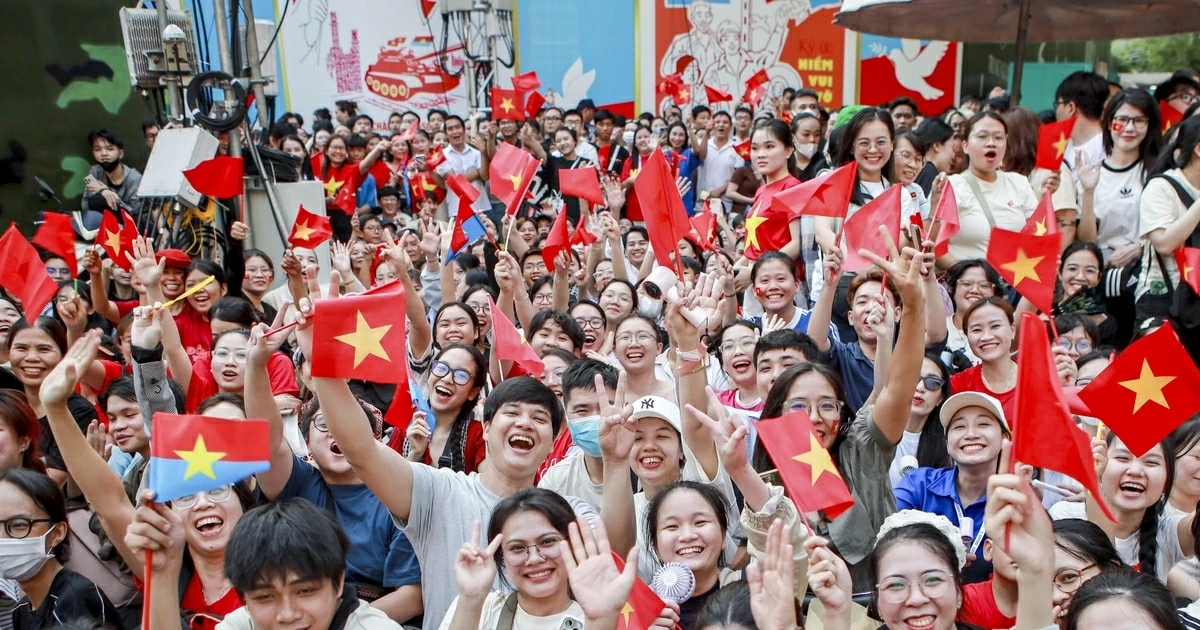 |
| Nowadays, human rights are gradually being “normalized” in social awareness, recognized as part of quality of life and sustainable development. (Photo: PLO) |
Instead of solely emphasizing international commitments or macro-level achievements, much of the communication content has linked human rights to specific issues such as social welfare, poverty reduction, digital transformation, access to public services, and the rights of women, children, the disabled, and vulnerable groups.
Through this, human rights are gradually being “normalized” in social awareness, recognized as part of quality of life and sustainable development. This approach helps human rights media better connect the State and the People, contributing to strengthening social trust, creating consensus in policy implementation, thereby harnessing the “people's heart” – a foundational factor as the country enters a new development phase with intertwined opportunities and challenges.
National-level communication strategy
A significant milestone in the renewal process of human rights communication was the issuance of Decision No. 1079/QD-TTg by the Prime Minister on September 14, 2022, approving the Communication Project on Human Rights in Vietnam for the period 2023-2028 (Project 1079). This is the first time human rights media has been placed within a unified strategic framework with clear objectives, tasks, and timelines.
| More from WVR |
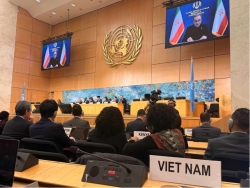 Vietnam shows active, responsible participation at 61st Human Rights Council session Vietnam shows active, responsible participation at 61st Human Rights Council session |
The project's goal is to create a shift in the awareness and understanding of the entire society about human rights; provide comprehensive and objective information to domestic citizens, overseas Vietnamese, and international friends; while also contributing to enhancing Vietnam's reputation and image in the field of human rights domestically, regionally, and globally.
Key tasks include: Perfecting the mechanism for communication and information provision; organizing exhibitions and media events domestically and internationally; digitizing media data; increasing media products in ethnic and foreign languages; proactively combating and minimizing misinformation and distortion about human rights in cyberspace.
After three years of implementation (2023-2025), Project 1079 has established a relatively consistent legal foundation and directive mechanism, helping ministries, sectors, and localities to implement human rights media more methodically and professionally. Coordination between state management agencies and the press, radio, and television systems has shown clear improvements; information is provided more promptly, with focus and alignment with the realities of people's lives.
In terms of quantity, the country has published 300 book titles, of which e-books and foreign language books account for 15% to 20% (achieving 30% of the project's target); produced and broadcast 189,550 journalistic products of various genres; produced and disseminated 462,259 digital products/news/articles/posts for online dissemination, reaching approximately 461 million accesses, with about 40% of accesses from abroad through the Vietnam image promotion platform - vietnam.vn.
Regarding content, the media does not only reflect achievements but gradually shifts to analyzing and explaining policies from the perspective of people's rights and interests. Officials, civil servants, and employees have shown a clear shift in awareness, understanding better the connection between their specialized fields and specific human rights. This is an important step forward, contributing to bringing human rights from a macro policy category to content associated with national governance and social life.
This result is partly due to the focus on training and workshops that have been actively implemented over the past time. Nationwide, 963 direct training sessions have been conducted with the participation of 37,790 turns of officials, civil servants, journalists, editors from central and local press, media, and publishing agencies, and 4,000 turns of learners participating in online training on open mass online course platforms (MOOCs) on topics: Journalism and human rights, the Universal Periodic Review mechanism of the UN Human Rights Council (UPR), cultural rights...
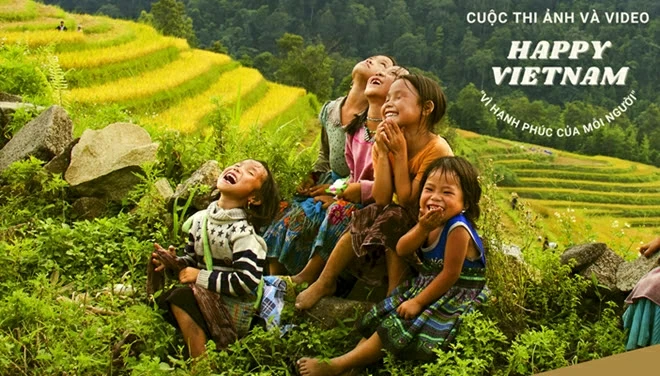 |
| A media poster for the photo and video contest "Happy Vietnam". (Photo: VTC) |
Disseminating approaches and enhancing information access
One of the highlights of human rights media in the recent period is the increasingly widespread dissemination of rights-based approaches in media products.
The mechanism for communication and information provision to the press is maintained quite regularly at the central level and gradually becomes substantive at the local level. Proactively providing information, instead of only responding when issues arise, has helped form a more timely and responsible flow of official information. This is an important premise to enhance the accountability of state agencies and increase the ability to respond to public opinion developments, especially in cyberspace.
The Ministry of Culture, Sports and Tourism, along with the Standing Office of the Human Rights Steering Committee, maintains the mechanism of monthly information provision conferences for the press on human rights work and external information since 2022.
To date, 30 conferences have been organized, with 2,000 turns of journalists attending; 70 turns of agencies reporting thematic topics in Hanoi, organizing 20 delegations of central journalists to conduct fieldwork at localities.
Three training sessions with the participation of representatives from the departments and sectors of the Human Rights Steering Committee of 34 provinces and cities were organized to transfer the model of information provision conferences for the press on human rights work.
The deployment of journalists to the field to write articles at the grassroots level has been implemented by ministries, sectors, and localities in the first three years of the project, with about 27.043 turns of domestic journalists. In terms of external relations, human rights media increasingly plays a role as a "bridge" between domestic and international spheres. The enhancement of foreign language media products, linked with human rights dialogue mechanisms, implementing international recommendations, and participating in multilateral forums demonstrates Vietnam's more proactive efforts in "telling its story" in a language accessible to the international community.
Accordingly, media is not only a tool to counter misinformation but also contributes to shaping the discourse framework on human rights associated with Vietnam's historical, cultural conditions, and development level. For instance, the series of events showcasing Vietnam's achievements in ensuring human rights domestically and internationally under the name "Happy Vietnam" since 2023 has been equipped for 100 Vietnamese representative missions abroad, organized exhibitions in all three UN headquarters cities, New York, Geneva, and Bangkok, attracting the interest, participation, and contributions of the diplomatic community, international experts, the press, and local people in spreading media messages about Vietnam's human rights.
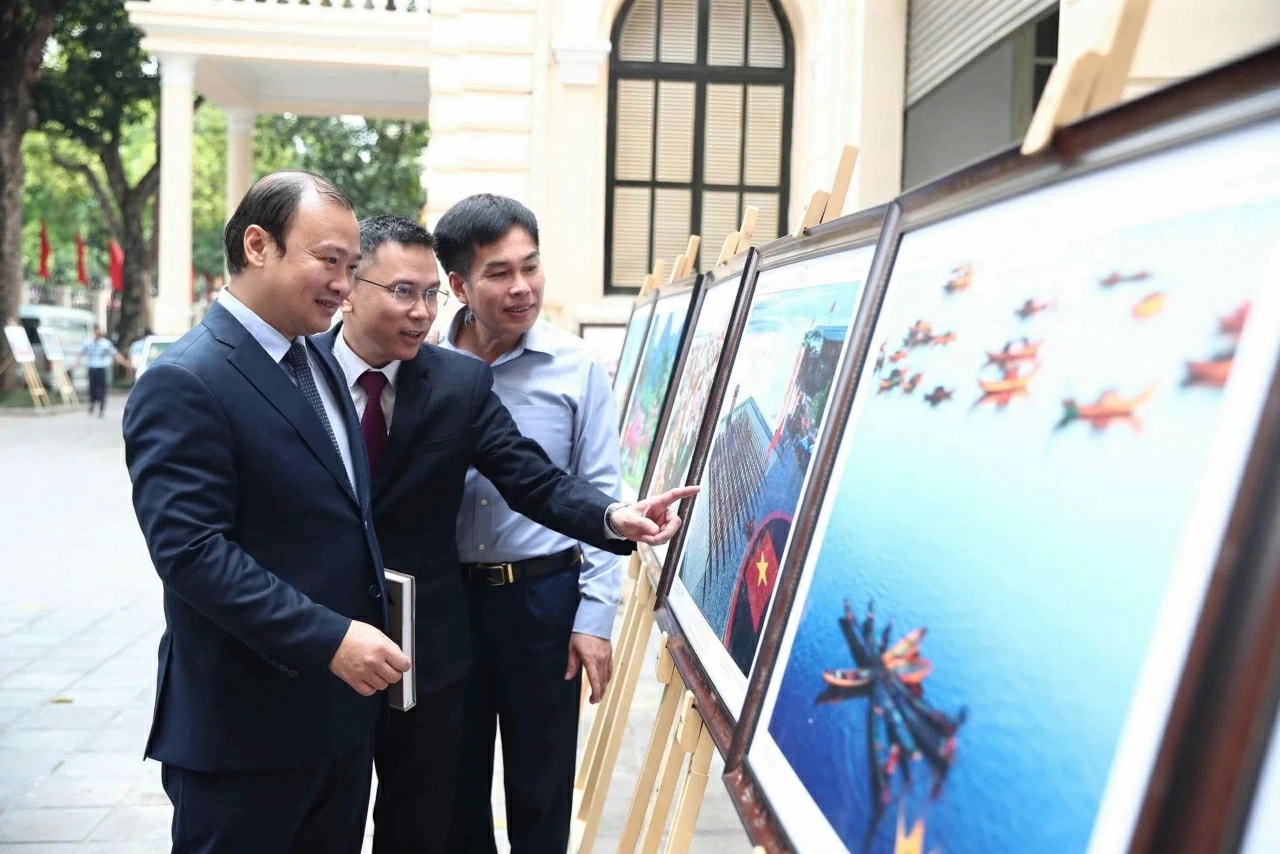 |
| Delegates visit the photo exhibition "Happy Vietnam 2025" displayed at the premises of the Ministry of Culture, Sports and Tourism. (Photo: Ministry of Culture, Sports and Tourism) |
Unlocking potential
The flourishing of human rights communication in recent years is closely linked to modern approaches, particularly the utilization of social media, organizing thematic awards, and building a series of events with widespread impact. Human rights are gradually stepping out of the confines of reports and specialized seminars to appear more vividly through life stories, visual images, and cultural experiences.
The organization of thematic communication awards, notably the Human Rights Media Award in Vietnam 2025 named "Happy Vietnam", has created an open creative space, attracting the participation of 30,000 journalists, artists, independent content creators, and the general public.
Through journalistic works, photos, and videos, human rights are portrayed concretely and closely, associated with real people and real stories, rather than existing as an abstract legal concept. This approach aligns with modern media trends, contributing to changing social perceptions of human rights.
Simultaneously, social media has become a crucial space for spreading messages. Platforms like Facebook, TikTok, YouTube, Threads allow for quick access to young people, overseas Vietnamese, and the international community, with concise, visual, and storytelling-rich presentations.
Media-cultural events such as the Vietnam Happy Fest, organized by the Ministry of Culture, Sports and Tourism in Hanoi from December 5-7, 2025, have created a public opinion highlight, maintaining a positive information flow about human rights in public spaces.
The event included a series of 13 activities spread over a 2km pedestrian street around Ho Guom for three days, attracting nearly 200,000 visitors; 80,000 gifts were sent to residents and tourists; 40,000 wishes were hung on the Happiness Tree; 5,000 letters were sent to the "Send happiness to tomorrow" mailbox; the opening ceremony of the Vietnam Happy Fest 2025 along with the wedding of 80 couples "Couple's day - Love is happiness" attracted nearly 2 million views on media platforms.
These figures demonstrate the significant reach of human rights communication activities when organized in a modern direction, harmoniously combining physical and digital spaces, between mainstream media and citizen media.
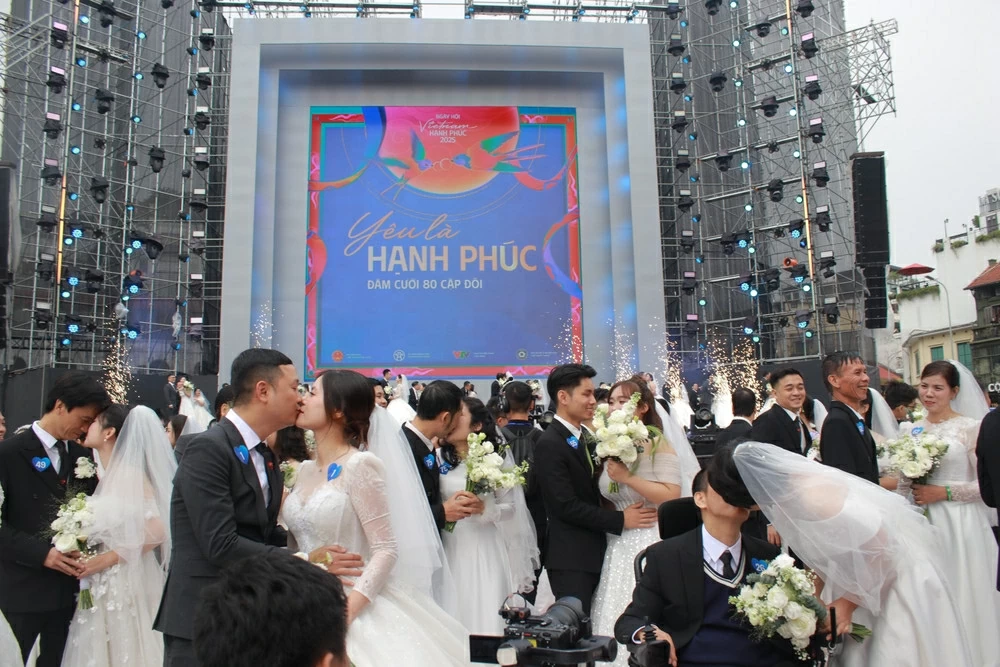 |
| The wedding of 80 couples with the theme "Ngay chung doi - Yeu la hanh phuc""Couple's day - Love is happiness", within the framework of the Viet Nam Hanh Phuc 2025 festival. (Photo: Vietnam+) |
Challenges remain
Alongside the achievements, human rights media in Vietnam still faces many structural, technological, and perceptual challenges.
Firstly, the conflict between the need for information orientation and the demand for multidimensional, critical modern media. In the social media environment, emotional, extreme, or politicized information can spread quickly, posing high demands on the ability to react and explain policies.
Secondly, the differences in standards and approaches to human rights between Vietnam and a segment of international public opinion. If not skillfully communicated, these differences can easily lead to defensive, rebuttal-oriented external communication, lacking in-depth dialogue.
Thirdly, the challenge of professional capacity among human rights personnel at all levels in general, and those working in human rights media in particular. This field requires deep interdisciplinary knowledge, combining law, public policy, media, and international relations.
In practice, many media products are still heavy on slogans, lacking comparative data, lacking international references, or not effectively utilizing objective external evaluations. This reduces the persuasiveness of the message, especially when reaching international audiences accustomed to strict academic and investigative journalism standards.
Finally, the issue of social trust. Human rights media is only truly effective when the public perceives authenticity, consistency, and a willingness to dialogue. Media needs not only to be "more," but "better," with depth and long-term persuasiveness.
It can be affirmed that although human rights communication in Vietnam has not yet created groundbreaking breakthroughs, the positive shifts in thinking and approaches have demonstrated the role of media as a "bridge" between policy and life, between the State and the People, between domestic and international spheres. This is an important foundation for human rights to be recognized as an integral part of sustainable development, contributing to strengthening social consensus and harnessing the "hearts and minds" of the people in the new development phase of the country.

| Human rights in cyberspace: Global and Vietnamese practices WVR - Ensuring and protecting human rights in cyberspace is an urgent requirement for the international community and individual nations in the current context. |
| Human rights efforts 2025: Transforming for breakthroughs WVR - In the context of profound global changes in 2025, Vietnam remains steadfast and consistent in its development path, maintaining political and social stability, ... |

| Promoting the value of socialist human rights WVR - The aspiration for a prosperous, happy, and powerful nation by the mid-21st century necessitates a strong renewal in theoretical thinking and practical development. ... |
| Proactively shaping the rules in the digital era: Placing human rights at the center Artificial Intelligence (AI) is increasingly intervening in every aspect of social life, posing challenges to legal sovereignty, social governance, and ensuring human rights. |
| Vietnam respects and ensures human rights, including freedom of religion or belief: Spokesperson WVR - At the regular press conference of the Ministry of Foreign Affairs, Spokesperson Pham Thu Hang responded to the information from the U.S. Commission ... |