







Completing legislation to ensure the rights of participants in legal proceedings according to the Méndez Principles
WVR - To assist countries in effectively implementing the Convention Against Torture (CAT), the Méndez Principles have been developed as a guiding framework to promote effective investigative interviewing methods that respect human rights and avoid the use of torture, thereby enhancing investigative efficiency and proactively preventing wrongful convictions in judicial activities.
Latest
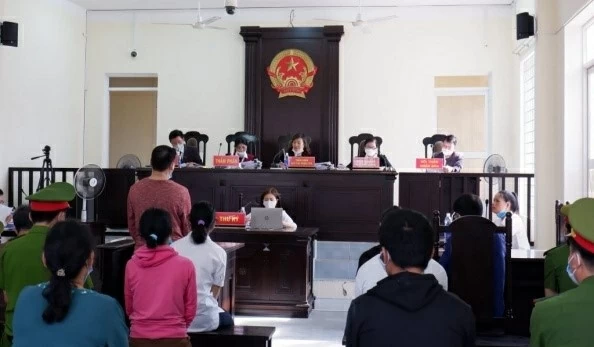 |
| The Méndez Principles help promote effective investigative interviewing methods that respect human rights and avoid the use of torture, thereby enhancing investigative efficiency and proactively preventing wrongful convictions in judicial activities. (Photo: Central Internal Affairs Commission) |
Researching the contents of the Méndez Principles contributes to completing Vietnamese legislation in general and the laws on human rights for participants in legal proceedings in particular, playing an important role in ensuring legality and building a socialist rule-of-law state in Vietnam.
Effective interrogation principles
In investigative and information-gathering activities, effective consultation principles include:
Principle 1: Presenting a comprehensive basis of scientific, legal, and ethical foundations for those in positions of state power in interrogation work, affirming that all investigative and interviewing activities must be based on respect for human dignity. This principle also emphasizes the absolute prohibition of torture and any cruel, inhuman, or degrading treatment. It requires that interviews be based on legality, transparency, and accountability.
| More from WVR |
 Promoting social welfare to ensure people's right to enjoy development achievements Promoting social welfare to ensure people's right to enjoy development achievements |
Principle 2: Proposing an effective interrogation process that includes: detailed preparation and planning; ensuring the full application of protective measures as prescribed by law throughout the process; maintaining an open mindset, avoiding prejudice; creating a non-coercive environment; building and maintaining a trusting relationship with the interviewee; using legally and scientifically proven questioning techniques; actively listening and encouraging the interviewee to speak freely and fully; analyzing and evaluating the information gathered and the entire interrogation process.
Principle 3: This principle asserts that "vulnerability" is not only a personal characteristic but can also arise from circumstances of deprivation of liberty, the interrogation environment, and the power imbalance between the investigator and the interviewee. Some interviewees may experience increased vulnerability due to specific risk factors coinciding with the interrogation. These risk factors may include age, gender, gender identity or sexual orientation; nationality or ethnicity; cultural or religious background; physical, intellectual, or psychological disabilities...
Additionally, other flexible factors can increase "vulnerability," such as health conditions like injury, illness, depression, anxiety, intoxication, post-traumatic stress disorder, or other weakened or altered states; previous traumatic experiences, including being a victim or witness to human rights violations…
Principle 4: The state is obligated to organize mandatory, regular, and systematic training for those involved in investigative, information-gathering, and interrogation activities. Training content includes guidance on maintaining an open mindset and avoiding prejudice; strategic planning and preparation; building and maintaining a trusting relationship; identifying and meeting the specific needs of the interviewee; complying with international human rights law; ensuring protective measures are applied throughout the interrogation process; using scientifically proven questioning techniques…
Principle 5: The prohibition of torture and the protection of human rights cannot rely solely on declarations or ethical codes but must be ensured through specific, transparent, and effective accountability mechanisms. The principle affirms that the state is obligated to establish a system in which all interviewing, interrogation, and information-gathering activities can be checked, monitored, and held accountable. This principle also emphasizes the importance of transparency in the interviewing process; thus, countries should adopt measures such as audio and video recording of the entire interview, maintaining complete records, and ensuring access for oversight agencies, lawyers, or courts when needed.
Principle 6: This principle emphasizes that implementation must begin with political commitment and institutional reform. The state must clearly define the goal of combating torture and improving investigative quality as a priority of the judicial system. This principle requires countries to establish a legal framework and standardized procedures for interviewing activities. Additionally, Principle 6 identifies that implementation must be accompanied by adequate resources such as facilities (appropriate interview rooms, recording equipment, storage systems), personnel (trained investigators, interpreters, psychological experts), or lack of legal assistance.
 |
| The current Vietnamese legal system (including the Constitution, laws, and sub-laws) is highly compatible with the provisions of the Méndez Principles. (Photo: Vietnam Lawyers Online Magazine) |
Compatibility of Vietnamese law with the Méndez Principles
It can be seen that the current Vietnamese legal system (including the Constitution, laws, and sub-laws) is highly compatible with the provisions of the Méndez Principles.
Vietnam has an important legal foundation for protecting human rights. The 2013 Constitution affirms: “Everyone has the right to inviolability of the body, is protected by law regarding health, honour, and dignity; is not subjected to torture, violence, coercion, humiliation, or any other form of treatment infringing on the body, health, honor, or dignity.”
The current Penal Code clearly stipulates criminal liability for acts of torture, violence, coercion, and humiliation in two crimes: Torture (Article 373) and Coercion (Article 374). The current Criminal Procedure Code, along with specific provisions on related issues, prohibits torture, coercion, the use of torture, or any other form of treatment infringing on the body, life, and health of individuals; investigators, investigative officers, prosecutors, and examiners who coerce or use torture against defendants must bear criminal responsibility according to the Penal Code; the interrogation of defendants, taking statements from the legal representatives of legal entities at detention facilities or at the headquarters of investigative agencies, agencies assigned to conduct certain investigative activities must be audio or video recorded with sound; the taking of statements from witnesses, victims, parties involved, confrontation, receipt of crime information… can be audio or video recorded with sound; the accused has the right to self-defense, to hire a lawyer or another defender. Agencies and individuals with procedural authority are responsible for notifying, explaining, and ensuring that the accused, victims, and parties involved fully exercise their right to defense, rights, and legitimate interests...
In addition to the above documents, the Vietnamese legal system also includes other laws and sub-laws with relevant provisions such as: the Law on Organization of Criminal Investigation Agencies, the Law on Execution of Criminal Judgments, the Law on Temporary Detention and Custody, the Law on Juvenile Justice; Joint Circular 03/2018/TTLT-BCA-VKSNDTC-TANDTC-BQP dated February 1, 2018, guiding the procedures for audio or video recording with sound; using, preserving, and storing audio or video recording results during investigation, prosecution, and trial...
Besides the basic compatibility mentioned above, through comparative research, the Vietnamese legal system still has some issues and inadequacies that pose challenges for the practical implementation of the CAT and the Méndez Principles:
First, some provisions regarding the legal status and rights of participants in legal proceedings are inadequate, such as those detained in emergencies not being considered as accused persons;
Second, regulations on audio and video recording in criminal proceedings for taking statements or conducting other criminal procedural activities (except for interrogating defendants) are discretionary and not mandatory. Additionally, Vietnamese law currently only provides for procedures for taking statements and interrogating but lacks provisions on an "effective interrogation process" according to Méndez Principle 2, such as preparing for interrogation, taking statements, establishing an environment, psychology, building relationships, interrogation techniques…
These issues are currently only found in research projects of police training institutions or law training institutions.
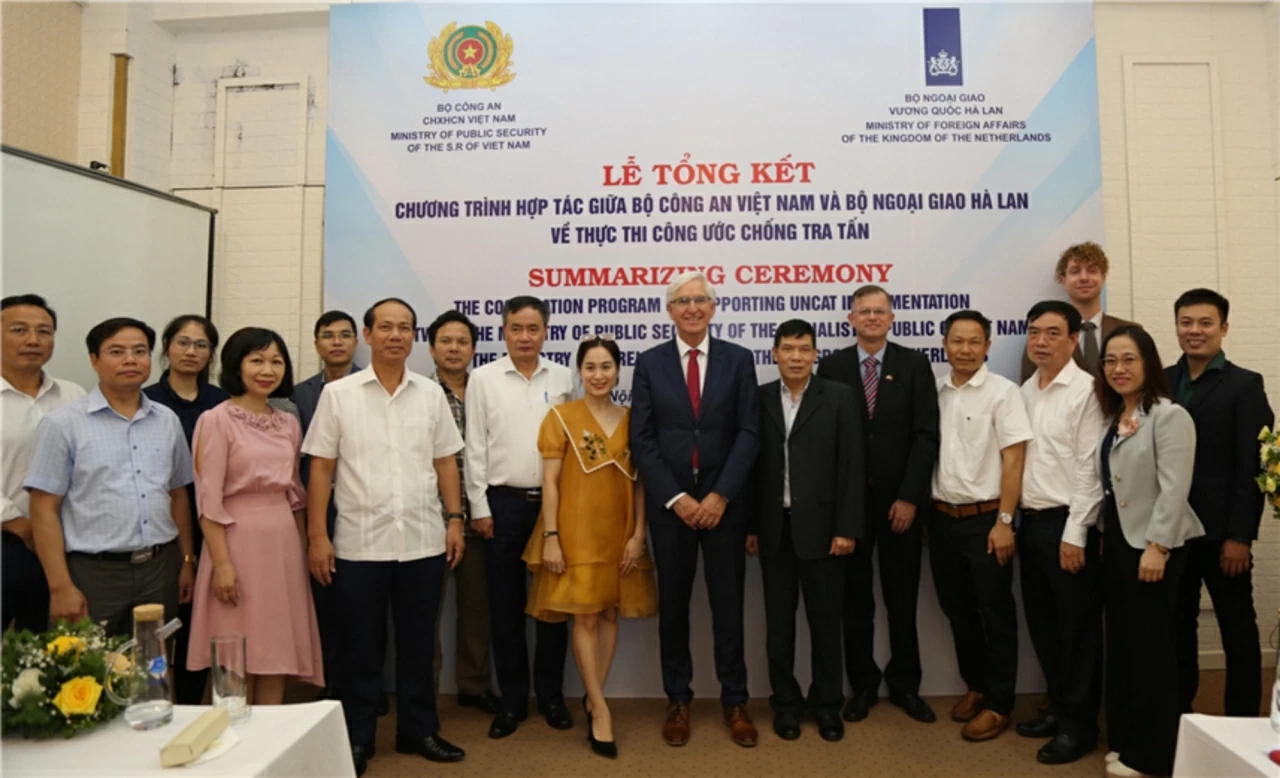 |
| The Closing Ceremony of the Cooperation Program between the Ministry of Public Security of Vietnam and the Ministry of Foreign Affairs of the Netherlands on the Convention Against Torture in July 2022. (Photo: Ministry of Public Security) |
Completing legislation in accordance with the Méndez Principles
To fully align with the provisions of the Méndez Principles, Vietnamese law needs to be completed in the following areas:
First, regulations on mandatory audio and video recording in interrogation and statement-taking activities need to be completed. To align with the Méndez Principles, the scope of mandatory audio and video recording should be expanded to include activities such as taking statements from those detained in emergencies, arrested individuals, detainees, witnesses... Additionally, the law should more clearly define the process of storing, sealing, securing, and accessing data by lawyers, prosecutors, and courts; there should be strict sanctions: if audio or video recording is not conducted without force majeure reasons, the statement must be considered inadmissible or without evidentiary value.
Second, the right to have a lawyer from the earliest possible time, from the time of arrest or detention, needs to be more substantively ensured. The current Criminal Procedure Code recognizes the right to defense, the right to hire a defender, and the mechanism for lawyer participation in proceedings. In practice, many cases see lawyers accessing late, after important statements have been made.
Third, mechanisms for excluding evidence obtained through torture, coercion, or procedural violations need to be completed. The current Criminal Procedure Code has a principle of not using illegally obtained evidence. However, to align with the CAT and the spirit of Méndez, more specific regulations on forms of coercion, including psychological violence such as threats, prolonged isolation, promises of benefits, or pressure, are needed. Especially when there are signs of coercion or torture, the burden of proving the voluntariness of the statement should be placed on the procedural agency, rather than requiring the interviewee to prove they were coerced.
Fourth, regulations protecting vulnerable individuals need to be completed. Vietnamese law has specific provisions for individuals under 18 in criminal proceedings, but the mandatory mechanism for psychological experts needs strengthening; specific regulations on friendly interviewing, appropriate duration, and prohibition of leading questions are needed. For individuals with disabilities, signs of mental disorders, ethnic minorities not fluent in Vietnamese…, mechanisms for interpretation, professional support, and cognitive assessment before taking statements are needed.
Fifth, the "Effective Interrogation Process" needs to be codified according to the provisions of the Méndez Principles. Accordingly, alongside regulations on the procedure and process of taking statements and interrogating, specific legal documents are needed to formalize planning, establishing psychological communication, and creating a friendly environment… during statement-taking and interrogation.

| Human rights communication: Harnessing the 'hearts and minds' of the people WVR - In recent years, media coverage of human rights in Vietnam has seen noteworthy shifts towards innovative thinking and approaches. |

| Managing religious communication crises from a human rights perspective in the context of digital transformation WVR - In the context of national digital transformation and the robust development of cyberspace, religious communication activities are increasingly expanding in scale, methods, and ... |

| Religious communication crisis in the digital era: Impacts on human rights WVR - In recent years, the shift from traditional religious practices to the digital environment has created significant opportunities for spreading the ethical and humanitarian ... |

| The right to rest for women WVR - The right to rest for women has been recognized in human rights standards, but in reality, it remains challenging to realize when women ... |
| Vietnam participates actively, proactively, and responsibly in the 61st session of the UNHRC: Ambassador Mai Phan Dung WVR - At the 61st Session of the United Nations Human Rights Council (UNHRC), Vietnam not only participated broadly but also contributed deeply through specific, ... |


