






Perfecting legislation to protect human rights in the digital era
WVR - In the context of widespread digital transformation and cyberspace increasingly becoming an essential living environment for humans, the demand for cybersecurity linked to the protection of human rights is becoming more urgent.
Latest
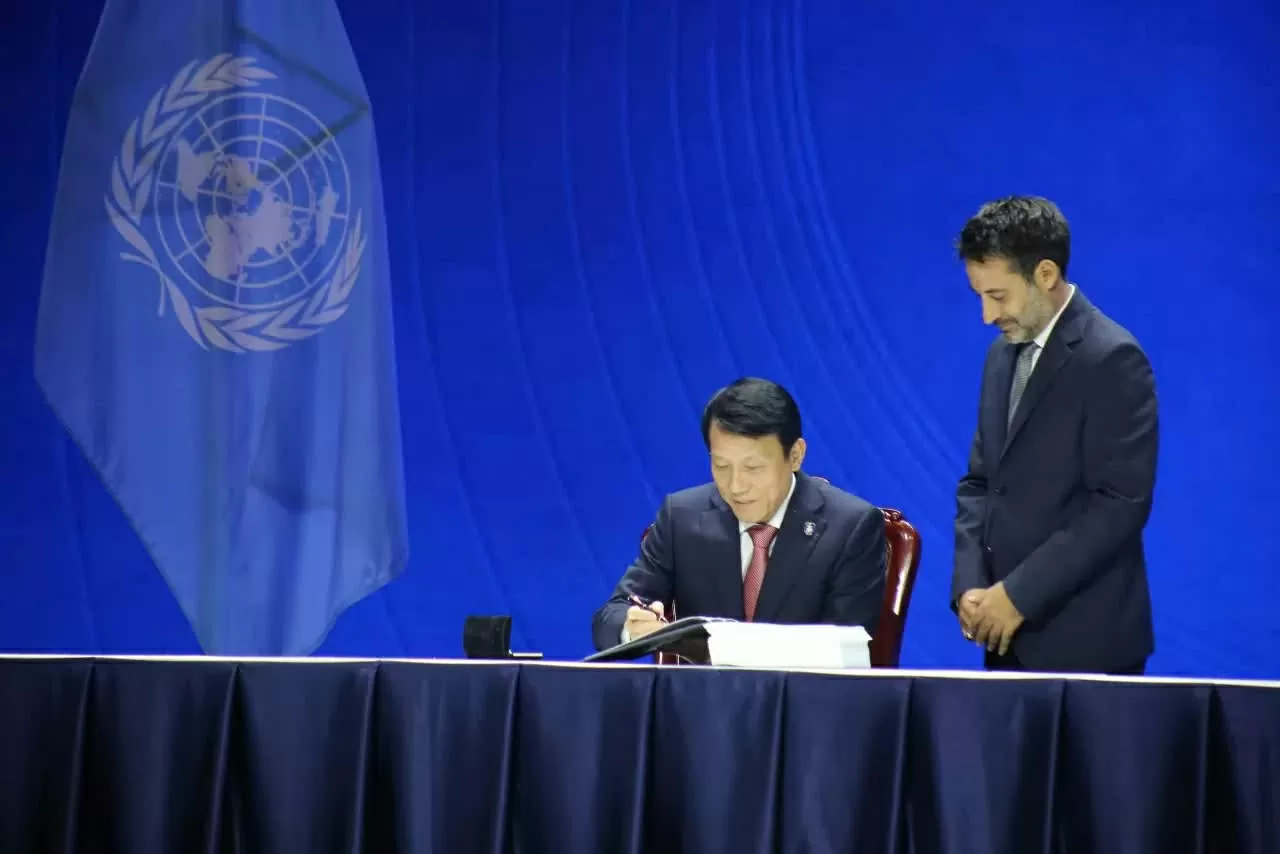 |
| General Luong Tam Quang, Member of the Politburo, Minister of Public Security, represented in signing the United Nations Convention against Cybercrime. (Photo: Thanh Long) |
Based on the inheritance and unification of the Cybersecurity Law 2018 and the Law on Network Information Security 2015, the Cybersecurity Law 2025 was issued to perfect the legal framework regulating social relations arising in cyberspace in the face of new challenges of digital technology, including strengthening the protection of human rights, citizens' rights, especially the rights of vulnerable groups in the digital era.
Protecting security and order in cyberspace
Cyberspace is both an information transmission environment and a new "living space" where people exercise basic freedoms such as: The right to access information, freedom of speech, and the right to protect privacy and personal data.
| More from WVR |
 Religious communication crisis in the digital era: Impacts on human rights Religious communication crisis in the digital era: Impacts on human rights |
However, alongside these benefits is the increase in threats to national security, social order, and safety, especially human rights in cyberspace such as: Cyberattacks, high-tech fraud crimes, privacy violations, child abuse…
The Law on Network Information Security 2015 (Law No. 86/2015/QH13) and the Cybersecurity Law 2018 (Law No. 24/2018/QH14) were issued by the National Assembly, marking an important development in forming a legal framework to protect national security and social order in cyberspace, while also providing a legal basis to protect the legitimate rights and interests of agencies, organizations, and individuals in the digital environment.
In particular, the Cybersecurity Law 2018 promptly adjusted many dangerous behaviors, laying the foundation for prevention and combating legal violations and cybercrimes in the early stages of national digital transformation.
However, the rapid development of digital technology in recent years, especially the explosion of AI, cross-border platforms, and increasingly sophisticated cybercrime methods, has posed many new issues that the Cybersecurity Law 2018 has not fully anticipated.
The risks of human rights violations in cyberspace are becoming more diverse and complex, directly impacting vulnerable groups in society, requiring a more comprehensive, specific, and appropriate legal approach.
The Cybersecurity Law 2025 (Law No. 116/2025/QH15) was enacted to amend, supplement, and perfect the provisions of the 2018 Law, meeting the requirements of cybersecurity protection in the new situation.
The Cybersecurity Law 2025 not only continues to affirm the role of the State in protecting national security in cyberspace but also more clearly reflects the human-centered perspective, enhancing the protection of human rights, citizens' rights, especially the rights of vulnerable groups in the digital era.
New points of the Cybersecurity Law
In the context of cyberspace increasingly becoming the second "living space" for humans, the Cybersecurity Law provides an important legal basis to ensure human rights, contributing to building a safe, healthy, and humane network environment for the sustainable development of society, as reflected in the following new points:
Firstly, the Law has expanded the scope of protection for vulnerable groups in cyberspace. One of the prominent progressive points of the Cybersecurity Law 2025 is the expansion and specification of the protection scope for vulnerable groups in cyberspace, including children, the elderly, and those with cognitive difficulties.
Previously, according to Clause 7, Article 1 of the Cybersecurity Law 2018, state management content on network information security mainly stopped at general regulations on "propagating and disseminating laws on network information security", without clearly identifying priority subjects, nor linking legal dissemination with equipping self-protection skills for vulnerable groups.
This approach was general and did not keep pace with reality as vulnerable groups increasingly became targets of online fraud, personal data breaches, and psychological manipulation.
To address this limitation, Article 35 of the Cybersecurity Law 2025 for the first time clearly stipulates policies for disseminating knowledge about cybersecurity in a focused manner, prioritizing guidance for children, the elderly, and those with cognitive difficulties to enhance their ability to protect their legitimate rights and interests in cyberspace.
At the same time, the law clearly defines the responsibilities of ministries, sectors, agencies, organizations, and local governments in implementing knowledge dissemination activities, raising awareness about cybersecurity for officials, civil servants, public employees, and citizens. Clearly identifying vulnerable groups not only has state management significance but also reflects a human rights-based approach.
Accordingly, the State not only protects human rights formally but also proactively creates conditions for vulnerable groups to have the necessary awareness and skills to protect themselves in the digital environment. This is an important shift from a "passive protection" mindset to "empowering" citizens in cyberspace.
 |
| Ho Chi Minh National Academy of Politics coordinated with the Ministry of Public Security and the Ho Chi Minh City Party Committee to organize a national scientific conference on the theme "Orientation for research, education, and ensuring, protecting human rights in the new era of the nation", November 2025. (Source: VTV) |
Secondly, enhancing self-reliance in cybersecurity is the foundation for protecting human rights. Besides directly protecting rights holders, the Cybersecurity Law 2025 also emphasizes enhancing self-reliance in cybersecurity, considering it a sustainable foundation to ensure human rights in the digital era. Article 37 of the Cybersecurity Law 2025 comprehensively regulates this issue for the first time.
Accordingly, the State encourages and facilitates agencies, organizations, and individuals to enhance self-reliance, from the ability to produce, inspect, evaluate, and certify digital devices and network services to mastering cybersecurity technology. The government is tasked with implementing a series of strategic measures such as developing policies, planning the development of the cybersecurity industry; promoting research, transfer, and technology development; training high-quality human resources; improving the business environment and supporting domestic enterprises.
Especially, the law identifies investment in building cybersecurity industrial infrastructure as a specially incentivized investment sector, with many support mechanisms regarding budget, taxes, and land. The State prioritizes investment in building research facilities, key laboratories, large data centers, concentrated cybersecurity industrial zones, and cybersecurity industrial complexes.
From an human rights perspective, self-reliance in cybersecurity is crucial. When digital infrastructure, data, and core technology are overly dependent on external sources, the risk of violating privacy rights, personal data protection, and citizens' information security will increase. Conversely, mastering technology and cybersecurity infrastructure allows the State to be more proactive in protecting the basic rights of citizens, while minimizing non-traditional security risks in cyberspace.
Thirdly, prohibiting the use of AI for impersonation contributes to protecting personal rights in the digital environment. The rapid development of AI, especially "deepfake" technology, has posed serious challenges to personal rights. Impersonating images, voices, and videos not only serves entertainment purposes but is increasingly exploited for fraud, defamation, privacy invasion, and public opinion manipulation.
The Cybersecurity Law 2018 did not have direct regulations addressing this behavior, only broadly covering behaviors of setting up fake information systems and fraud. To address this, the Cybersecurity Law 2025 has added a groundbreaking provision in point g, clause 2, Article 7, prohibiting the use of AI or new technology to unlawfully impersonate videos, images, and voices of others.
This provision is particularly important in protecting fundamental personal rights such as rights to images, honor, reputation, and privacy. It also reflects the timeliness of Vietnamese law in responding to risks posed by new technology, ensuring that AI development does not contradict the core values of human rights.
Fourthly, enhancing international cooperation in combating cybercrime aims to protect human rights in the digital era. Unlike geographical space, cyberspace has no borders, and protecting human rights in this environment cannot rely solely on the individual efforts of each country.
The Cybersecurity Law 2025 has expanded and specified the content of international cooperation on cybersecurity. Compared to the 2018 Law, the new regulation in clause 2, Article 6 of the Cybersecurity Law 2025 covers more comprehensively, from information sharing, early warning, legal framework building, human resource training, technology research and transfer to coordinating the investigation and handling of cybercrime and high-tech crime.
Enhancing international cooperation not only improves Vietnam's cybersecurity protection capacity but also contributes to protecting human rights in the context of globalization. Through cooperation, countries can jointly prevent privacy violations, cross-border fraud, illegal data exploitation, and increasingly sophisticated forms of cybercrime.
Fifthly, the Law represents a new step in preventing child abuse in cyberspace. Protecting children is always a top priority in human rights protection policies. In the digital era, children are both easily accessible to technology and a group vulnerable to risks in cyberspace. The Cybersecurity Law 2025 dedicates Article 16 to regulating the prevention of child abuse in cyberspace, reflecting a comprehensive and rigorous approach.
The law clearly affirms children's rights in cyberspace, including the right to access information, participate in social activities, play, entertain, and protect personal secrets and privacy. At the same time, the law clearly defines the responsibilities of parents or guardians in registering accounts, supervising, and managing the content children access, post, and share.
Especially, the Cybersecurity Law 2025 specifically regulates the responsibilities of service providers on the network in controlling content, preventing and removing information harmful to children, deploying technical support systems, and closely coordinating with authorities. This approach shows that the State not only places responsibility on families but also requires business entities in the digital environment to share social responsibility in protecting children.
For the Cybersecurity Law 2025 to truly come into life, the organization of implementation and law enforcement plays a particularly important role. Ensuring cybersecurity linked to human rights protection is not only the responsibility of the State but requires the joint effort and coordinated participation of agencies, organizations, businesses, and each individual in society.
Through raising awareness, complying with the law, enhancing the social responsibility of entities participating in cyberspace, and promoting the proactive role of citizens, the new Cybersecurity Law can be effectively implemented in practice, contributing to building a safe and healthy network environment, thereby ensuring and promoting human rights in the digital era.
| The Cybersecurity Law 2025 (No. 116/2025/QH15), effective from July 1, 2026, includes 8 chapters and 45 articles, regulating important contents on protecting national security, preventing cybercrime, protecting critical information systems, and the responsibilities of agencies, organizations, and individuals in cyberspace. |

| Proactively shaping the rules in the digital era: Placing human rights at the center Artificial Intelligence (AI) is increasingly intervening in every aspect of social life, posing challenges to legal sovereignty, social governance, and ensuring human rights. |

| Vietnam respects and ensures human rights, including freedom of religion or belief: Spokesperson WVR - At the regular press conference of the Ministry of Foreign Affairs, Spokesperson Pham Thu Hang responded to the information from the U.S. Commission ... |

| Vietnam shows active, responsible participation at 61st Human Rights Council session WVR - On March 31, at the United Nations (UN) headquarters in Geneva, Switzerland, the final session took place, concluding the 61st regular session of ... |

| Human rights communication: Harnessing the 'hearts and minds' of the people WVR - In recent years, media coverage of human rights in Vietnam has seen noteworthy shifts towards innovative thinking and approaches. |

| Managing religious communication crises from a human rights perspective in the context of digital transformation WVR - In the context of national digital transformation and the robust development of cyberspace, religious communication activities are increasingly expanding in scale, methods, and ... |


