



Cultural diplomacy as a pathway to development
WVR - In the context of increasingly fierce competition in soft power, cultural diplomacy not only contributes to promoting the country's image but also becomes an important resource for development.
Latest
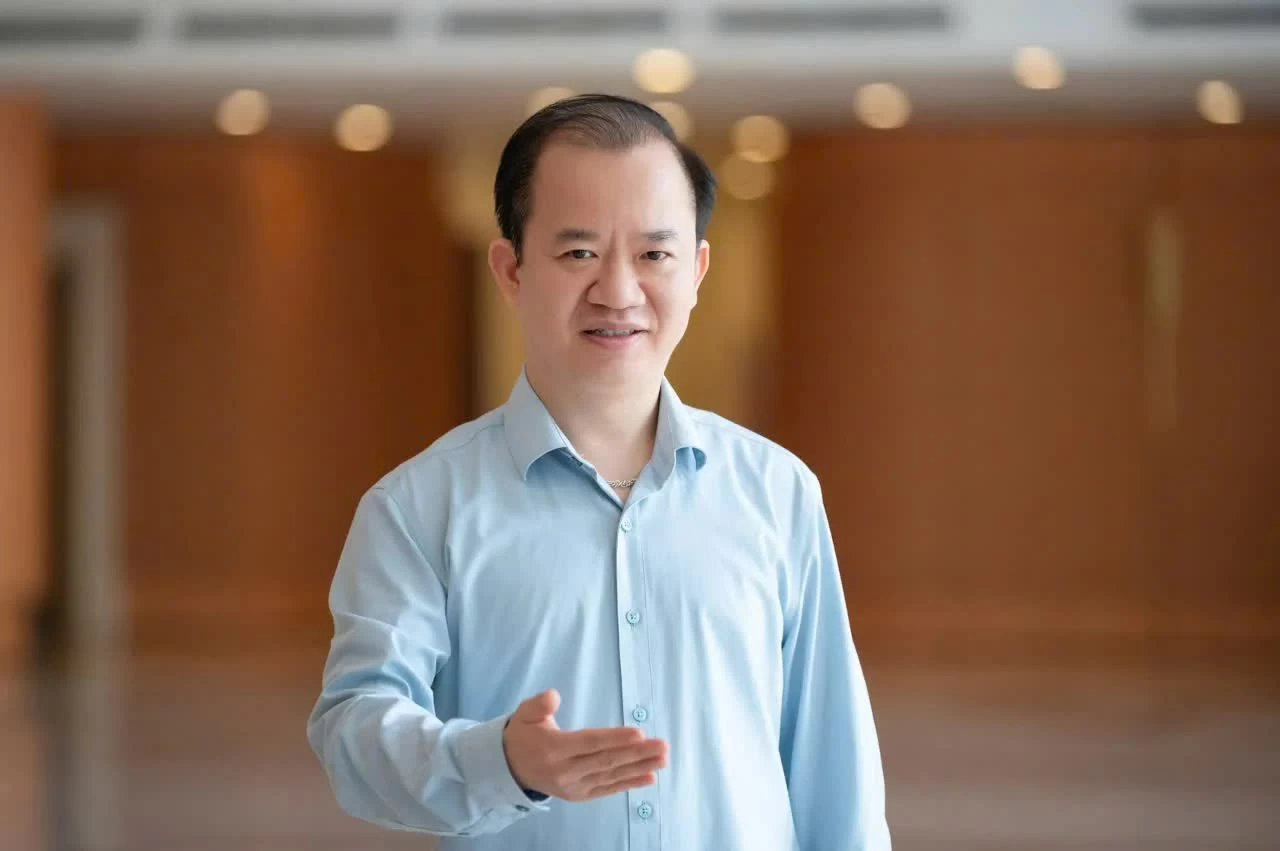 |
| National Assembly Delegate Bui Hoai Son. |
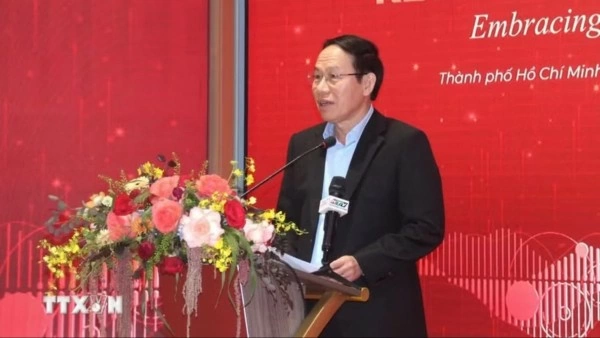
Recently, cultural diplomacy has affirmed its role as one of the three pillars of modern Vietnamese diplomacy, contributing to spreading the image of a peaceful, rich in identity, dynamic, and trustworthy Vietnam on the international stage. In an exchange with the newspaper The gioi va Viet Nam, National Assembly Delegate Bui Hoai Son, a specialized member of the National Assembly's Committee on Culture and Society, shared his views on the contributions of cultural diplomacy in enhancing the nation's position and soft power. He also proposed innovative solutions to make culture a true resource for the country's development in the new era.
Building soft power from Vietnamese identity
In implementing the Party's strategic resolutions on national development and international integration, how do you assess the contributions of the Foreign Affairs sector in promoting its pioneering role in diplomacy?
One of the most prominent contributions of the Foreign Affairs sector in recent times is gradually affirming its pioneering role, paving the way, creating a peaceful and stable environment, and mobilizing external resources for the country's development.
In a world full of upheavals, increasing strategic competition, complex conflict hotspots, and declining international trust, Vietnamese diplomacy has demonstrated resilience, proactivity, flexibility, and consistency. We remain steadfast in independence, self-reliance, national interests, while actively integrating, multilateralizing, and diversifying relationships, thereby enhancing Vietnam's position and prestige on the international stage.
Notably, political diplomacy, economic diplomacy, and cultural diplomacy are increasingly being implemented in a synchronized manner, complementing each other. Political diplomacy builds trust and relationship frameworks; economic diplomacy transforms that trust into trade, investment, technology, and development opportunities; cultural diplomacy creates emotional depth, understanding, and sustainability of relationships.
In other words, if political diplomacy opens the door, economic diplomacy creates resource flows, cultural diplomacy builds bridges from heart to heart. This combination helps diplomacy not only manage relationships between nations but also directly serve the people, businesses, localities, and the long-term development goals of the country. This is also a clear manifestation of a comprehensive, modern diplomacy, rich in Vietnamese identity: Steadfast in principles, flexible in methods, sincere in interactions, and always oriented towards peace, cooperation, and development.
Cultural diplomacy is identified as one of the three pillars of modern Vietnamese diplomacy. In your opinion, how has this field contributed to enhancing the nation's position, soft power, and image, thereby creating additional resources to achieve the country's development goals in the new phase?
Recently, cultural diplomacy has played a crucial role in making the world understand Vietnam more fully, deeply, and favorably. Vietnam is not only known as a nation that bravely fought for independence but is increasingly recognized as a peaceful, dynamic, rich in identity, responsible, and trustworthy country.
Through promoting heritage, art, cuisine, the Vietnamese language, peace ideology, humanitarian traditions, and the image of the Vietnamese people, cultural diplomacy has created a very valuable "capital of goodwill". This is a type of capital that is not easily measurable by immediate figures but has a long-term impact on political relations, economic cooperation, tourism attraction, investment, and people-to-people exchanges.
Successes in lobbying UNESCO to recognize Vietnam's heritage, figures, and documents are not only an honor for the nation's history and culture. More importantly, it is a process of integrating Vietnamese values into the common flow of human civilization, while also creating additional motivation to preserve heritage, develop tourism, and build cultural industry products.
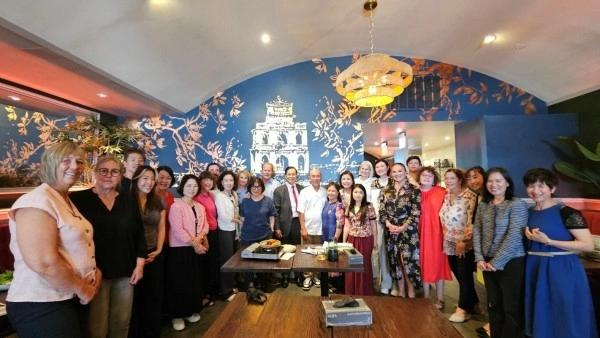
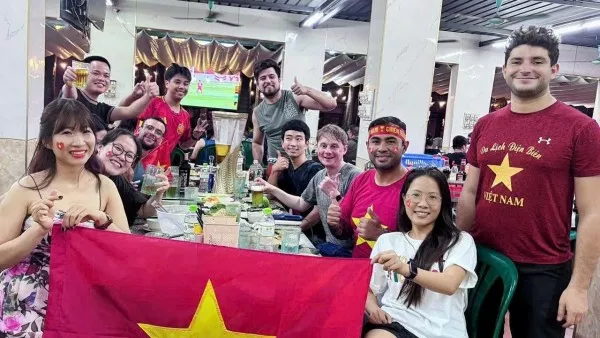
Cultural diplomacy has also contributed to spreading Vietnam's image through high-level foreign affairs events, cultural days, cultural weeks, festivals, art programs, and exchange activities abroad. Every dish, ao dai, folk tune, film, or story about the Vietnamese people can become an "ambassador" of the country.
In the new era, a nation's strength is not only in its economic scale or defense potential but also in its ability to create attraction, trust, and desire for cooperation. Cultural diplomacy is an important path to transform the depth of national culture into soft power, thereby creating new resources for development.
Pioneering the path for national development
In the context of increasing competition in soft power worldwide, what solutions do you think Vietnam needs to effectively promote cultural diplomacy, making Vietnamese cultural values, heritage, and people an advantage in attracting investment, tourism, international cooperation, and enhancing the country's influence?
Firstly, there needs to be a strong shift from the mindset of "introducing culture" to "creating national attraction". Cultural diplomacy cannot stop at a few performances, exhibitions, or cultural weeks that are time-bound. More importantly, it must create stories, products, and cultural experiences that can touch the emotions of the international public.
To achieve this, Vietnam needs to clearly identify the core values that make up the national brand. These could be a Vietnam that loves peace, is rich in compassion, has a resilient cultural vitality, friendly people, creativity, and always knows how to overcome difficulties. These values must be consistently expressed through media, tourism, cinema, music, fashion, cuisine, design, video games, and creative products.
Secondly, cultural diplomacy needs to be more closely linked with the cultural industry. Heritage only truly becomes a resource when it is transformed into products, services, brands, and experiences of value. We need to encourage businesses, artists, designers, filmmakers, and technology companies to participate in telling the Vietnamese story in a modern language, suitable for global tastes.
Thirdly, there must be stronger investment in international communication capabilities. In the digital environment, an attractive cultural product can cross borders quickly, but an unprofessional message can easily be overshadowed. Therefore, Vietnam needs a team of experts knowledgeable in culture, foreign languages, technology, markets, and the psychology of the international public.
Finally, each locality needs to proactively discover and promote its unique cultural advantages. National cultural diplomacy is only truly rich when it is created from thousands of vibrant stories of Vietnamese lands, communities, heritage, and people.
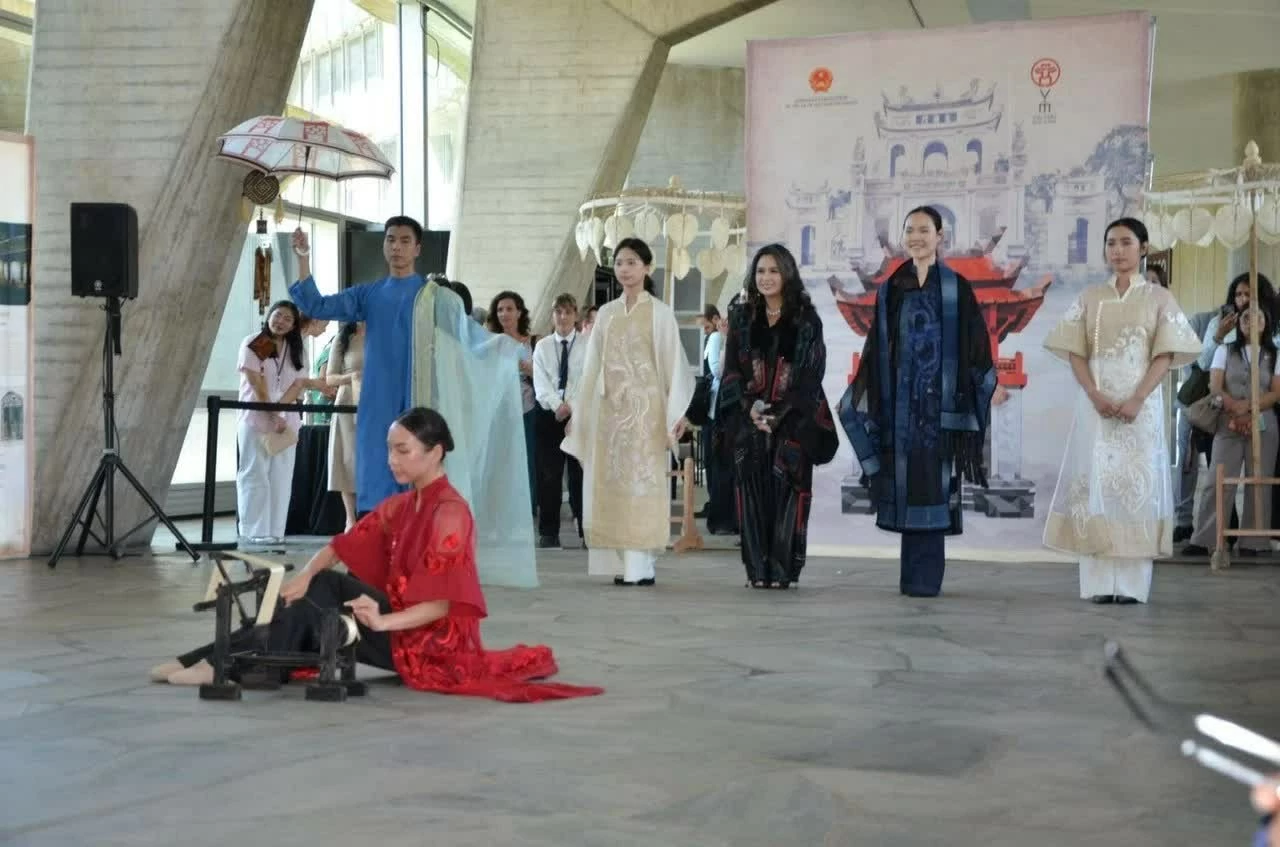 |
| The artistic program "Dao hoc" is unique, introducing the depth of Vietnamese culture through exhibitions, music, ao dai, and performance art. (Photo: Ministry of Foreign Affairs) |
The Party's resolution identifies foreign affairs as a crucial, regular task. In your opinion, how should the Foreign Affairs sector innovate its mindset and approach to cultural diplomacy to continue its pioneering role in the new era?
I believe that, first and foremost, it is essential to recognize that cultural diplomacy is not only the work of diplomatic agencies or cultural management agencies but is the common cause of the entire political system, the business community, intellectuals, artists, and every Vietnamese citizen.
In the digital age, the boundaries between domestic and foreign affairs, between domestic and international media are increasingly blurred. A beautiful act by a citizen, a successful creative product, or a positive story on social media can all contribute to building the national image. Conversely, misleading information or irresponsible behavior can also affect the country's reputation.
Therefore, cultural diplomacy needs to shift from a model primarily organized by the State to a model where the State guides, creates, and connects; businesses, artists, the creative community, and citizens directly participate. The Foreign Affairs sector must act as a hub connecting Vietnamese cultural values with international needs, markets, and audiences.
Digital transformation also requires us to innovate storytelling methods. It is not just about digitizing for storage, but digitizing for education, creativity, dissemination, and creating economic value. Vietnamese heritage, art, and history need to be expressed through films, online platforms, digital museums, virtual reality, video games, and new content forms.
Additionally, there is a need to build a data system and mechanism to evaluate the effectiveness of cultural diplomacy. Effectiveness is not only measured by the number of events but must be reflected in the level of recognition of the Vietnamese image, the number of tourists, investment opportunities, the export value of cultural products, and the ability to expand international cooperation. Ultimately, innovating the mindset of cultural diplomacy is about shifting from organizing activities to creating influence; from one-way information transmission to dialogue, interaction, and co-creation with the world.
As a cultural researcher and National Assembly delegate, what are your expectations for the coordination between the Foreign Affairs sector and other ministries, localities, and the creative community to build a long-term cultural diplomacy strategy that contributes to realizing the country's development aspirations by 2030 and the vision for 2045?
I hope we will build a truly long-term, synchronized, focused cultural diplomacy strategy that can mobilize the strength of the entire society. Cultural diplomacy should not be a collection of separate activities but must become an integral part of the national development strategy, national brand strategy, and cultural industry development strategy.
The Foreign Affairs sector needs to promote its role in coordinating, providing information about localities, markets, and international audiences; the Ministry of Culture, Sports, and Tourism ensures professional depth and value orientation; other ministries and sectors create conditions for institutions, trade, technology, and investment; localities provide unique stories, heritage, and products; businesses and the creative community transform those values into products capable of conquering the market.
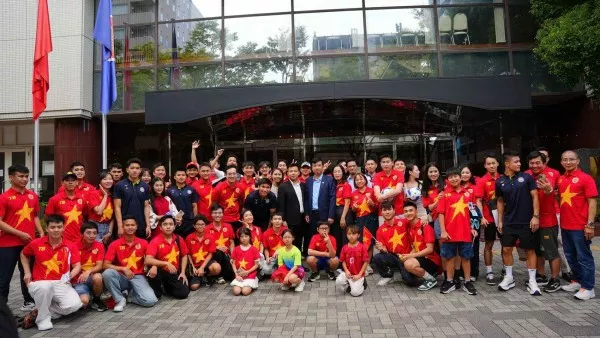
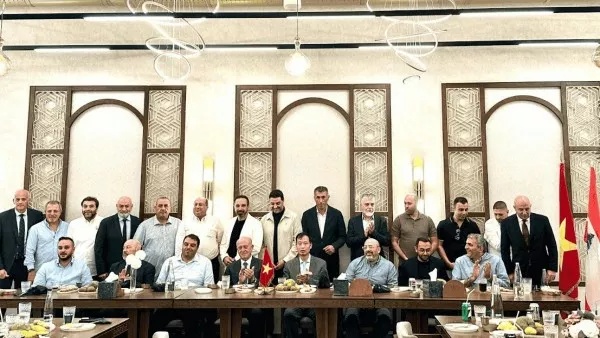
I particularly hope to establish a regular cooperation mechanism between diplomatic agencies, localities, universities, research institutes, technology companies, film studios, artists, designers, and overseas Vietnamese. The overseas Vietnamese community is not only a bridge of friendship but also a source of knowledge, networks, and creative capacity crucial for bringing Vietnamese culture closer to the world.
The strategy needs to identify a number of priority markets, products, and symbols; have corresponding resources; have a mechanism for public-private partnerships and encourage creativity. Especially, there needs to be investment in people, as cultural diplomacy requires personnel with both political courage and cultural understanding, fluent in foreign languages, technology, and international communication.
By 2030 and towards 2045, our aspiration is not only for a prosperous Vietnam but also for a Vietnam with identity, attractiveness, and the ability to contribute positive values to humanity. Cultural diplomacy must help the world not only know but also love, trust, choose, and want to accompany Vietnam. That is how culture transforms into national strength, and diplomacy truly becomes the pioneering force paving the way for the country's development in the new era.