


AEF 2026: Businesses call for clearer policies to advance biotechnology and digital pharmaceuticals
WVR - Vietnamese technology businesses have called for stronger support for biomedical research, standardised data and better system integration to drive innovation and improve efficiency across economic sectors.
Latest
On the occasion of the Autumn Economic Forum 2026 (AEF 2026), The World and Vietnam Report spoke with Vietnamese businesses about ways to advance biotechnology and address bottlenecks in the digitalisation of the pharmaceutical sector.
Unlocking the potential of biotechnology
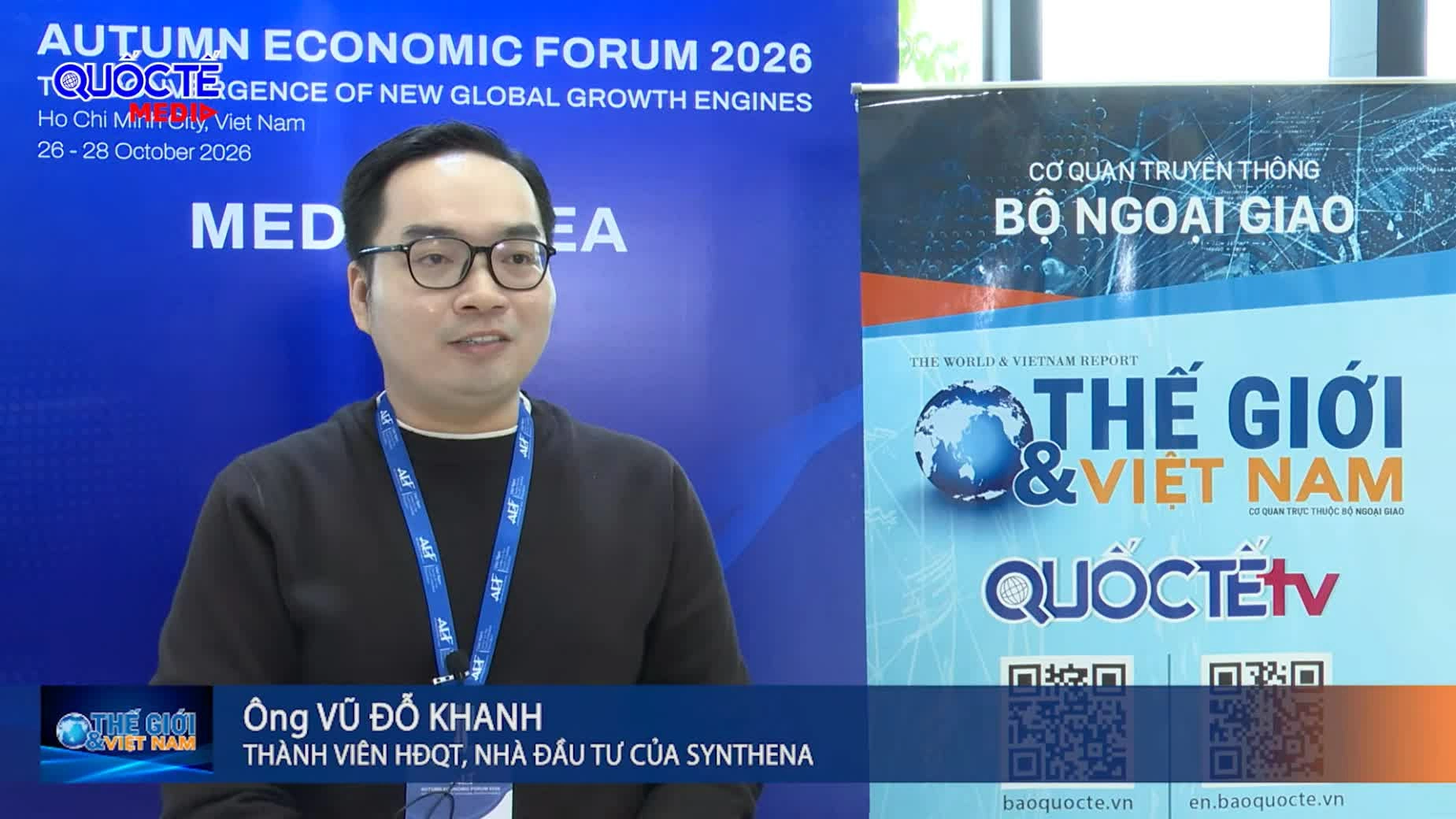 |
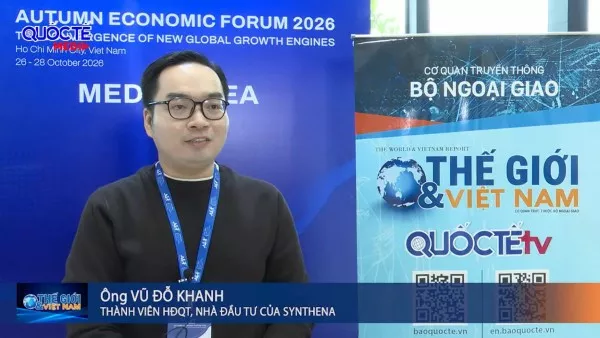
| Mr. Vu Do Khanh, Member of the Board of Directors and investor at Synthena, shared his views on the potential for biotechnology development in Vietnam. (Photo: Thanh Long) |
According to Mr. Vu Do Khanh, people should be placed at the centre of economic development strategies and urban planning.
From this perspective, technology should focus on improving quality of life, particularly by enhancing healthcare.
With its focus on biotechnology, Synthena hopes to help open up new approaches in a scientific field with considerable untapped potential, while encouraging Vietnamese businesses to invest in specialised research.
Beyond research capabilities, the Synthena investor highlighted the importance of identity in technology product development.
For example, one of the key ingredients used in the company’s cosmetics technology is extracted from lotus seeds and flowers, a plant deeply rooted in Vietnamese cultural life.
He said combining indigenous knowledge with research capabilities could produce distinctive products while meeting market demand.
To support the development of biotechnology, the Synthena board member said the State should continue to improve support mechanisms for businesses, alongside tax incentives and measures to facilitate the establishment of companies and branches.
In particular, biological testing and medical research require policies tailored to their specific professional needs.
Expanding cooperation between private businesses and universities would also help research ideas undergo validation and gradually develop into practical products.
Building a digital foundation for the pharmaceutical sector
 |
| Mr. Vu Van Thanh, Chairman of the Board of Directors and General Director of Sphacy JSC, proposed solutions to address data bottlenecks and accelerate the digitalisation of the pharmaceutical sector. (Photo: Thanh Long) |
Drawing on his experience in the technology business, Mr. Vu Van Thanh, Chairman of the Board of Directors and General Director of Sphacy, said Vietnam’s pharmaceutical market was valued at approximately VND214 trillion in 2025, with more than 8,000 distributors and around 95,000 retail pharmacies.
However, the market’s scale also highlights the urgent need to standardise management processes and improve data connectivity.
According to the figures cited, although the national prescription system had connected more than 218 million prescriptions by mid-2025, only around 2% of prescriptions were issued in compliance with the proper procedures.
Most prescriptions were still sent to pharmacies in paper form or as images. Meanwhile, medicine batch-number data were not managed consistently, creating obstacles to traceability and the control of counterfeit medicines.
Drawing on experience in implementing the Facey platform, the Sphacy general director said data standardisation was fundamental to improving operational efficiency.
A unified dataset could meet both the reporting requirements of the national pharmaceutical system and submissions to tax authorities, reducing duplicate work for pharmacies.
To address data fragmentation, Mr. Vu Van Thanh proposed the early introduction of a stable national identification code for pharmacies and pharmaceutical businesses.
According to a Facey representative, the code should remain consistent for at least three years, allowing businesses to plan investment and develop their systems with greater certainty.
At the same time, requirements to protect sensitive health data under the Law on Personal Data Protection must go hand in hand with efforts to connect and use data.
The orientations set out in Resolution No. 57-NQ/TW on the development of science and technology, innovation, and national digital transformation; Resolution No. 68-NQ/TW on private-sector development; and the amended Law on Pharmacy also provide an important basis for further improving the environment for technology development.
Against this backdrop, standardising application programming interfaces (APIs) and establishing a clear, criteria-based regulatory sandbox would help create greater scope for business innovation.
Viewed across biotechnology and pharmaceuticals, the development of domestic technology requires close coordination between research capacity, practical application and coherent policy frameworks.
As barriers related to testing, data, and system integration are gradually removed, Vietnamese businesses will be better positioned to put technological solutions into practical use, improve the quality of life, and strengthen their competitiveness in regional and international markets.