





AEF 2026: International Experts Suggest Ways to Enhance Vietnam's Competitiveness in the Digital Era
WVR - To sustain its growth momentum, Vietnam needs to move from contract manufacturing and assembly towards higher value-added production, while preparing its workforce and policy environment for the age of artificial intelligence (AI).
Latest
On the occasion of the Autumn Economic Forum 2026 (AEF 2026), The World and Vietnam Report spoke with international experts about priorities for industrial development, improving workforce quality and promoting AI adoption.
Their views underscored the need to align policies with practical requirements and strengthen coordination among businesses, training institutions and government agencies to lay the foundations for long-term growth.
Increasing domestic value added and strengthening Vietnamese businesses
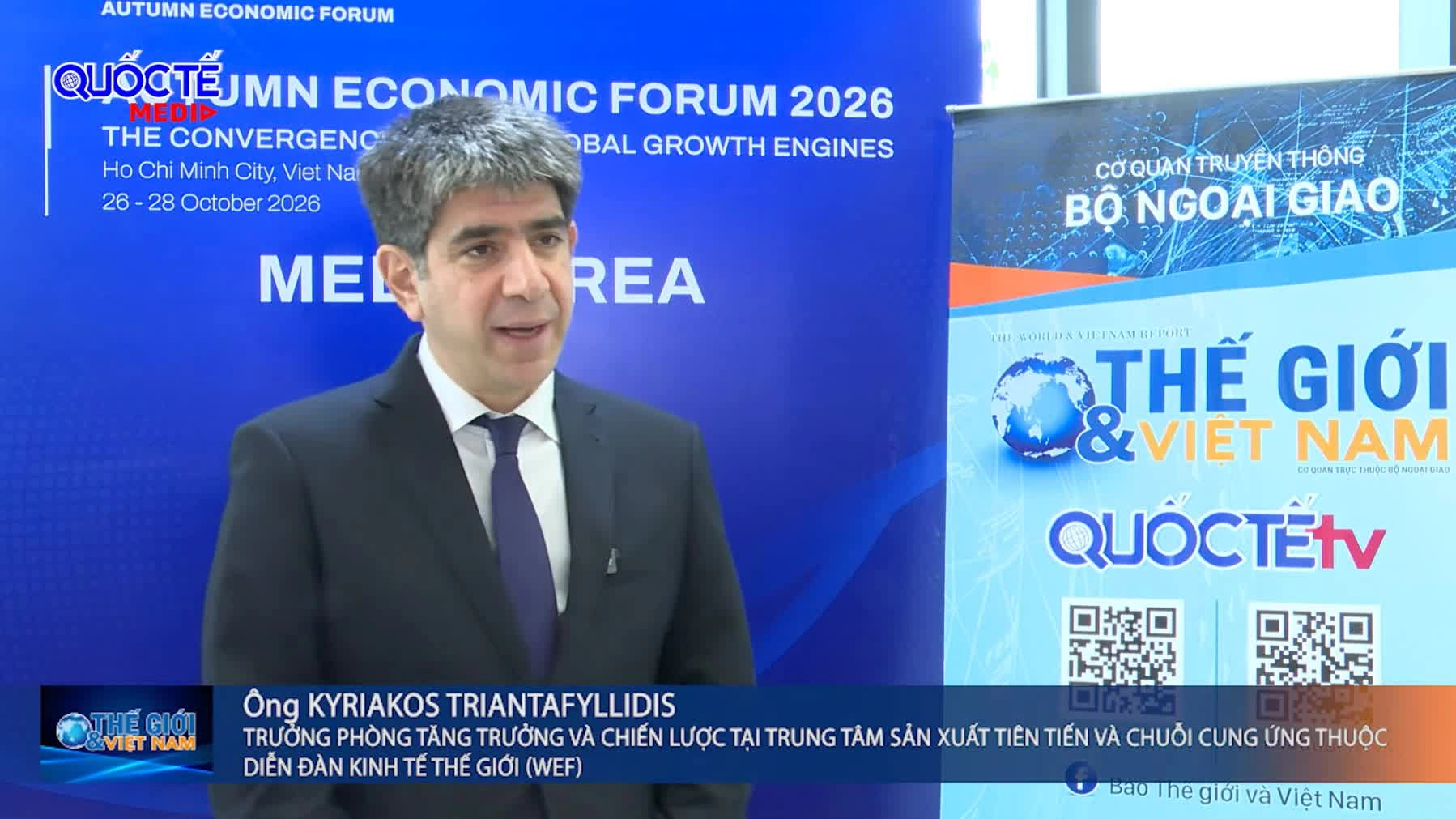 |
| Mr. Kyriakos Triantafyllidis, Head of Growth and Strategy at the World Economic Forum’s (WEF) Centre for Advanced Manufacturing and Supply Chains, highlighted the need to increase manufacturing value added and strengthen the capabilities of Vietnamese businesses. (Photo: Thanh Long) |
Mr. Kyriakos Triantafyllidis, Head of Growth and Strategy at the World Economic Forum’s (WEF) Centre for Advanced Manufacturing and Supply Chains, said manufacturing and assembly had made important contributions to Vietnam’s economic success in recent years.
However, to move up the value chain, Vietnam needs to expand into activities with higher value added, particularly engineering and product design.
According to the WEF representative, this transition requires the development of a manufacturing ecosystem involving multinational corporations, domestic suppliers and the government.
Appropriate policies should provide the foundation for Vietnamese businesses to strengthen their capabilities and participate more deeply in higher value-added activities.
For small and medium-sized enterprises (SMEs), Mr. Kyriakos Triantafyllidis stressed the importance of developing skills and establishing the capabilities needed to meet the requirements of multinational corporations.
Businesses, he said, should begin by identifying the problems and challenges they need to address, rather than pursuing technology in the expectation that it will automatically deliver results.
Alongside their internal capabilities, businesses also need to provide transparent information about their production activities and supply chains.
When multinational corporations gain clearer visibility into suppliers’ operations through data and traceability, opportunities for domestic businesses to connect with international supply chains can improve.
Regarding cooperation between the WEF and Vietnam, Mr. Kyriakos Triantafyllidis said the two sides had worked closely together for around three years, particularly through the Centre for the Fourth Industrial Revolution Vietnam (C4IR Vietnam).
As part of this cooperation, the V-Smart smart manufacturing initiative was piloted with 70 SMEs to assess their digital maturity, evaluate talent development capabilities and identify gaps that needed to be addressed.
Aligning workforce skills development with labour market demand
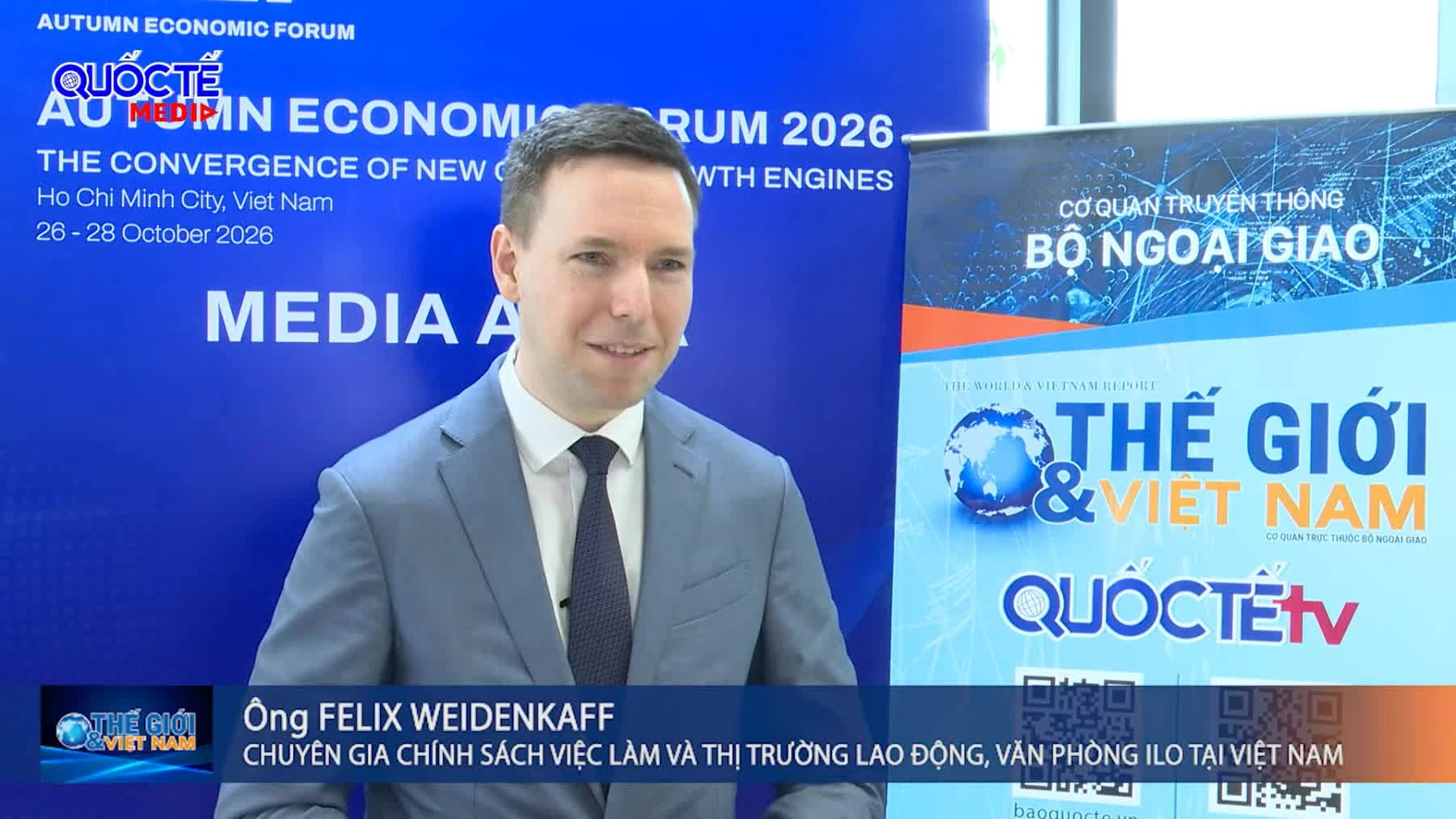 |
| Mr. Felix Weidenkaff, Employment and Labour Market Policy Specialist at the International Labour Organization (ILO) Office in Vietnam, highlighted the need to align workforce skills development with actual labour market demand. (Photo: Thanh Long) |
Mr. Felix Weidenkaff, Employment and Labour Market Policy Specialist at the International Labour Organization (ILO) Office in Vietnam, observed that decades of impressive economic growth had created new employment opportunities and development prospects for Vietnamese workers and businesses.
However, digital transformation, green growth, globalisation and an ageing population are placing new demands on the labour market.
Against this backdrop, the ILO expert identified three important priorities for skills development in the coming years.
First, Vietnam needs to strengthen its existing policy framework, with priority given to improving the implementation of regulations on vocational education and employment. Mr. Felix Weidenkaff also highlighted the importance of effectively implementing mechanisms such as enterprise human resource training funds.
Second, skills development needs to be more closely aligned with actual labour market demand. According to the ILO representative, stronger links are needed among employers, workers, training institutions and economic sectors, alongside regular feedback mechanisms and labour market information systems. Sectoral skills bodies or councils could enable industries such as electronics and textiles and garments to jointly identify the skills and occupations they will need over the next one, two or three years.
Third, young people need clearer information about emerging career opportunities arising from digital transformation and green growth. Mr. Felix Weidenkaff stressed that education and training institutions play an important role in helping young people understand the digital and green jobs available in the labour market and prepare the skills required to meet future demand.
Building a flexible AI policy framework
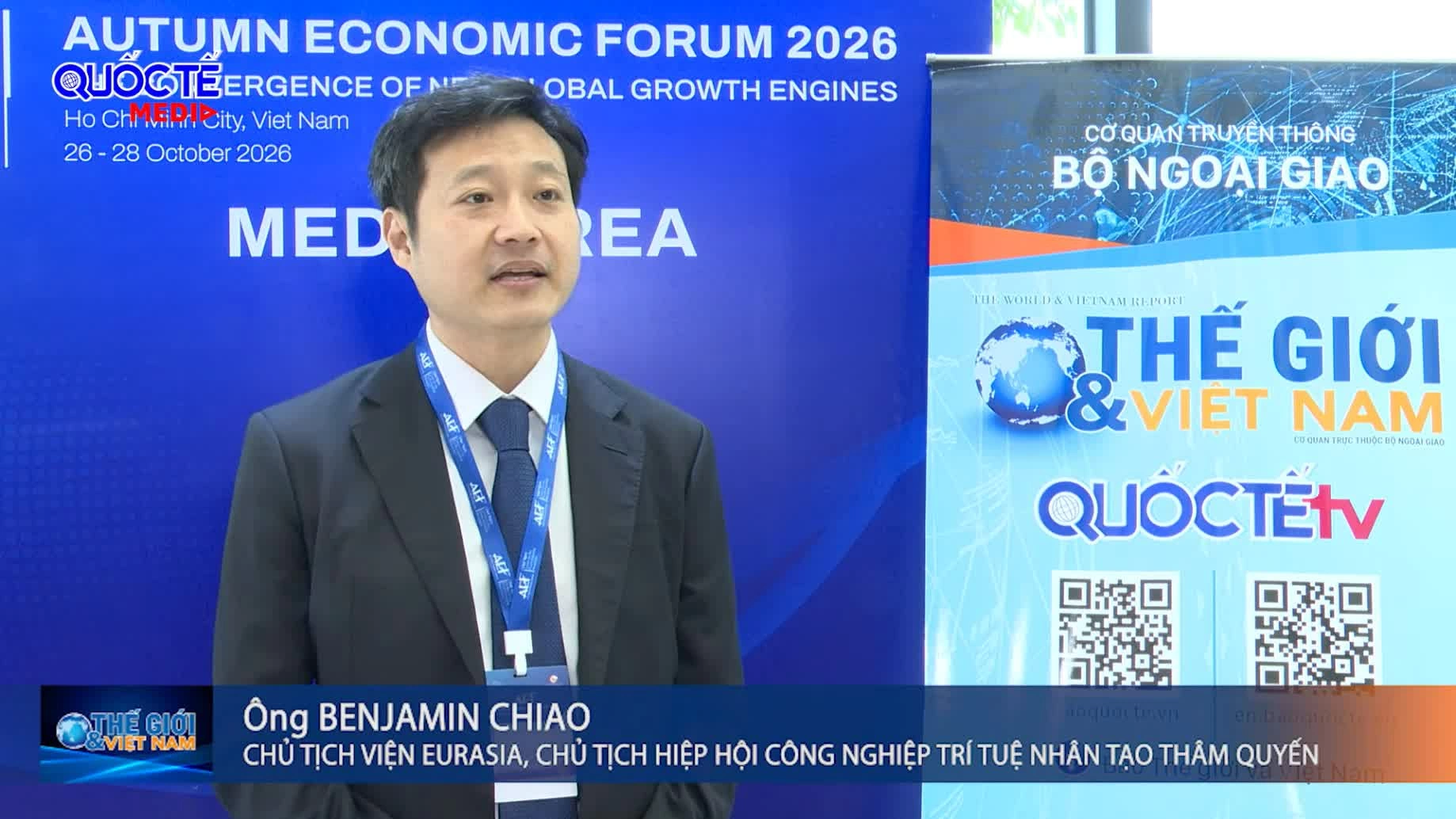 |
| Mr. Benjamin Chiao, Chairman of the Eurasia Institute and Chairman of the Shenzhen Artificial Intelligence Industry Association (China), shared his views on AI policy and promoting technology adoption in Vietnam. (Photo: Thanh Long) |
Mr. Benjamin Chiao, Chairman of the Eurasia Institute and Chairman of the Shenzhen Artificial Intelligence Industry Association (China), said Vietnam had made significant progress in AI.
To harness the technology’s potential to support economic growth, Vietnam needs to develop appropriate policies while creating a favourable environment for international cooperation.
According to the Eurasia Institute chairman, Vietnam does not necessarily need to develop the most advanced AI models itself. Instead, it should focus on building a reliable and secure environment capable of supporting cooperation with a range of partners.
Mr. Benjamin Chiao also emphasised the importance of a technology-neutral approach, enabling Vietnam to work with different platforms and technological systems.
Alongside policy considerations, the AI expert noted that AI requires substantial electricity, particularly to power data centres.
Vietnam therefore needs appropriate policies to attract investment in electricity infrastructure while balancing energy demand between industrial production and AI development.
On promoting AI adoption among businesses, Mr. Benjamin Chiao said the government had an important role to play in providing infrastructure and foundational conditions that serve the common good.
However, not every AI capability needs to be developed as public infrastructure.
Instead, the Eurasia Institute chairman pointed to China’s experience with voucher programmes designed to encourage individuals and small businesses to use AI services.
Mr. Benjamin Chiao explained that a token is a unit used to measure the amount of data processed or consumed when working with AI models.
Through voucher schemes, users can choose services that suit their needs, thereby encouraging competition among providers.
According to the Eurasia Institute expert, this policy approach could help the government use its support more effectively while encouraging individuals and businesses to take the initiative in selecting suitable AI solutions.