


Can Tho realizes Resolution 80 through unique cultural festivals
WVR - From the Southern Folk Cake Festival, Oc Om Boc - Ngo Boat Racing to the Water Culture Festival, Can Tho is tapping into the cultural sediments of the Tay Do region to create distinctive tourism products.
Latest
Behind the series of large-scale events lies the requirement to preserve heritage, promote the community's role, and transform cultural resources into sustainable development drivers, in line with the spirit of Resolution 80-NQ/TW of the Politburo.
Bringing the spirit of Resolution 80 into cultural life
Resolution No. 80-NQ/TW dated January 7, 2026, of the Politburo on the development of Vietnamese culture identifies culture and people as the foundation, intrinsic resources, drivers, and regulatory systems for rapid and sustainable development.
This spirit requires localities not only to preserve heritage, organize artistic activities, or meet the public's enjoyment needs but also to view culture as a resource that creates economic value, fosters creativity, and enhances competitiveness.
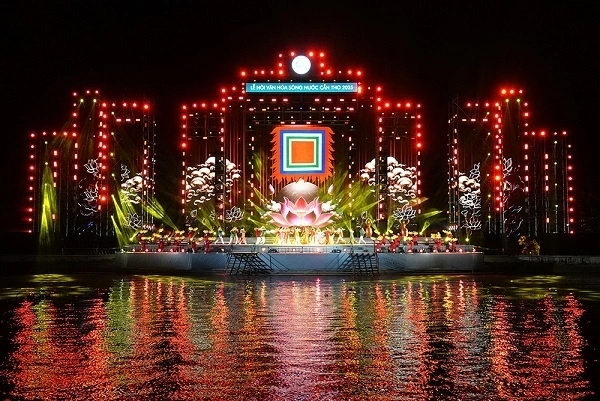 |
| The second Can Tho Water Culture Festival will be held with the theme “Can Tho – Harmony of Waterways”. (Photo: Duy Khoi) |
As the center of the Mekong Delta, Can Tho has ample material to concretize this orientation. After administrative unit rearrangement, the city gathers diverse cultural layers: riverine urban civilization, orchard life, river trade customs, and the heritage of the Kinh, Khmer, and Hoa communities. These values are present in architecture, beliefs, festivals, performing arts, cuisine, and lifestyle, creating the unique identity of the Tay Do region.
Program No. 24-CTr/TU dated July 8, 2026, and Project No. 03-DA/TU dated April 29, 2026, on developing cultural industries and building the Can Tho cultural brand in the Mekong Delta region reflect the orientation of linking preservation with value promotion, integrating culture deeper into socio-economic life.
According to the orientation of Project No. 03, Can Tho aims to become the cultural industry center of the region, targeting a contribution of about 7% of the city's GRDP by 2030 and 9% by 2045, while establishing at least three distinctive cultural brands.
On October 6, 2026, the Can Tho Party Committee continued to require party committees, agencies, and units to focus on implementing Resolution 80; reviewing plans, determining progress, products, and responsibilities, while addressing institutional, resource, market, human resource, and digital transformation bottlenecks. This is the basis for festivals to be placed within a long-term orientation, rather than being organized individually.
Telling the story of riverine culture
One of the approaches that Can Tho emphasizes is organizing cultural, tourism, and culinary events throughout the year to meet the community's needs and attract tourists. The appeal of festivals lies not only in the stage, the number of stalls, or the scale of attendees but in the cultural story told through the activities.
The 13th Southern Folk Cake Festival in 2026, held from April 26 to May 1 at Binh Thuy Ward Square, is a highlight. The event features spaces introducing folk cakes, regional specialties, cuisine, OCOP products, and promoting tourism and trade services. The cakes, made from local ingredients through the hands and experience of artisans, are not merely food but also preserve folk knowledge, farming practices, and seasonal interactions with produce.
The cultural, tourism, and culinary weeks continue to exploit this advantage. The Can Tho City Cultural - Tourism Week 2026, themed “Tay Do - Radiant Summer Colors”, held from June 18-21 at Ninh Kieu Wharf, showcases photo exhibitions, cuisine, and local products.
The Culinary Week themed “Tay Do Cuisine - Essence of the Riverine Region” features about 100 stalls, recreating rural markets, street vendors, introducing specialties, OCOP products, and tourism services.
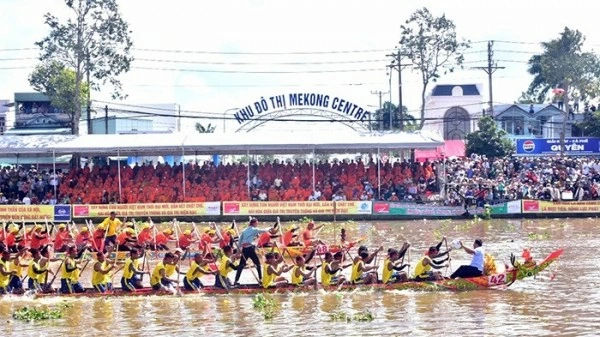
In the year-end event series, the Oc Om Boc - Ngo Boat Racing Festival holds a special position as it is an important traditional cultural activity of the Southern Khmer community.
The festival is associated with beliefs, agricultural life, and community joy after the harvest season; Ngo boat racing demonstrates solidarity, collective strength, and the identity of the phum, soc. The drumbeats, rowing rhythms, and colorful costumes create a distinctive festive atmosphere, attracting locals and tourists.
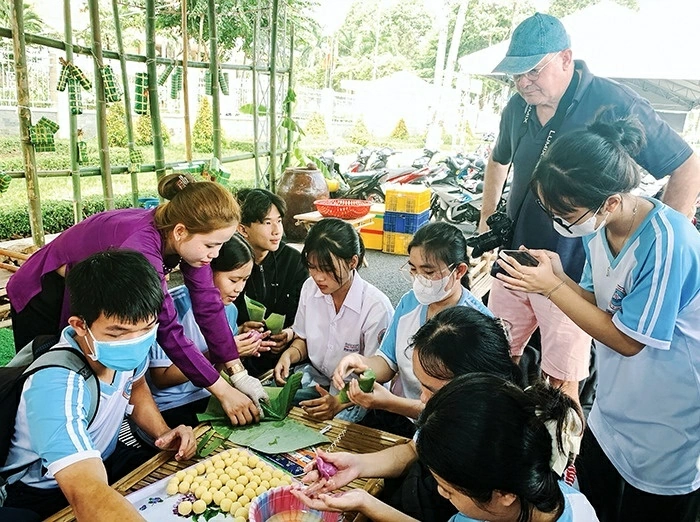 |
| The 13th Southern Folk Cake Festival in 2026, held from April 26 to May 1 at Binh Thuy Ward Square. (Photo: Kieu Mai) |
According to the city's plan, the 2026 program is organized in conjunction with activities celebrating Vietnam Culture Day on November 24.
The opening ceremony is scheduled for the evening of November 22 at Bach Dang Square, along with cultural, artistic, sports, and tourism activities. In November, the city also plans to organize the 3rd Southern Khmer Du Ke Theater Art Festival, exhibitions on culture, heritage, and programs celebrating Vietnam Heritage Day on November 23.
Traditional festivals need to place the Khmer community at the center. Rituals, arts, and activities must be respected within the community's cultural space, not simplified into illustrative performances for visitors. The participation of Khmer temples, artisans, Ngo boat teams, and local residents is the foundation for the festival to retain its vitality.
An event expected to create another mark is the second Can Tho Water Culture Festival, scheduled from December 30, 2026, to January 4, 2027, with the theme “Can Tho – Harmony of Waterways”.
According to the announced plan, the festival opens at Khai Luong Canal, Cai Khe Ward. Planned activities include displaying agricultural tools, fishing gear; introducing folk cakes, fruits, and specialties on boats; performing and competing in water sports such as sailing, SUP boards, model boats, mini Ngo boats, and composite shell boats.
Building a sustainable cultural brand
The series of major festivals helps Can Tho refresh its image as a destination, but the challenge is to create a unique mark and maintain value after the event concludes.
A vibrant festival cannot be measured solely by the number of visitors, stalls, or media effects. It is essential to consider the ability to preserve heritage, quality of experience, length of stay, spending levels, livelihood opportunities, and the satisfaction of the local community.
The cultural industry orientation requires connecting cultural tourism, cuisine, performing arts, crafts, and creative services. Festivals can be a starting point to form year-round products such as tours exploring Khmer culture, experiencing folk cake making, discovering floating markets, riverine art programs, and locally branded souvenirs. With investment in content and quality, these products can expand the economic value of heritage.
Each festival needs its own identity and story. The Southern Folk Cake Festival should highlight culinary knowledge and the role of artisans; Oc Om Boc - Ngo Boat Racing should place Khmer culture and the community at the center; the Water Culture Festival should depict the relationship between people and rivers, between traditional livelihoods and environmental protection requirements. Avoiding content duplication, excessive scale, or over-staging will help events retain cultural depth.
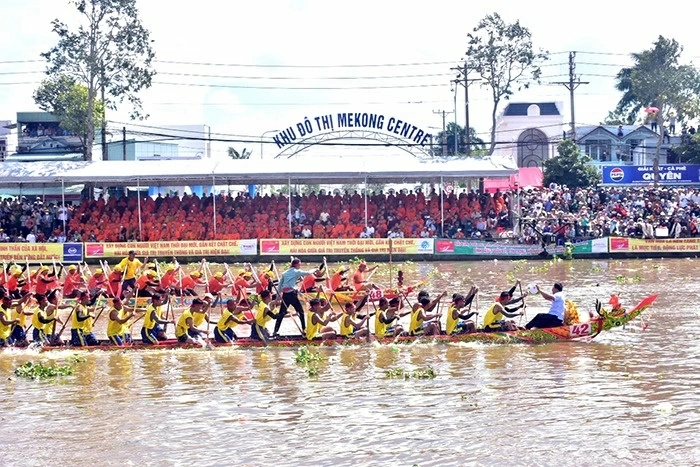 |
| The Oc Om Boc - Ngo Boat Racing Festival places Khmer culture and the community at the center. (Photo: Thach Pich) |
Plan No. 438/KH-UBND dated September 18, 2026, of the city's People's Committee on organizing Vietnam Culture Day for the period 2026-2030 emphasizes activities introducing, performing, and experiencing heritage, arts, festivals, folk games, cuisine, and crafts; while encouraging heritage preservation models linked to community tourism. This orientation is significant when people are not only beneficiaries but also directly involved in creating, preserving, and passing on cultural values.
Social resources need to be mobilized transparently, balancing benefits among the State, businesses, and the community. Local businesses, garden owners, artisans, Ngo boat teams, and tourism operators should have substantial participation opportunities and reasonably benefit from festival activities. This is the condition for heritage to continue to exist in life, to have practitioners, and to have a succeeding generation to continue the craft.
With its folk cuisine, Ngo boat drum rhythm, floating market space, and riverbank activities, Can Tho has rich material to build a contemporary cultural identity.
Realizing Resolution 80 is not about organizing numerous events, but about the ability to turn policies into tangible changes. Here, heritage is preserved, people have more opportunities for creativity and livelihoods, tourists have profound experiences, and culture becomes a sustainable development resource.
When the community truly is the subject and benefits are shared, festivals can transcend the framework of annual events to become cultural brands of Can Tho and the Mekong Delta region.