






Decree on Digital Cultural Infrastructure opens new development space for the cultural sector
WVR - On July 9, the Government issued Decree No. 277/2026/ND-CP on Digital Cultural Infrastructure. This strategic turning point lays the initial foundation for the development of digital cultural infrastructure, officially “giving birth” to many important contents for the development and state management of culture.
Latest
While transportation infrastructure connects people and goods, and digital infrastructure connects data and knowledge, digital cultural infrastructure is the specialized infrastructure that connects national identity with creativity, economy, and national soft power.
The decree details the development of digital cultural infrastructure, including three basic components: (i) Digital infrastructure; (ii) Digital cultural data infrastructure; (iii) Digital platforms, systems, and tools serving the public interest. This infrastructure is not limited to core areas but will be shared and connected to promote synchronized development in both tourism and sports sectors.
The decree comprises 5 chapters and 20 articles, applicable to all agencies, organizations, and individuals, both domestic and international, participating in the digital cultural ecosystem in Vietnam. Notably, the document embodies a spirit of thorough reform by eliminating barriers and not introducing any cumbersome administrative procedures for citizens and businesses.
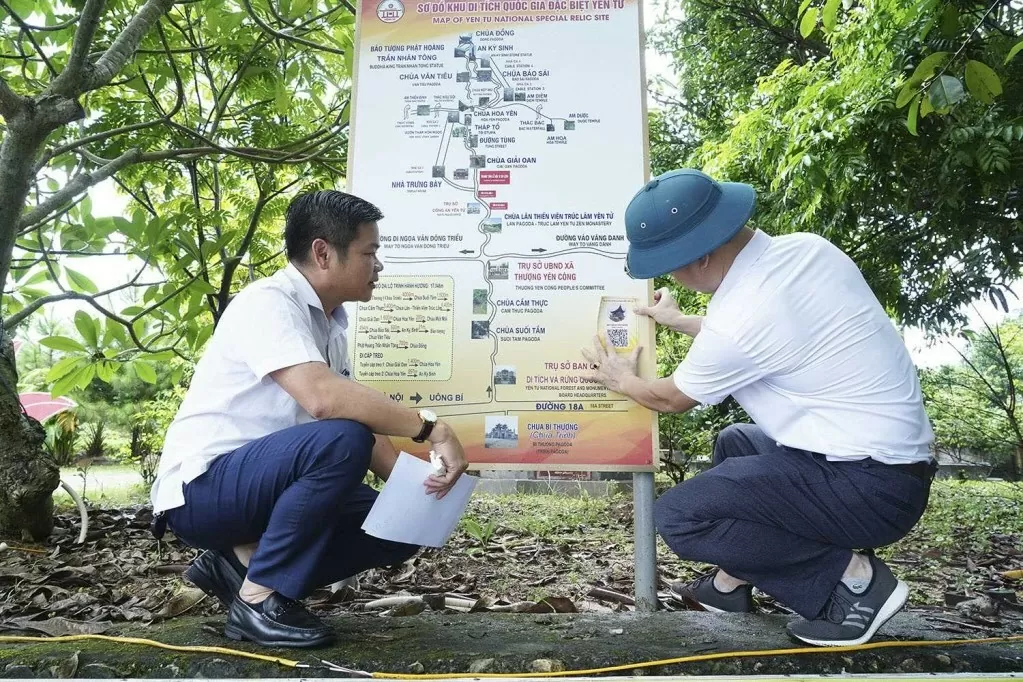 |
| Historical, cultural sites, and scenic spots in Quang Ninh have been digitized. |
Eight strategic transition steps
Instead of following the traditional path of dispersed physical infrastructure investment, the decree focuses on creating mechanisms to address 8 core issues through a data-driven governance model:
Preserving heritage in a rapidly changing context: Many cultural values face the risk of fading due to time, natural disasters, urbanization, and changes in social life. Digital cultural infrastructure helps: (i) Digitize artifacts, relics, documents, and performing arts; (ii) Store them long-term according to international standards; (iii) Restore them using AI, 3D, XR when artifacts are damaged; (iv) Create "Digital Twins" of heritage. Thus, cultural values are preserved even if the original artifacts are destroyed.
Expanding cultural access: Previously, people had to visit museums, libraries, and theaters. With digital cultural infrastructure, everyone can tour museums online; learn arts on digital platforms; watch high-quality performances; and access heritage information anywhere. Culture becomes a digital public service for all.
Providing raw materials for AI and the creative economy: In the AI era, data is the raw material. For AI to understand Vietnamese culture, there needs to be a repository of Vietnamese language data; heritage data; art data; festival data; music data; costume data; fine arts data, etc. Without cultural data infrastructure, AI will primarily learn from foreign data and struggle to reflect Vietnamese identity.
Promoting cultural industries: Films, video games, animations, music, design, advertising, publishing—all require cultural data. A robust digital cultural infrastructure will help businesses legally exploit data; reuse digital resources; reduce creative costs; and develop many new products. Thus, digital cultural infrastructure is akin to a highway for the cultural industry.
Building a national brand: Today, national strength lies not only in the economy but also in cultural appeal. Successful countries have digital ecosystems promoting culture: Republic of Korea with K-content; Japan with anime, manga; China with digital cultural platforms and games. For Vietnam to build a digital cultural brand, it needs strong infrastructure to connect data, content, and businesses. Digital cultural infrastructure is the foundation for developing Vietnam's digital cultural brand: VietCreative and VietGames.
Creating a transparent digital cultural market: Without infrastructure, it's challenging to determine copyrights; conduct digital asset transactions; share revenue; and protect artists and authors. Digital cultural infrastructure allows the formation of copyright databases; work identification; digital cultural asset trading platforms; and payment and benefit-sharing mechanisms. This is the foundation of the digital cultural economy.
Enhancing state management efficiency: Management agencies can monitor cultural activities in real-time; compile statistics on the cultural industry; assess policy impacts; analyze cultural consumption trends; and forecast market demand. Management shifts from "experience-based" to "data-driven governance".
Ensuring cultural sovereignty in digital space: The cyberspace is becoming a new cultural space. Without its own infrastructure, Vietnam's cultural data would reside on foreign platforms; Vietnamese content would struggle to be prioritized; foreign algorithms would dictate user access; and there would be risks of data dependency and the spread of foreign values.
Accompanying the development of creative "incubators"
To provide a solid foundation, the decree establishes a list of priority digital technologies for development, including: Cloud computing, edge computing, AI, big data, digital twins, blockchain, VR/AR/XR, LiDAR, GIS, and BIM/HBIM.
Enterprises investing in, researching, and developing digital technology, digital technology products, as well as digital cultural products and services, will enjoy full incentives and support according to current laws on investment, science and technology, innovation, high technology, digital technology industry, and digital transformation when meeting the corresponding criteria.
Simultaneously, the state will support market development, investment promotion, trade promotion, and connect businesses with cultural and artistic units, supporting research and product development according to programs approved by competent authorities.
Additionally, the model of the Cultural Innovation Center is officially legally recognized. These centers are implemented through partnerships between the state, academia, and businesses; operating as public service units, enterprises, or other legal organizations without creating additional bureaucracy, legal procedures, or separate incentives outside the existing legal framework.
Flexibly located in creative cultural industry clusters, creative complexes, educational institutions, or cultural facilities, the center will fulfill its core mission of supporting digital content creation, developing digital cultural products and services, and connecting the creative community with educational institutions and businesses. This synergy promises to transform the valuable cultural resources of our ancestors into a powerful and sustainable driving force for the creative economy in the future.
| -The state encourages and attracts domestic and foreign technology corporations and digital technology enterprises to invest, cooperate in investment, sponsor, transfer technology, and develop digital infrastructure, data infrastructure, shared digital platforms, and high-tech solutions to preserve and promote cultural values, develop cultural industries, and digital cultural products and services. -Priority digital technologies for development in the cultural sector include: (1) Cloud Computing; (2) Edge Computing; (3) Artificial Intelligence (AI); (4) Big Data; (5) Digital Twin; (6) Internet of Things (IoT); (7) Blockchain; (8) Virtual Reality (VR), Augmented Reality (AR), Extended Reality (XR), Immersive Experience (IR), Mixed Reality (MR); (9) 3D Scanning Technology (LiDAR), Photogrammetry, Geographic Information Systems (GIS), Building Information Modeling (BIM/HBIM); (10) Other digital technologies as prescribed by law. -The Ministry of Culture, Sports, and Tourism issues a set of indicators for managing agencies to self-assess the effectiveness of the Cultural Innovation Center; annually organizes reviews, selects, and honors exemplary successful models; and forms and develops a national network of cultural innovation centers. |