

Connecting ASEAN cities through culture, heritage and people
Ahead of the ASEAN Future Forum 2026 (June 9-10), Chairman of the Hanoi People’s Committee Vu Dai Thang granted an interview to The World and Vietnam Report regarding the capital's role in serving as a bridge to bring ASEAN people closer together through cultural experiences.
Latest
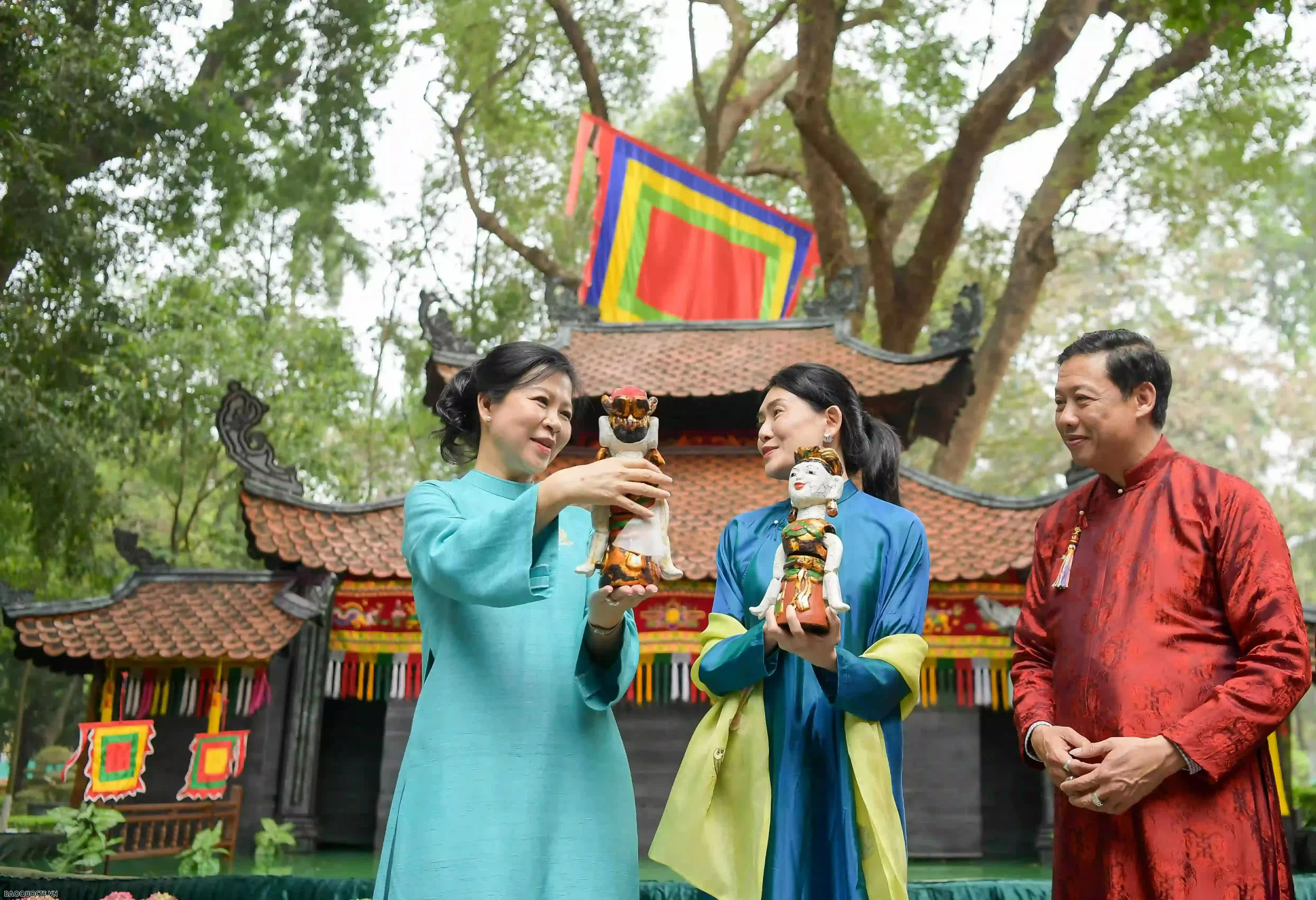 |
| The Spouse of General Secretary To Lam and the spouse of the Singaporean Prime Minister enjoy a water puppet performance at the Presidential Palace, during the official visit of Singaporean PM Lawrence Wong and his spouse Loo Tze Lui to Vietnam in March 2025. (Photo: Nguyen Hong) |
In the spirit of the ASEAN Future Forum 2026 theme, “Shaping Our Future Together: Peace, Prosperity and People-Centered Development”, what role does Hanoi play in connecting ASEAN cities through culture and people-to-people exchanges?
In the spirit of “shaping a shared future together” and “putting people at the center”, Hanoi serves as a key hub connecting ASEAN cities through culture, heritage, and people-to-people exchanges. This role stems from its position as Vietnam’s capital and the country’s political, cultural, and diplomatic center. It is further strengthened by Hanoi’s extensive international cooperation network, which includes friendship and cooperative relations with more than 100 capitals and major cities worldwide, as well as formal partnerships with 58 capitals, cities, and major localities.
| More from WVR |
 ASEAN Future Forum 2026: Creating a more open and substantive dialogue space between ASEAN and partners ASEAN Future Forum 2026: Creating a more open and substantive dialogue space between ASEAN and partners |
The ASEAN City Leaders Conference, jointly organized by Hanoi and the Ministry of Foreign Affairs on June 7-8, 2026, is a concrete manifestation of this role. If the ASEAN Future Forum 2026 serves as a platform for strategic dialogue at the regional level, the ASEAN City Leaders Conference functions as an urban-level channel for connectivity, where cities can exchange experiences in smart, green, sustainable, and people-centered development.
A key highlight is that Hanoi connects ASEAN not only through formal meetings and discussions, but also through open cultural spaces. Sites such as Temple of Literature, Thang Long Imperial Citadel, Ngoc Son Temple, Hoa Lo Prison Relic Site, the pedestrian zone around Hoan Kiem Lake, and Hanoi's Book Street have become gathering places for diplomats, visitors, artists, young people, and local residents. The city has established nearly 100 creative spaces. In particular, the Hoan Kiem Lake pedestrian area has hosted nearly 600 domestic and international cultural and artistic events over the past four years. These achievements provide a strong foundation for Hanoi to further its role as a bridge, bringing ASEAN citizens closer together through shared cultural experiences.
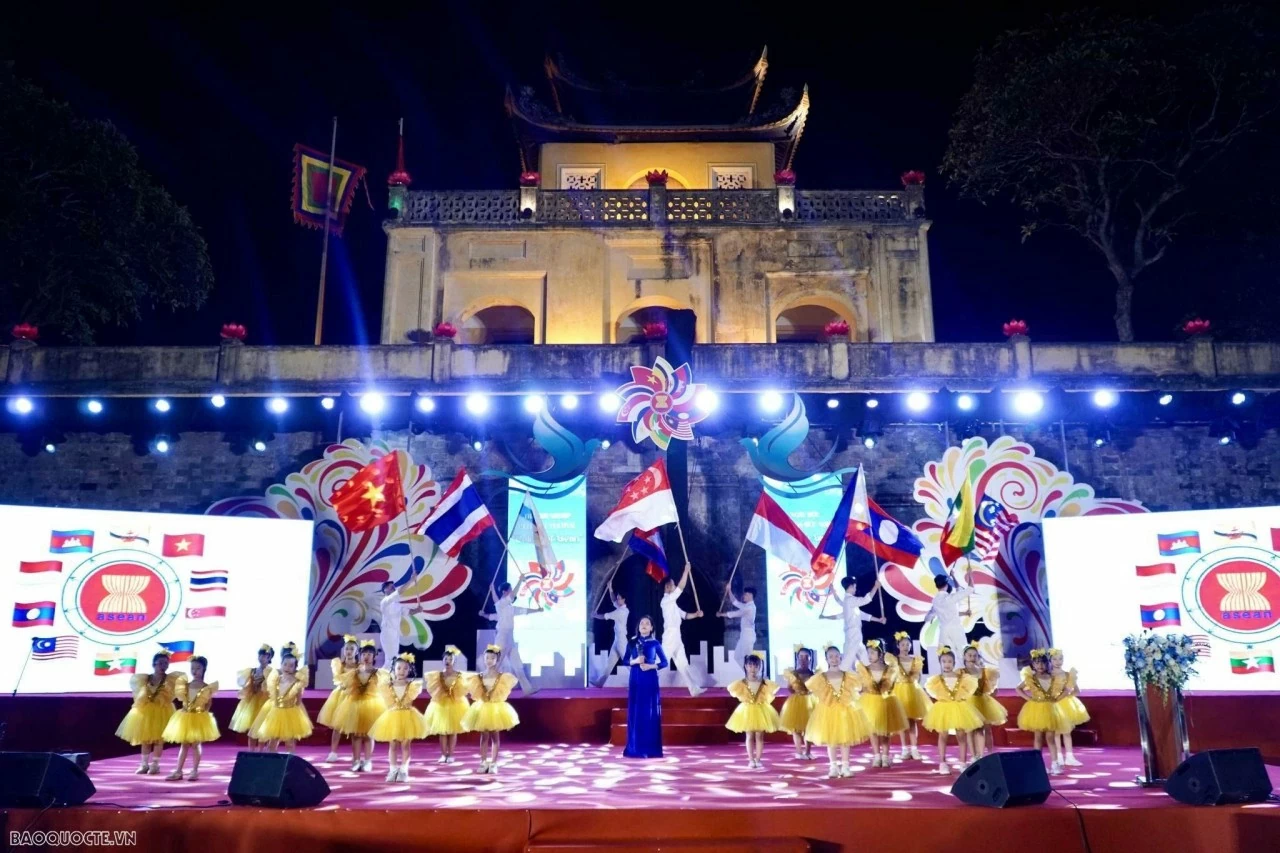 |
| The ASEAN Friendship Cultural Festival 2024, themed "Colors of ASEAN," was held at Thang Long Imperial Citadel to commemorate the 57th anniversary of ASEAN's founding (August 8, 1967 - August 8, 2024). (Photo: Tuan Viet) |
What activities or cooperation models has Hanoi implemented to promote ASEAN cultural identity and strengthen mutual understanding among people in the region, particularly the younger generation?
Hanoi has carried out a wide range of initiatives to promote ASEAN cultural identity and foster closer ties among the peoples of the region. The Hanoi International Cultural and Arts Exchange Programmes in 2023, 2024, and 2025 featured the participation of Cambodia, Laos, the Philippines, Myanmar, Malaysia, and Thailand. The Hanoi Culinary Culture Festivals in 2023 and 2024 welcomed participants from Myanmar, Laos, Malaysia, and the Philippines. Hanoi also coordinated the organization of the 2025 ASEAN Police Football Tournament, which brought together teams from Thailand, Cambodia, Laos, Singapore, and Timor-Leste. Notably, the first World Culture Festival in Hanoi in 2025 saw the participation of numerous ASEAN countries, including Cambodia, Laos, the Philippines, Thailand, Malaysia, Myanmar, Indonesia, and Singapore.
In addition, Hanoi has worked closely with and supported Embassies in organizing a variety of cultural exchange activities, such as the “Thailand Beat” event, the Malaysia Tourism, Arts and Culture Promotion Programme 2025, and Lao Cultural Week, held at prominent heritage sites and cultural venues across the capital. This is clear evidence that Hanoi does not view ASEAN merely as a political or economic concept, but has translated it into tangible cultural activities throughout the city.
An effective model has been the use of heritage sites and public spaces as cultural destinations. Cultural delegations from Indonesia, Laos, and Malaysia have visited Hanoi's landmarks, including the Temple of Literature, Ngoc Son Temple, and other historical sites, to exchange experiences and strengthen cultural ties. For younger generations, Hanoi benefits from initiatives such as the Hanoi Creative Design Festival, Photo Hanoi, design and sketching competitions, heritage-inspired creative activities, and educational programmes at historical sites.
These initiatives enable young people not only to watch performances, but also to actively participate in creative activities, dialogue, and cultural exchange, allowing them to express and share ASEAN cultural identities in ways that are more relatable.
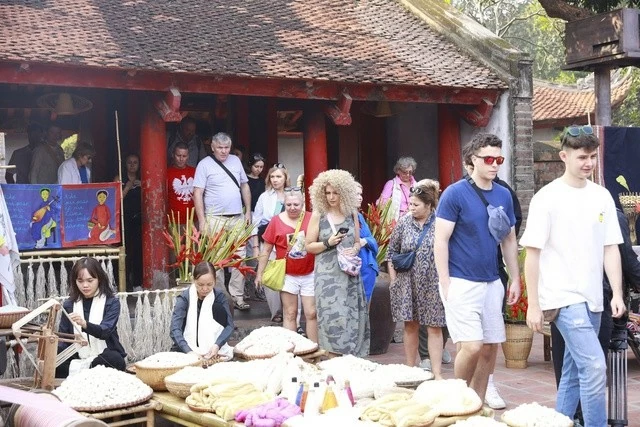 |
| In 2025, Hanoi is expected to welcome 33.7 million tourists, including 7.82 million international visitors; during the period 2021-2025, key historical sites managed by the city such as the Temple of Literature, Ngoc Son Temple, Hoa Lo Prison, Hanoi Museum, and Thang Long Imperial Citadel Center are expected to welcome more than 12 million visitors. (Photo: VGP) |
Beyond its diplomatic significance, how can stronger cultural connectivity among ASEAN cities generate tangible economic benefits for Hanoi and other cities in the region?
Cultural connectivity among ASEAN cities creates clear economic value through tourism, event-related services, the night-time economy, and cultural industries. For Hanoi, the figures demonstrate that culture has become an increasingly important driver of development. In 2025, the city welcomed 33.7 million visitors, including 7.82 million international arrivals. During the 2021-2025 period, major heritage and cultural sites managed by the city-including the Temple of Literature, Ngoc Son Temple, the Hoa Lo Prison Relic Site, the Hanoi Museum, and the Thang Long Imperial Citadel Centre-received more than 12 million visitors.
Every cultural exchange activity, festival, exhibition, or international arts programme can generate demand for accommodation, dining, transportation, shopping, heritage experiences, traditional craft villages, and creative services. Tourism products such as night tours of Hoa Lo Prison, the Temple of Literature, Ngoc Son Temple, and the Thang Long Imperial Citadel, along with water puppet shows, pedestrian streets, culinary festivals, book streets, and creative spaces, can help extend visitors' length of stay and increase their spending.
The experience of the 31st Southeast Asian Games (SEA Games 31) in 2022 offers a notable example. Hanoi played a key role in organizing the Games, which brought together all 11 Southeast Asian countries. The city undertook numerous responsibilities and hosted the opening and closing ceremonies on a grand scale, earning widespread recognition across multiple dimensions. What is particularly noteworthy is that SEA Games 31 was one of the first major international events to be held after the COVID-19 pandemic had been brought under control. Combined with cultural and artistic activities, the regional sporting event generated not only diplomatic benefits but also helped promote Hanoi and Vietnam as safe, friendly, and attractive destinations.
For ASEAN cities, cultural cooperation can unlock a wide range of economic opportunities, creating value chains in intra-regional tourism, meetings and exhibitions, gastronomy, design, traditional crafts, creative education, and digital content industries. By linking culture with economic development, cities can enhance their competitiveness while fostering more sustainable and people-centered growth.
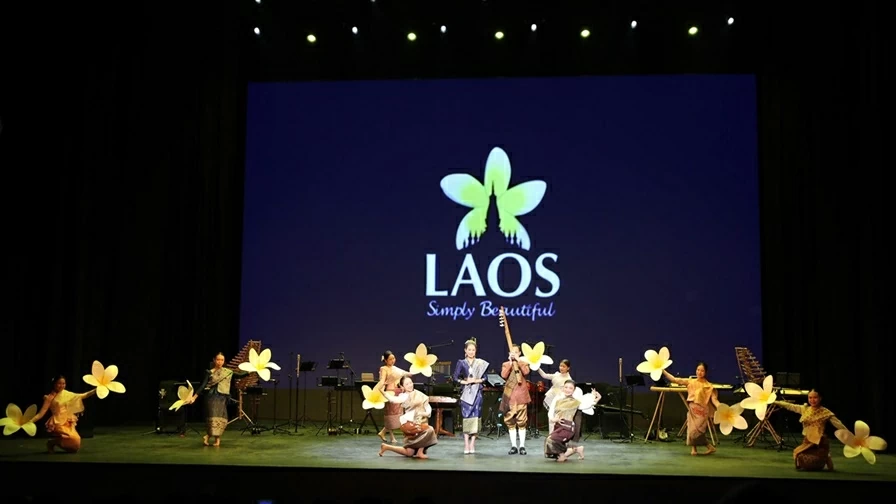 |
| A Laotian art performance during the New Year's Eve 2026 celebration in Hanoi. (Photo: Vy Anh) |
As ASEAN strives to build a more cohesive and people-centered community, what should Hanoi do to become a regional hub for culture, creativity, and dialogue, thereby contributing to the vision of a united, peaceful, and sustainably developed ASEAN?
To become a leading destination for culture, creativity, and dialogue, Hanoi should continue pursuing its development vision of being a city of “heritage, identity, creativity, integration, and connectivity”. First, the city should seek to transform the ASEAN City Leaders Conference into a long-term mechanism for cooperation rather than a one-off event. Hanoi could propose establishing an annual platform for ASEAN cities to exchange experiences and best practices in areas such as culture, creative urban development, the night-time economy, digital transformation, heritage preservation, and green growth.
Second, Hanoi should better connect its existing cultural assets into a year-round ecosystem of experiences. This ecosystem could link the Thang Long Imperial Citadel, the Temple of Literature, the Hoan Kiem Lake pedestrian area, the Old Quarter, Bat Trang pottery village, Van Phuc silk village, theatres, museums, book streets, design spaces, and seasonal festivals.
By doing so, the concepts of a “Creative City” and a “City for Peace” would become tangible experiences for residents, visitors, young people, and regional partners alike. At the same time, Hanoi could take the initiative in hosting signature regional events such as ASEAN City Culture Weeks, ASEAN Food Festivals, ASEAN Young Designers Forums, and ASEAN Digital Heritage Exhibitions, creating new platforms for cultural exchange, and people-to-people connectivity across the region.
Third, Hanoi should prioritize the younger generation and promote multilingual digital content in regional cultural exchanges. Building on existing models such as the Hanoi Creative Design Festival, Photo Hanoi, heritage-based innovation competitions, student-teacher exchange programmes, and cultural experiences and traditional education activities at historical sites, Hanoi could explore the establishment of an ASEAN Creative Youth Network in the city. It could also expand student exchanges, apply VR/AR technologies, and develop bilingual and multilingual content on the cultures of Hanoi and ASEAN.
When young people are directly involved in cultural exchange, creative activities, and the promotion of culture, Hanoi will not only be a venue for cultural and artistic events, but also become a regional space for dialogue, connectivity, and co-creation.
| ASEAN-China: Strategic cooperation for a resilient region WVR - On May 21, the 32nd ASEAN-China Senior Officials' Consultation (ACSOC) and the 26th ASEAN-China Senior Officials' Meeting on the Implementation of the Declaration ... |
|
| Vietnam prepares to host ASEAN Future Forum 2026 in Hanoi: Press conference WVR - On May 26, in Hanoi, the Ministry of Foreign Affairs held an international press conference to introduce the ASEAN Future Forum 2026 with ... |
| General Secretary, President To Lam’s visits to three ASEAN countries achieve great success: FM Le Hoai Trung WVR - Politburo Member and Minister of Foreign Affairs Le Hoai Trung affirmed that the visit to Thailand, Singapore, and the Philippines, and the attendance ... |
| Prime Ministers of Laos and Cambodia to pay official visit to Vietnam and attend 3rd ASEAN Future Forum WVR - At the invitation of Prime Minister Le Minh Hung, the Prime Ministers of Laos and Cambodia will pay official visit to Vietnam and ... |

| Over 600 delegates register for ASEAN Future Forum: Spokesperson WVR - To date, the organizing committee of the ASEAN Future Forum 2026 has recorded over 600 delegates registered to attend, including key leaders, senior ... |