


Quang Ninh invests in education to lay foundation for sustainable development
WVR - With the perspective that “investing in education is a strategic investment for the future”, Quang Ninh is implementing a unique and comprehensive educational policy system that covers the entire learning process of its people, from preschool education to talent training. This aims to build a high-quality workforce to meet development demands in the new era.
Latest
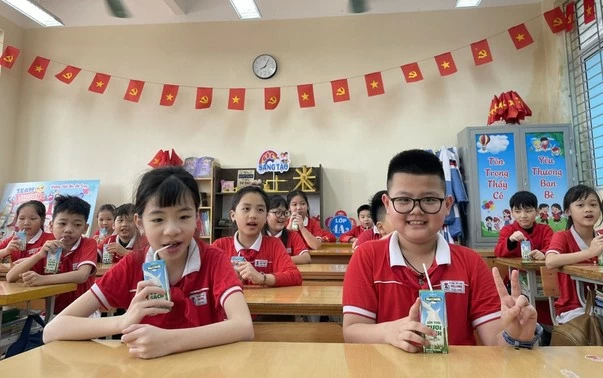 |
| Students of Hong Gai Primary School drink milk under the "School Milk" program. (Source: Quang Ninh Newspaper) |
On its journey towards rapid and sustainable development, Quang Ninh identifies education and training as foundational, serving as the key to building a workforce that meets the development requirements of the new era.
From this understanding, the province has proactively concretized major Party directives on educational development, especially Resolution No. 71-NQ/TW dated August 22, 2025, of the Politburo, by issuing Action Program No. 03-CTr/TU of the Provincial Party Standing Committee. With the view that investing in education is a strategic investment for the future, Quang Ninh has been implementing significant policies to lay the foundation for enhancing training quality, developing human resources, and boosting local competitiveness.
In the context where resources must be allocated for various socio-economic development tasks, Quang Ninh still prioritizes education, dedicating appropriate investment to create a foundation for long-term development. The province is gradually building and perfecting a comprehensive, synchronized educational policy system with suitable support levels, wide-ranging benefits, and targeting various groups.
A notable aspect of Quang Ninh's approach is that educational policies are designed as a continuous chain throughout the learning and development process of learners. From preschool children to high school students; from urban, plain areas to ethnic minority, mountainous, border, and island regions; from mass education to specialized education; from learners, teaching staff to non-public educational institutions, all have appropriate support mechanisms.
Each policy issued not only addresses immediate difficulties but also reflects a long-term vision in improving population quality, ensuring equal educational access, identifying and nurturing talents, thereby building a high-quality workforce to meet the rapid and sustainable development demands of the province in the new phase.
Ten exemplary, unique educational policies
On this foundation, Quang Ninh has implemented 10 exemplary, unique educational policies of the locality, organized into four key policy groups, forming the pillars of the province's educational development strategy.
According to the Quang Ninh Provincial People's Committee, the 10 exemplary policies have an estimated total annual implementation cost of nearly 800 billion VND per school year, supporting over 539,000 learners and educators. The policy system is designed to reduce educational costs for families, prioritize ethnic minority, mountainous, border, and island regions, and create momentum for specialized education development.
Among the policies, the largest funding is allocated to providing free milk at schools for all preschool children and primary school students at both public and private institutions.
Accordingly, children from 6 months old in nursery groups receive 110 ml of milk daily; preschool children and primary school students receive 180 ml daily. The support duration is calculated based on actual school days, with a maximum of 175 days per school year.
In 2026 alone, it is expected that 197,277 children and students will benefit, including over 18,200 nursery children, nearly 58,800 preschool children, and over 120,300 primary school students. The total cost of implementing this policy is over 290.1 billion VND.
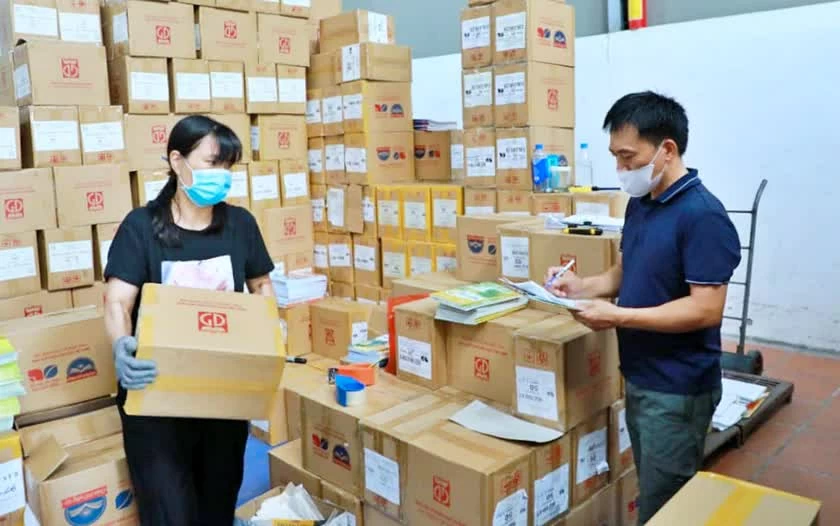 |
| Employees of Quang Ninh School Book and Equipment Joint Stock Company arrange and count textbooks according to orders. (Source: Quang Ninh Newspaper) |
Quang Ninh assesses that investing in school nutrition not only directly supports families but also contributes to improving children's health, fitness, and stature, laying the foundation for enhancing the quality of human resources in the long term.
Another noteworthy policy is the provision of free textbooks for high school students and continuing education learners starting from the 2026-2027 school year.
Books are purchased and equipped at educational institutions for students to borrow and use during the school year. Approximately 290,000 students and learners are expected to benefit, with a total cost of about 147 billion VND.
The province requires relevant units to ensure textbooks reach students and teachers before August 15, 2026, to prevent any impact on the preparation for the new school year.
Prioritizing difficult areas, ensuring equal learning opportunities
For preschool children and primary school students in ethnic minority, mountainous, island communes, and disadvantaged groups, Quang Ninh allocates about 188.1 billion VND per school year to support lunch money and meal organization costs.
Eligible preschool children receive 360,000 VND per month. Approximately 18,600 children are expected to receive support, with a cost of about 74 billion VND. Additionally, 44 preschool institutions receive nearly 24.7 billion VND to pay for cooking staff, electricity, water, and related costs.
Primary school students in similar groups receive 400,000 VND per month. About 18,300 students are expected to benefit, with a cost of nearly 65.8 billion VND. The province also allocates about 23.6 billion VND for 72 educational institutions to organize meals, manage students, and pay for electricity and water.
According to the Provincial People's Committee, supporting both meal money and meal organization conditions helps schools maintain two-session teaching per day, enhance care and nurturing quality, and narrow the educational condition gap between regions.
In 24 communes in ethnic minority, mountainous, and island areas, public preschool institutions are also supported to care for children during the summer. The implementation cost is about 33.1 billion VND per school year, with support duration not exceeding two months per year.
Allocating 92 billion VND to support students far from school
For students and learners living far from school or having to traverse difficult traffic areas, Quang Ninh applies two forms of support: organized boarding or daily transportation.
Primary school students living 4 km from school, secondary school students 7 km, and high school students 10 km or more may qualify for support. Cases involving crossing rivers, streams, passes, or rugged terrain are also considered.
Learners in organized boarding receive 936,000 VND per month. About 7,100 students and learners are expected to benefit, with a cost of about 60.1 billion VND. Educational institutions organizing meals, managing students, and arranging electricity and water receive additional support of about 24.1 billion VND.
In areas lacking conditions for organized boarding, transportation support ranges from 510,000 to 730,000 VND per month, depending on the education level. Teachers and staff directly involved in transportation receive 2.34 million VND per month for each group of 15 students.
The total cost of the boarding and transportation policy group is about 92 billion VND per school year. Quang Ninh expects the policy to reduce absenteeism and dropout rates due to geographical distance, while helping schools in difficult areas maintain stable enrollment numbers.
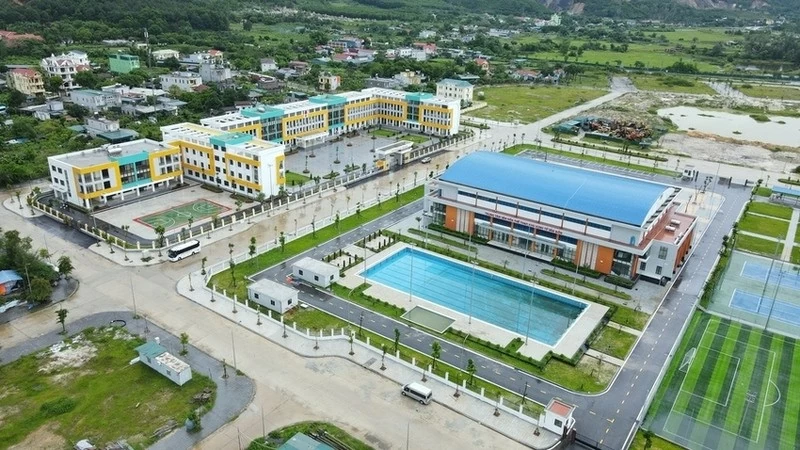 |
| Ha Long 1 Primary School (Van Don Special Zone) is invested in as a high-quality school model, a highlight in local urban development. (Source: Quang Ninh Newspaper) |
Creating momentum for specialized education development
Not only focusing on ensuring learning opportunities, Quang Ninh also allocates significant resources to develop specialized education, encouraging students to maximize their capabilities and reach major arenas.
The province continues to maintain high rewards for students winning prizes in excellent student competitions, scientific research, technical, regional, and international Olympics.
Students winning provincial prizes receive rewards from 1 to 3.5 million VND; national level from 20 to 70 million VND; regional level from 100 to 500 million VND, and international level from 200 to 700 million VND. Teachers directly coaching receive 50% of the student's reward.
Particularly, students who are ethnic minorities residing in ethnic minority, mountainous areas, or island communes receive rewards 1.5 times the common rate. Thus, students in this group winning the highest prize in an international competition can receive up to 1.05 billion VND.
Each school year, about 4,500 students and teachers are expected to benefit from the policy, with a total cost of about 13.6 billion VND.
The province also allocates about 6.5 billion VND per school year to train 11 excellent student teams; support remuneration for visiting lecturers, provincial teachers participating in training, and cover meals, travel, and living expenses for students.
At Ha Long Specialized High School, students with outstanding entrance exam results in 11 specialized classes receive a reward of 10 million VND. About 50% of the school's students receive scholarships ranging from 570,000 VND to 3.8 million VND per month. Students living 15 km or more from school receive meal support and free accommodation at the dormitory.
Additionally, the province continues to support tuition fees for high school students in disadvantaged groups studying at private schools; pay 100% mandatory insurance for over 1,000 non-public preschool staff, teachers, and employees; maintain assistance for children without caregivers until they complete their first university degree, but not beyond 22 years old.
In the 2026-2027 school year, Quang Ninh plans to pilot a student transportation model in certain special areas and research installing rooftop solar power at eligible public educational institutions.
According to the Provincial People's Committee, the policies are designed not only to directly support learners but also to supplement funding for schools to organize meals, care, management, transportation, and maintain operations. Through this, the locality aims to ensure fairness in educational access, stabilize the school system after restructuring, and prepare high-quality human resources for the new development phase.
With a human-centered approach, Quang Ninh is demonstrating a long-term vision in investing in education, viewing it not only as a social welfare task but also as a strategy for future resource development.
The policies implemented comprehensively, covering many groups, are creating an important foundation for each citizen to have more learning opportunities, develop capabilities, and contribute to building a quality, equitable, and modern education system, serving the goal of rapid, sustainable development for Quang Ninh in the new phase.