



ASEAN Future Forum 2026: What shapes its distinctive identity
WVR - Record participation of more than 1,200 delegates from around the world, an agenda featuring numerous topics discussed for the first time, and a strong sense of connectivity and optimism for the future defined the identity of the third ASEAN Future Forum (AFF 2026)
Latest
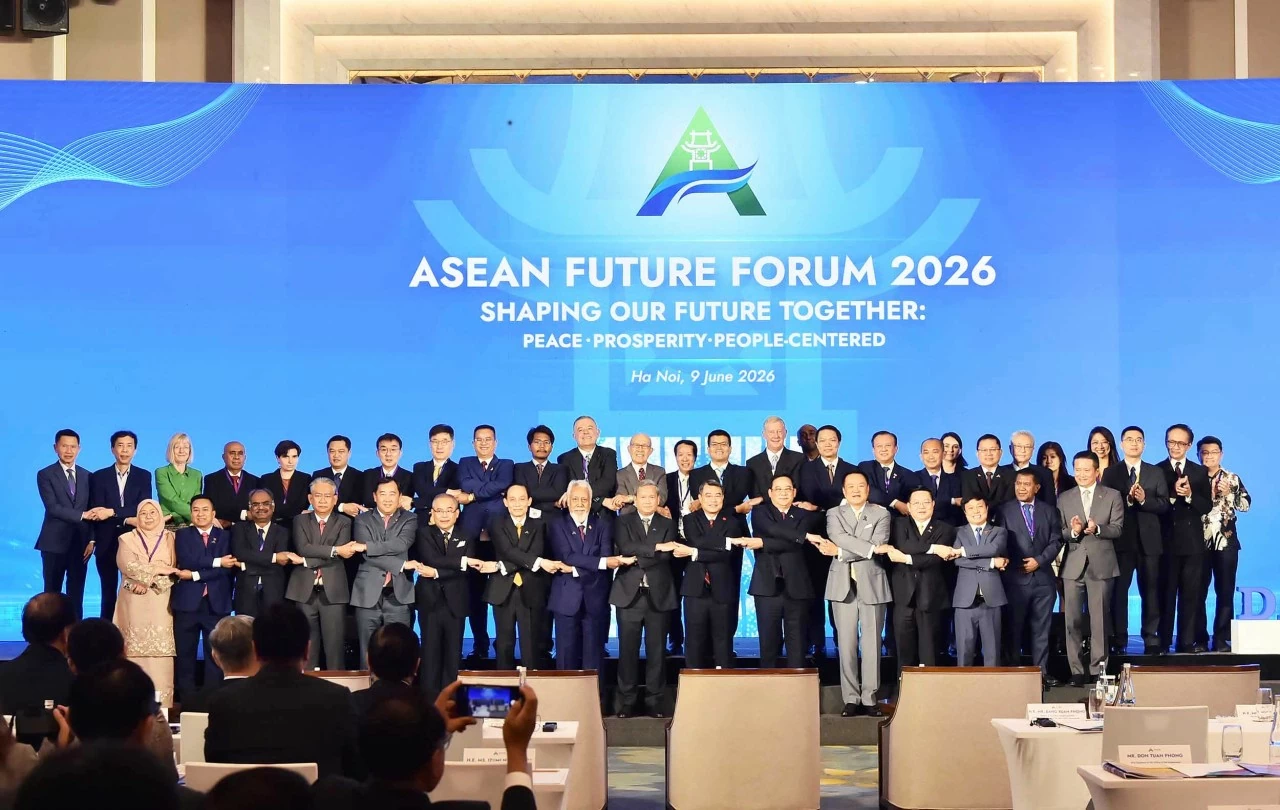 |
| Delegates take a group photo at the Opening Session of the ASEAN Future Forum 2026. (Photo: Quang Hoa) |
In an open and sincere atmosphere, delegates exchanged a wide range of issues closely tied to ASEAN's development path, from immediate to long-term, from intra-regional cooperation to partnerships within and outside the region, from concerns about conflict prevention to common aspirations for transforming growth models, development, energy security, or artificial intelligence (AI)… These genuine, substantive, and creative exchanges with many thought-provoking ideas are expected to be reported to ASEAN leaders for consideration in the near future.
The forum was attended by high-level leaders from several ASEAN countries, including Prime Minister of Cambodia Hun Manet; Prime Minister of Laos Sonexay Siphandone; Prime Minister of the Kingdom of Thailand Anutin Charnvirakul; Prime Minister of Timor-Leste Xanana Gusmão; ASEAN Secretary-General Kao Kim Hourn; representatives of international organizations, scholars, businesses, and localities… This reflects the growing interest in ASEAN's future, while also demonstrating the spirit of companionship and shared responsibility in shaping the region's development direction in the new phase.
Three strategic dimensions
Prime Minister Le Minh Hung, in his opening speech at the Forum, began with a question: “In a world undergoing profound changes, the question for us today is not only how ASEAN will adapt, but how ASEAN will shape its own future in the 21st century?”
The phrase "shaping its own future in the 21st century" became the guiding principle directing the discussions of the Forum from various perspectives.
 |
| Prime Minister Le Minh Hung speaks at the Opening Session of the third ASEAN Future Forum (AFF 2026). (Photo: Quang Hoa) |
From a broad perspective, Prime Minister Le Minh Hung outlined three "strategic dimensions" that ASEAN should aim for, including: First, not only participating in global trends but also contributing to shaping them; ASEAN should become a center of dialogue, a focal point of cooperation, and a foundation of trust. Second, not just a production hub but also a center of innovation. Third, not merely a community of nations but a true community of people. The ultimate goal of all development strategies is not growth figures but the quality of life for the people.
“Peace” is the highlight of the message that Prime Minister of Cambodia Hun Manet emphasized when discussing ASEAN's future. According to the Prime Minister, ASEAN's achievements after nearly six decades of formation and development result from strategic choices based on dialogue, trust-building, and peace creation. “Peace today cannot be taken for granted… Peace is a prerequisite for development, while prosperity is the ultimate goal of the ASEAN Community building process,” Prime Minister Hun Manet affirmed, urging member countries to continue working together to build a more peaceful and prosperous ASEAN for future generations.
Maintaining the "strategic asset" – ASEAN's central role is the perspective approached by Prime Minister of Thailand Anutin Charnvirakul in ensuring the Association's future amid numerous fluctuations. According to Prime Minister Anutin Charnvirakul, the ability to harmonize national interests with regional interests is the foundation that helps ASEAN maintain stability, strengthen intra-regional solidarity, and become a partner chosen by many major countries for cooperation.
ASEAN-led mechanisms have proven effective in creating space for partners to cooperate on an equal basis, thereby contributing to ensuring strategic balance and maintaining the Association's central position. “ASEAN must continue to maintain this strategic mindset,” emphasized the Prime Minister of Thailand.
Furthermore, an important factor highlighted by ASEAN leaders regarding the Association's "destiny" is the "People"; they agree that ASEAN's success should not be measured by the number of conferences or declarations adopted, but by the level of safety, prosperity, and people's trust in the future.
Resilience, solidarity, and adaptation
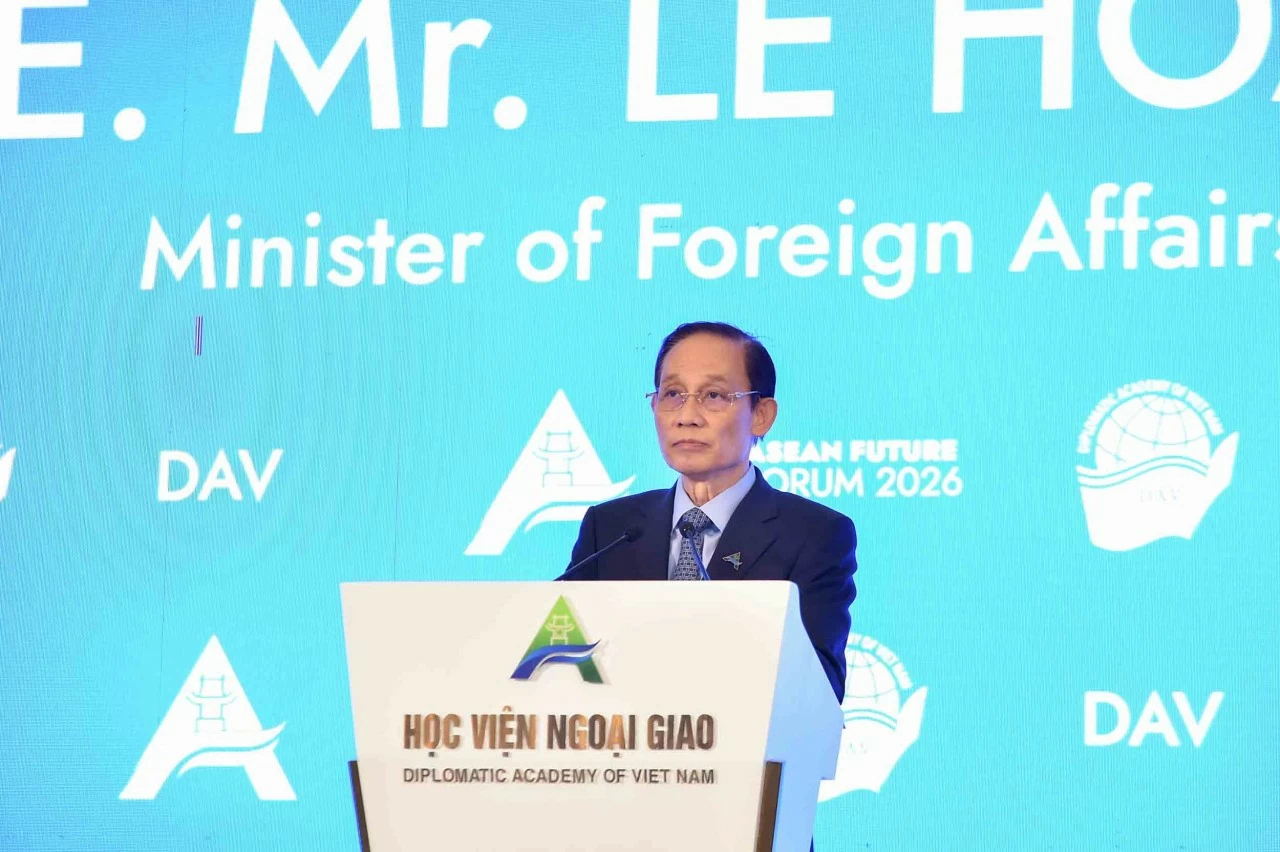 |
| Minister of Foreign Affairs Le Hoai Trung speaks at the Closing Session of the ASEAN Future Forum 2026. (Photo: Quang Hoa) |
Politburo Member, Minister of Foreign Affairs Le Hoai Trung, when summarizing the Forum at the Closing Session, highlighted a key point – the convergence of views within ASEAN in the face of current challenges. Accordingly, enhancing the region's resilience and adaptability is a high priority for ASEAN. Speakers emphasized the need to build a strategic environment for the long term, not just to respond in the short term.
Indeed, in thematic discussions or side exchanges, and media interactions, the topic of resilience, solidarity, and adaptation remains "hot". The concept of "cooperative resilience" was deeply analyzed by Member of the Party Central Committee, Standing Deputy Secretary of the Party Committee of the Ministry, and Deputy Minister of Foreign Affairs Nguyen Manh Cuong, in the thematic discussion "Resilience and Solidarity in a Changing World".
According to the Deputy Minister, resilience is not about withdrawing or isolating from international cooperation flows, but about strengthening internal capacity while expanding connections and diversifying cooperation networks. For ASEAN, the Deputy Minister believes that the Association's resilience is not merely the sum of the strengths of individual member countries but is formed from three closely linked elements: intra-regional solidarity, effective central role, and cooperation mechanisms that yield substantive results.
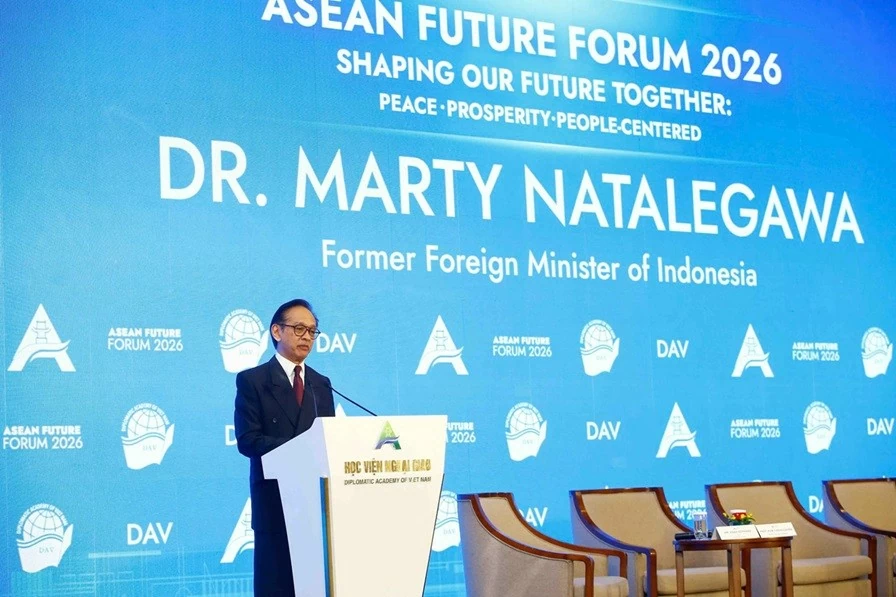 |
| Marty Natalegawa, Former Minister of Foreign Affairs of Indonesia, shares at a thematic discussion. (Photo: Thanh Long) |
Resilience and solidarity, according to former Indonesian Foreign Minister Marty Natalegawa, also involve avoiding confrontational or dependent choices, instead pursuing a "dynamic equilibrium" approach – a state maintained through dialogue, inclusiveness, and proactive management of regional relations. According to him, the goal is not to choose sides in strategic competition but to create a stable regional environment where all parties can participate, cooperate, and adhere to common rules.
Viewing resilience from a similar perspective, Kuik Cheng-Chwee, Professor of International Relations at the National University of Malaysia, believes that resilience is not merely the ability to respond to crises but also includes the capacity to withstand and recover, helping a nation or regional organization maintain development momentum after disruptions.
Professor Kuik suggests that ASEAN possesses many advantages to enhance its resilience through multi-layered cooperation networks built over decades. ASEAN serves as both a dialogue forum and a mechanism that helps member countries maintain balance against external influences, thereby enhancing adaptability in an increasingly complex international environment.
New "rendezvous points" expected
The "new elements" of the Forum is clearly felt in two initiatives organized for the first time, including the Southeast Asian Political Parties Dialogue and the ASEAN Cities Leaders Conference 2026, becoming unforgettable highlights of this year's Forum "season".
The Southeast Asian Political Parties Dialogue was designed as a platform for political parties in the region to exchange views, share experiences, and contribute to the Community building process. The event took place in an open, frank, and constructive atmosphere, with active participation from 11 political parties from Southeast Asian countries, along with numerous scholars and experts in the region.
Delegates agreed that enhancing dialogue, building trust, and mutual understanding among political parties are essential for strengthening ASEAN solidarity, increasing regional resilience, and promoting ASEAN's central role amid rapidly changing regional and international environments.
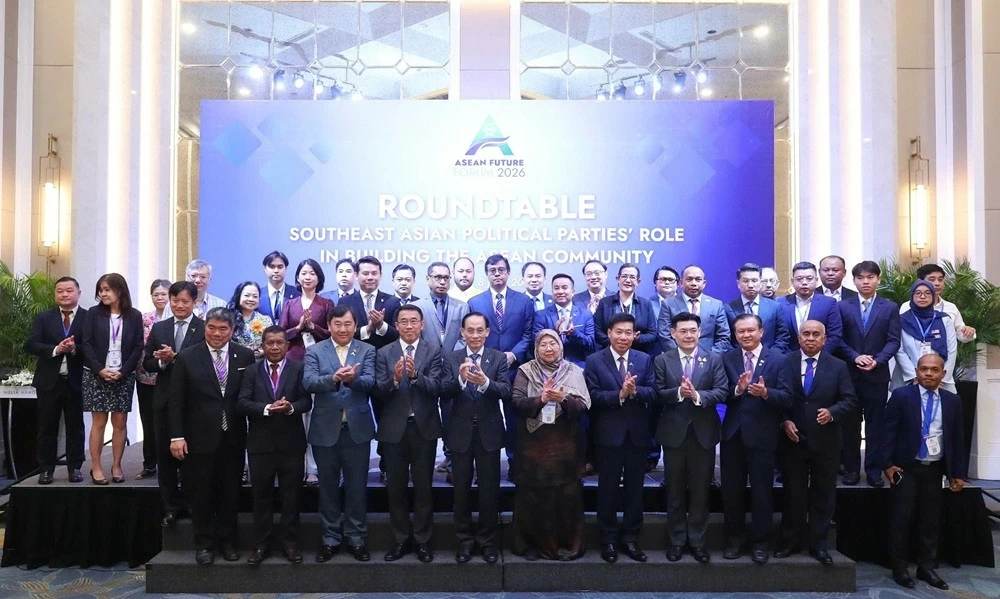 |
| Minister of Foreign Affairs Le Hoai Trung with delegates at the Southeast Asian Political Parties Dialogue. (Photo: Thanh Long) |
Opinions also hope that the dialogue will gradually become a regular dialogue mechanism, creating a sustainable platform for building trust and enhancing understanding between political parties and scholars in the region.
Meanwhile, the ASEAN Cities Leaders Conference 2026 attracted over 250 delegates, representing more than 25 cities and localities from ASEAN member countries, along with numerous scholars and experts from within and outside the region.
Delegates highly appreciated Hanoi's initiative in organizing the conference, considering it a practical forum to enhance dialogue, connectivity, and experience sharing among ASEAN cities amid the region facing many intertwined opportunities and challenges; they hope to continue maintaining this dialogue and connectivity mechanism in the future.
“Saying goodbye is never easy,” expressed Minister of Foreign Affairs Le Hoai Trung at the Closing Session before a large number of delegates. Minister Le Hoai Trung believes that, ultimately, many delegates share the belief that the ASEAN Future Forum has given us an incredibly optimistic outlook for the future.
Farewell to the ASEAN Future Forum 2026, farewell to sincere and trusted friends and partners of ASEAN and Vietnam, the future lies ahead, and ASEAN 2027 is also ahead, well-prepared from today, united, we move together towards a wide-open future.