



ASEAN-China: Strategic cooperation for a resilient region
WVR - On May 21, the 32nd ASEAN-China Senior Officials' Consultation (ACSOC) and the 26th ASEAN-China Senior Officials' Meeting on the Implementation of the Declaration on the Conduct of Parties in the East Sea (internationally known as the South China Sea) (SOM-DOC) took place in Kuala Lumpur.
Latest
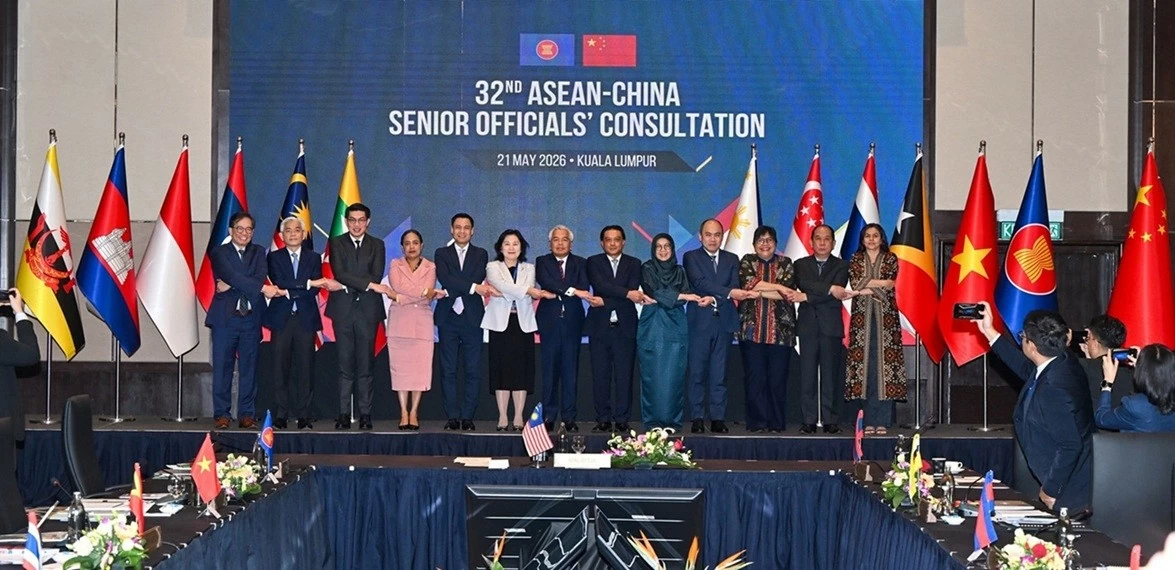 |
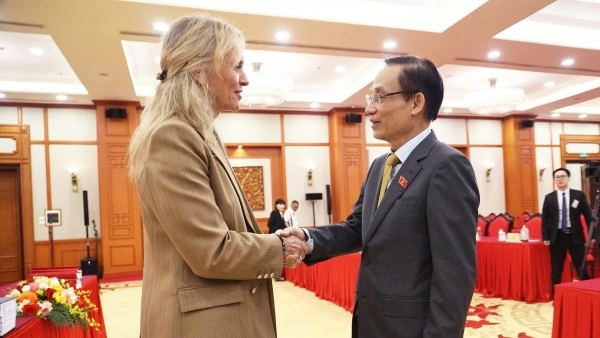
| The 32nd ASEAN-China Senior Officials' Consultation (ACSOC). (Photo: Bao Chi) |
Deputy Minister Dang Hoang Giang, Head of the ASEAN Vietnam Senior Officials' Delegation (SOM), led the Vietnamese delegation to the meetings.
*At the ACSOC-32, ASEAN countries highly appreciated China's role in the region and globally, recognizing China as one of ASEAN's most dynamic, extensive, and comprehensive partners.
ASEAN and China are currently driving growth and development in the region, with ASEAN's GDP projected at 4.9% and China's at 5% in 2025. Additionally, both parties have been major trade and investment partners for many years.
Chinese Deputy Foreign Minister Hua Chunying, Head of the ASEAN China SOM, acknowledged ASEAN as one of the most successful organizations with an increasingly prominent voice and position in the region. She affirmed that China prioritizes ASEAN in its neighborhood policy, supports the ASEAN Community building process and its central role, and is ready to contribute to the region's development and prosperity.
The meeting highlighted that in 2026, ASEAN will commence the implementation of the ASEAN Community Vision 2045 and strategic plans. This year also marks the beginning of the joint Action Plan (POA) between ASEAN and China for 2026-2030. Effective implementation of these visions and plans will lay a solid foundation, complement each other, and create momentum for mutual development.
On the occasion of the 50th anniversary of the Treaty of Amity and Cooperation in Southeast Asia-TAC (1976-2026) and the 5th anniversary of the ASEAN-China Strategic Partnership (2021-2026), ASEAN and China agreed to implement practical activities to highlight the significance of these events for the region and activate opportunities for further deepening cooperation in the coming years.
Amidst the rapidly changing, complex, and unpredictable global landscape, the meeting especially emphasized the need for ASEAN and China to engage in dialogue, build trust, connect, cooperate, enhance resilience, and withstand shocks, contributing to peace, security, stability, and sustainable development in the region.
The meeting also reviewed the implementation of the outcomes of the 28th ASEAN-China Summit in October 2025, agreeing to continue promoting the ASEAN-China Action Plan for 2026-2030, expedite the ratification procedures, and effectively implement the upgraded ASEAN-China Free Trade Area (ACFTA) 3.0 protocol. It also aimed to enhance cooperation in energy, artificial intelligence, digital transformation, tourism, people-to-people exchanges, cybercrime prevention, online fraud, and more.
Both sides exchanged numerous proposals and initiatives to promote cooperation, which are expected to be presented at the ASEAN-China Foreign Ministers' and Summit Meetings in July and November this year.
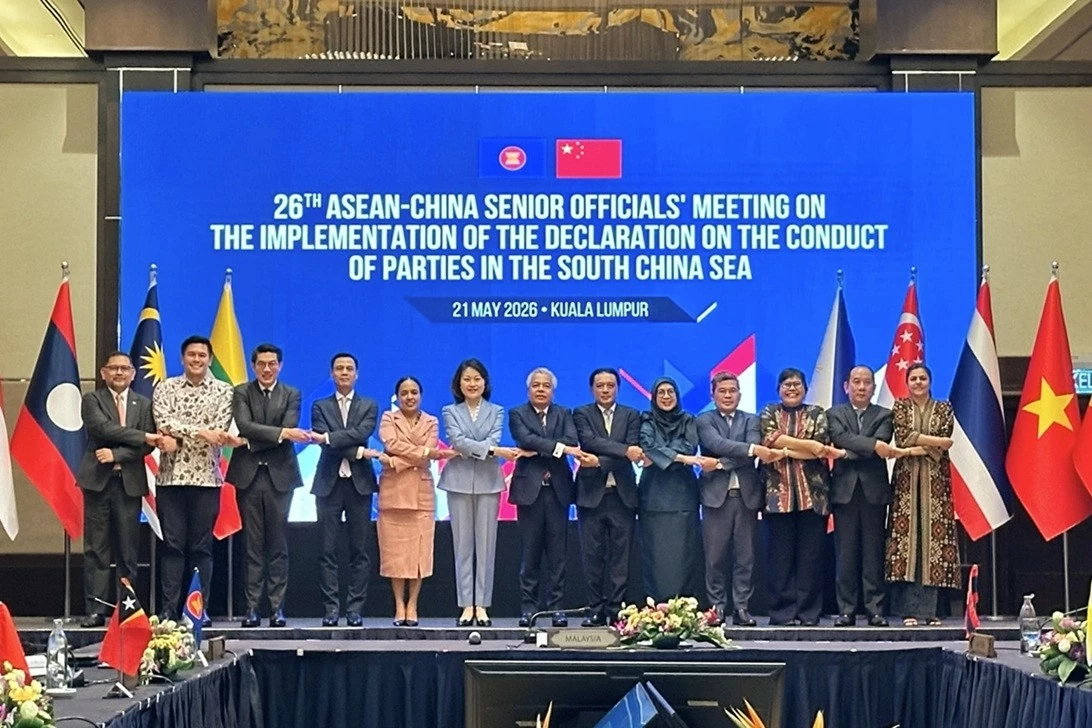 |
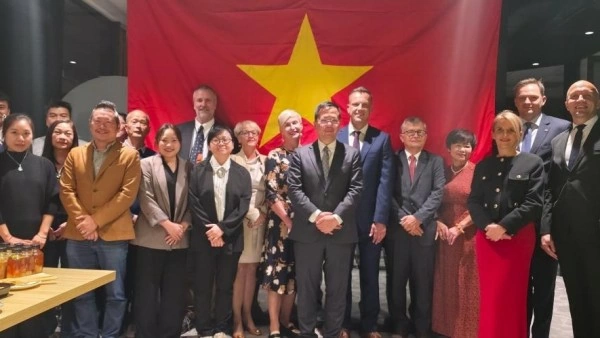
| The 26th ASEAN-China Senior Officials' Meeting on the Implementation of the Declaration on the Conduct of Parties in the East Sea (SOM-DOC). (Photo: Bao Chi) |
*At the SOM-DOC 26, countries emphasized the importance of maintaining peace, stability, security, safety, and freedom of navigation and overflight in the East Sea based on international law, especially the United Nations Convention on the Law of the Sea (UNCLOS 1982).
ASEAN countries and China reviewed the achievements in fully implementing the DOC and negotiating the Code of Conduct in the East Sea (COC); acknowledging the efforts of the parties in the monthly meetings of the ASEAN-China Joint Working Group on DOC (JWG-DOC) to soon achieve an effective, substantive Code of Conduct in accordance with international law, including UNCLOS 1982.
*Speaking at the meetings, Deputy Minister Dang Hoang Giang affirmed that Vietnam and ASEAN value the comprehensive strategic partnership with China. Especially in the current context, ASEAN-China relations must contribute more positively to peace, stability, and development in the region.
Accordingly, ASEAN and China need to continue to uphold international law, the United Nations Charter, TAC, multilateralism, enhance consultations, build trust, and promote a culture of dialogue through ASEAN-led mechanisms.
The Deputy Minister also suggested that both sides enhance consultations, aiming for China to sign and ratify the SEANWFZ Treaty protocol as soon as possible. Additionally, ASEAN and China should boost connectivity via road, rail, sea, and air to ensure trade flow, promote tourism, and facilitate people-to-people exchanges; strengthen responses to emerging challenges, including ensuring security and safety at borders and checkpoints, and cooperate against human trafficking, drug trafficking, money laundering, and other transnational crimes and cybersecurity threats...
Deputy Minister Dang Hoang Giang emphasized the importance of maintaining peace, stability, freedom of navigation and overflight, resolving disputes by peaceful means, and adhering to international law, particularly UNCLOS 1982; urging parties to fully and effectively implement the DOC, affirming that the DOC is a crucial foundation for COC negotiations.
Vietnam will continue to closely coordinate with ASEAN countries and China to expedite the achievement of an effective, substantive COC in line with international law, especially UNCLOS 1982, contributing practically to peace, stability, and cooperation in the East Sea.
*On the occasion of the meetings, Deputy Minister Dang Hoang Giang held talks with Chinese Deputy Foreign Minister, Head of the ASEAN China SOM Hua Chunying, and Head of the SOM DOC China Hou Yanqu.
During the meetings, both sides agreed to continue close coordination to effectively implement the agreements and common understandings reached between the senior leaders of the two Parties and countries; enhance high-level delegation exchanges; and promote substantive cooperation in trade, investment, infrastructure connectivity, transportation, agriculture, energy...
Both sides also exchanged views on international and regional issues of mutual concern and coordinated at multilateral forums, emphasizing the determination to promote effective, substantive COC negotiations in accordance with international law and UNCLOS 1982.