


CPTPP strengthens free trade, expands global economic connectivity: Experts
WVR/VNA - The Comprehensive and Progressive Agreement for Trans-Pacific Partnership (CPTPP) continues to reinforce its position as one of the world's most comprehensive and high-standard new-generation free trade agreements (FTAs), providing a vital anchor for free trade amid mounting geopolitical uncertainty, supply chain disruptions and rising protectionism.
Latest
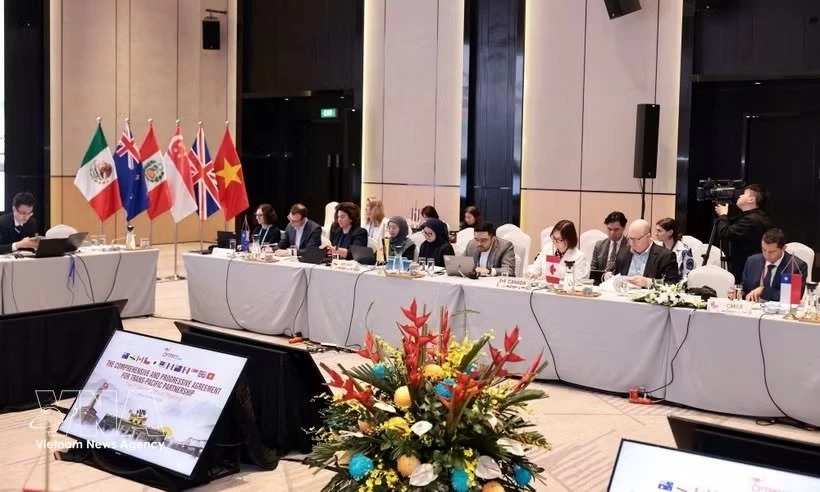 |
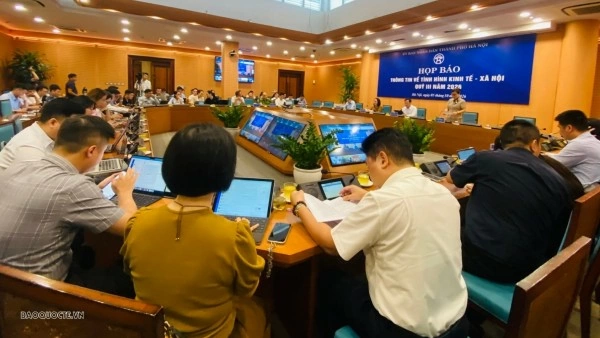
| CPTPP strengthens free trade, expands global economic connectivity: The first Senior Officials’ Meeting (SOM1) of the Comprehensive and Progressive Agreement for Trans-Pacific Partnership (CPTPP) in 2026 opened in Hanoi on March 11, 2026. (Photo: VNA) |
Mary-Catherine Speirs, Director General for Trade Negotiations at Global Affairs Canada and senior CPTPP official of Canada, said the rapidly evolving geopolitical landscape is fundamentally reshaping the global trading system. Rather than simply adapting to change, economies must actively help shape new frameworks for international economic cooperation.
According to Speirs, Canada views stronger dialogue between CPTPP members and the EU as an important platform for middle-power economies to promote an open, transparent and rules-based trading system. Enhanced connectivity will also enable member economies to play a more active role in shaping international trade rules instead of merely responding to global economic shifts.
Nguyen Son Tra, Head of the WTO and Trade Negotiations Division under the Ministry of Industry and Trade's Multilateral Trade Policy Department and Vietnam's Deputy Chief CPTPP Negotiator, said member economies have agreed on five key priorities during Vietnam's CPTPP Chairmanship Year in 2026.
These include reviewing and updating the agreement to ensure it remains a high-standard framework that can adapt to evolving trends, including digital trade and more resilient supply chains, as well as emerging trade issues. Another major priority is strengthening engagement with external partners, particularly the EU. Ministers of CPTPP members agreed to deepen cooperation with the bloc in 2025, and focus on implementing these commitments through practical cooperation programmes in 2026.
Against the backdrop of global supply chain restructuring, digital transformation and the transition towards sustainable development, maintaining an open, transparent and rules-based trading system has become increasingly important for strengthening economic resilience and facilitating international trade and investment. Accordingly, CPTPP members are focusing on improving the implementation of the agreement to increase utilisation of tariff preferences while expanding opportunities in services, investment, digital trade and regional supply chains through closer cooperation between government agencies and the business community.
Businesses expect stronger CPTPP-EU connectivity to diversify supply chains, attract more investment and create greater opportunities for Vietnamese exports to access major markets. They also believe that a free trade environment with zero tariffs will enhance business competitiveness and significantly expand international partnerships.
Although the CPTPP and the EU are located in different geographical regions, they are becoming increasingly interconnected through investment flows, technology cooperation and integrated supply chains. Together with other new-generation FTAs, these links are helping facilitate the movement of goods, services, investment and data, and improve predictability and stability in the global business environment.
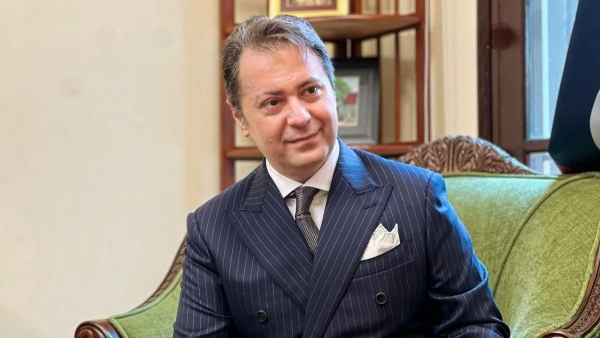
Michele D'Ercole, General Manager of Henoto Vietnam, said closer ties between the CPTPP and the EU will create a larger, more competitive marketplace, providing businesses with greater opportunities under a liberalised trading environment. Given current global economic uncertainties, he stressed that maintaining open markets is more important than ever.
He added that energy represents one of the most promising areas for cooperation between Vietnam and Canada under the CPTPP, particularly as Vietnam accelerates its sustainable development agenda. Agriculture and food industries also hold considerable potential.
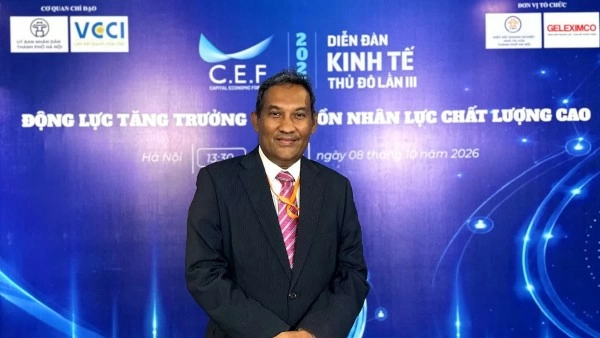
Meanwhile, Jack Nguyen, CEO of InCorp Vietnam, noted that businesses still face challenges in fully implementing CPTPP commitments, including compliance with rules of origin, logistics and transportation costs. To maximise the agreement's benefits, enterprises should strengthen their understanding of the CPTPP and seek professional guidance to ensure their products meet all applicable requirements.
Since taking effect, the CPTPP has significantly expanded Vietnam's access to major markets across North America, the EU, and the Asia-Pacific, contributing to strong export growth in key sectors such as textiles and garments, footwear, and agricultural, forestry and fishery products. The agreement has also encouraged greater investment into Vietnam by promoting regional production networks and clearer rules of origin.