

Scholar emphasizes nurturing a confident, courageous, and patriotic young generation in the 4.0 era
WVR - When the three links "school - family - society" are synchronized, we not only help young people avoid the dangers of harmful information, but also create a confident, courageous generation that knows how to protect the nation in the 4.0 era.
Latest
 |
| According to Dr. Trinh Le Anh, "patriotism 4.0" is not measured by noise, but by precision. (Photo: Courtesy by author) |
This is the perspective of Dr. Trinh Le Anh, Faculty of Tourism Studies, University of Social Sciences and Humanities, VNU, shared with The World and Vietnam Report about equipping the youth with a "vaccine" in the fight against misinformation online.
Equipping the youth with "resistance" against harmful information
What should agencies and organizations do to make political, ethical, and lifestyle education engaging and deeply impactful for young people?
I often tell students: "Politics and ethics are like precious books; if left on the shelf, they gather dust, but if opened and told in everyday language, they become vibrant life tools." Today's youth grow up with TikTok, YouTube Shorts, podcasts...
If we continue to deliver 90-minute lectures filled with resolutions and slogans, students will nod off, but out of boredom. Instead, let's turn seemingly grand ideas into relatable stories: A short video about a naval soldier in Trường Sa, a student play about the spirit of "sharing hardships", or an online campaign created by the youth themselves.
The key is to show young people that politics and ethics are not distant concepts, but choices we make every day: Knowing how to queue politely, sharing community hardships, and feeling proud to say "I am Vietnamese". When these values are conveyed in modern language and emotionally resonant images, I believe education will not only "sink in" but also motivate the youth to act.
In the current information explosion, enhancing the "resistance" of the youth against harmful information is crucial. Do you have specific advice for young people to identify and neutralize social media manipulation, avoiding being "led" or "joining the crowd"?
We live in a world where information spreads rapidly. Good news rarely goes "viral", while bad news can become a storm overnight. Therefore, if I were to advise, I would tell young people something very simple: Consider information reception skills like getting vaccinated.
Vaccines help the body resist disease, while "information vaccines" enable individuals to identify and resist fake news. This vaccination method is not complicated: Always ask who posted this, for what purpose, whether the data is sourced, and ideally compare at least two different sources.
| "Patriotism 4.0 is not measured by noise, but by precision: Precision in verification, precision in sharing, precision in responsible attitudes. Every correctly reported issue, every blocked scam link, every verified help request forms a soft shield protecting the community, creating a uniquely Vietnamese digital citizen culture." |
Before hitting the share button, pause for a moment, as a thoughtless click can turn you from a victim into an "accomplice". More importantly, maintain your composure. Don't "join the crowd" just because of many likes or comments.
The youth can completely turn social media into a place to spread positive energy, rather than a "fertile ground" for sowing confusion. A careful click not only protects oneself but also contributes to the community's peace.
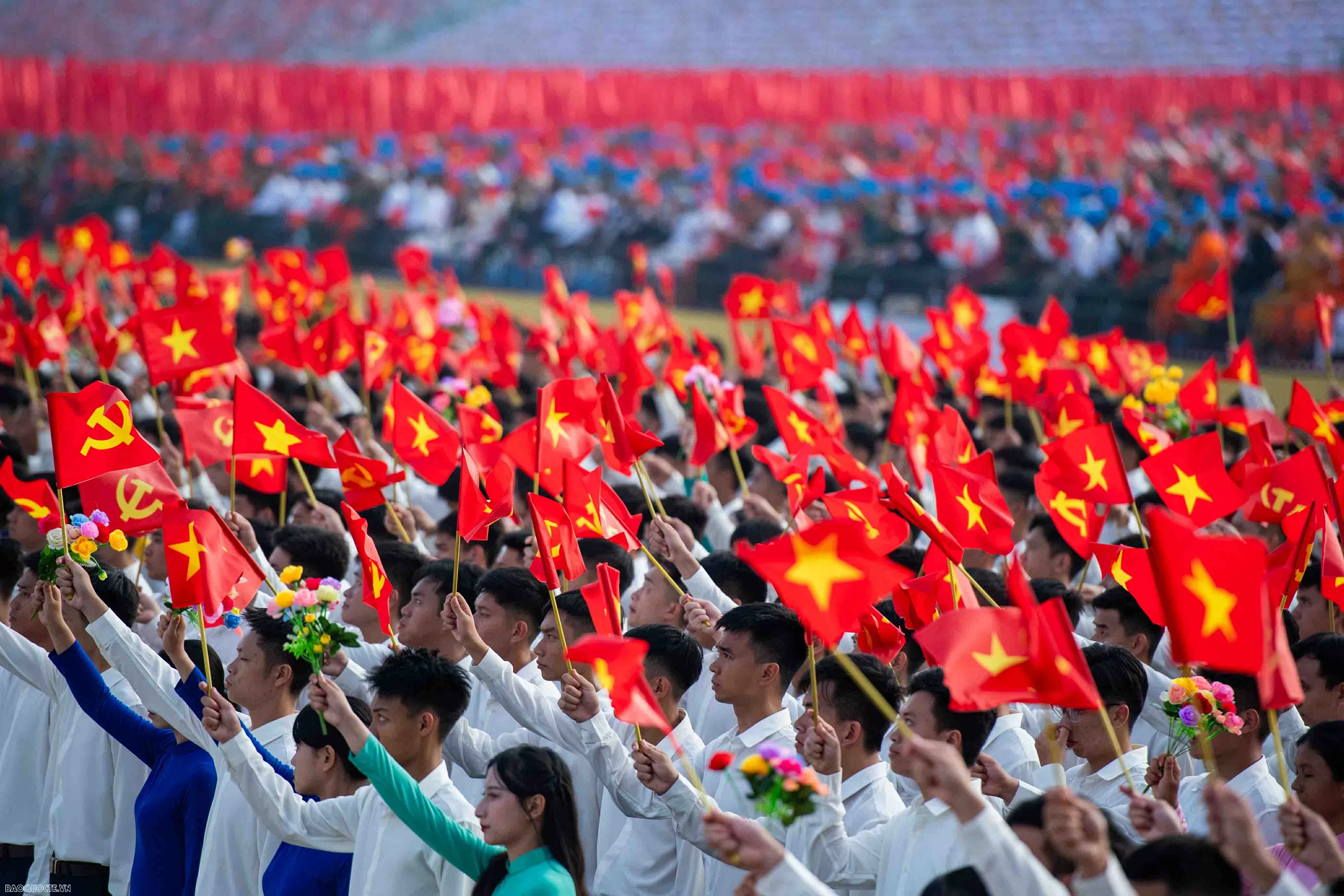 |
| Young people in the parade celebrating the 80th National Day. (Photo: Nguyen Hong) |
One important solution is to build and promote the role of mainstream information networks. What should we do to make these channels more appealing and relatable to young people, rather than just a news?
In my opinion, the issue is not that young people are uninterested in mainstream information, but in how we tell the story. A news report starting with "summary conference" will struggle to compete with a lively 30-second TikTok clip. What we need is not to change the truth, but to change how we tell the truth. Mainstream information must reach the "addresses" where young people frequently are: TikTok, Instagram, YouTube Shorts, and must speak their "language": Concise, rich in imagery, and emotional.
A compelling example is the excellent work done by Nhan Dan newspaper during the A80 Grand Celebration: From a special supplement with 80 notable events to "digital gifts" like AR/VR experiences at the Independence Flagpole, Spotify codes to listen to the Declaration of Independence, or the "Homeland in the Heart" concert at My Dinh that spread widely on social media. Even reports on the "female information soldiers" training in the rain and sun became highlights, as they touched emotions and natural admiration.
| "The important thing is to show young people that politics and ethics are not distant concepts, but choices we make every day: Knowing how to queue politely, sharing community hardships, and feeling proud to say 'I am Vietnamese'. When these values are conveyed in modern language and emotionally resonant images, education becomes a driving force that motivates the youth to act." |
As I know, The World and Vietnam Report also signed a cooperation agreement with the India Research Center (Institute of Politics and International Relations, Ho Chi Minh National Academy of Politics) to produce thematic publications that are both academic and communicative, helping foreign affairs stories become not just policy statements, but stories with depth, experts, and real voices...
These examples show that when mainstream information is crafted through storytelling art, it is no longer "words from above" but becomes the voice of friends, easy to listen to, trust, and share. I believe that if we continue to expand youth participation, turning them into "creators" alongside, mainstream channels will not only be "channels to know" but truly become "channels to love".
 |
| Dr. Trinh Le Anh believes that instilling confidence and love for the nation in young people starts with small things. (Photo: Courtesy by author) |
Patriotism in the 4.0 era from simple things
Patriotism among young people in the 4.0 era is expressed in many ways, not just on social media. Could you share some stories or examples of how young people have contributed to protecting the nation, especially in the fight against misinformation online?
I think "patriotism 4.0" often comes from very small and quiet actions: A correctly reported fake news, a scam link blocked in time, or a help request verified and successfully connected during the pandemic. These actions are not loud but contribute to maintaining peace on the "digital border" every day.
During the peak of the COVID-19 pandemic, tens of thousands of students participated in Zalo Connect and SOSMap, helping verify and connect hundreds of thousands of help requests while filtering out fabricated, exploitative information. Another group of young engineers developed the Anti-Fraud project, creating a tool to identify scam websites, which has protected tens of thousands of users from fake news and online scams. Recently, the Vietnam Youth Union Central Committee signed a five-year agreement with TikTok to train skills to react to harmful content, turning young people into "immune cells" in cyberspace.
Additionally, the Vietnam Fake News Processing Center has opened a channel for citizens, especially young people, to actively participate in sending, monitoring, and spreading verification results, helping prevent fake news from spreading. And we cannot forget the volunteer students at SEA Games 31, whose clips and images they created spread a friendly, hospitable Vietnam, while subtly countering distorted narratives.
These actions may be quiet, but collectively, they form a highly effective "soft shield" for Vietnam's image and values in cyberspace. Looking at these examples, I believe "patriotism 4.0" is not measured by noise, but by precision: Precision in verification, precision in sharing, precision in responsible attitudes. These are all "soft shields" protecting the community, creating a uniquely Vietnamese digital citizen culture: Quiet, responsible, effective.
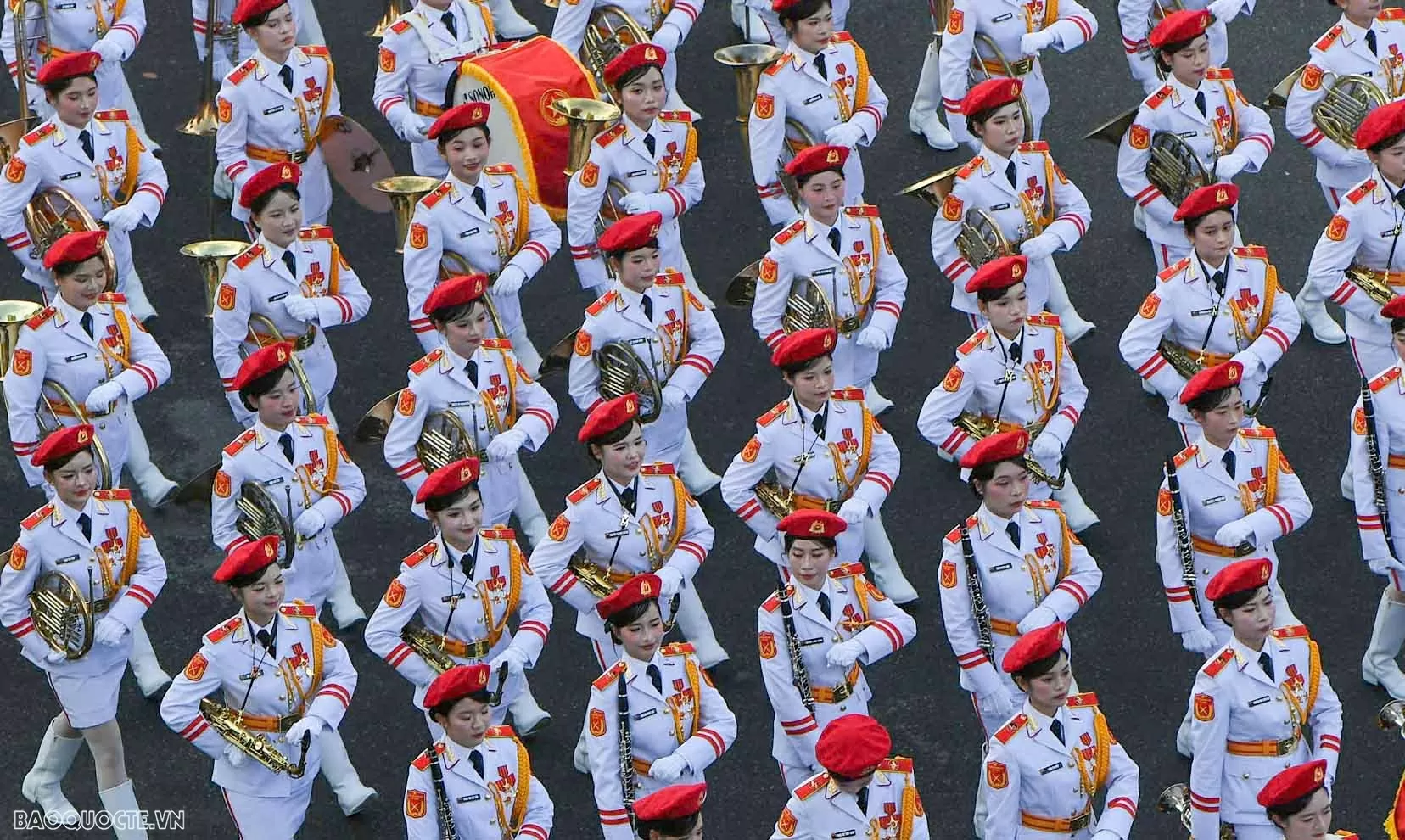 |
| Image of the parade celebrating the 80th National Day. (Photo: Nguyen Hong) |
To enhance vigilance among young people, there needs to be a coordinated effort between family, school, and society. In your opinion, how should each side fulfill its role to create a safe and healthy environment for young people to develop?
Family, school, and society are like a tripod; if one leg is missing, the tripod cannot stand firm. The family is where the first seeds are sown: Integrity, love, pride in tradition. If during meals, parents can talk to their children about history, about stories of living virtuously, that is an early "cultural vaccine".
Schools play the role of nurturing skills: Critical thinking, digital skills, the ability to filter information. It's not just about teaching them "what's right, what's wrong", but more importantly, teaching them how to find answers themselves in a world full of data and temptations.
Society, including media, organizations, and the online environment, needs to create healthy playgrounds where young people are both challenged and inspired. An attractive mainstream news report, a youth volunteer campaign, or simply a transparent digital platform can become an effective "firewall".
When these three links are synchronized, we not only help young people avoid the dangers of harmful information, but also create a confident, courageous generation that knows how to protect the nation in the 4.0 era.