






Dr. Trinh Le Anh: Teachers must ignite the flame to shape individuals who will master the future
WVR - In a learning environment dominated by technology, where students may feel isolated, stressed, and anxious, teachers must serve as the emotional bridge.
Latest
 |
| Dr. Trinh Le Anh believes that educators must be experts in their fields. |
The era of technology presents the greatest opportunity for teachers to reaffirm their irreplaceable role: Igniting the flame, shaping individuals who are not only intellectually smart but also deeply soulful, possessing the courage and empathy to master the future.
We are discussing the future of an entire generation, about the mission of teachers in a world where information is limitless but understanding and wisdom are finite.
As an educator and researcher, Dr. Trinh Le Anh from the University of Social Sciences and Humanities – VNU shared his perspectives on this matter on the occasion of Vietnamese Teachers' Day (November 20th).
The boundary between application and dependence on technology
What is your perspective on the role of teachers in the digital era, where technology increasingly influences all fields, including education?
In this new context, the role of teachers is redefined in three core pillars that technology can hardly replace: First, teachers are the inspirers. Technology can provide information and data, but it cannot ignite passion. In reality, a good teacher is one who "sparks inspiration and passion for learning in students". It is the gaze, the energy, the stories, and the human connection that transform a dry subject into an exciting journey of discovery.
Second, teachers are experience designers. Instead of delivering content unilaterally, modern teachers design contexts, projects, and situations for learners to apply knowledge and create understanding.
They are the "conductors" who coordinate and use technology as powerful tools, from Gamification to Virtual Reality (VR) or Augmented Reality (AR), to turn the classroom into an interactive, creative, and problem-solving space.
Third, perhaps most importantly, teachers are critical thinking coaches. In the digital era, we are not "starving" for information but are overwhelmed with it, with truth and falsehood intertwined. As I have shared in another context, one of our weaknesses is sometimes the lack of comparison and the desire to go straight to the truth. The digital era exacerbates this.
| "If the digital education landscape is likened to a vehicle, then technology is the wheel, policy is the road, but humans are the drivers, the motivation, and the reason for the vehicle to move". |
Therefore, the ultimate role of teachers today is not to provide the correct truth but to equip learners with a filter and a scientific methodology. Teachers teach students how to learn for lifelong learning, and more importantly, teach them how to doubt scientifically. They teach how to ask questions, compare, debate, and find their own truths.
In summary, teachers are no longer the "sage on the stage" but have transformed into the "guide on the side" and "architects of the learning journey".
What is the boundary between applying technology and depending on it in teaching? How can teachers master it instead of being led by it?
This is a very practical and urgent question. The boundary between application and dependence lies in who is the subject and what is the goal. Dependence occurs when the tool's features dictate the lesson content. Application (or mastery) occurs when pedagogical goals determine the choice of tools. A dependent teacher will start with the question: "I just installed a new VR software, what lesson can I use it for?".
This is when technology leads pedagogy. Teachers become "device operators" and students only interact with screens instead of people. Conversely, a "mastering" teacher will always start with pedagogical goals. They ask: "The goal of today's lesson is to help students deeply understand the structure of a cell. What is the best method? Perhaps VR technology will allow them to 'step inside' the cell most intuitively". Here, pedagogy leads technology.
The golden rule to protect this boundary is: "Pedagogy first, technology second". Even in specialized fields like teaching political theory, the application of information technology must absolutely serve the goals of "Party character, revolutionary character, scientific character" of the lesson, not to make the lesson chase technological effects.
So how can teachers "master" instead of being "led"? In my opinion, there are three levels of mastery: First, mastering pedagogical goals. Teachers must be experts in their field and in educational science. They must know what competencies they want students to achieve before thinking about any tool.
Besides, mastering the tools. Teachers need to be thoroughly trained, not just in button-pressing, but in the philosophy of using those tools. They need to understand the levels of technology integration, from basic (drafting) to creative (using AI, designing simulations).
Additionally, mastering freedom (Automation for Liberation). This is the highest level of mastery. Many worry that AI will take away teachers' jobs. But a "mastering" teacher will see AI as a powerful assistant. They use AI to free themselves from repetitive, time-consuming tasks like grading multiple-choice tests, taking attendance, or administrative tasks.
And here is the crux: A "dependent" teacher will use the freed time to explore a new technology application. But a "mastering" teacher will use that precious time to do what technology cannot: engage in deeper conversations with students, organize "high-touch" debates, and care for students' mental health.
Mastering technology does not mean using a lot of technology. Mastering is using the right technology, at the right time, for the right pedagogical goals. Most importantly, mastering is knowing when to turn off technology to make human connections.
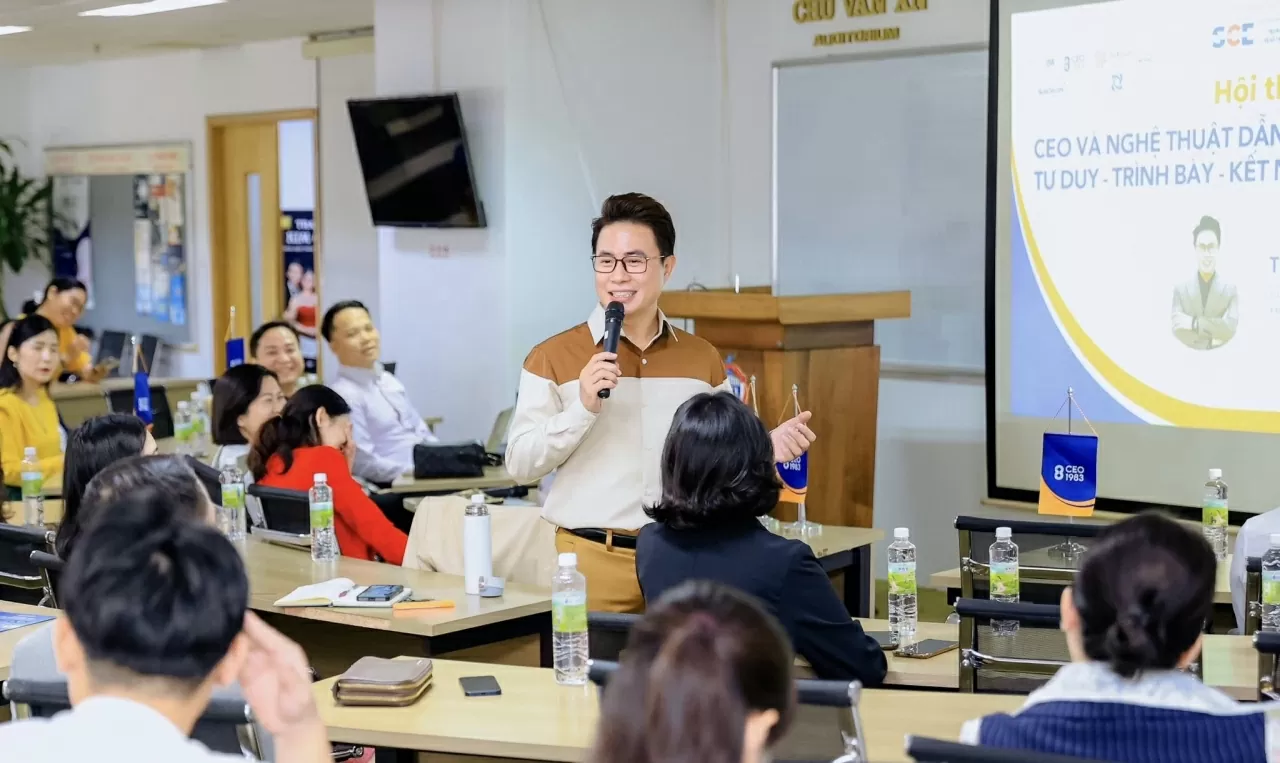 |
| Dr. Trinh Le Anh believes the digital era is the greatest opportunity for teachers to reaffirm their irreplaceable role. |
In the digital education landscape, what element should be placed at the center? And how can these elements harmonize and complement each other?
In my view, humans must always be at the center. Technology - policy - humans are the "three-legged stool" of digital education transformation. But if the digital education landscape is likened to a vehicle, then technology is the wheel (means), policy is the road (support), but humans (both teachers and students) are the drivers, the motivation, and the reason for the vehicle to move.
Technology is infrastructure, a tool. It provides amazing capabilities: personalizing learning paths, accessing unlimited knowledge, and enhancing management efficiency. But by itself, technology is "soulless".
| "The digital era is not a threat to the teaching profession. On the contrary, it is the greatest opportunity for teachers to reaffirm their irreplaceable role". |
Policy is the legal framework and operational mechanism. It creates conditions and directions. But a misguided policy that focuses solely on investing in equipment (infrastructure) while neglecting teacher training (humans) will only result in enormous waste.
Humans are the subject. Teachers are the operators, creators, and infusers of technology. Students are the receivers, creators of knowledge.
Why are humans the center? Education 4.0 or EdTech (Educational Technology) is not about machines, but about humans interacting with machines. A report on the future of learning has highlighted the necessity of a "human-centered teaching approach". Successful countries in digital education transformation emphasize "training and supporting teachers".
The reason is very simple: Imagine we have the most intelligent AI system in the world, but teachers do not trust it, do not know how to use it, or use it for the wrong pedagogical purposes. In that case, that expensive technology becomes meaningless. Conversely, an empowered teacher with supportive policies can create groundbreaking lessons with very basic technology tools. Humans are the decisive variable in the success or failure of any reform. So how can these three elements harmonize? They should not balance, meaning standing still next to each other, but harmonize in a positive mutual spiral.
That is, everything must start from a human-centered policy. Instead of just allocating budgets to buy hardware, policies must prioritize training, nurturing, and developing humans. Policies protect teachers from administrative burdens and reward their innovation efforts appropriately.
When humans are empowered, they will proactively and creatively master technology. They will confidently integrate technology into lessons, rather than being forced to do so mechanically.
When technology is mastered, it will return to serve humans most effectively (personalizing learning, creating rich learning experiences). At the same time, it provides data to prove effectiveness, helping policymakers continue to improve and adjust accordingly. Harmony only comes when policy and technology revolve around and serve the ultimate goal: The comprehensive development of humans – both teachers and students.
Adjusting policies to enhance the role of educators
From a teacher's perspective, what adjustments or additions should educational policies have to create the best conditions for educators to maximize their role in the digital era?
I believe that the policy philosophy in the digital era must shift from management to empowerment. We need supportive policies that liberate teachers, not policies that use technology to monitor them more closely.
I propose four specific policy groups: First, invest in "digital pedagogy", not just office computing. Many current training programs only stop at teaching teachers how to use software A, how to create E-Learning lessons B. This is necessary but not sufficient. We need in-depth and continuous training programs on digital pedagogy: How to design a blended learning course? How to organize effective debates in the online space? How to assess students' competencies through digital projects? And also how to teach about online safety and mental health in the digital environment.
Second, use technology to "liberate" teachers from administrative burdens. One of the biggest barriers to innovation is the burden of paperwork and reporting. The digital era is at risk of creating more "digital reports", "digital evidence". International reports all point to the potential of AI in "reducing administrative workload" and "automating repetitive tasks".
This must be a strong policy directive. Policies must mandate management levels to apply technology to reduce procedures for teachers, not to increase monitoring. The time freed up is golden time for teachers to fulfill their roles of inspiring and coaching critical thinking.
Third, policies on remuneration must match "digital labor". The role of teachers in the digital era is clearly more complex, requiring more skills: technology skills, digital pedagogy skills, emotional management skills in the online environment. Remuneration policies must recognize this "digital labor". The Ministry of Education and Training's proposal to increase the preferential allowance for teachers is a very positive, timely, and necessary signal for teachers to confidently transform.
Fourth, policies ensuring "digital equity". We cannot talk about digital education when there is still significant inequality in access to devices and internet connectivity. There needs to be a strong national policy to ensure no student, especially in remote, mountainous, or island areas, is left behind in this revolution. Policies should also focus on building a national open educational resource ecosystem, so all teachers and students can access high-quality educational resources for free.
A good policy will not ask "How to manage teachers with technology?", but will ask "How can this technology and policy best support teachers?".
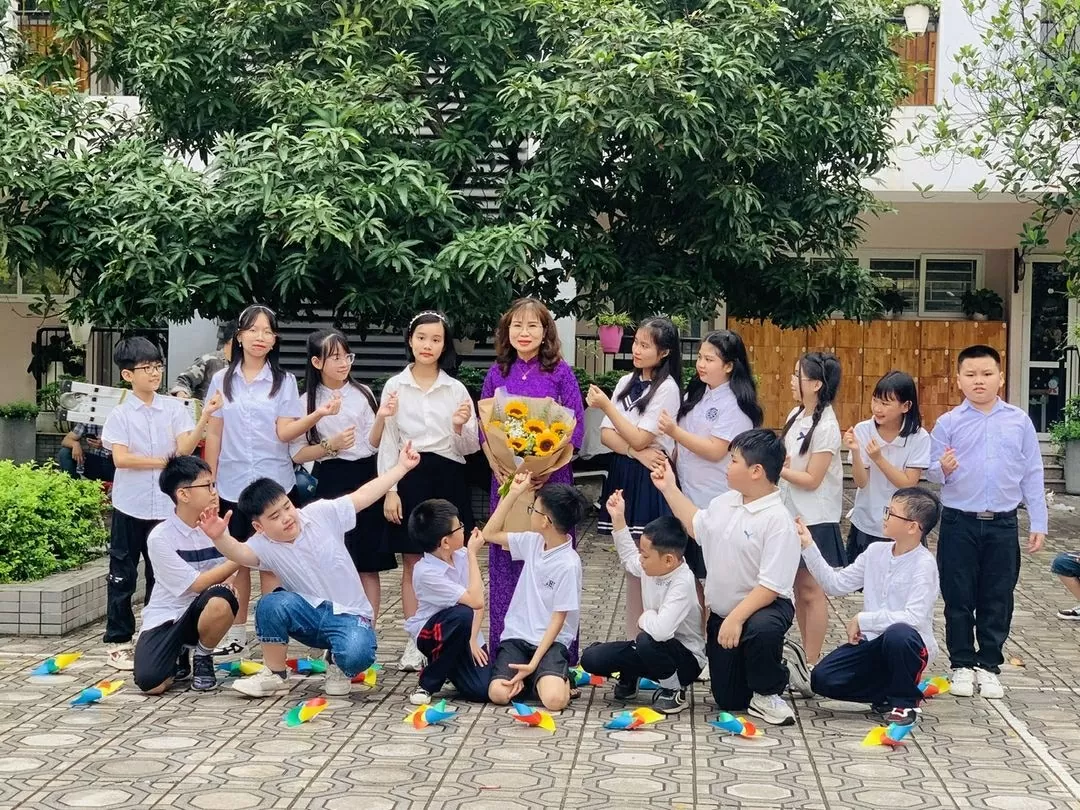 |
| The greatest transformation of teachers, perhaps, is courage. (Photo: Nguyet Anh) |
Transforming to harmonize technology and emotions
In a teaching environment increasingly reliant on technology, how should educators "transform" to balance the use of technology with maintaining emotional connections and attention to each student?
This is a core question, touching the heart of the teaching profession. The "transformation" of educators lies in recognizing a beautiful paradox: The more technology develops, the more precious human connections become.
In a learning environment dominated by technology, students may feel isolated, stressed, and anxious. Teachers, more than ever, must be the emotional bridge. To achieve this, teachers need to "transform" in three aspects: First, shift from "Lecturer" to "Designer of Blended Learning Environments". Teachers need the courage to abandon the "one-way teaching" mindset. Instead, apply models like Blended Learning or Flipped Classroom.
That is, use technology (recording lectures, providing E-Learning materials) for students to receive content before coming to class. Then, the precious time in class (whether virtual or real) is completely freed from lecturing, dedicated to activities that technology does not do as well: Teacher-student interaction, group discussions, debates on issues, and emotional connections. We use technology to protect time for human interaction.
Second, transform to use "technology data" for "empathy" purposes (Data for Empathy). Technology is not just a "screen", it is also a data-generating machine. The transformation lies in teachers learning to use data for empathy. Learning management systems or AI can provide teachers with "data-driven insights". For example, the system might report: "Student A has not logged into the system for 3 days", "Student B always submits assignments at 2 am", "Student C has never spoken on the online forum".
A traditional teacher might overlook this, but a "transformed" teacher will use this data as a reason to start a personal, humane connection: "Hey, I've noticed you've been submitting assignments late at night. Is there something you're struggling with?". Technology detects signs, but only humans can show care and connection.
Third, proactively integrate social-emotional learning (SEL) into teaching. The digital environment can easily stress learners. Therefore, teachers must "transform" by proactively becoming educators of social and emotional learning. This is the process where students learn to recognize, manage emotions, empathize, and build positive relationships.
Research has shown that SEL not only helps reduce depression and stress but also significantly improves academic performance. Teachers can integrate SEL through hypothetical scenarios, "learning through play" activities, even when using simulation tools. The greatest transformation of teachers, perhaps, is courage.
Courage to learn something new every day, courage to accept that they can also be wrong and learn from their students. And courage to prioritize love, patience, and human connection, even when using the most inanimate tools. Technology provides efficiency, but only teachers bring humanity and compassion.
I have a strong belief in the generation of Vietnamese educators. We are standing before a historic opportunity to change and adapt, to prove our value. The digital era is not a threat to the teaching profession. On the contrary, it is the greatest opportunity for teachers to reaffirm their irreplaceable role: Igniting the flame, shaping individuals who are not only intellectually smart but also deeply soulful, possessing the courage and empathy to master the future.