






Vietnam tourism needs a 'positioning identity' in the new phase: Scholar
WVR - Amidst increasing regional competition, Vietnam's tourism requires a sustainable identity to thrive in the new phase.
Latest
Following a breakthrough year in 2025 with over 20 million international visitors, 2026 is anticipated to be the time for the tourism industry to shape a new identity – a "Living Heritage Vietnam, Open to the World". This is the perspective of Dr. Trinh La Anh from the University of Social Sciences and Humanities (VNU), shared with The World and Vietnam Report.
 |
| Dr. Trinh La Anh. |
Pillars for tourism 2026
After the breakthrough year of 2025, what is the most important "pillar" for Vietnam's tourism to enter 2026 with higher quality and sustainability from your perspective?
In my opinion, the most important "pillar" for Vietnam's tourism as it enters 2026 is to shift entirely from a quantity-driven growth mindset to a quality-driven one, focusing on destination management and quality standards as the core.
In 2025, Vietnam demonstrated a significant leap: reaching the milestone of welcoming the 20 millionth international visitor and estimating over 21 million international arrivals for the year. Domestic reports also estimate 21.5 million international visitors, 135.5 million domestic tourists, and total revenue exceeding 1 trillion VND.
However, 2026 will be more challenging due to intense regional competition and ongoing global fluctuations. According to the UN Tourism Organization, global travel demand continues to recover, with the first nine months of 2025 seeing a 5% increase compared to the same period in 2024, and the full year forecasted to grow by 3–5%. This means the market "door" is open, but only those who manage destinations well, control quality, and create unique and sustainable experiences can maintain momentum.
For Vietnam, this "pillar" needs to be concretized by three actions: First, standardizing service quality and experiences (from accommodation, transportation, and guiding to safety and civility at destinations). Second, managing destinations based on data (visitor flow, capacity, spending, feedback) to make quick and accurate decisions. Third, investing in human resources with service skills, foreign languages, cultural etiquette, and experience design capabilities, as ultimately, quality lies in people.
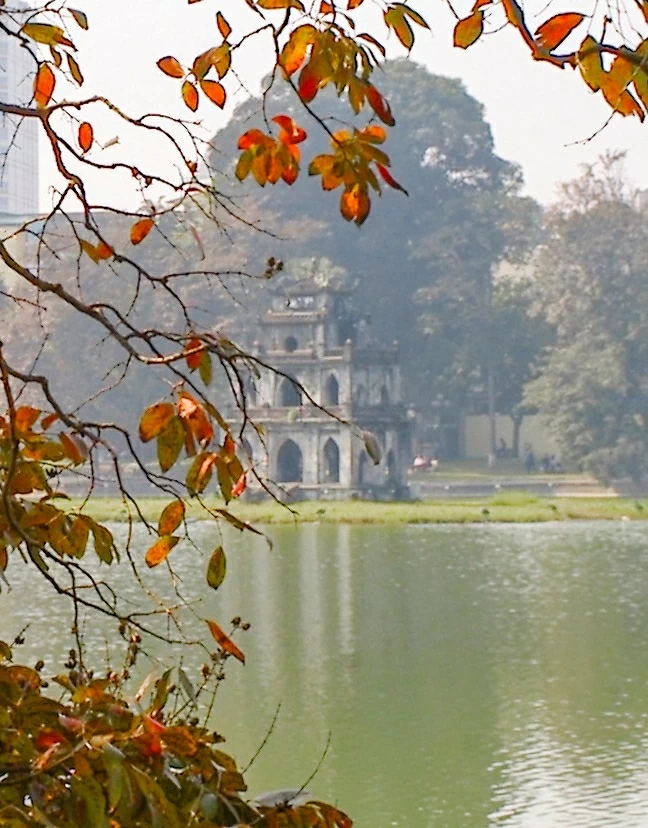 |
| A peaceful Hanoi. (Photo: Ngo Minh Chau) |
Entering 2026, Vietnam's tourism is expected not only to be a service industry but to evolve into a creative industry. In your view, what changes are required in product development, destination management, and storytelling about Vietnam?
In reality, tourism does not stand "beside" creative industries but increasingly acts as a market launchpad for them. Film, music, design, cuisine, crafts, performing arts, gaming, fashion… all need "consumption spaces" and "visitor flows" to transform creativity into revenue, jobs, and identity.
Conversely, creative products make tourism distinctive, helping destinations move beyond the "beautiful scenery – low cost" race to the "experience – emotion – storytelling" race. Therefore, if we expect Vietnam's tourism in 2026 not only to be a service industry but to shape up as a "creative industry", then I believe changes are needed simultaneously in three areas:
First, product development: From "tour packages" to "designed experience works". Products must have a concept, a "script", emotional rhythm, artistic/culinary/cultural highlights, and quality standards for scaling. Then, the question is no longer "where to go – what to eat – where to sleep", but "what theme will tourists experience Vietnam under": Living heritage, storytelling cuisine, night economy, festivals, film tourism… Each product must clearly define its target audience, unique value, and corresponding price.
For example, instead of selling a "one-day Hanoi tour", we offer "a night in Hanoi" designed as a work with a clear concept, emotional climax, artistic and storytelling culinary highlights, quality standards for scaling; tourists don't just visit to know but experience to remember and are willing to pay accordingly.
Second, destination management: Viewing tourism as a "destination ecosystem/service ecosystem". For creativity to flourish, the destination must operate as a synchronized system: transportation, environment, security, public spaces, service quality, communication, and community roles. Modern management needs to be data-driven and involve intersectoral coordination to both encourage creativity (urban nights, events, experiential streets…) and control capacity, standardize services, and protect resources.
Thus, destination management must view the destination as an "operational complex" (transportation, environment, security, services, communication, community). When the 2026 target is set high (e.g., 25 million international visitors, 150 million domestic tourists), there is an even greater need for intersectoral coordination and regional linkage for smooth operation.
Third, storytelling about Vietnam: From "introduction" to "leading experiences and creating meaning". International tourists don't just buy scenery; they buy meaning and the feeling of being welcomed. Vietnam needs to tell the story of a country rich in heritage yet contemporary: Living heritage in daily life, friendly people, dynamic cities, each destination with a clear "character". Good storytelling will extend stay duration, increase spending, and motivate return visits.
Vietnam should tell the story in the direction of: A "vibrant" Vietnam – heritage not in glass cases but in life; An "open" Vietnam – easy to come, easy to move around, friendly; A "modern" Vietnam – creative, young, dynamic, not just a war memory or "cheap destination".
In summary, calling tourism a "creative industry" is not about changing slogans but changing practices: Designing experiences – managing the destination ecosystem – deep storytelling, so creativity becomes a genuine added value for Vietnam's tourism.
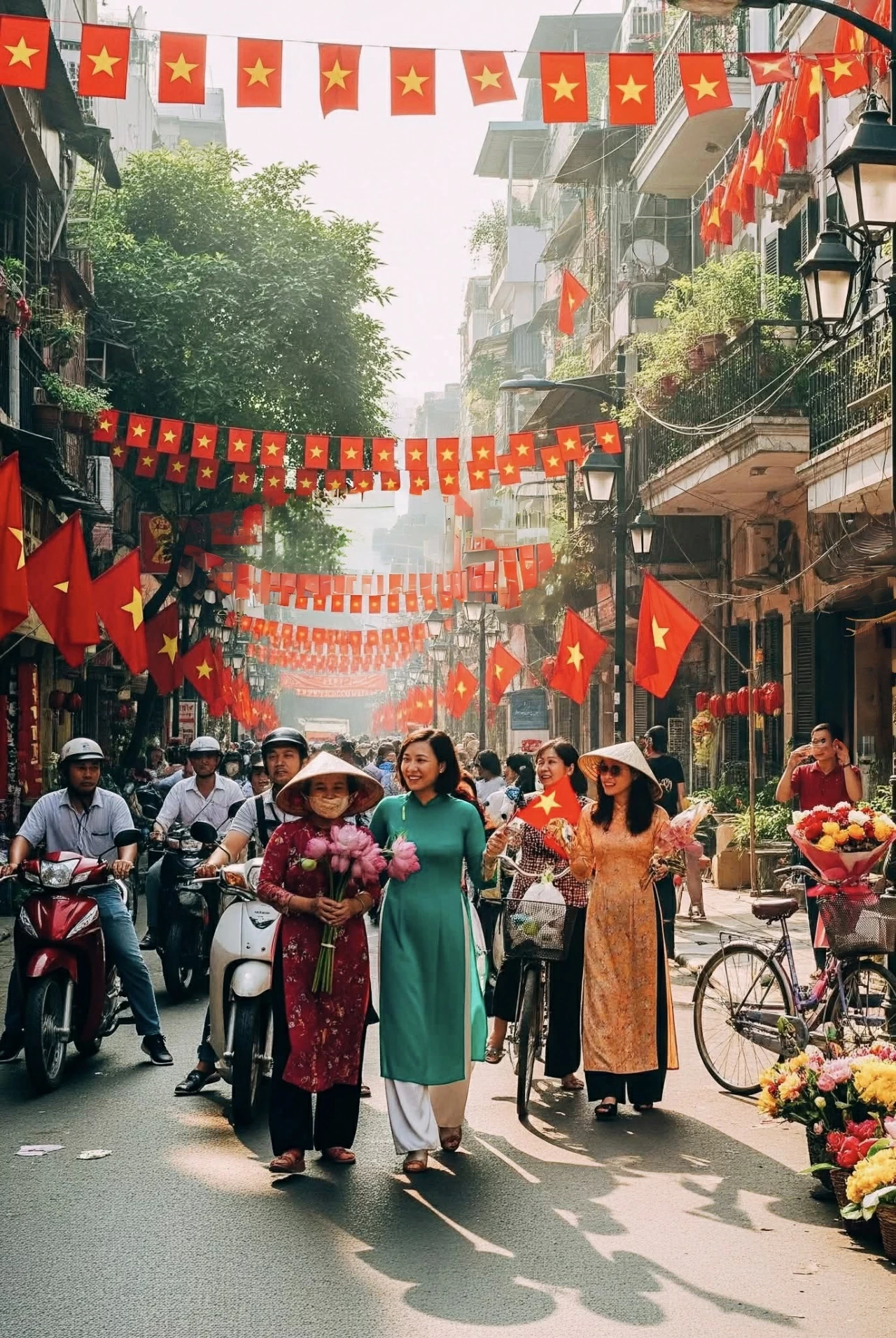 |
| Vietnam tourism has made positive strides in 2025. (Photo: Ngo Minh Chau) |
Bottlenecks to resolve
So what are the "bottlenecks" that need priority resolution in 2026 for this ecosystem to operate effectively and create genuine added value, in your opinion?
In my view, 2026 has four "bottlenecks" that need early resolution, which 2025 has clearly highlighted through various specific situations: First, the "travel – visitor flow distribution" bottleneck: Congestion at gateways disrupts experiences right from the start. It's not hard to see congestion at airports during peak seasons.
During the 2025 Tet holiday, Nội Bài was forecasted to handle about 90,000 passengers/day (with peak days reaching 100,000), while Tân Sơn Nhất recorded long queues, high flight and passenger loads. Even in daily operations, Tân Sơn Nhất's domestic terminal T1, designed for about 15 million passengers/year, frequently experiences overload.
When the "gateway" is strained, we encounter a chain reaction: Delayed flights – tour congestion – reduced experience time – increased frustration – decreased spending at destinations. Resolving this bottleneck is not just about infrastructure but also about seasonal coordination, off-season product offerings, and regional linkages to distribute visitors.
Second, the "peak season overload – service standard deficiency" bottleneck: Rapid increase in numbers but quality lags behind. Long holidays are always a "stress test" for destinations.
During the April 30 – May 1, 2025 holiday, many places reported very high room occupancy, with some reaching 90%, meaning pressure on transportation, sanitation, security, eateries, and attractions. When quantity increases but standards don't keep up, experiences easily fall into "crowded–expensive–tiring".
Third, the "commercial civility – tourist trust" bottleneck: Just one "rip-off" incident can tarnish the image. In 2025, there were still stories causing frustration like "one taxi ride ruining the impression of the entire trip".
Media reported cases of foreign tourists being charged taxi fares from Nội Bài to downtown Hanoi several times higher than usual, prompting authorities to intervene. Such incidents are not "minor", as they damage the message of "Friendly – Safe Vietnam", while tourism heavily relies on word-of-mouth and social media reviews.
Fourth, the "environment – climate risk" bottleneck: If resources degrade, added value cannot be sustainable. 2025 highlighted a concerning paradox, with international visitors increasing sharply but destination images under pressure from pollution and natural disasters.
Reuters described Vietnam approaching a record of about 21 million international visitors in 2025, while also emphasizing challenges like air pollution (especially in Hanoi) and floods affecting destinations like Hue, Hoi An, Nha Trang.
The issue of fine dust in Hanoi has also been reflected through international tourists' experiences on various forums. Tourists have also reacted to plastic waste in areas like Ha Long Bay/Cat Ba. Conversely, there are positive signals such as Hoi An reducing plastic waste by 30–35% in six months thanks to specific intervention programs, serving as a good model for replication.
In summary, resolving the "bottleneck" in 2026 is about shifting from a "welcoming as many as possible" mindset to "operating as well as possible": Good at gateways (smooth travel – reasonable visitor flow distribution); Good in service standards (transparent pricing – civilized attitude – competent workforce); Good in environment and safety (so tourists feel secure to stay longer – spend more – return). If achieved, added value will come naturally: no need for much promotion, just good enough experiences for tourists to tell Vietnam's story themselves.
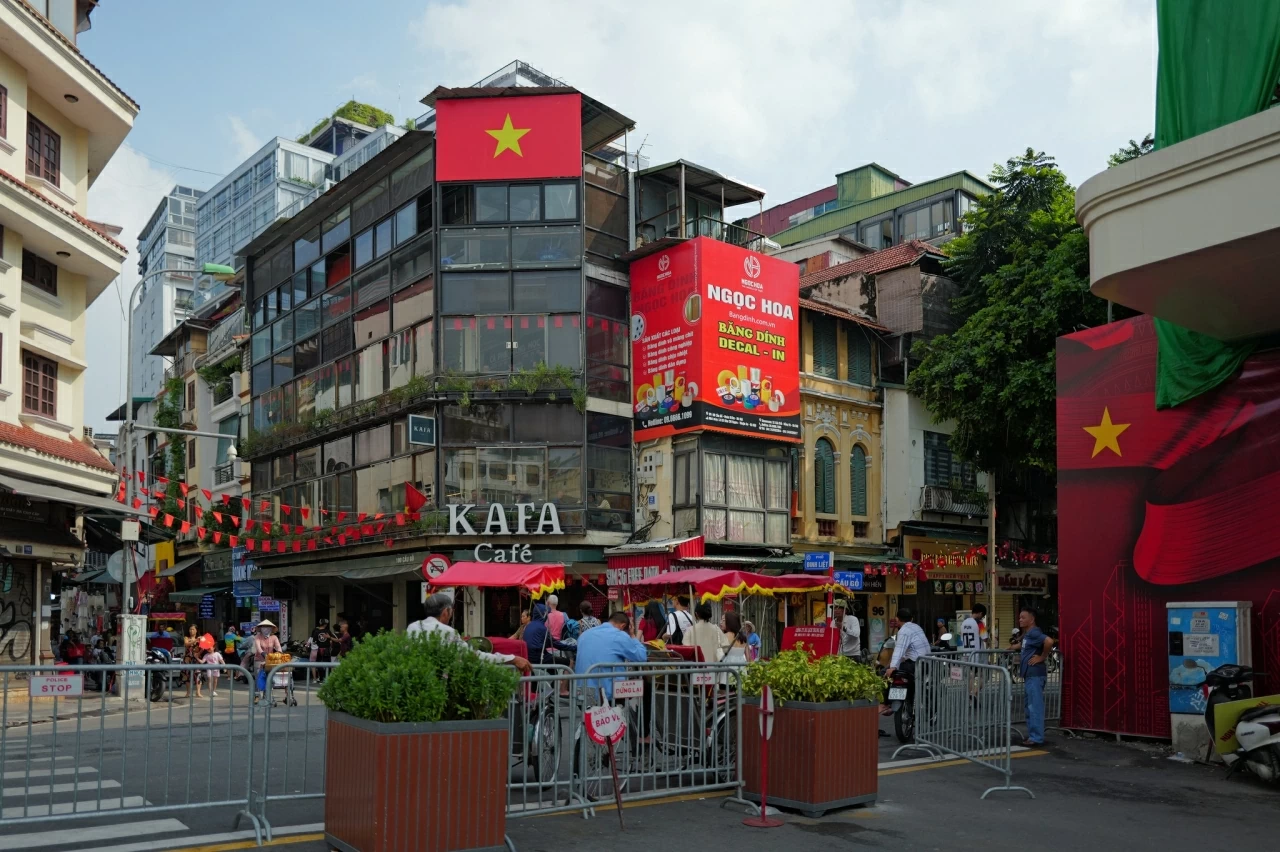 |
| Designing experiences – managing the destination ecosystem – deep storytelling, so creativity becomes a genuine added value for Vietnam's tourism. (Photo: Ngo Minh Chau) |
In the context of increasingly fierce destination competition in the region and globally, how do you expect Vietnam's tourism to be recognized on the global tourism map in the coming years? What is the core message that needs to be spread to affirm the image of a dynamic, open, safe, and culturally rich Vietnam?
In the context of increasingly fierce destination competition, I expect Vietnam's tourism in the coming years to move beyond the familiar "labels" of beautiful – cheap – crowded, to be more clearly recognized as a destination "rich in cultural living experiences, diverse nature, increasingly standardized services, with modern storytelling capabilities".
I say this because Vietnam has very favorable "pieces" to position itself: In terms of competitiveness, Vietnam is highly rated for competitive pricing (ranked 16th) and safety – security (ranked 23rd) in the 2024 Travel and Tourism Development Index (TTDI) by the World Economic Forum; it also ranks well in natural and cultural resources.
The year 2025 also showed strong appeal as Vietnam approached a record of about 21 million international visitors, despite challenges like air pollution and floods at some destinations.
The momentum for 2026 is therefore very clear, with a target of 25 million international visitors, 150 million domestic tourists, and revenue of about 1.12 trillion VND. But upcoming competition will be a race for differentiated experiences and destination reliability, not just visitor numbers.
This is the time when Vietnam's tourism needs a "positioning identity" that is both sharp and sustainable, with a core message that should be "nailed" in a way that is both internationalized and retains its identity. That is "Vietnam: Living Heritage, Open to the World".
The important thing is that this message must be conveyed through real experiences. Well-designed cultural – culinary – natural products, decent and standardized services, cleaner environments, and a sense of being "welcomed" at every destination. Then, the dynamic, open, safe, and culturally rich image will not need "advertising", but will naturally spread through the stories tourists bring back.