


Global Network: The common home for Vietnamese language keepers
WVR - Shortly after its formation and connection, the Global Network for Teaching Vietnamese Language and Culture is gradually affirming its role as a bridge among those involved in teaching Vietnamese across continents.
Latest
From small classes to language centres, expatriate associations, or formal teaching programs in schools, the Global Network for Teaching Vietnamese Language and Culture has created a space to share experiences, teaching methods, and learning resources, paving the way for a new step in the effort to preserve and develop the mother tongue within the Vietnamese community.
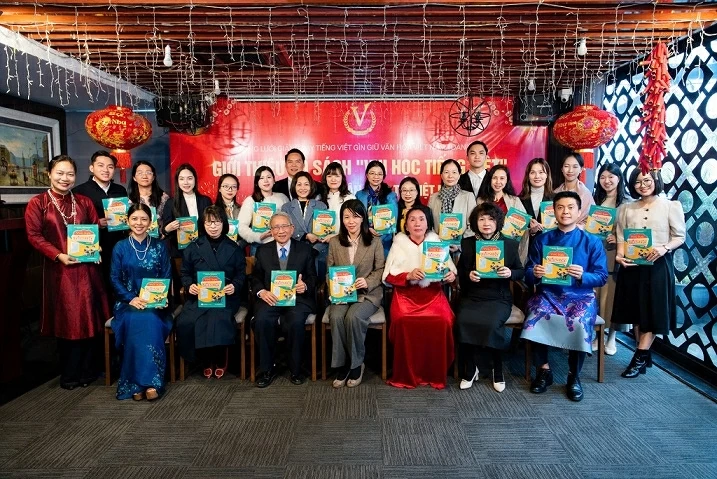 |
| The Global Network for Teaching Vietnamese Language and Culture introduces the book series "Vui hoc tieng Viet". |
Preserving the mother tongue and promoting Vietnamese culture
In September 2025, in Fukuoka (Japan), the Global Network for Teaching Vietnamese Language and Culture officially launched, attracting the attention of many domestic agencies, Vietnamese diplomatic representatives in various countries, scholars, teachers, and the expatriate community.
The initiative, spearheaded by the Consulate General of Vietnam in Fukuoka, aims to build a common home for teachers, parents, students, and those interested in teaching and learning Vietnamese abroad.
The formation of a global connection system will enhance the quality of Vietnamese language teaching, support teachers with methods, materials, and technology, and create an academic forum for exchanging experiences among experts, educators, and researchers.
The network is built on three core objectives: preserving and developing Vietnamese as a symbol of national identity; connecting the Vietnamese community worldwide; and promoting the image of a modern, friendly, and rich-in-tradition Vietnam internationally.
Beyond the goal of language learning, Vietnamese classes abroad are also linked with exploring history, culture, cuisine, and traditional arts. Each Vietnamese class abroad is a cultural connection point, contributing to nurturing love for the homeland and strengthening national identity. Here, young expatriates are introduced to fairy tales, folk songs, traditional music, the Lunar New Year, and customs of their homeland.
One of the major challenges in teaching Vietnamese to children born abroad is the difference in language environments. To address this, the network focuses on developing flexible, dynamic, and internationally appropriate teaching methods; organizing numerous global training programs for Vietnamese teachers abroad, focusing on modern teaching methods, digital learning material skills, and creating engaging learning environments for expatriate children.
A notable example is the global training class on teaching methods using the book series Vui học tiếng Việt, attracting hundreds of teachers from various countries. This series is built on a learner-centered approach, viewing Vietnamese not just as a subject but as a cultural space for Vietnamese children abroad to access, experience, and connect with.
This is the result of continuous research, experimentation, and adjustment, based on feedback from teachers participating in training classes and practical teaching in many countries. The program is seen as a significant step in standardizing and internationalizing Vietnamese language teaching activities for the Vietnamese community abroad; helping expatriate children access Vietnamese more naturally while gaining a deeper understanding of national culture and history.
A borderless connection model
According to Mr. Nguyen Duy Anh, President of the Vietnamese Association in Fukuoka and Secretary-General of the Global Network for Teaching Vietnamese Language and Culture, the participation of volunteer teachers, expatriate associations, and domestic scientists will create an important foundation for the network's sustainable development. When resources are effectively connected, teaching and learning Vietnamese will no longer be isolated efforts but will become a widespread movement within the community.
The Secretary-General of the Global Network for Teaching Vietnamese Language and Culture also stated that one of the main focuses over the past year has been organizing training and professional development classes for teaching Vietnamese to teachers and volunteers in Vietnamese communities abroad.
According to him, the training classes are conducted both in-person and online, focusing on methods for teaching Vietnamese to bilingual children, building lessons linked to Vietnamese culture, and sharing experiences in organizing classes suitable for the actual conditions in each country.
"The training classes not only enhance the professional capacity of teachers but also create a unified direction and teaching method throughout the network," Mr. Nguyen Duy Anh emphasized.
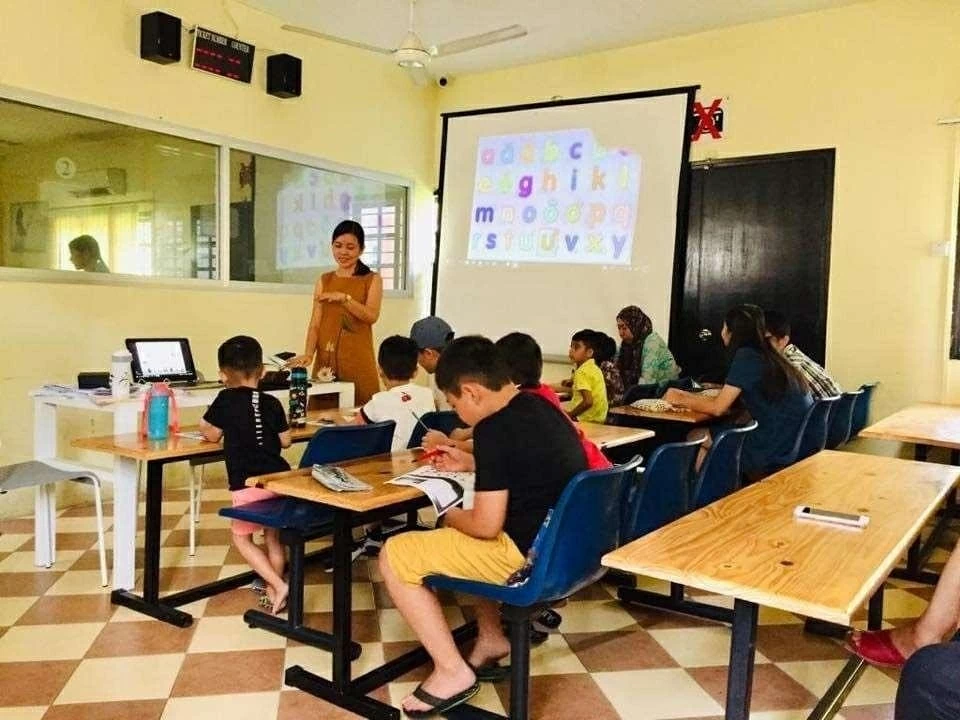 |
| Teacher Nguyen Thi Lien in a Vietnamese class in Malaysia. |
The network currently maintains connections with Vietnamese teaching communities in many countries through a system of Deputy Secretaries-General responsible for each region. Each area is associated with specific models such as schools, Vietnamese language centers, Vietnamese associations, language clubs, or cultural-religious organizations, creating a practical foundation for spreading and preserving Vietnamese abroad.
Currently, the Deputy Secretaries-General are active in 14 regions, including Laos, Cambodia, Thailand, Malaysia, Republic of Korea, Australia, Sri Lanka, Taiwan (China), Russia, Germany, France, the Netherlands, Poland, and the USA. Through these focal points, the network regularly monitors the teaching and learning of Vietnamese in the area, promptly providing professional support to teachers and community classes.
Ms. Nguyen Thi Lien, Vietnamese Language Ambassador 2023, Deputy Secretary-General of the Global Network for Teaching Vietnamese Language and Culture in Malaysia, shared that the training classes have provided teachers at the grassroots level with more tools and clearer directions in teaching.
"In the coming time, we plan to organize teaching classes in several countries, focusing on guiding the teaching and learning of Vietnamese using the book series Vui hoc tieng Viet (volumes 1 and 2), thereby contributing to standardizing teaching content and enhancing the effectiveness of Vietnamese classes in the Vietnamese community.
With the participation of many educators, intellectuals, and representatives from the expatriate community in various countries, the network hopes to continue expanding its activities, promoting cooperative initiatives, and contributing to the stronger spread of the Vietnamese language," Mr. Nguyen Duy Anh shared.
Building a global Vietnamese class map
It is evident that connecting representatives across continents has facilitated the Global Network for Teaching Vietnamese Language and Culture in sharing teaching experiences, building learning materials, and organizing regional Vietnamese language promotion activities, gradually forming a transnational Vietnamese education community.
In the near future, the network will launch the special publication "Map of Vietnamese Classes Worldwide and the Situation of Teaching and Learning Vietnamese in the Vietnamese Expatriate Community in 2025" to reflect the overall picture of Vietnamese teaching and learning activities in the expatriate community today.
Based on the aggregation of data, class models, and exemplary initiatives in many countries, the special publication aims to form a "global Vietnamese map", thereby connecting classes, teachers, organizations, and communities involved in preserving and promoting Vietnamese abroad.
The content of the special publication includes main sections: An overview of the situation of teaching and learning Vietnamese abroad in 2025; a map of Vietnamese classes worldwide with statistics, distribution by region, and class types; introduction of exemplary teachers, parents, students, and community models in maintaining Vietnamese classes; articles, and research on the role of Vietnamese in community connection, the application of technology and artificial intelligence in teaching, as well as experiences in building effective learning environments.
The publication is expected to become a valuable long-term reference source for research, policy-making, and community connection; while also contributing to spreading the love for Vietnamese, enriching cultural identity, and connecting generations of Vietnamese worldwide.