


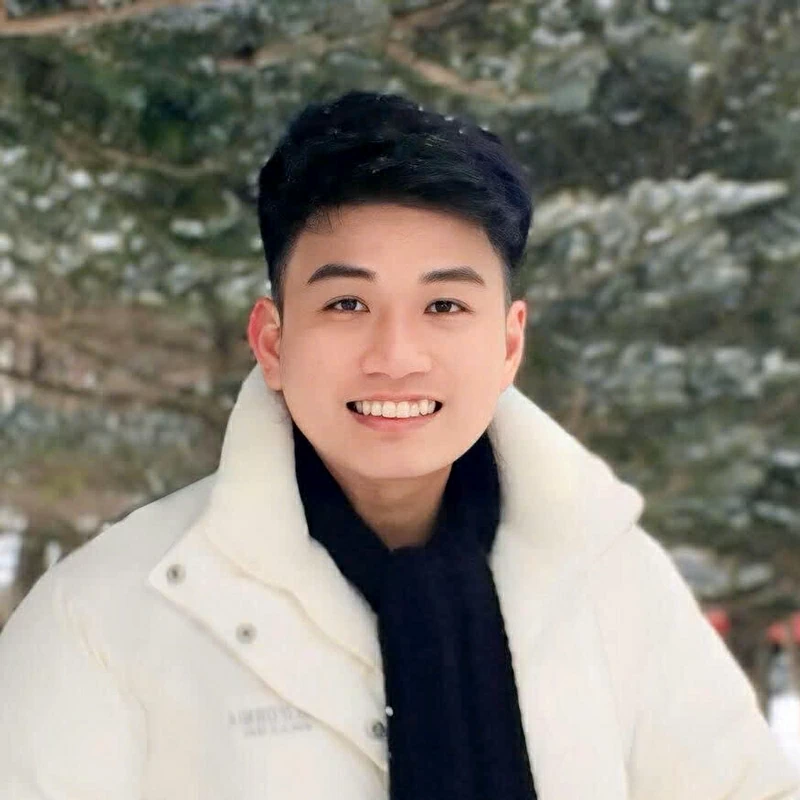

Professor Thach Nguyen and his journey of connecting Vietnamese cardiology with global medicine
As a Vietnamese-American interventional cardiologist widely recognised by the international medical community, Professor Thach Nguyen has left a distinct mark not only through impactful scientific research and scholarly publications but also through his sustained commitment to bridging global medical knowledge with the advancement of cardiology in Vietnam and throughout Asia. For him, going abroad is a path of intellectual growth, and his return, shaped by learning, responsibility, and a spirit of service, embodies the very essence of a true scholar.
Latest
From a clinical moment to the choice of interventional cardiology
Reflecting on his professional journey, he points to a formative moment during his clinical training when he was directly involved in the care of a patient suffering a heart attack. At the time, the use of thrombolytic therapy to restore coronary blood flow by recanalising an acutely occluded artery was an emerging and disruptive development in cardiology. Witnessing how rapid, decisive intervention, grounded in cutting-edge scientific innovation, could dramatically alter a patient’s outcome left a deep and lasting impression on him. This experience was pivotal in shaping his aspiration to be at the forefront of cardiology.
Beyond its profound humanistic significance, cardiology is one of the most intellectually demanding and technically exacting fields in medicine-requiring rigorous systems thinking, uncompromising precision, and extraordinary professional resilience. At the same time, the American scientific community thrives on bold ideas, disruptive thinking, and transformative innovation. It was precisely this high-stakes combination of complexity and possibility that compelled him toward interventional cardiology as a lifelong vocation - a field where cutting-edge science, advanced technology, and real-world social impact intersect to create a powerful, tangible pathway for those daring enough to challenge the status quo and redefine what is possible in patient care.
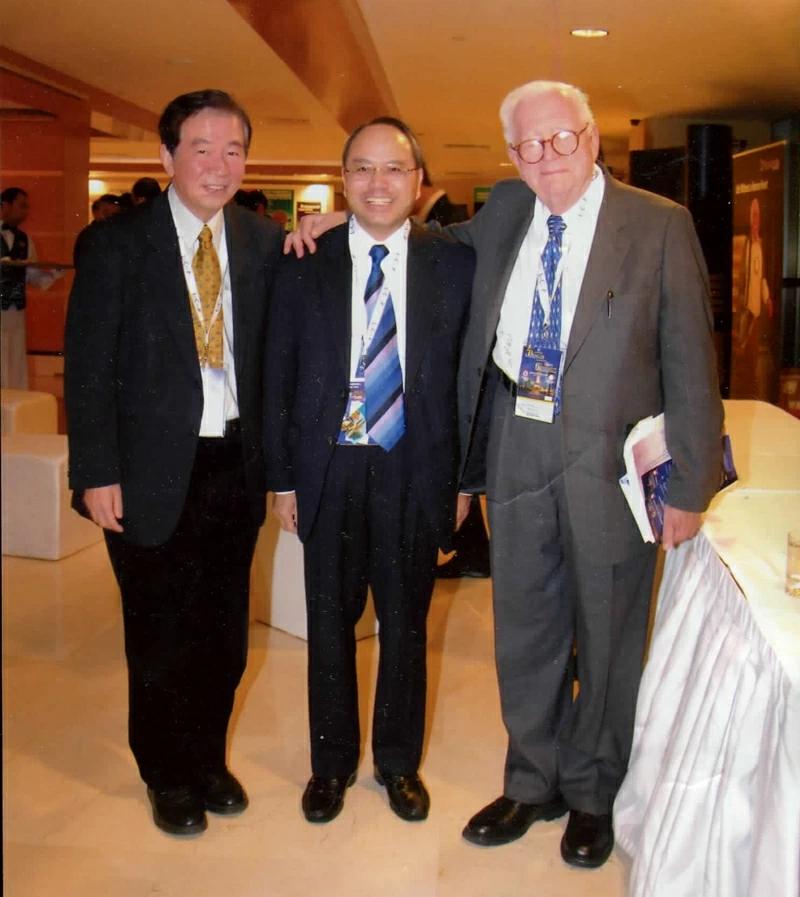 |
| Dr Thach Nguyen with his mentor, Professor Eugene Braunwald (left). |
Visual thinking, systems-based approach, and a philosophy of medical education
Despite having imperfect eyesight and wearing glasses, Professor Thach Nguyen has an exceptionally strong visual memory. He learns and retains information most effectively when he can reconstruct it spatially - in terms of layouts, positions, and relationships among components. This cognitive tendency has drawn him naturally toward dynamic processes such as flow, direction, and energy, which are central to cardiovascular physiology.
From this perspective, he conceptualises complex systems through their internal mechanisms: from networks of conduits and pumps to the heart’s four chambers and valves. In his view, the heart is not a static structure, but a continuously operating dynamic system.
This perspective also profoundly shapes his philosophy of medical education. According to Professor Nguyen, training a competent physician goes far beyond imparting knowledge or technical skills; it is about shaping an individual capable of caring for others. This includes empathy for patients, ethical judgement, integrity, critical thinking, humility, communication skills, teamwork within a modern healthcare system, resilience under pressure, and the preservation of the humanistic values of medicine.
Academic contributions and new directions in cardiovascular research
Throughout his academic career, Professor Thach Nguyen’s work has remained closely aligned with clinical practice. One significant milestone is the publication of the Practical Handbook of Advanced Interventional Cardiology, now in its 6th edition, which focuses on techniques and practical “tips and tricks” that help physicians perform procedures more safely, efficiently, and cost-effectively. Its problem-based approach, featuring solutions ranked by priority, has been widely embraced within the interventional cardiology community.
This was followed by another academic work highly regarded by international experts and often described as a “compass for the modern cardiologist.” The book “Management of Complex Cardiovascular Problems” presents clinical issues by synthesising landmark clinical trials, allowing readers to engage directly with the original data and form independent assessments, thereby strengthening their evidence-based decision-making.
More recently, his research team has pioneered a new direction by integrating vascular biomechanics and wave acoustics with established biological models, offering a unifying explanation for plaque localisation, codified morphology, and variability. By characterising the unique “fingerprint” of hemodynamic forces within individual arteries and mapping the cumulative “footprint” of these forces over time on the vessel wall, this approach evaluates coronary artery disease in a more physiologically grounded manner. It supports lesion classification, guides interventional strategies, and may enable earlier detection of latent abnormalities before they become apparent on conventional imaging.
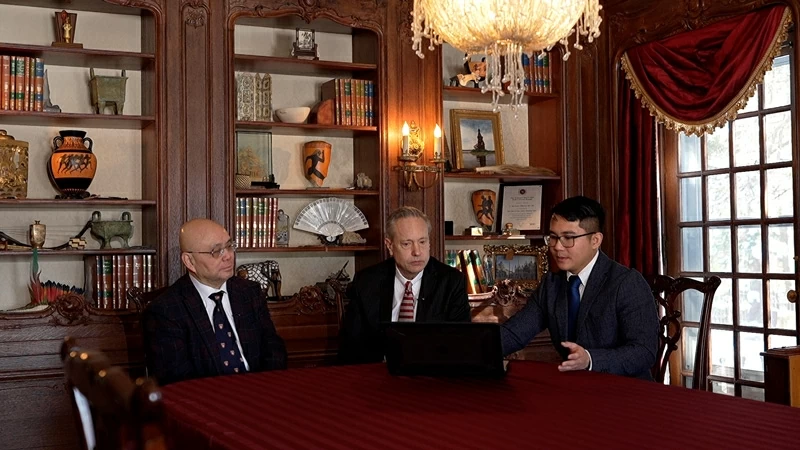 |
| Dr Khiem Ngo (left) presents the latest research findings to Professor Michael Gibson – Executive Director of the Baim Clinical Research Institute, Professor of Medicine at Harvard Medical School, January 2026. |
Preserving Vietnamese roots on a global path
After many years living and working abroad, Professor Thach Nguyen affirms that core Vietnamese values-such as family responsibility, perseverance, humility, and community cohesion-remain deeply embedded in both his personal life and professional career.
When returning to Asia to support the development of interventional cardiology in China, Vietnam, Malaysia, and Thailand, he emphasises adapting international medical knowledge to local contexts. In his view, protocols and technologies proven effective in the US can only realise their full value when flexibly adjusted to regional infrastructure, resources, and healthcare ecosystem.
Addressing young physicians and Vietnamese intellectuals both at home and abroad, he underscores that there is no need to choose between being a global citizen and preserving Vietnamese identity. The most significant impact, he believes, often emerges when local identity is connected with international knowledge and networks-and when expertise is applied not merely for individual achievement, but for the broader benefit of society.
An inspiring mentor for independent research Dr Vu Tri Loc Tan Tao University For me, regardless of the stage, whether as a student or as a practising physician, I have always remained a student of Professor Thach, and that has never changed. When speaking about him, I often recall the well-known words of American writer and educator William Arthur Ward: “The mediocre teacher tells. The good teacher explains. The superior teacher demonstrates. The great teacher inspires.” To me, Professor Thach is truly a great teacher, not only imparting knowledge but also inspiring and nurturing a lasting spirit of learning and research in generations of students. My most vivid memory dates back to 2019, when he allowed me to participate in and present at the TransCatheter Therapeutic meeting in San Francisco, the largest American interventional cardiology conference. Rather than providing detailed instructions as conventionally done, he entrusted me with full autonomy to design the presentation, preserve my scientific ideas, and defend my viewpoints before an international audience. Over the years, I have come to realise that he was quietly imparting a crucial lesson: that a researcher can only truly go far and create lasting value by daring to think differently, proposing provocative ideas, and taking responsibility for their own scientific reasoning. |
|
Continuing the spirit of “service to the community” in a world-class academic environment Dr Minh Le, MD, PhD Postdoctoral research fellow in cardiology and artificial intelligence Department of Cardiovascular Medicine, Yale University Professor Thach Nguyen is an exceptional mentor whose guidance has profoundly shaped my academic mindset and professional trajectory. Building on the foundation he established, I have carried these values into my work in international academic environments, including at leading institutions such as Yale University, where I consistently uphold global scientific standards as the benchmark for all professional endeavours. In a spirit of continuity and gratitude toward my mentor, I actively share my research and clinical experience with students, supporting their engagement with international standards and fostering their systematic academic development. I believe that contributing to the academic community and training the next generation is the most meaningful way to support the deeper integration of Vietnamese medical scholarship into the global scientific landscape. |
| RELATED NEWS | |
 | India to be first country to send students to Vietnam for Master’s Degrees in medicine |
| Vietnamese Coffee – A global heritage connection |