




Protecting human rights in the digital era is a strategic task for the Party, State, and society: Seminar
WVR - On December 5, in Lao Cai, the Office of the Standing Agency of the Human Rights Steering Committee, the Department of Foreign Affairs, Ministry of Public Security, in collaboration with the Institute of Human Rights, Ho Chi Minh National Academy of Politics, organized a scientific seminar titled “Human rights in the digital Era – Theory and practice”.
Latest
The event took place amidst the robust development of the Fourth Industrial Revolution; digital transformation has become an inevitable trend, profoundly impacting all aspects of social life, including the assurance and promotion of human rights. Notably, the seminar is part of activities commemorating the 77th anniversary of World Human Rights Day (December 10, 1948 - December 10, 2025).
In her opening remarks, Colonel Nguyen Thi Thanh Huong, Head of the Human Rights Department, Office of the Standing Agency of the Human Rights Steering Committee, Ministry of Public Security, emphasized that human rights in the digital era is a new and timely issue. It is an urgent practical demand that requires thorough research and discussion to provide the Human Rights Steering Committee with solutions to ensure, protect, and promote human rights in the digital era in line with the Party and State's perspectives.
This is also one of Vietnam's eight priorities during its term as a member of the United Nations Human Rights Council (2026-2028): Ensuring human rights amidst climate change and digital transformation. Thus, ensuring human rights has expanded into the digital space, posing new challenges to human rights protection at the international level, including in Vietnam.
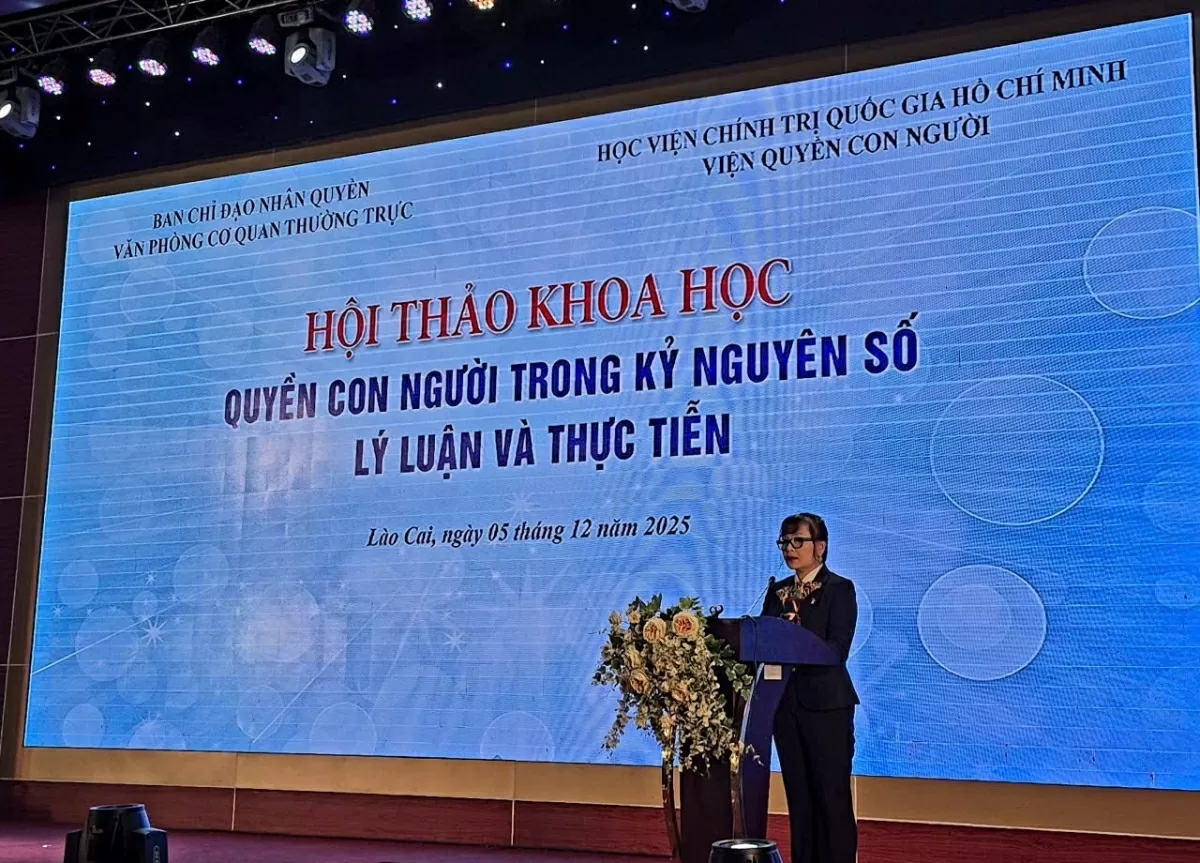 |
| Colonel Nguyen Thi Thanh Huong, Head of the Human Rights Department, Office of the Standing Agency of the Human Rights Steering Committee, Ministry of Public Security, delivers the opening speech. (Photo: VOV) |
Colonel Nguyen Thi Thanh Huong highlighted that with 78.8% of the population accessing the Internet, including 76.2 million social media users, Vietnam recognizes this challenge and considers protecting human rights in the digital environment a key priority in the new era.
At the seminar, delegates focused on discussing and clarifying challenges, opportunities, and proposing theoretical and practical solutions to ensure human rights in the new context; emphasizing the urgent need to complete the legal framework to protect human rights in the digital environment.
| More from WVR |
 Promoting digital transformation while protecting human rights, ensuring digital security, and sustainable development of the nation Promoting digital transformation while protecting human rights, ensuring digital security, and sustainable development of the nation |
In his presentation, Associate Professor Dr. Tuong Duy Kien, Director of the Institute of Human Rights, Ho Chi Minh National Academy of Politics, affirmed that Vietnam is one of the countries with a high rate of internet penetration (over 70% of the population), facilitating citizens' access to information, education, and public services. However, this rapid development also increases the risks of large-scale personal data collection and processing. Despite significant progress with the issuance of personal data protection regulations, the overall legal framework remains relatively new and requires time to shape and strengthen enforcement mechanisms.
To address challenges in the digital era, according to Associate Professor Dr. Tuong Duy Kien, Vietnam needs to focus on improving the legal system in line with international standards on digital rights, based on the Personal Data Protection Law No. 91/2025/QH15 issued by the National Assembly. Specifically, it is necessary to complete the legal framework for personal data protection; establish regulatory mechanisms and responsibilities; develop a Code of Ethics for AI applications; including clear legal provisions requiring major social media platforms to be accountable for disseminated content, especially fake news and illegal content.
Additionally, Dr. Tran Thi Hong Hanh, Institute of Human Rights, Ho Chi Minh National Academy of Politics, pointed out that one of the most urgent requirements in the context of digital transformation is to complete the legal system to address new issues arising in cyberspace, based on the 2013 Constitution and international treaties on human rights to which Vietnam is a member. Vietnam needs to complete an overall legal framework, synchronizing laws on human rights, personal data, and cybersecurity to ensure citizens' rights to control their personal data, including management, deletion, and restriction of information sharing. At the same time, it is necessary to enhance transparency and accountability of state agencies and technology companies, enabling citizens to monitor and respond when their rights are violated.
Sharing about facial recognition and smart surveillance technologies along with the level of risk to privacy and other human rights, Associate Professor Dr. Tran Quang Dieu, Director of the Information Technology Center, Ho Chi Minh National Academy of Politics, believes that Vietnam has a solid legal start with Decree 13/2023/ND-CP on personal data protection, especially recognizing biometrics as “sensitive data”. This is an important foundation, allowing Vietnam the opportunity to lead and avoid repeating the mistakes of other countries.
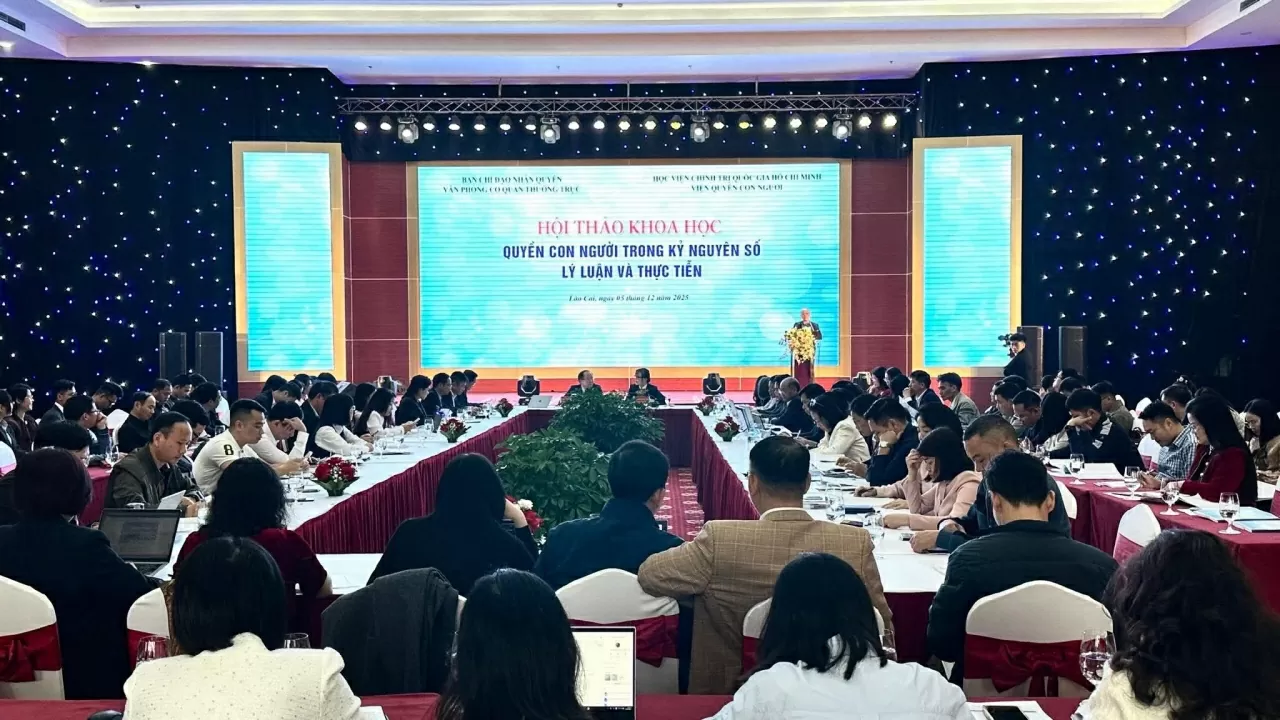 |
| Overview of the seminar. (Photo: VOV) |
By proactively addressing legal “gaps” and establishing technical standards to ensure algorithmic sovereignty, Vietnam can build a balanced AI management and smart surveillance model, ensuring national security and social order while protecting privacy and fundamental human rights.
Meanwhile, Colonel Ha Van Bac, Deputy Director of the Department of Cybersecurity and High-Tech Crime Prevention, Ministry of Public Security, affirmed that as Vietnam faces a sharp increase in cybercrime with approximately 659,000 security incidents in 2024 and over 6.5 million accounts stolen in the third quarter of 2025, enhancing technical measures is essential.
However, the core lies not in the scope of intervention but in the design and operation of measures within a transparent legal framework, adhering to four criteria: necessity, proportionality, controlled transparency, and accountability. These criteria are recognized in international practice and align with the spirit of the 2013 Constitution, Cybersecurity Law, Decree 13/2023/ND-CP, and the Hanoi Convention against Cybercrime.
When implemented comprehensively, these criteria not only ensure the legitimacy of cybersecurity protection activities but also foster cooperation among the State, businesses, and citizens, enhancing the effectiveness of investigation, response, and incident recovery. This allows Vietnam to firmly protect digital sovereignty while creating a “safe - humane - rule of law” online environment, meeting the requirements of sustainable development and deep international integration in the digital era.
In summary, the presentations at the seminar all affirmed: Protecting human rights in the digital era is no longer an option but an objective requirement, a strategic task for the Party, State, and society. This is not solely the work of the legal, technology, security, or state management sectors, but requires interdisciplinary coordination and active participation from the business community, social organizations, the scientific community, and every citizen.

| Developing data as a strategic asset for digital government (2028-2030) Prime Minister’s Decision No. 2629/QD-TTg, which approved the Digital Government Development Programme on December 1, 2025, affirms a guiding principle expanding inclusive and widespread digital ... |

| Ensuring energy security, promoting human rights WVR - In the context of globalization and increasingly deep international integration, energy security has become one of the top strategic issues. It is not ... |

| Developing Ho Chi Minh's ideology on human rights diplomacy WVR - Vietnam's re-election to the United Nations Human Rights Council (UNHRC) for the 2026-2028 term marks a significant victory in human rights diplomacy... |

| Vietnam's election to UNHRC highlights its achievements in ensuring human rights: Scholar WVR - The international community's trust in voting for Vietnam as a member of the United Nations Human Rights Council (UNHRC) for the 2026-2028 term ... |

| Vietnam as a member of the United Nations Human Rights Council: Listening to the voices and aspirations of the youth WVR - Vietnam's continued participation in the United Nations Human Rights Council is seen as an important opportunity for the country to affirm its humane, ... |