




Ensuring energy security, promoting human rights
WVR - In the context of globalization and increasingly deep international integration, energy security has become one of the top strategic issues. It is not only an economic-technical matter, but energy security is also closely linked to human rights. Ensuring a stable, clean, and sustainable energy source is a prerequisite for guaranteeing the basic rights of individuals.
Latest
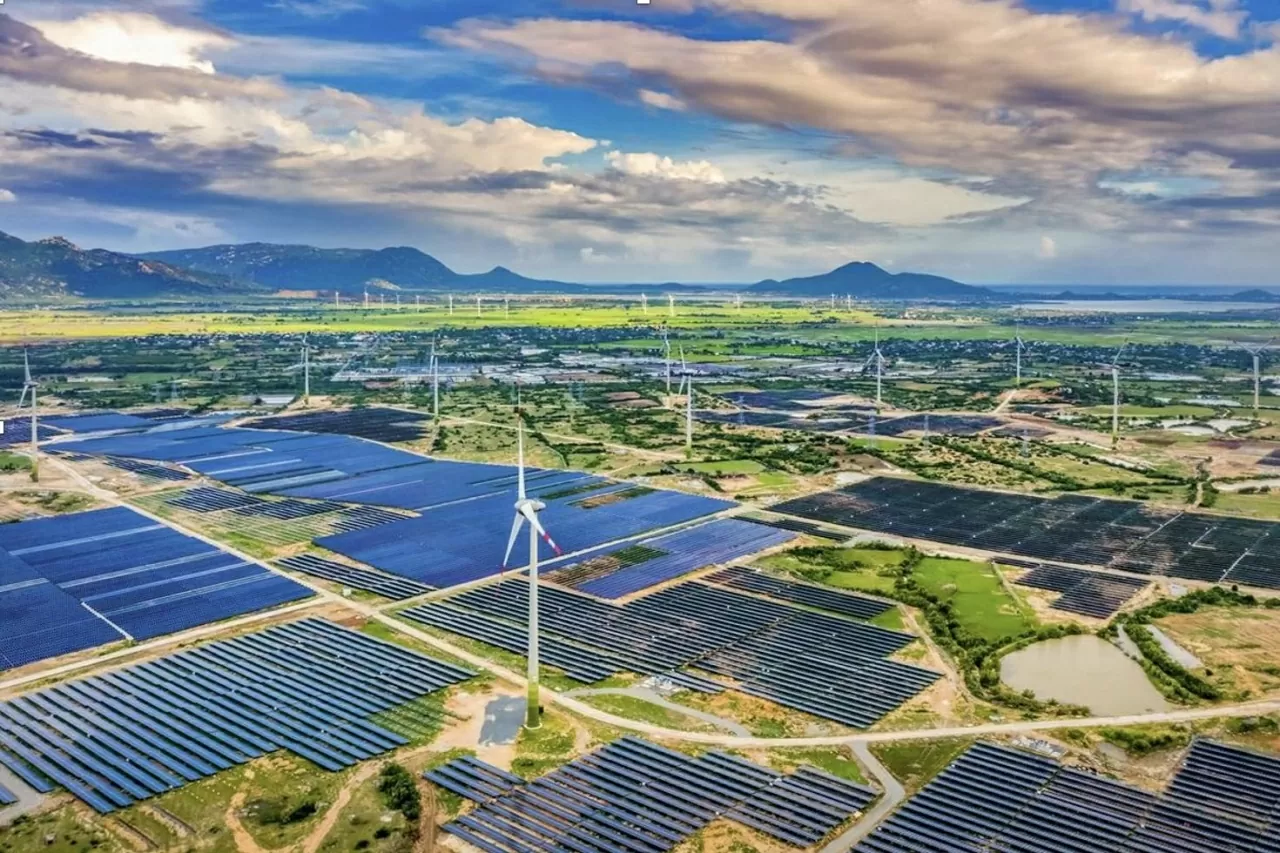 |
| Wind and solar farms in Vietnam. (Source: VUSTA) |
The impact of energy security on human rights
Ensuring energy security and avoiding disruptions in energy supply is crucial to prevent chain reactions affecting social life. In Vietnam, the socio-economic development over the past decades has shown that energy is both a driving force and a foundation for implementing human rights, including the right to life, education, work, and a safe living environment.
The Right to Life: Energy is essential for maintaining vital services such as healthcare, clean water, transportation systems, communication, and daily living. By 2023, 100% of communes in Vietnam had electricity, with 99.6% of rural households having access to electricity. This means that almost all Vietnamese citizens are ensured basic living conditions, healthcare, education, and protection from natural disasters and incidents.
However, some mountainous and island regions still face challenges in accessing stable electricity, directly affecting the ability to protect the health and lives of residents. Furthermore, during hot seasons, many areas experience system overloads, leading to localized power outages, affecting millions of households. Some provincial hospitals are forced to operate backup generators at high costs. Energy shortages can directly threaten people, especially vulnerable groups like the elderly, children, and critically ill patients.
In reality, Vietnam is consuming electricity unsustainably, as evidenced by the consistently high electricity elasticity coefficient. This technical term, which holds strategic significance, is the ratio of electricity consumption growth to GDP growth over the same period. In Vietnam, this coefficient has hovered above 1 for the past two decades, meaning that when GDP grows by 1%, electricity consumption increases by more than 1%. The country is consuming more electricity to achieve a unit of economic value, indicating an economy still developing broadly, relying heavily on resource exploitation, cheap labor, and low-cost energy.
The Right to Education: Energy, especially electricity, plays a decisive role in ensuring educational conditions. From lighting, teaching equipment, to Internet connectivity, all depend on a stable energy supply. Rising energy costs also pressure educational institutions, particularly private and non-public schools, to balance finances. In some northern mountainous districts, there are still schools without stable electricity connections, forcing students to study in dim conditions or use oil lamps, leading to compromised educational quality and increased inequality in educational access between regions.
The Right to Work: Energy is an indispensable driver of production and business. From industries to service sectors and information technology, all require a stable energy supply. Energy shortages severely impact business productivity, forcing companies to cut production, risking job losses or reduced income for workers. When the right to work is affected, it impacts living standards, social welfare, and equality in career development opportunities. This becomes more critical as Vietnam aims to become a modern industrialized nation by 2045, meaning energy demand will continue to rise rapidly.
The Right to a Safe Life: Energy security has far-reaching impacts on the environment, climate, and public health, affecting the right to live in a clean environment, health protection, and personal safety. Vietnam still heavily relies on coal power, accounting for about 31% of total electricity capacity by 2022 (according to Power Plan VIII). The high-intensity use of fossil fuels leads to greenhouse gas emissions, air, water, and soil pollution, directly affecting public health.
According to Dr. Angela Pratt, WHO Representative in Vietnam, at least 70,000 people die annually in Vietnam due to air pollution from acute respiratory diseases, exacerbated underlying conditions like asthma, and other conditions such as strokes, heart disease, and lung cancer.
Thus, ensuring energy security cannot stop at quantity but must also consider sustainability and environmental friendliness. Without a fair energy transition strategy, the risk of environmental insecurity will directly threaten the health of millions, especially in major cities like Hanoi and Ho Chi Minh City.
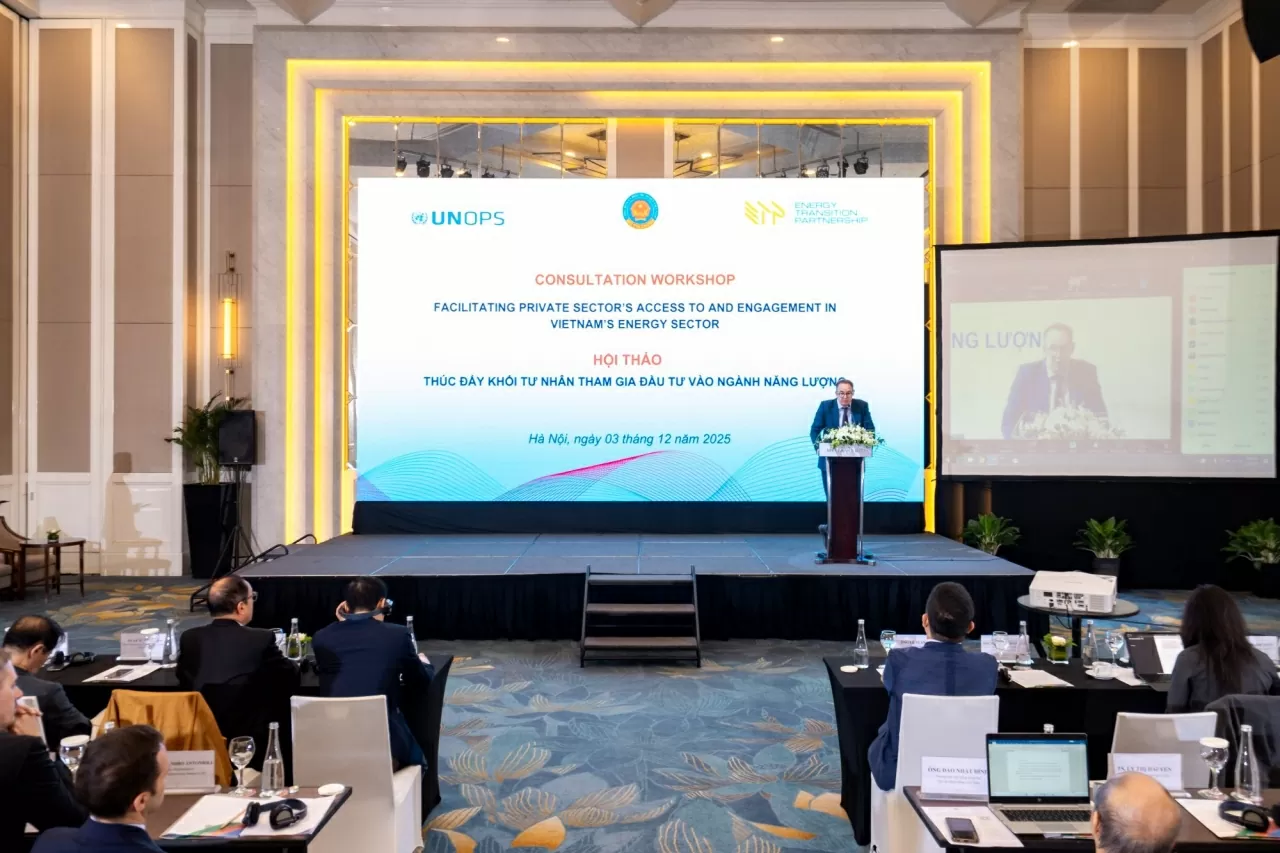 |
| Workshop 'Promoting Private Sector Participation in National Energy Transition' on December 3, in Hanoi. |
Ensuring energy security - Ensuring human rights
Additionally, energy security impacts the right to access information, participate in political-social life, and equality. Energy shortages in rural and mountainous areas make it difficult for people to access the Internet, limiting their right to information and online public services. Similarly, when energy costs rise, poor households must cut spending on education and healthcare, increasing social inequality. Therefore, ensuring energy security is not just an economic-technical task but also a moral and legal requirement to realize human rights in practice.
In the context of Vietnam's commitment to achieving net-zero emissions by 2050 at COP26, linking energy security and human rights becomes even more urgent. Energy policies cannot solely focus on supply goals but must be organically related to public health protection, social equity, and climate change adaptation. This means that human rights will be the ultimate measure of the effectiveness and sustainability of energy policies. To achieve this, the following solutions need to be implemented:
Firstly, promote renewable energy development. This is the foremost important solution, contributing to ensuring a long-term stable supply while minimizing negative impacts on the environment and human health. According to Power Plan VIII approved by the Government in 2023, Vietnam aims to increase the share of renewable energy (wind, solar, biomass, small hydropower) to about 30% by 2030 and 47% by 2050. This not only reduces dependence on coal and gas but also directly protects the environment.
In reality, wind power projects in Ninh Thuan, Binh Thuan, or solar power in Tay Ninh, An Giang have created tens of thousands of jobs while providing clean electricity to millions of households. Expanding renewable energy projects in high-potential areas, especially in the Central and Central Highlands, will enhance electricity access for people in difficult areas, thereby promoting the right to enjoy basic services equitably.
Secondly, improve energy use efficiency. One of Vietnam's major challenges is the high energy intensity in production, meaning high energy consumption for the same GDP unit. Therefore, energy-saving programs need to be promoted, modern production technologies applied, and enterprises encouraged to innovate processes to reduce consumption. Simultaneously, households, especially poor ones, should be encouraged to use energy-saving devices, apply LED lighting technology, or use rooftop solar power. An effective policy in this field will help realize human rights by ensuring sustainable energy access at reasonable costs.
Thirdly, reform policies and enhance energy governance. Vietnam needs to build a transparent, stable, and predictable policy system in the energy sector to attract investment while ensuring citizens' rights in the energy transition process. Regulations on electricity prices, subsidies for poor households, and support policies for renewable energy development need to be designed fairly, prioritizing vulnerable groups. Additionally, the management capacity of functional agencies needs to be strengthened, from planning, licensing, monitoring to operation, to avoid supply-demand imbalances affecting people's lives.
Fourthly, ensure social equity in energy access. A fundamental principle of human rights is that everyone has the right to equal access to essential services. Therefore, energy policy must aim to narrow the gap between urban and rural areas, between plains and mountains, islands. The state needs policies to prioritize investment in electricity grids for remote areas while encouraging decentralized energy models like household solar power, small-scale wind power to ensure everyone has the opportunity to access clean energy.
Additionally, direct support programs for poor households in paying energy costs, such as tiered electricity subsidies, support for installing energy-saving devices, need to be developed. These policies will contribute to implementing the principle of "leaving no one behind" in the development process, while realizing human rights in the energy sector.
Fifthly, enhance international cooperation and mobilize resources. Vietnam faces urgent demands for a fair energy transition, ensuring growth while reducing emissions. This requires significant investment capital. According to the World Bank, Vietnam needs about $14 billion annually to implement the clean energy development roadmap by 2030. Therefore, international cooperation is indispensable, contributing to renewable energy development and enhancing governance capacity, helping Vietnam access capital, technology, and management experience. At the same time, international cooperation also opens opportunities for Vietnam to affirm its commitment to human rights through energy policies linked to equity and sustainability.
Energy security is not only the responsibility of the state and businesses but also a shared responsibility of the entire society. Citizens need to be aware of the role of energy in human rights, actively participating in electricity-saving programs, using renewable energy, and monitoring policy implementation. Enhancing information transparency, publicizing energy projects, and creating conditions for public input during planning will contribute to increasing democracy, thereby strengthening social trust. This is crucial to ensure energy policies are not only economically and technically effective but also humane, serving people and for people.
| Resolution No. 70-NQ/TW dated August 20, 2025, of the Politburo on ensuring national energy security until 2030, with a vision to 2045, states: "Energy development must align with the socialist-oriented market economy institution, associated with social progress and equity, social welfare, national defense, security, environmental protection, and flexibility in implementing international commitments on greenhouse gas emission reduction". |
Tags:


