


Immerse in the traditional Bangladeshi New Year celebration in Hanoi
WVR - On the morning of April 14, the Pohela Boishakh 1433 celebration – the traditional New Year of Bangladesh – took place at the Hanoi College of Commerce and Tourism, organized by the Embassy of Bangladesh in Vietnam in collaboration with the college.
Latest
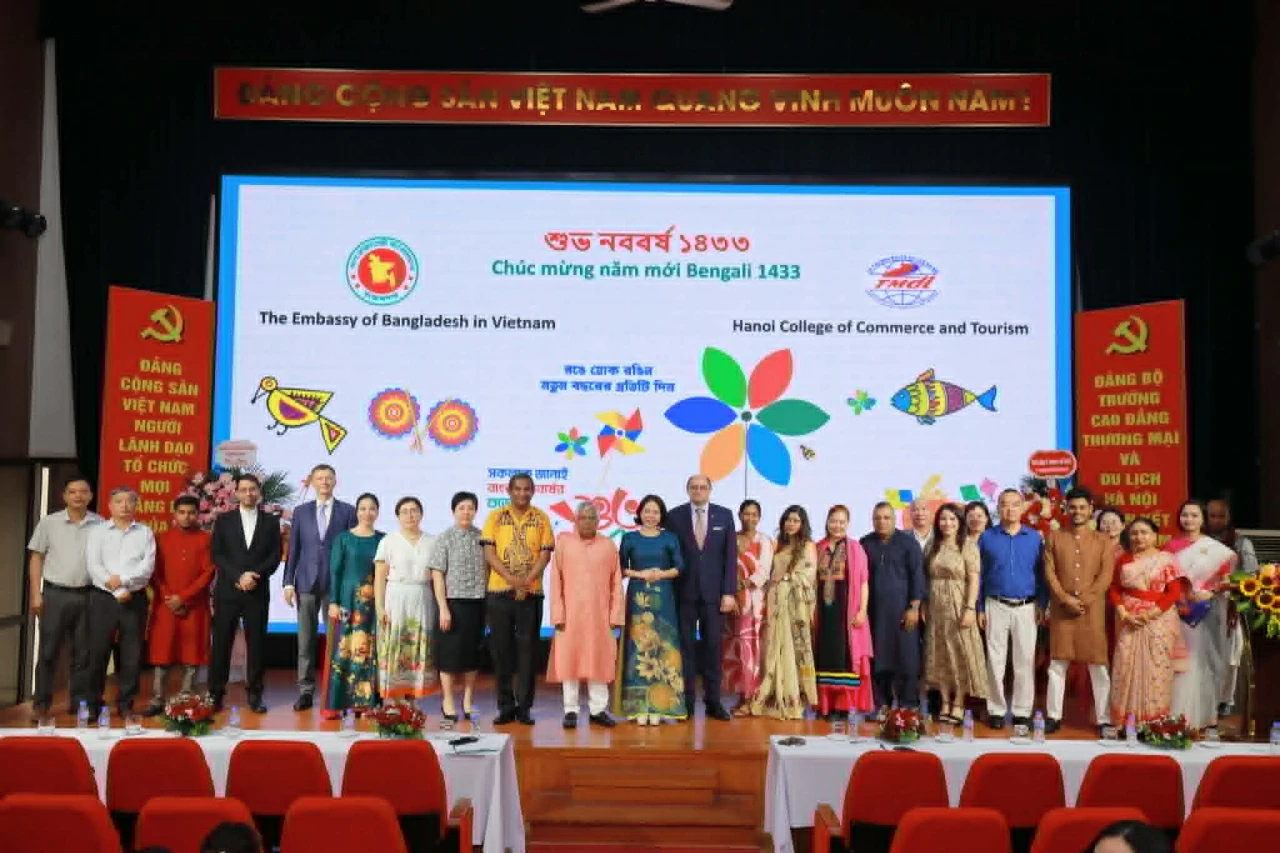 |
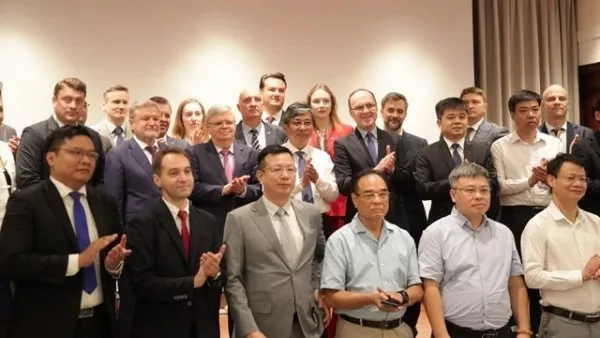
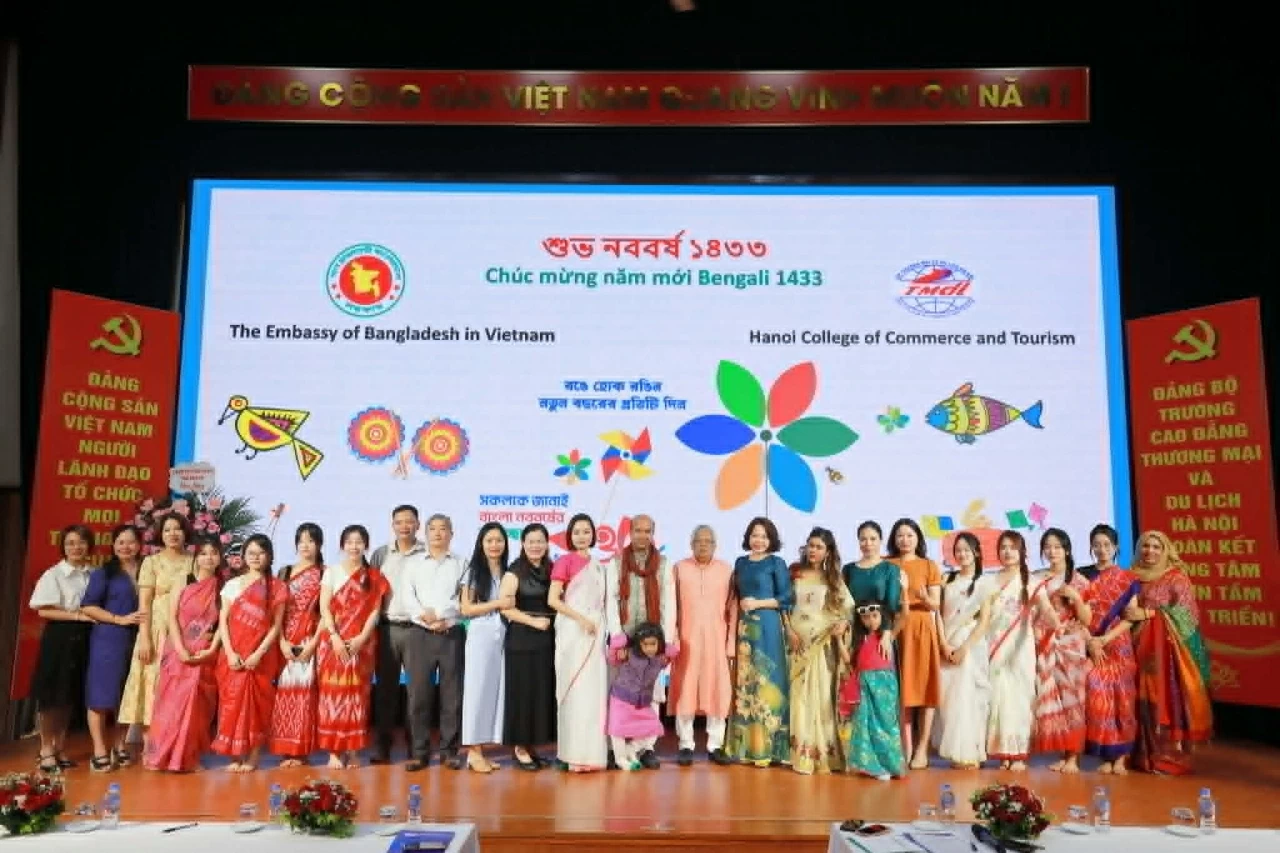
| Delegates attending the Bangladeshi New Year event take commemorative photos. (Photo: Le An) |
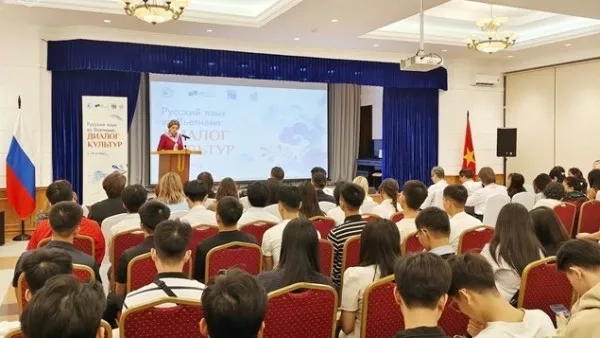
The event attracted a large number of international delegates, the Bangladeshi community in Vietnam, along with the college's staff, lecturers, and students, creating a vibrant international cultural exchange space in the heart of Hanoi.
Pohela Boishakh – the first day of the Bengali calendar year – is not only a symbol of new beginnings but also of renewal, hope, and community spirit.
The re-enactment of this festival in Vietnam contributes to showcasing the unique features of South Asian culture while enhancing understanding and connections between the peoples of the two countries.
As a co-organizer, the Hanoi College of Commerce and Tourism proactively created a diverse experiential space where students not only observed but also directly participated in cultural activities. This also demonstrates the college's educational approach that integrates practical experiences, aiming to develop a workforce capable of global integration and thinking in the fields of commerce, tourism, and communication.
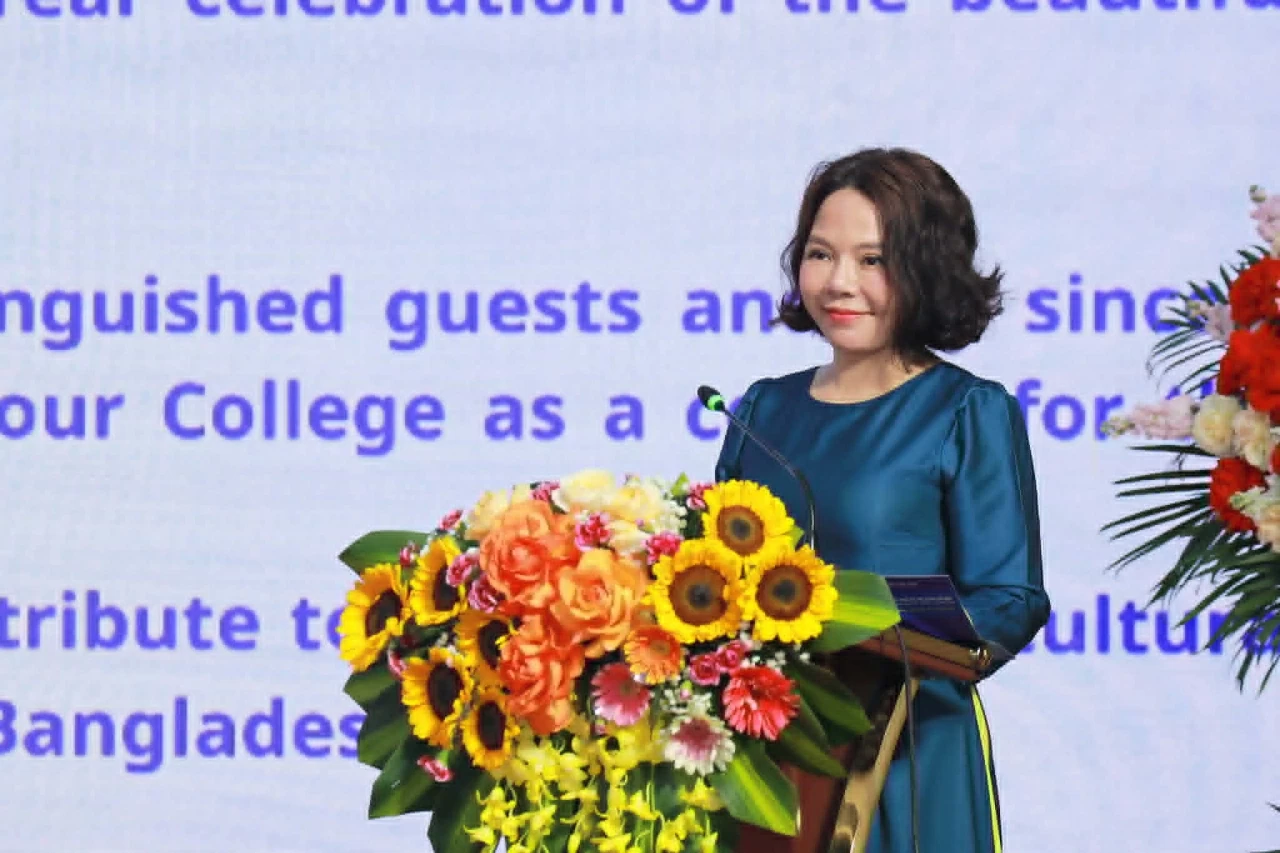 |
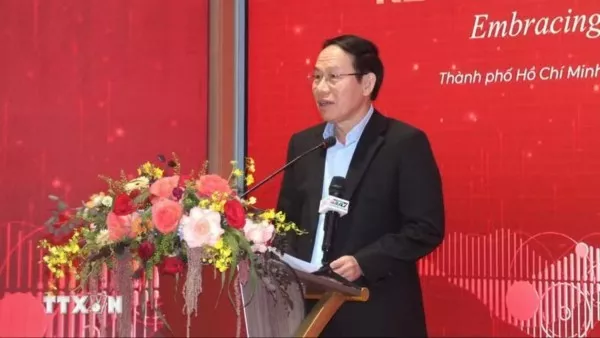
| Dr. Trinh Thi Thu Ha, Principal of Hanoi College of Commerce and Tourism, speaks. (Photo: Le An) |
Speaking at the event, Dr. Trinh Thi Thu Ha, Principal of Hanoi College of Commerce and Tourism, emphasized that Pahela Boishakh is not only the first day of the Bengali calendar year but also a symbol of beginnings, hope, unity, and aspirations for prosperity and happiness.
She stated that the college always considers educating students on cultural values as a crucial foundation for training high-quality human resources in tourism, services, and commerce. In the context of integration, understanding international cultures is the key to helping students confidently step into the world. Over time, the college has gradually become a cultural bridge, spreading international values within the educational environment.
“I believe that through this program with its diverse activities, we will gain more understanding of the country and people of Bangladesh, while creating beautiful memories and meaningful connections between cultures,” Dr. Trinh Thi Thu Ha emphasized.
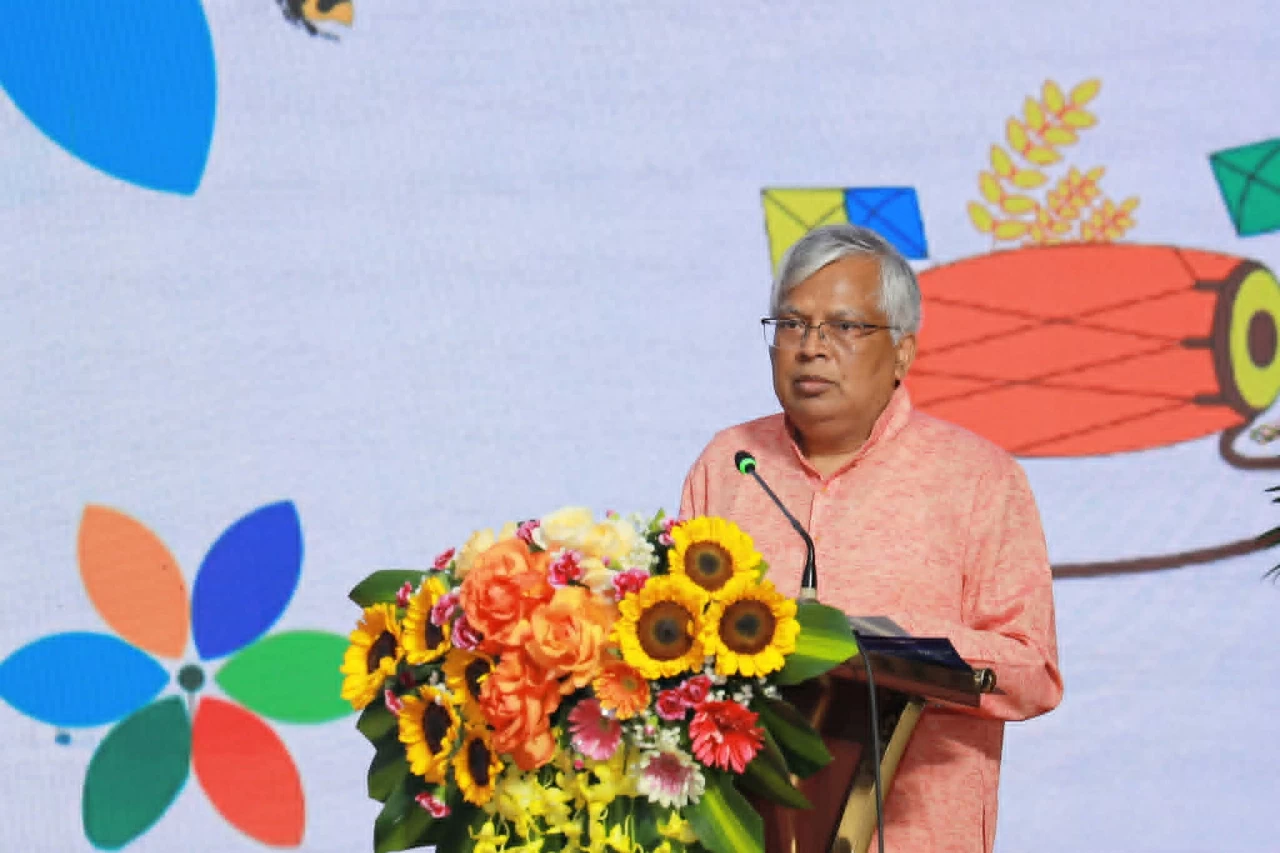 |
| Bangladeshi Ambassador to Vietnam Lutfor Rahman speaks. (Photo: Le An) |
Sharing at the event, Bangladeshi Ambassador to Vietnam Lutfor Rahman expressed gratitude to the leadership and the collective of lecturers and students of Hanoi College of Commerce and Tourism for supporting the organization of the program, thereby demonstrating the friendship and increasingly strong cultural connection between the two countries.
The Ambassador stated that Pohela Boishakh is one of the largest and most vibrant festivals in Bangladesh, marking the first day of the Bengali calendar year, symbolizing new beginnings, hope, and renewal. On this occasion, people across the country, regardless of religion or class, participate in parades, art performances, and family gatherings.
The Ambassador noted that Pohela Boishakh shares many similarities with Vietnam's Tet Nguyen Dan, as both emphasize the values of unity, tradition, and faith in the future.
A notable highlight of the festival is the Mangal Shobhajatra – a parade symbolizing the triumph of good over evil, recognized by UNESCO as an Intangible Cultural Heritage of Humanity.
According to Ambassador Lutfor Rahman, the program in Hanoi partially re-enacts that spirit through art performances, traditional costumes, and the enthusiastic participation of lecturers and students.
He affirmed that culture is an important bridge between nations, helping to overcome geographical distances to enhance mutual understanding and respect. Bangladesh and Vietnam share many similarities in history, culture, and development aspirations. Cultural exchange activities like this event contribute to deepening bilateral relations in various fields, especially people-to-people exchanges.
The program featured a variety of content, from a solemn opening ceremony to activities introducing an overview of Bangladeshi culture through images and documents.
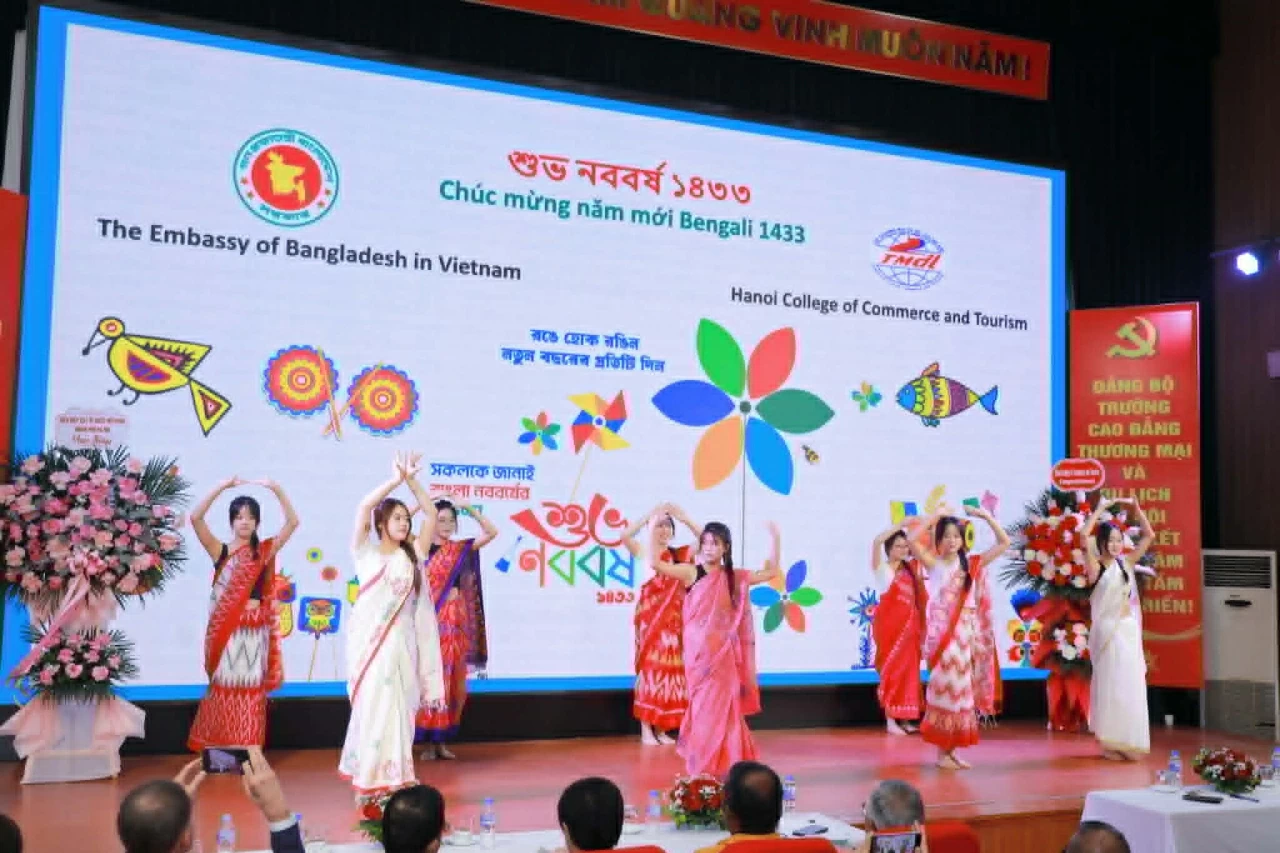
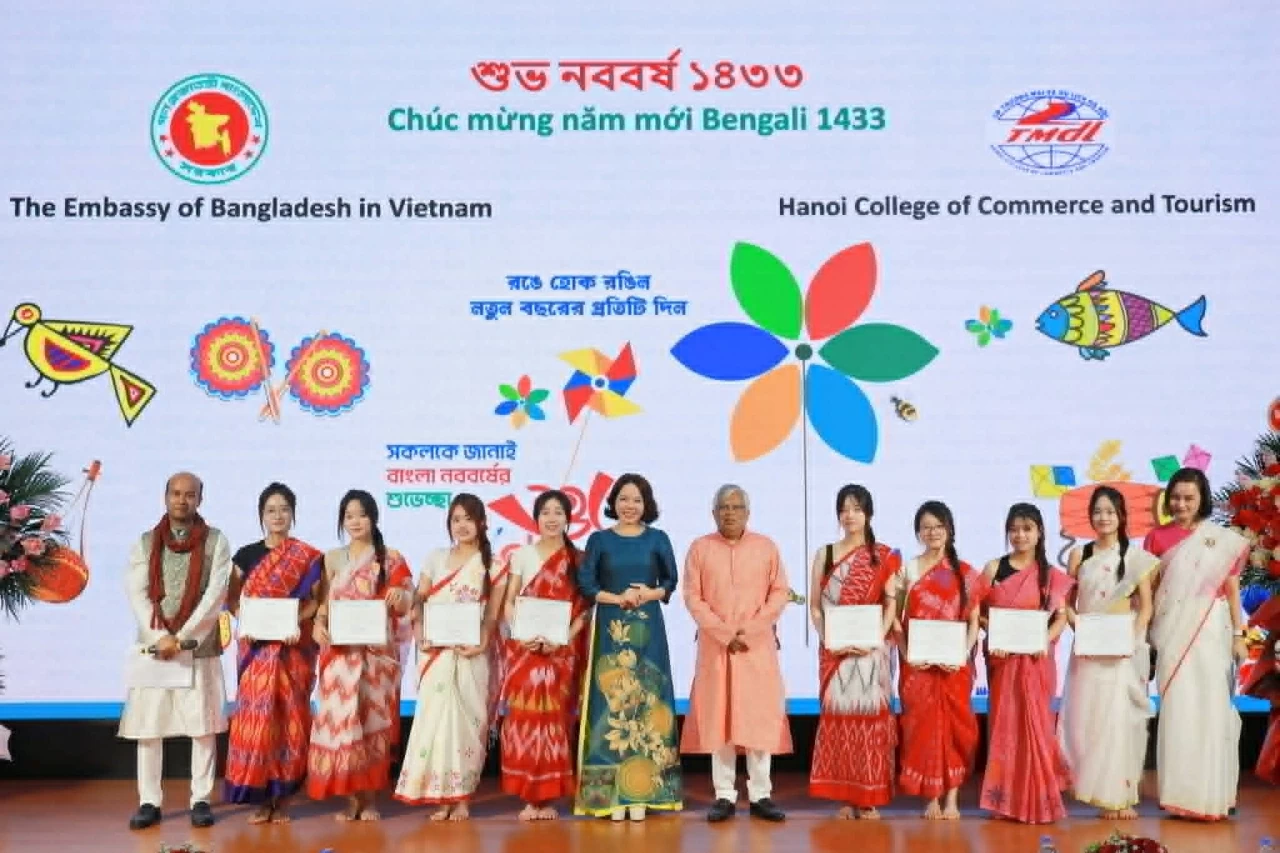
The highlight of the program was a series of unique international art exchange performances. Students of the college performed a dance to the Bengali New Year song "Eso He Boishakh Eso Eso" in traditional Saree attire, presenting a lively cultural exchange image.
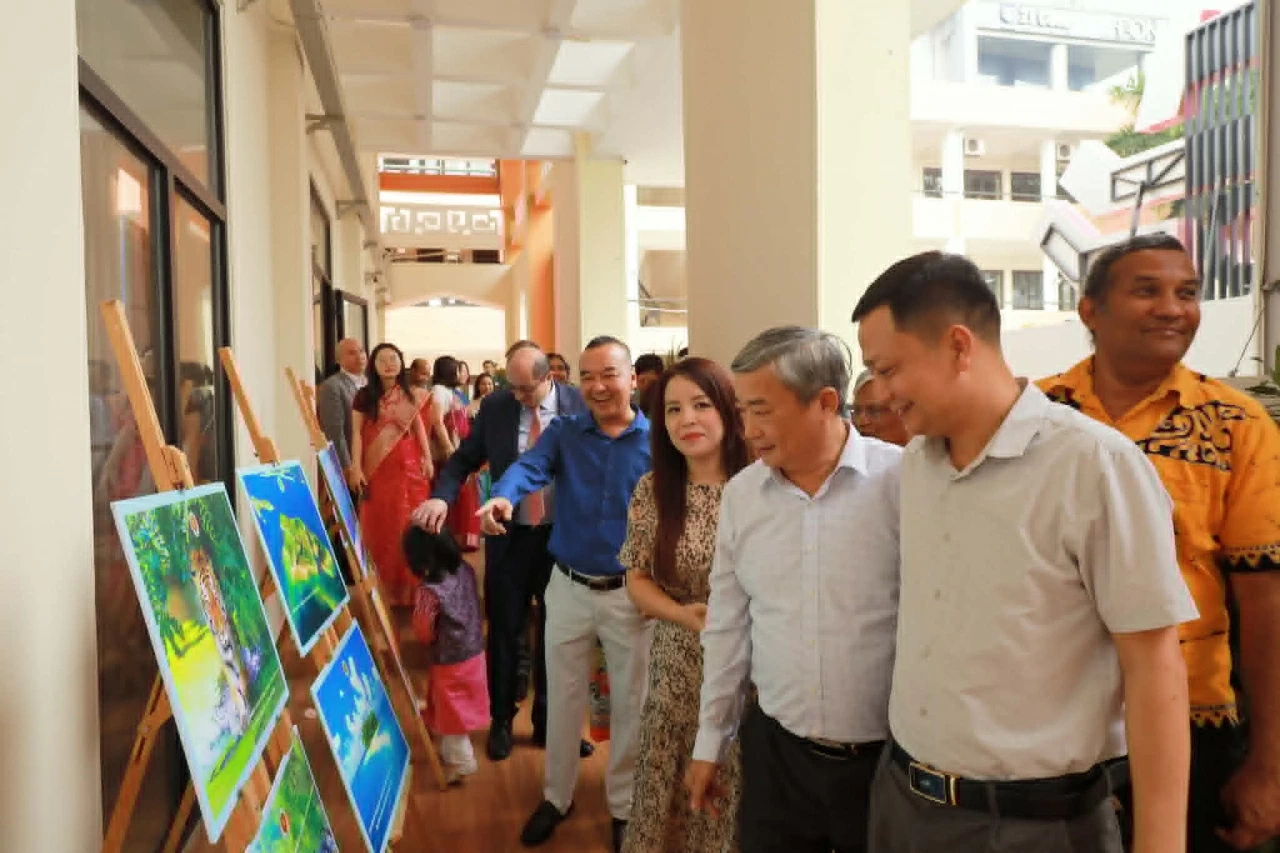 |
| Delegates visit photos introducing Bangladesh. (Photo: Le An) |
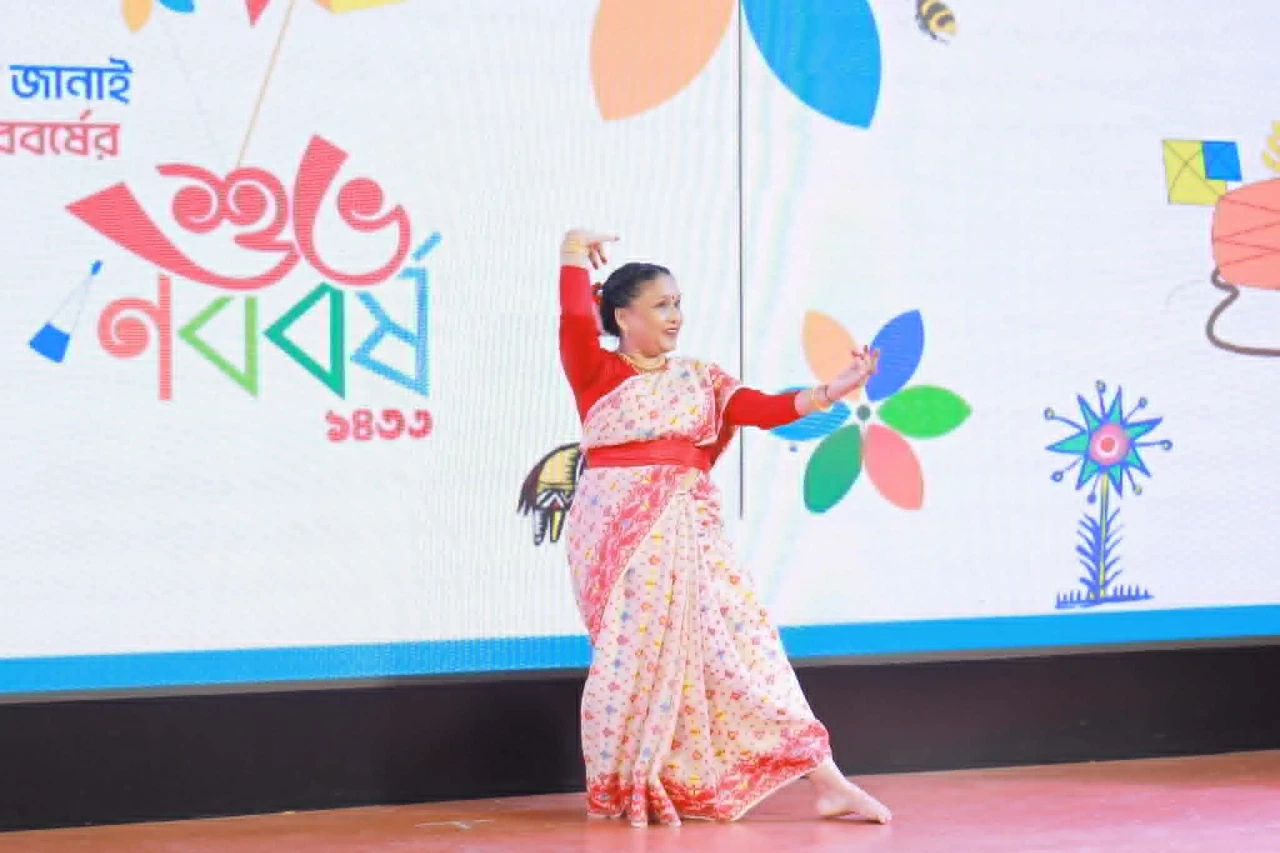
The Bangladeshi community in Vietnam also directly performed music and folk dance performances, contributing to recreating the distinctive festive atmosphere of their homeland.
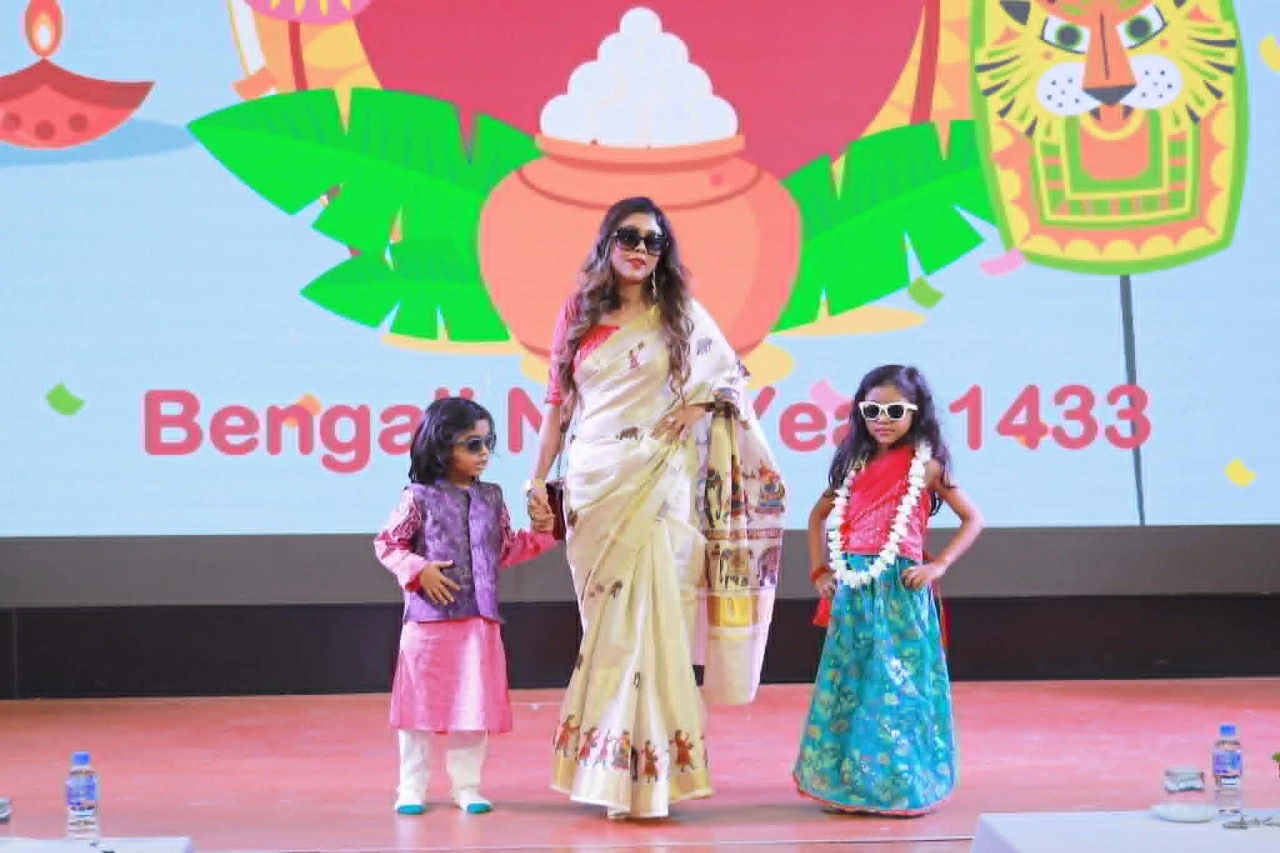
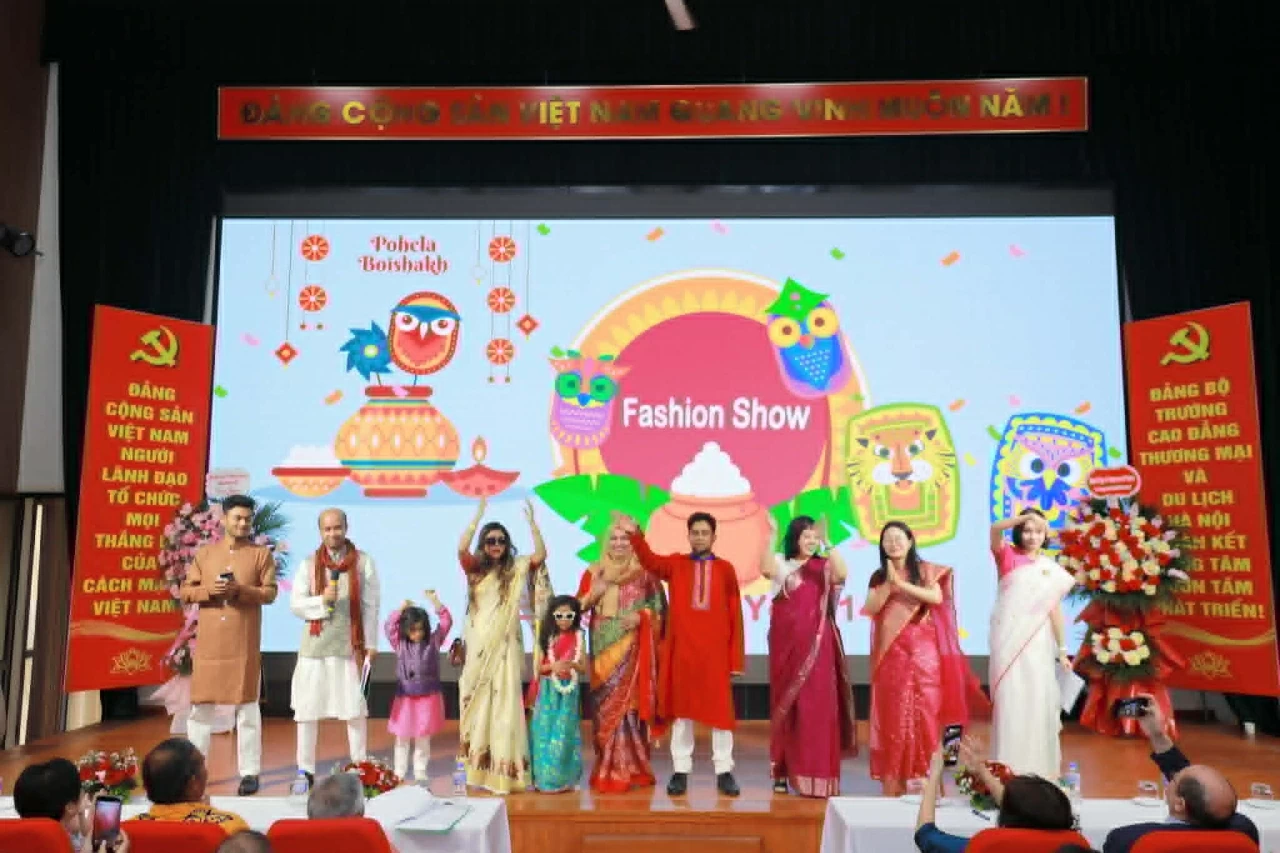
The traditional Bengali fashion show, featuring representatives from Bangladesh and Vietnamese students, provided a visual insight into the beauty of Saree attire and contemporary designs.
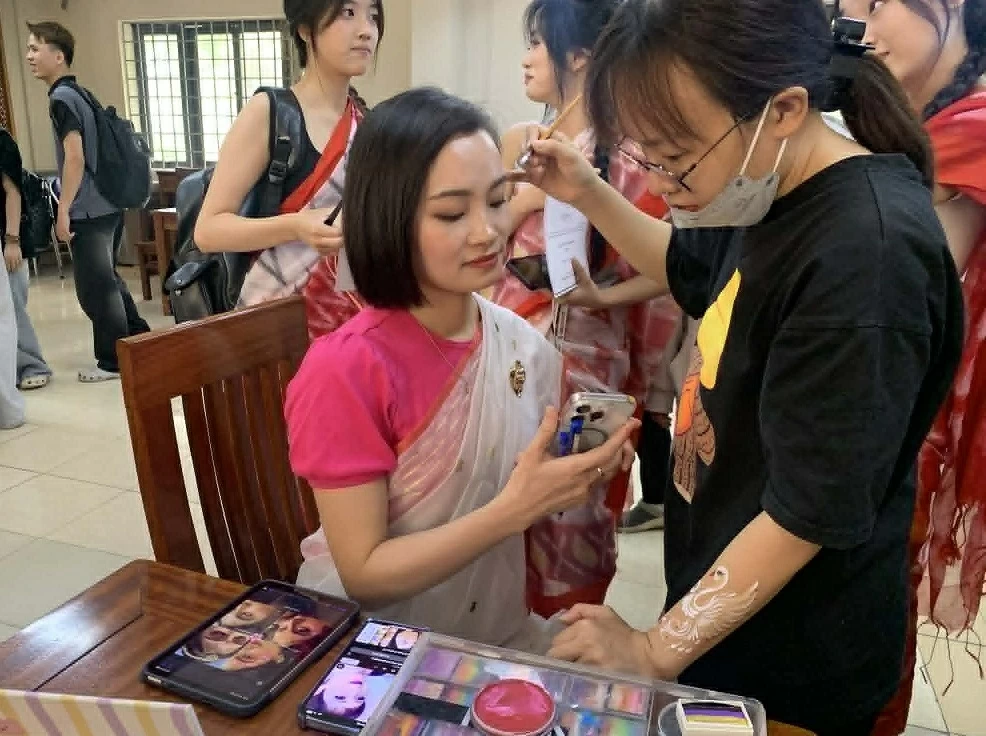
Additionally, the side experience area with cuisine, handicrafts, and folk games attracted a large number of participants, creating an open and friendly interactive space.
Not just a cultural exchange event, the Pohela Boishakh 1433 celebration is also seen as an "open classroom" where students learn through real-world experiences, interacting and connecting directly with the international community right on campus.
Through organizing the event in collaboration with the Embassy of Bangladesh in Vietnam, Hanoi College of Commerce and Tourism aims to build a modern educational environment where specialized knowledge training is always linked with practical experience spaces and diversifying cultural perspectives for students. This development strategy is tied to global integration, thereby creating a solid foundation and equipping students with multicultural adaptability skills to meet the stringent demands of the domestic and international labor market.
Below are some highlights from the event:
 |
 |
 |
 |
 |
 |
 |
| Immerse in the Traditional Bangladeshi New Year Celebration in Hanoi |