

Former Vietnamese students in Japan - enduring bridges fostering bilateral friendship: VAJA
WVR - Bringing together generations of intellectuals who studied in Japan, the Vietnam Alumni Association in Japan (VAJA) has been actively involved in exchange, cooperation, and people-to-people diplomacy activities for the past 25 years.
Latest
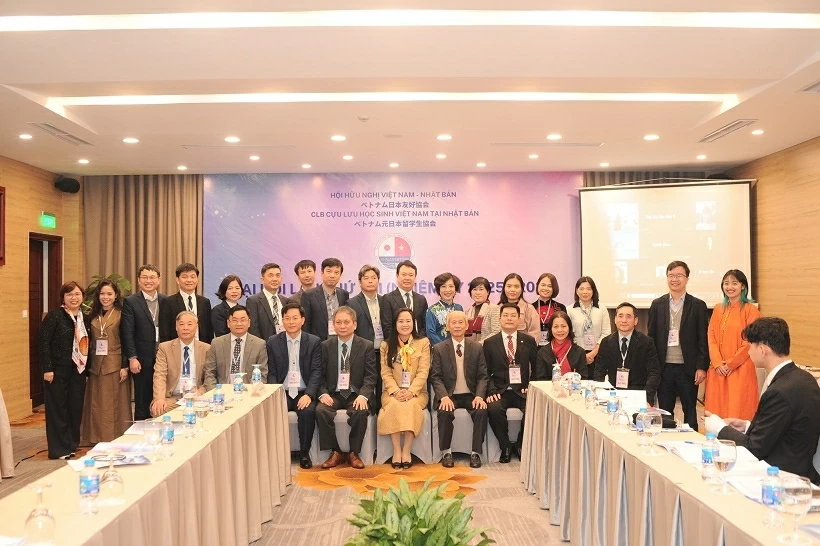 |
| Former Vietnamese students in Japan : Enduring bridges fostering bilateral friendship. |
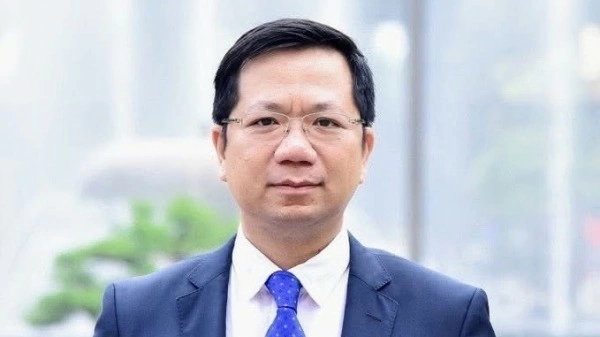
Sharing with TG&VN, Associate Professor Dr. Ngo Minh Thuy – President of VAJA, emphasized the role of the alumni community in spreading Japanese educational values and contributing to the nurturing of a strong friendship between the two countries.
VAJA recently received a Certificate of Commendation from the Japanese Ministry of Foreign Affairs on the occasion of its 25th anniversary. Looking back, what is the proudest achievement of the Vietnamese alumni community in Japan in terms of people-to-people exchange and educational-cultural connection between the two countries?
VAJA is a completely voluntary organization, bringing together individuals committed to contributing to the development of Vietnam-Japan cooperation and aspiring to be bridges of friendship between the two nations.
With over 2,500 members and no membership fees, we have conducted numerous activities over the past 25 years in fields such as diplomacy, academia, cultural-educational exchange, and knowledge connection...
Currently, VAJA has an extensive network within the country, maintaining close contact with member associations of the ASEAN Council of Japan Alumni (ASCOJA) – an organization with 10 member associations from 10 Southeast Asian countries and nearly 50 years of history.
We also closely collaborate with ASJA International – an agency supported by the Japanese Ministry of Foreign Affairs. VAJA not only contributes to building Vietnam-Japan cooperative relations but also fosters friendship among Southeast Asian countries and between Southeast Asia and Japan.
An organization that operates without spending a single budget dollar and seeks no material benefits, yet possesses immense strength and has achieved much in connecting and supporting former students who studied in Japan, becoming one of the most meaningful and effective bridges of friendship. This is the beauty and perhaps the pride of VAJA.
In carrying out VAJA's work, I, along with over 2,500 members, especially those in the Executive Committee, work with a voluntary spirit. We are truly grateful for the attention and appreciation from the Japanese Ministry of Foreign Affairs, the Japanese Embassy in Vietnam, and the Japanese Ambassador to Vietnam, Ito Naoki.
How has VAJA managed to gather, inspire, and maintain the connection of generations of alumni across various fields?
I believe there are several reasons why VAJA can gather and inspire, maintaining the connection of generations of alumni.
Firstly, the essence of VAJA is a voluntary and volunteer organization, working for all members and society, not for the benefit of any particular group. Such organizations easily attract members.
Secondly, VAJA's activities revolve around very practical issues for alumni and topics they care about or value.
Thirdly, the effectiveness of VAJA's activities is clear, meaningful, and recognized by many people and agencies. This builds the organization's credibility, trust, and appeal.
Fourthly, although VAJA is a voluntary organization, it is not merely a community for fun. Besides the joy created when alumni meet and interact, the core is that VAJA's activities are serious and methodical. This creates long-term appeal and significance, especially for students, alumni, and intellectuals.
Fifthly, the lives, work, and social activities of key members, particularly those in the Executive Committee, contribute to VAJA's credibility and trust.
Sixthly, the alumni themselves have a deep connection and special affection for Japan, so they also have the desire and wish to participate in VAJA's activities.
In your opinion, what strengths do alumni have when returning to their home country or participating in cooperative activities, and how do they maintain and promote the core values of Japanese education?
VAJA is an organization that operates seriously, with a clear vision, direction, and plan. Its members are individuals who have studied in Japan, benefiting from the advantages of Japanese education, with a deep understanding and connection to Japan.
In Vietnam, VAJA is under the Vietnam-Japan Friendship Association. In Southeast Asia, we are a member organization of ASCOJA and have a close partner in ASJA International – an organization supporting Southeast Asian students, sponsored by the Japanese Ministry of Foreign Affairs. Within such a system, our strength is multiplied many times.
Additionally, the VAJA Executive Committee members over the years are enthusiastic individuals with solid experience and knowledge in leadership, management, expertise, and international cooperation across various fields, from different regions and agencies nationwide, including (from the 8th term) some Executive Committee members residing in Japan.
In my view, the work and activities that alumni pursue after graduation are the practical environments for them to continue what they learned in Japan. In this journey, VAJA acts as a nurturing cradle, helping these values to be maintained and promoted over the long term.
In the context of expanding Vietnam-Japan cooperation in fields such as culture, technology, education, healthcare, and innovation, what are VAJA's planned focus and priorities in the coming time?
Vietnam-Japan cooperation has been and is developing strongly in all aspects. VAJA's activities have always closely followed the joint cooperation activities of the two countries, including fields like culture, technology, education, healthcare, and innovation. I think in the future, VAJA will continue to implement and further strengthen these activities. Specifically:
Promoting exchanges, meetings, and cooperation among alumni who have studied and researched in Japan.
Enhancing exchanges with former teachers and schools in Japan. Organizing academic activities, intra- and inter-industry exchanges, establishing and promoting multi-disciplinary, multi-field cooperation opportunities among members and with Vietnamese and Japanese agencies and partners.
Strengthening activities to enhance mutual understanding, friendship, and cooperation between Vietnam and Japan in fields such as education-training, science-technology, cultural exchange...
Supporting Vietnamese students to study, research, and exchange in Japan. Establishing relationships and exchanges with the Japanese community in Vietnam, introducing the cultures of both countries, organizing scientific seminars, and other forms of cooperation.
Participating in activities of alumni organizations in Japan and Japanese organizations in Vietnam regarding cultural-scientific exchange. Implementing exchange programs, scholarship programs, study abroad exhibitions...
If we talk about activities VAJA wants to further strengthen, it is high-level cultural exchange activities with more professional aspects, based on collaboration with some research institutes or universities, such as the Institute for Cultural, Language, and Education Development (CLEF), University of Languages and International Studies - Vietnam National University, Hanoi, and Vietnam Japan University. These are agencies implementing significant and effective Vietnam-Japan cultural research-training-exchange programs.
Currently, VAJA is in its two-year term as the rotating President of ASCOJA. In October 2027, we will host the 29th ASCOJA Congress in Hanoi. VAJA also plans to organize a major international education conference in Hanoi in the summer of 2026, with the participation of Japan and 10 Southeast Asian countries.
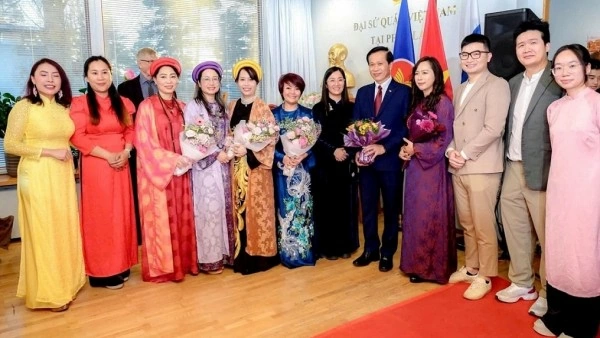
| On November 18, at the Japanese Embassy in Vietnam, a ceremony was held to award the Certificate of Commendation from the Japanese Ministry of Foreign Affairs to VAJA, honoring VAJA's outstanding contributions in promoting mutual understanding between Japan and Vietnam, thereby making a significant contribution to the friendship and goodwill between Japan and other countries. The event also marked a 25-year journey of tireless activity filled with dreams and aspirations of Vietnamese alumni in Japan for a friendly connection and continued development between the educational institutions of the two countries, among alumni in various professions, to best utilize the knowledge gained from Japan. |