


Cuba awards 15 scholarships to Vietnamese students
WVR - On the morning of December 22, in Hanoi, the Cuban Embassy in Vietnam held a press conference to announce the Cuban Government's scholarship program for Vietnamese students for the academic year 2026-2027.
Latest
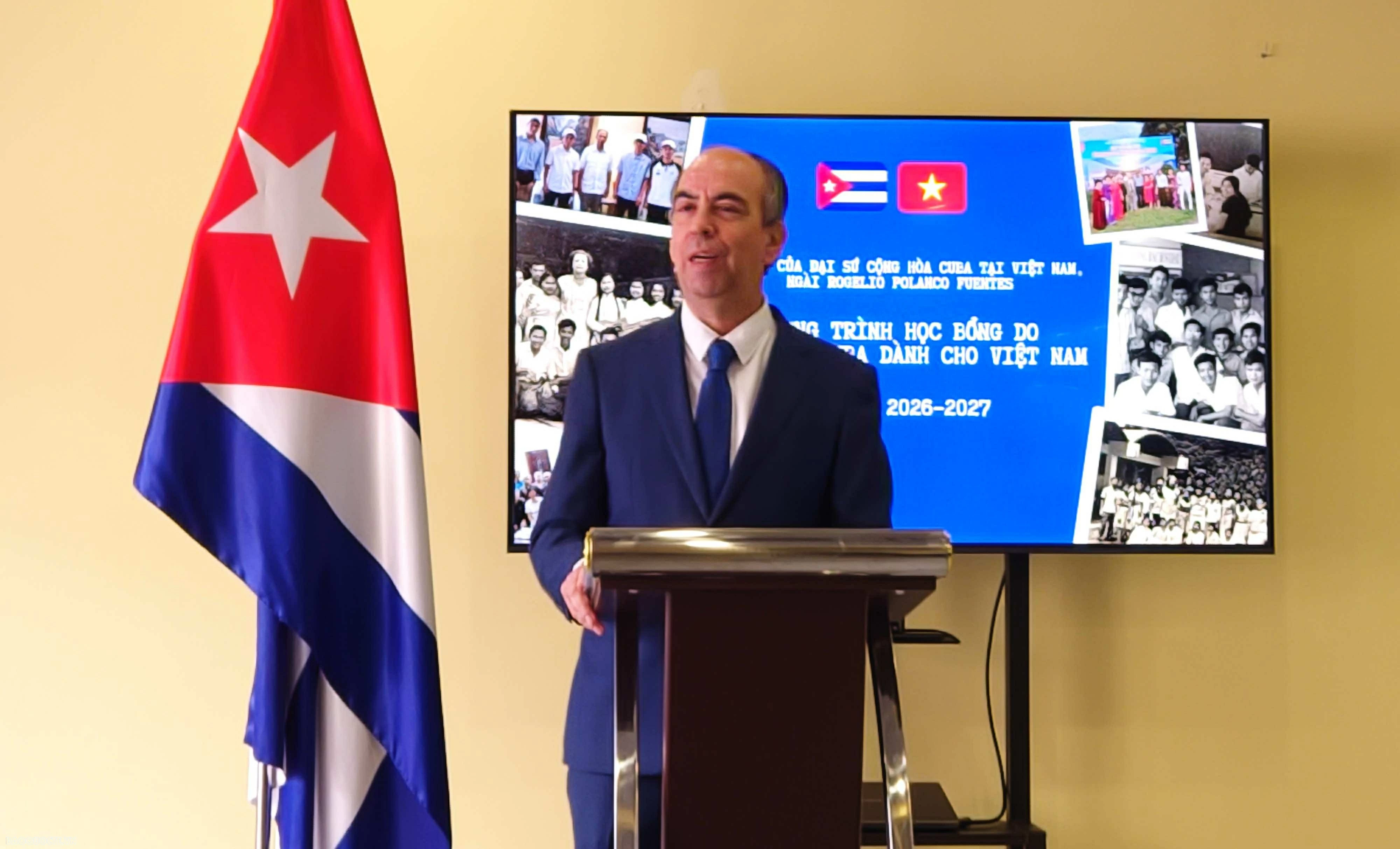 |
| Cuban Ambassador to Vietnam Rogelio Polanco Fuentes provides information about the study program in Cuba. (Photo: Tien Dat) |
At the press conference, Cuban Ambassador to Vietnam Rogelio Polanco Fuentes officially announced that the Cuban government will continue to offer 15 scholarships to Vietnamese students, including 8 for medicine and 7 for other fields such as economic sciences, journalism, humanities, social sciences, and natural sciences.
The new academic year is expected to start in September 2026, so Vietnamese students will arrive in Cuba from August 20-30, 2026. Notably, the requirements for students to be considered for a scholarship to study in Cuba include: being over 16 and under 25 years old; having graduated from high school or an equivalent level; coming from low-income families unable to afford educational expenses; and priority is given to those from remote areas.
Vietnamese students wishing to pursue undergraduate studies at Cuban universities must submit documents such as a high school diploma and transcript; a health certificate; a certificate of no criminal record; and a birth certificate.
To be accepted for study in Cuba, Vietnamese students must have a valid passport for entry and stay in Cuba, and the passport must have a valid visa issued by the Cuban Embassy or Consulate.
Ambassador Fuentes recalled the origins of the educational cooperation program between the two countries. The initiative to bring Vietnamese students to Cuba for study and vocational training in various fields was launched in May 1961, during the first official Vietnamese delegation's visit to Cuba led by Hoang Minh Giam, then Minister of Culture, to participate in activities celebrating International Workers' Day on May 1.
“Since no one in the delegation spoke Spanish, bilateral meetings had to be conducted through two interpreters, with a Vietnamese translating from their native language to English and a Cuban translating from English to Spanish,” the Ambassador recounted.
Recognizing the complexity of communication, Commander-in-Chief Fidel Castro proposed that Vietnam send students to Cuba to learn Spanish. Additionally, student exchanges would facilitate Vietnam's relations not only with Cuba but also with the entire Latin American region.
Accordingly, the first group of 23 Vietnamese students arrived in Havana in the fall of 1961. To date, approximately 1,300 Vietnamese students have graduated in Cuba, across fields under the Cuban Ministry of Public Health (MINSAP), the Cuban Ministry of Higher Education (MES), the Cuban Institute of Physical Education and Sports (INDER), and the Cuban Ministry of Education (MINED).
Many Vietnamese students who graduated in Cuba over the years have held important positions in the Party and State agencies, as well as in Vietnamese Embassies and Consulates worldwide.
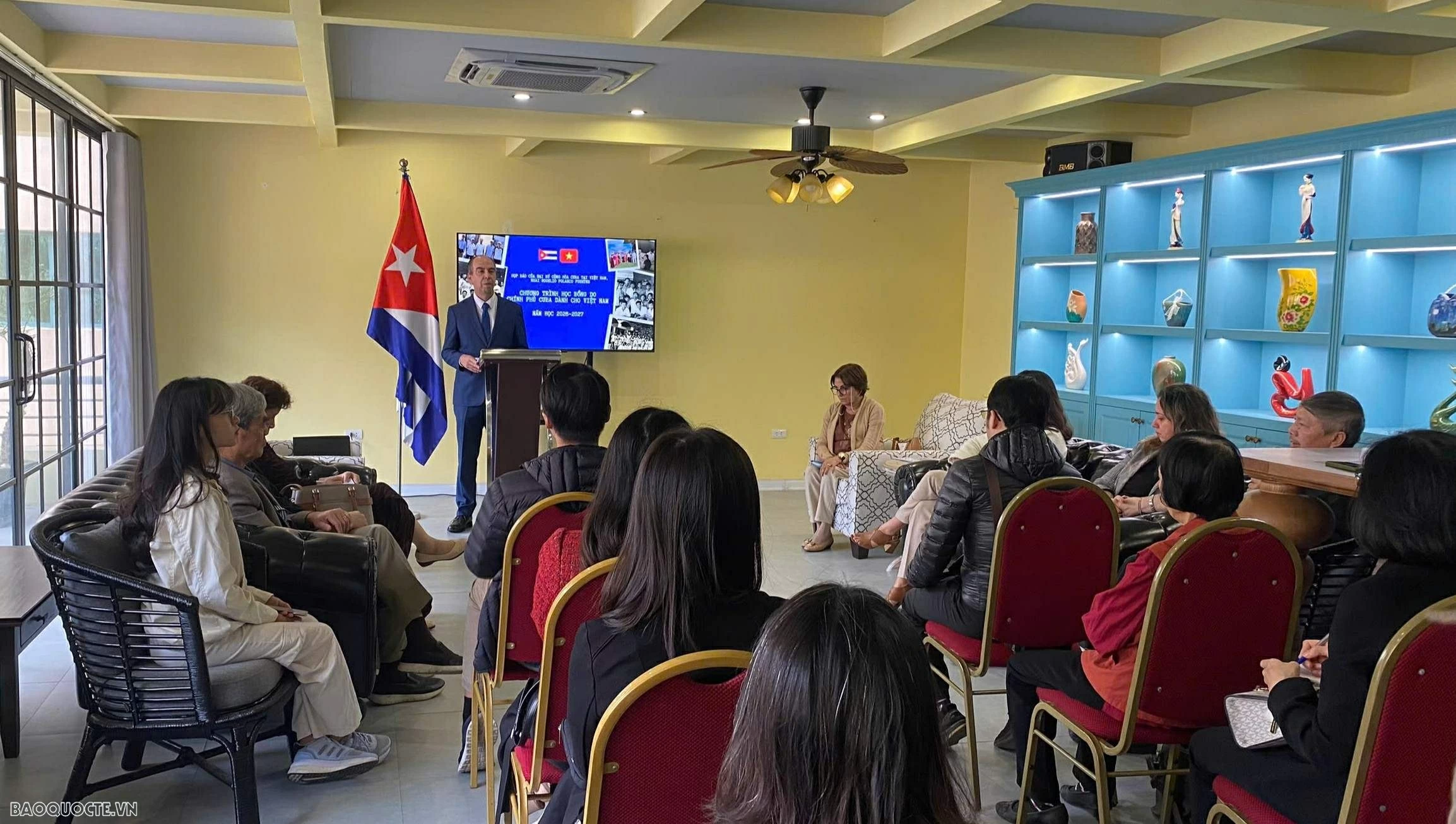 |
| Overview of the press conference. (Photo: Ngoc Anh) |
On the occasion of the press conference, Ambassador Fuentes invited representatives from Vietnamese ministries, sectors, and universities to attend the 15th International Congress on Higher Education in February 2026 in Havana. The event coincides with activities celebrating the 100th birthday of leader Fidel Castro. It will also feature the launch of a bilingual book on Fidel Castro's thoughts on higher education, co-published by the Vietnam Education Publishing House and the Cuban side.
In response to a question from the press about the advantages Vietnamese students might gain from the training program in Cuba, Ambassador Fuentes affirmed that Vietnamese agencies highly value Cuba's training quality, especially in the fields of healthcare and nursing.
“Ensuring scholarships in these fields is Cuba's strength, as our healthcare system is built on the foundation of primary healthcare, community health, and preventive medicine,” the diplomat emphasized.
According to the Ambassador, besides gaining high-quality professional knowledge, Vietnamese students upon graduation will also be proficient in Spanish, expanding their opportunities for global integration. Cuba's training program always links theory with practice at service and production facilities, providing comprehensive training so that graduates can immediately engage in their work.