



Vietnamese community in Japan proposes solutions to preserve Vietnamese language for the younger generation
WVR - Amidst the growing Vietnamese community in Japan, preserving the mother tongue for the younger generation has become a common concern for many associations, families, and representative agencies.
Latest
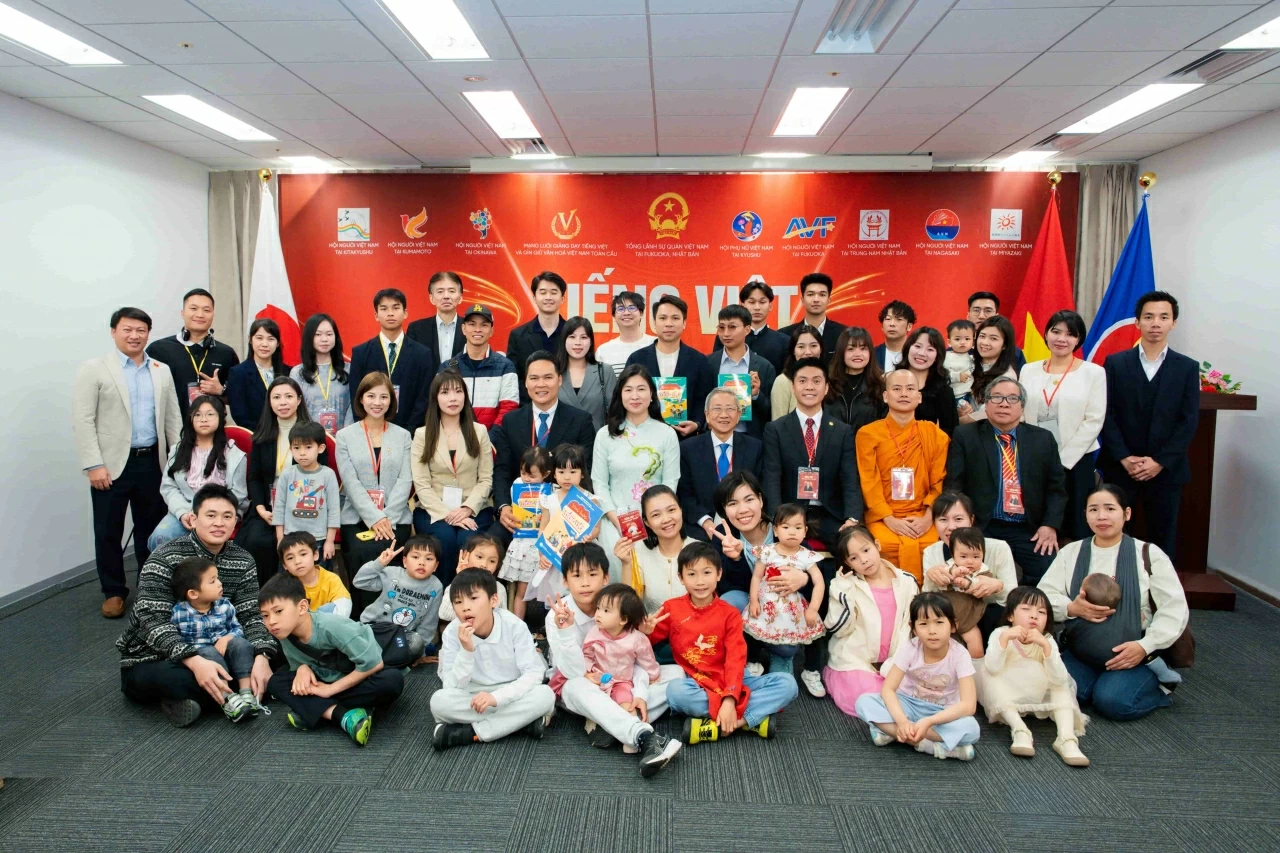 |
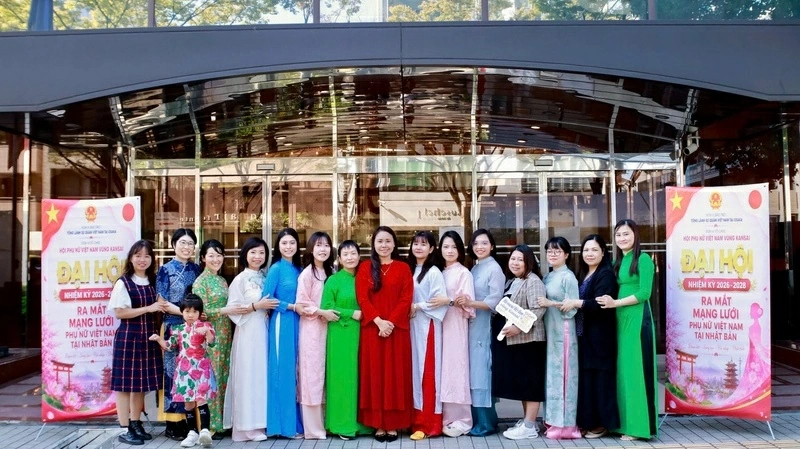
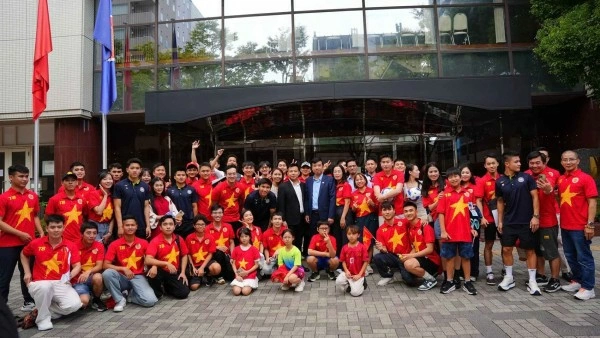
| Delegates take a commemorative photo. (Source: Consulate General of Vietnam in Fukuoka) |
At the program “Vietnamese in the Heart of Kyushu, Japan” held in Fukuoka, delegates reviewed the current situation and proposed various initiatives to maintain and spread the Vietnamese language within the community.
Attending the program were: Ms. Trinh Thi Mai Phuong - Consul General of Vietnam in Fukuoka, Japan; Ms. Ngo Thi Thanh Mai - Deputy Head of the State Committee for Overseas Vietnamese, Ministry of Foreign Affairs; Mr. Dang Thanh Phuong - Deputy Head of the People's Foreign Affairs Committee, Central Committee of the Vietnam Fatherland Front; Prof. Dr. Nguyen Minh Thuyet – Chief Editor of the 2018 General Education Program, Chief Editor of the book series "Vui hoc tieng Viet".
Mr. Nguyen Duy Anh – Member of the Central Committee of the Vietnam Fatherland Front, General Secretary of the Global Network for Teaching Vietnamese and Preserving Vietnamese Culture; Venerable Thich Phap Quang, Abbot of Truc Lam Zen Monastery in Sri Lanka; Deputy General Secretary of the Global Network for Teaching Vietnamese and Vietnamese Culture in South Asia; Ms. Nguyen Thi Lien, Vietnamese Language Ambassador 2023, Deputy General Secretary of the Global Network for Teaching Vietnamese and Vietnamese Culture in Malaysia; Mr. Hoang Xuan Dung, Chairman of the Vietnamese Association in Fukuoka; Ms. Nguyen Thi Minh Nguyet, Chairwoman of the Vietnamese Women's Association in Kyushu
Along with representatives from Vietnamese associations, Vietnamese language classes, teachers, parents, students, and the Vietnamese community in Japan
When Vietnamese gradually becomes a second language
At the Forum, many delegates candidly pointed out that Vietnamese is gradually losing its natural position in the lives of the younger generation. In Hiroshima, where nearly 60,000 Vietnamese reside, Mr. Tran Duc Viet, Vice Chairman of the Vietnamese Association in Central South Japan, noted that the number of second-generation children is rapidly increasing, but the environment for using Vietnamese is shrinking.
Many children fall into a state of "passive language": understanding Vietnamese but responding in Japanese. As a result, the mother tongue is gradually relegated to a secondary position, even becoming a "second language" within their own families.
In Kumamoto, where over 7,000 Vietnamese live, this concern is evident in every family. Many parents share the feeling that "their children become strangers in their own home" when they cannot fully communicate in Vietnamese with their grandparents over the phone.
In Okinawa or Miyazaki, the story is no different. As children grow up in an entirely Japanese educational environment, Vietnamese only exists at a basic level of family communication and gradually weakens if not properly nurtured.
These figures and stories reveal a paradox: the more the community develops, the larger the younger generation becomes, the more apparent the risk of "language disruption" becomes.
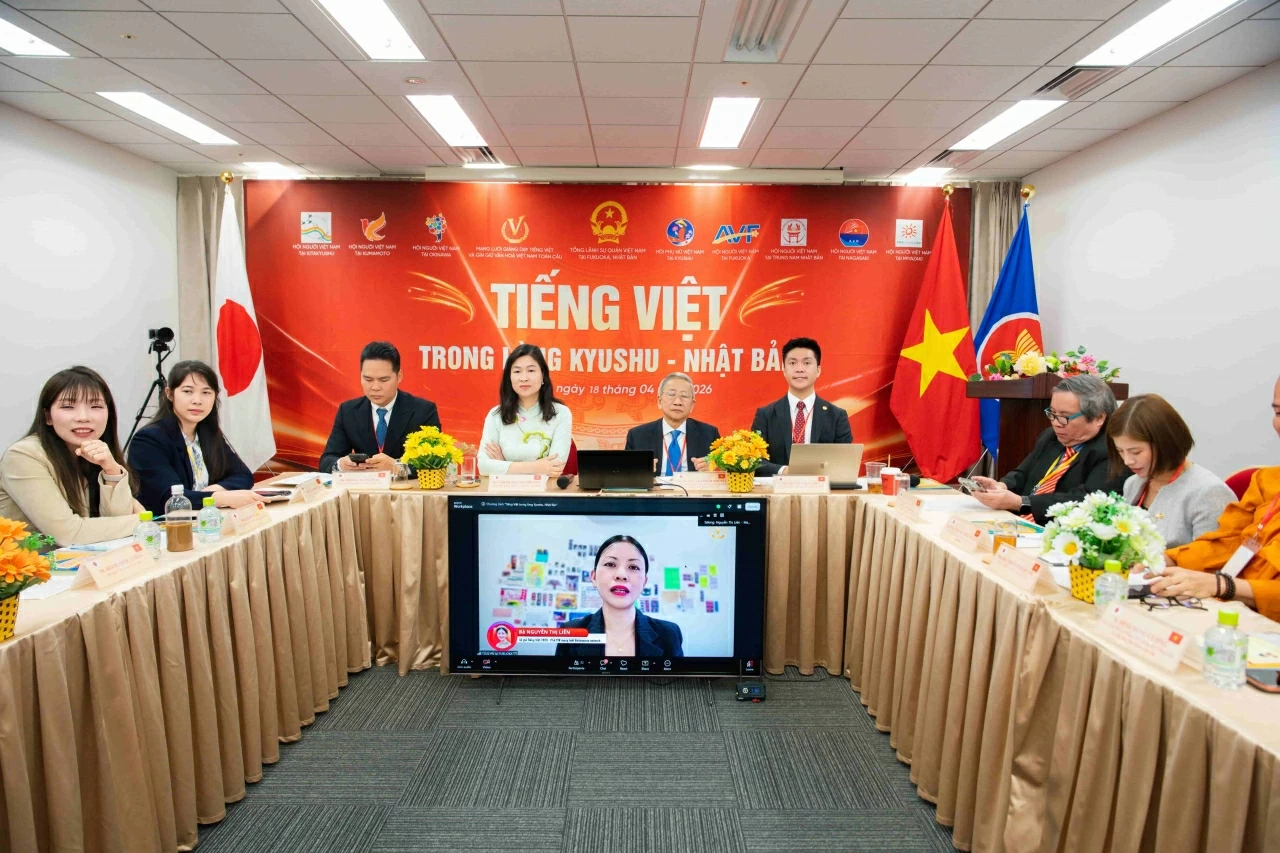 |
| The forum connects multiple online points with Vietnamese language classes worldwide to share experiences. (Source: Consulate General of Vietnam in Fukuoka) |
Challenges that are not easy to overcome
The common point from the discussions is: everyone sees the problem, but solving it is not simple. Firstly is the issue of human resources. Most Vietnamese language classes in Japan are run by volunteers – people who work and teach in their spare time. Finding teachers with expertise, pedagogical skills, and perseverance is a significant challenge.
Secondly is the lack of suitable teaching materials. Many textbooks are brought from Vietnam but do not fit the context of children born abroad – those who learn Vietnamese as a second language while living in a multicultural environment.
Thirdly is the geographical and time constraints. Vietnamese families in Japan often live scattered, and parents work long hours, making it difficult to take their children to Vietnamese language classes.
More importantly, the language environment is crucial. When Japanese dominates in schools, society, and among friends, Vietnamese, if not consciously maintained, will quickly be overshadowed.
Representing Vietnam's diplomatic mission in the area, Consul General of Vietnam in Fukuoka Trinh Thi Mai Phuong stated that preserving the Vietnamese language is always integrated into diplomatic activities with local authorities.
“In meetings with Japanese local authorities, we always request their attention and support for the activities of the Vietnamese community, including Vietnamese language teaching and learning activities,” emphasized Ms. Trinh Thi Mai Phuong.
According to the Consul General, the support of local authorities, especially in providing community activity spaces, class venues, or cultural activities, is crucial in maintaining and developing Vietnamese language classes in Japan.
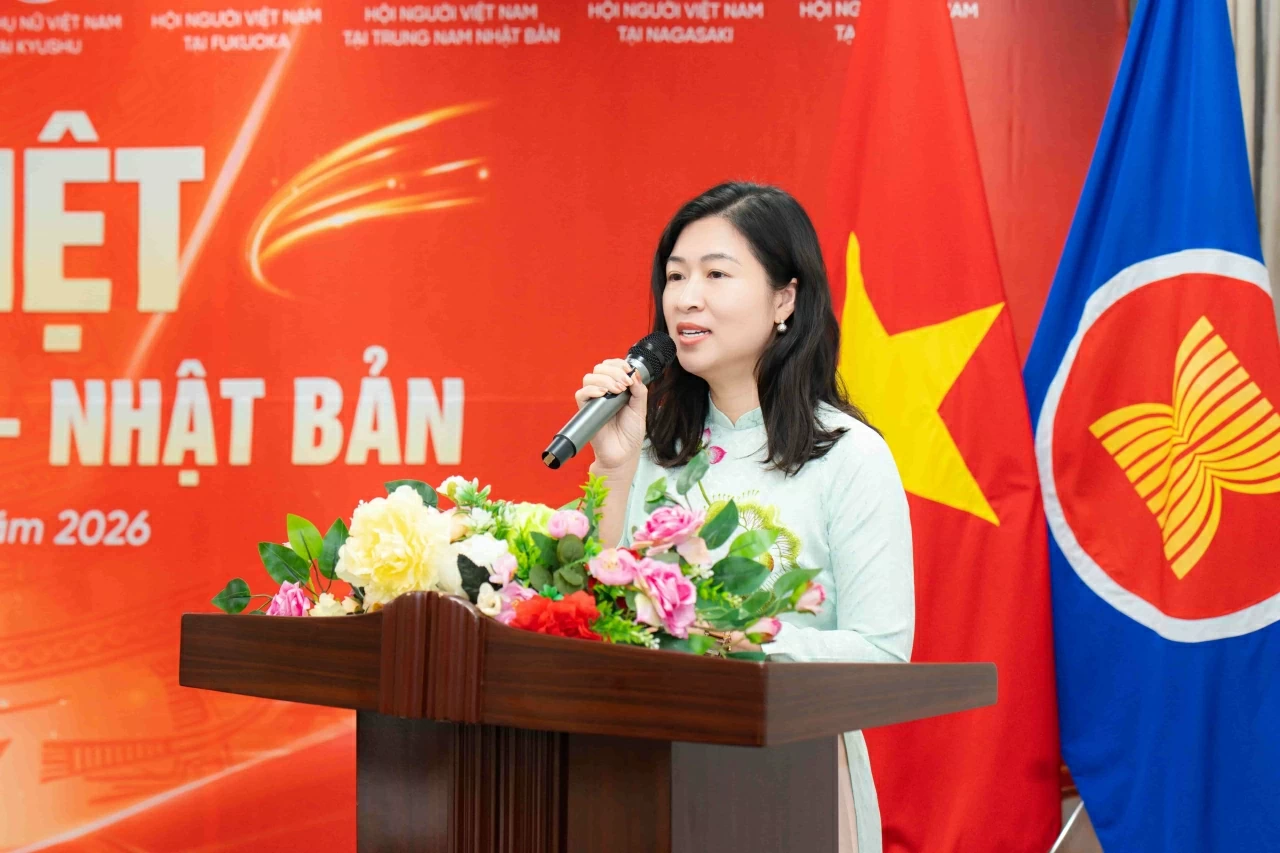 |
| Consul General of Vietnam in Fukuoka Trinh Thi Mai Phuong speaks. (Source: Consulate General of Vietnam in Fukuoka) |
“Keeping classes is harder than starting them”
In his speech, Mr. Nguyen Duy Anh, General Secretary of the Global Network for Teaching Vietnamese and Vietnamese Culture, emphasized a thought-provoking reality: opening a Vietnamese language class is commendable, but maintaining and developing that class is even more important.
He stated that preserving the Vietnamese language cannot be the responsibility of just one individual or organization but must be a collective effort of the entire ecosystem: from representative agencies, networks, associations, teachers, parents to the students themselves.
“Vietnamese is not just a language. It is the origin, the memory, the identity. A Vietnamese person can live far from the homeland, but if there is still Vietnamese in their heart, there is still a way to return,” he shared.
The noteworthy aspect of the program is not only in "identifying the problem" but also in the very specific initiatives arising from the community itself.
In Hiroshima, a hybrid online-offline teaching model is implemented to overcome geographical distances. The classes not only teach the language but also connect with cultural experiences such as making banh chung, playing folk games, organizing Vietnamese Tet… helping children "love the culture before loving the language".
In Kumamoto, the "language home" model is proposed – where the family becomes the center of preserving Vietnamese, with support from materials and connections from associations.
The Vietnamese Women's Association in Kyushu also implements sending online learning materials, combining Vietnamese language teaching with storytelling, singing folk songs, proverbs, and idioms to bring the language back to natural life.
Another emphasized direction is building digital learning materials – from videos, songs, interactive games – so that children can learn Vietnamese at home, anytime, anywhere. Additionally, there is a need for inter-regional connections between Fukuoka, Hiroshima, Kumamoto… to share experiences, organize joint online classes, creating a "large community" feeling for the children.
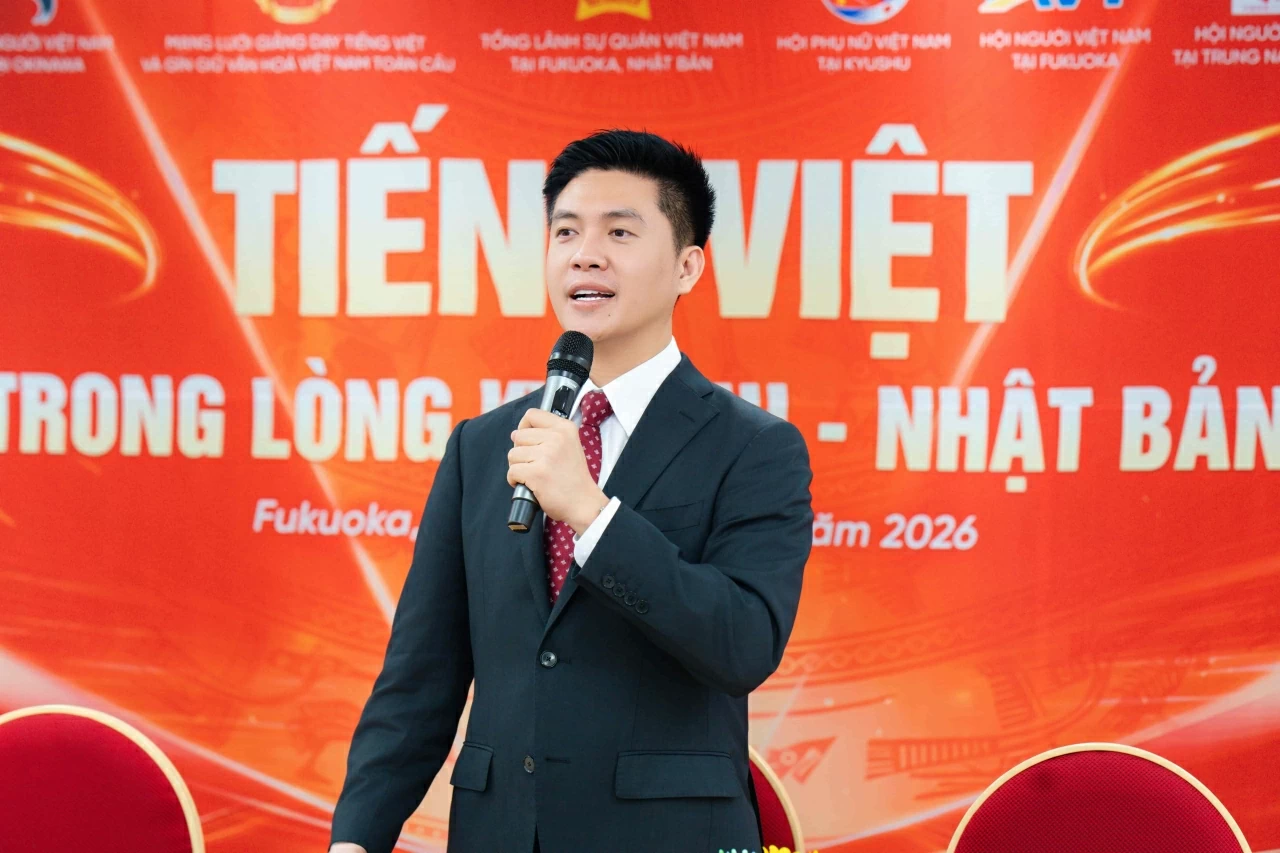 |
| Mr. Nguyen Duy Anh – General Secretary of the Global Network for Teaching Vietnamese and Vietnamese Culture shares. (Source: Consulate General of Vietnam in Fukuoka) |
From identifying the problem to concrete actions
If the discussions were the place to "dissect the situation", the highlight of the program is the transition to action: launching the contest "Vui hoc tieng Viet, nho on Bac Ho". This is not just a simple contest but is expected to become a "push" to bring Vietnamese back into the lives of children and families.
According to the rules, the contest targets various audiences: from children, students, parents, teachers to classes, community associations. The content revolves around the love for Vietnamese, family, homeland, and gratitude to President Ho Chi Minh. Notably, the participation format is very diverse: storytelling, poetry reading, singing, presentations, making videos, drawing… opening opportunities for each individual to express Vietnamese in the most familiar way to them.
The organizers also emphasize that the judging criteria are not only based on language skills but also on emotions, sincerity, and community impact. On a broader scale, the contest is seen as a way to reactivate the Vietnamese environment not only in classrooms but in every family, every story, every life activity.
Empowering the young in the journey to preserve Vietnamese
A notable point in the program is the increasingly clear presence of the younger generation of overseas Vietnamese not only as subjects of Vietnamese teaching and learning but also as a force that can participate in spreading Vietnamese language and culture.
According to records from classes and associations, the number of children aged 1–12 and teenagers aged 15–17 in the Kyushu area is increasing. This generation was born or raised in Japan, has the ability to quickly integrate, is fluent in Japanese, and is early exposed to the international environment.
However, this deep integration process also poses new requirements for preserving Vietnamese, not just stopping at "re-teaching", but creating conditions for them to actively use and spread Vietnamese in life.
The reality at the program shows that many young people have started participating in community activities in Vietnamese. Some boldly share their Vietnamese learning stories in front of many people; some participate in connection and exchange activities, even using Vietnamese as a way to express personal identity in a multicultural environment.
From this reality, many opinions suggest that stronger actions are needed to empower the younger generation from participating in contests, cultural activities, to becoming "little ambassadors" spreading Vietnamese in the community.
Not only learning Vietnamese, but they can also become storytellers of Vietnam in Vietnamese, connecting international friends and contributing to preserving national identity in a natural, modern, and suitable way for their generation.
Kyushu – From a bright spot to a spreading model
One of the program's overarching messages is: Kyushu is not only a place to "keep the fire" but can become a model to spread to other areas.
According to Mr. Nguyen Duy Anh, many initiatives on teaching Vietnamese have been initiated, tested, and expanded in Fukuoka and Kyushu. The spirit of cooperation between representative agencies – associations – the community here is considered "very substantive and inspirational".
From small weekend classes to training programs, cultural activities, and now a community-scale contest, all contribute to creating an ecosystem for preserving Vietnamese.
Besides community solutions, an approach emphasized by many delegates is to build an ecosystem for teaching and learning Vietnamese abroad, instead of isolated models.
Accordingly, maintaining Vietnamese cannot stop at spontaneous classes but requires a connection between representative agencies – professional networks – associations – families – schools, accompanied by a system of teaching materials, teacher training, and supporting cultural activities.
Some opinions suggest that without this connection, Vietnamese language classes are very likely to fall into a state of "everyone for themselves", lacking continuity and difficult to sustain in the long term.
From the reality in Kyushu, many delegates propose forming regional linkage clusters, where classes, associations, and teachers can share materials, methods, class organization experiences, as well as coordinate to organize joint activities to create a broader Vietnamese usage environment for children.