




Vietnamese cuisine through global lenses: When flavours narrate culture
WVR - For many international travelers, Vietnamese cuisine is far more than a culinary experience, serving as a vivid reflection of the country’s history, cultural identity, resilience, and deeply rooted sense of human connection through every shared meal.
Latest
Far beyond the simplistic concept of "deliciousness”, every Vietnamese dish acts as a historical and cultural fragment reflecting the nation's identity and endurance.
Through the eyes of international observers, gastronomy has transformed into a living lens, offering a profound look into the adaptability, creativity, and deeply humanistic lifestyle of the local people.
The complexity of harmony and flavour
"Flavourful" - or more accurately, a complex explosion of tastes - is the defining descriptor international travelers use for Vietnamese gastronomy.
To them, what makes a Vietnamese meal truly unforgettable is not just immediate sensory satisfaction, but the calculated engineering where contrasting profiles coexist in a seamless harmony.
From the interlocked layers of sour, spicy, salty, and sweet to fresh herbs and specialized dipping sauces, the cuisine offers a rich, multifaceted depth without ever feeling fragmented.
Hannah Gordon, a kindergarten teacher from South Africa, found herself captivated by this structural synergy.
Before relocating to Hanoi nearly two years ago, Vietnamese cuisine was entirely uncharted territory for her, given the absolute rarity of such restaurants in her homeland.
However, her life in the capital has fundamentally reshaped her perception.
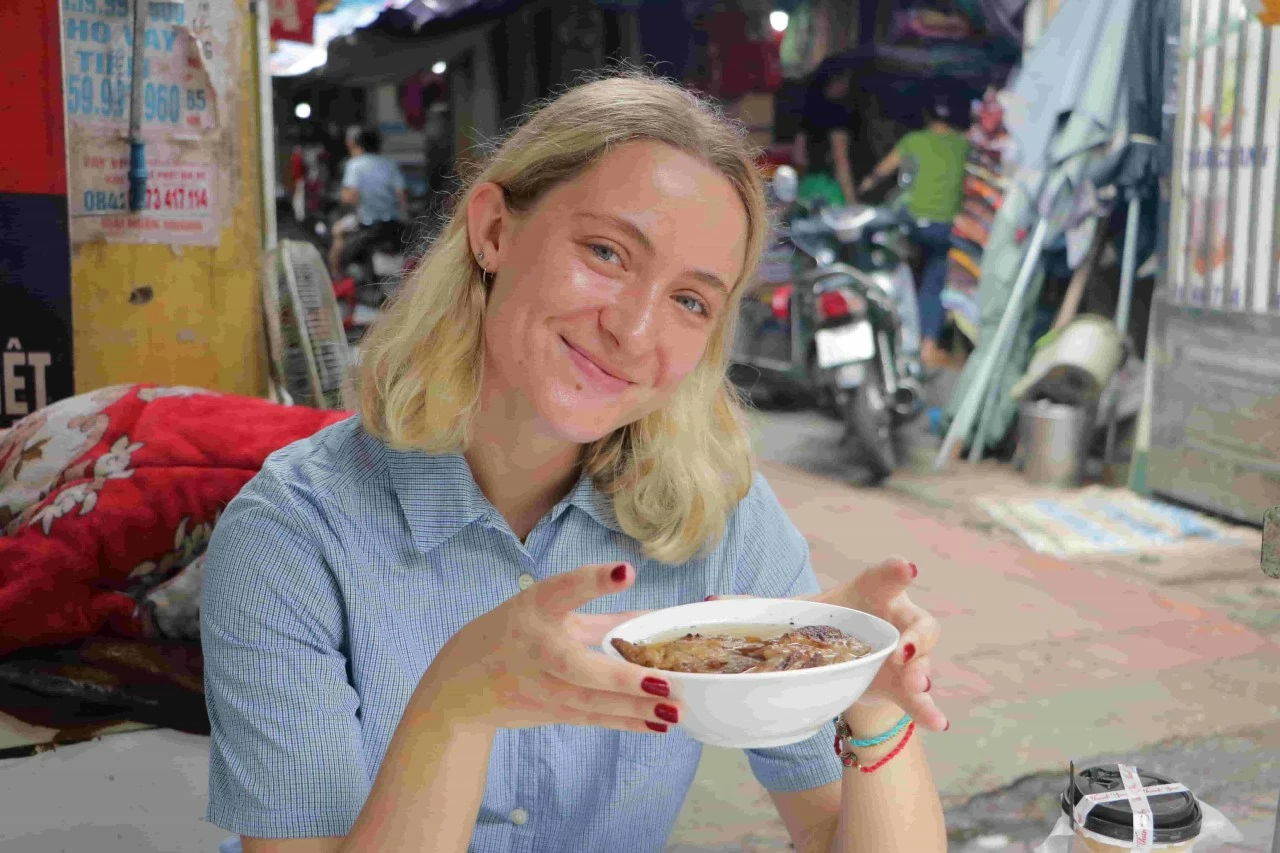 |
| Hannah Gordon has gradually integrated fish sauce into the familiar fabric of her daily meals in Vietnam. (Photo: Linh Đan |
"I love the combination of different flavours, and it’s always interesting to taste local dishes", Hannah shares. For her, the magnetism of Vietnamese food does not stem from a single dominant ingredient, but from a collective resonance of components that deliver an incredibly bold yet oddly balanced experience.
Hannah’s sensory journey with fish sauce is a case in point. Initially, the potent, pungent aroma of this national staple left her hesitant - a standard defense mechanism for many uninitiated travelers. Yet, over time, the condiment quietly integrated itself into her daily life, becoming an indispensable fixture in her routine meals.
"You can eat a dish in its original form and it’s already great, but once you start adding other condiments, the flavour just explodes", Hannah notes. "I think that’s the magic of Vietnamese food - an intricate weaving of so many elements, yet perfectly harmonious".
This mastery of flavour architecture is a shared sentiment among global diners. For Ada, a traveler from the Netherlands, Vietnamese cuisine stands as a radical antithesis to her homeland’s culinary landscape.
"Food in the Netherlands is quite homogenous and plain, whereas here, everything is robust with exploding layers of flavour", Ada observes.
In her view, it is the skillful manipulation of indigenous seasonings that carves out a distinct identity for Vietnam on the global culinary map.
Ultimately, a Vietnamese meal is experienced as a masterclass in flavour orchestration - a space where complexity never yields chaos, and harmony never dilutes individual character, turning every bite into an unmistakable, highly flavorful adventure.
The cultural subtext on the dinner plate
For many travelers, Vietnamese food leaves an impression that goes far beyond taste. The way locals combine ingredients, manage strong seasonings, and structure a communal meal offers a direct window into the country’s culture, history and its people.
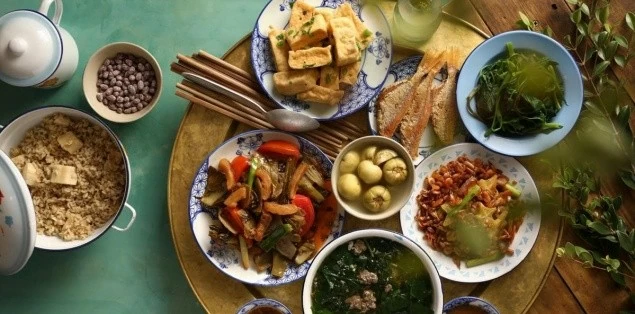 |
| For international travelers, every Vietnamese dish reflects a distinct fragment of local cultural identity. |
Traveler from Republic of Korea Dohui Kwon is no stranger to intense, fermented flavors like Kimchi or Gochujang. Yet, he still finds Vietnamese fish sauce uniquely compelling.
"Food always reflects a nation's core character", Dohui notes. "In Vietnam, the sheer boldness of the flavour profile is exactly what makes the country so charismatic".
Tsao Yuhau from Taiwan shares this view, treating Vietnam’s culinary diversity as a piece of living cultural heritage rather than just dinner. "I deeply respect this complexity because it reflects the historical flow of the country", he says.
For Bradley Corbett, a Canadian expatriate who has spent six years in the country, the food reveals something even more resilient: how generations of Vietnamese have adapted to their historical circumstances.
To Bradley, the defining feature of Vietnamese cuisine is the absolute art of balance. This equilibrium is visible not just in standalone dishes, but in how an entire family meal is orchestrated.
No matter how many intense, competing flavours hit the table, they always find a way to coexist without overpowering one another. "Vietnamese people are genuine master coordinators of flavour", Bradley observes.
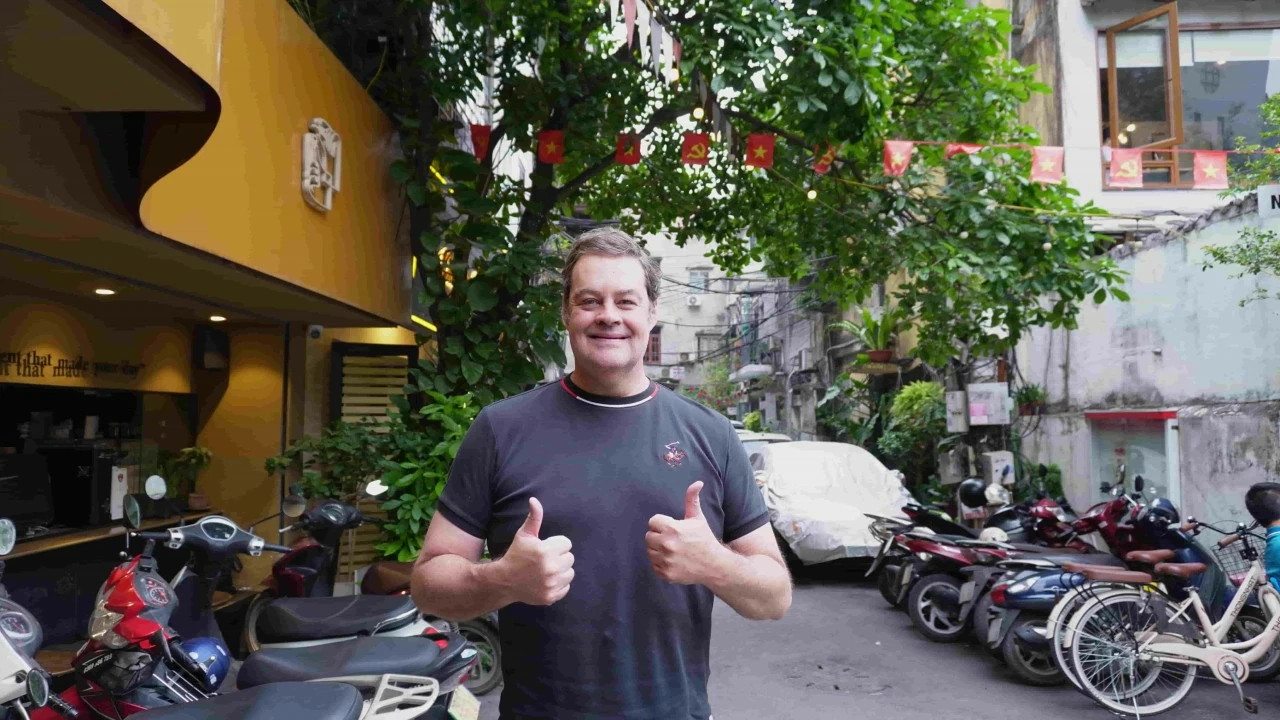 |
| Canadian expatriate Bradley Corbett, who has spent nearly six years decoding the cultural nuances of Vietnamese cuisine. (Photo: Linh Đan) |
This culinary harmony mirrors how locals handle life. Bradley reflects that the concept of “moderation” and the contrast between heavy and light dishes show the true flexibility of the people through historical hardships.
"When I think of Vietnamese food, I think of the people first", he says. "In their toughest times, they were incredibly creative. They knew how to take the simplest, most minimalist ingredients and turn them into something sophisticated".
At this point, a Vietnamese meal is no longer just sustenance. It stands as a testament to creativity, thrift, and cultural preservation - all served up on a daily family tray.
Flavours formed by memory
In the end, what sticks with travelers isn’t just the recipe on the plate; it’s the gravity of the moments attached to it.
For Australian couple Joycelyn and Glen, Vietnamese food has become the definitive anchor for their 20-year history with the country. Six visits across two decades allowed them to watch Vietnam transform, but while the skyline changed, the food remained their emotional constant.
They initially landed in Vietnam driven by historical curiosity, specifically wanting to understand the remnants of the war. Instead, they found themselves bound to the country through its kitchens.
| More from WVR |
 Reinterpreting Vietnamese Cuisine for the World: The 25-Year Journey of Chef Vu Nguyen in Northern Europe Reinterpreting Vietnamese Cuisine for the World: The 25-Year Journey of Chef Vu Nguyen in Northern Europe |
Today, dining at Vietnamese spots back in Australia functions as an immediate sensory recall for Joycelyn. "The aroma instantly bridges the distance", she says.
"It brings back everything familiar - the experiences we shared and our deep affection for this country". For them, a bowl of pho (rice noodle soup) or a specific scent is no longer just lunch; it is a time stamp of familiar street corners and the visual poetry of a changing nation.
This connective tissue of food is just as vital for the wider expatriate community. For many living in Hanoi, their entire social life - from catching up with friends over local street food to daily coffee runs - revolves entirely around the table.
Food here acts as a social shortcut; it strips away cultural boundaries and effortlessly brings people together.
Whether it's a crowded low-stool sidewalk stall or a massive family gathering, Vietnamese gastronomy is archived in memory not by ingredients, but by proximity, conversation, and human intimacy.
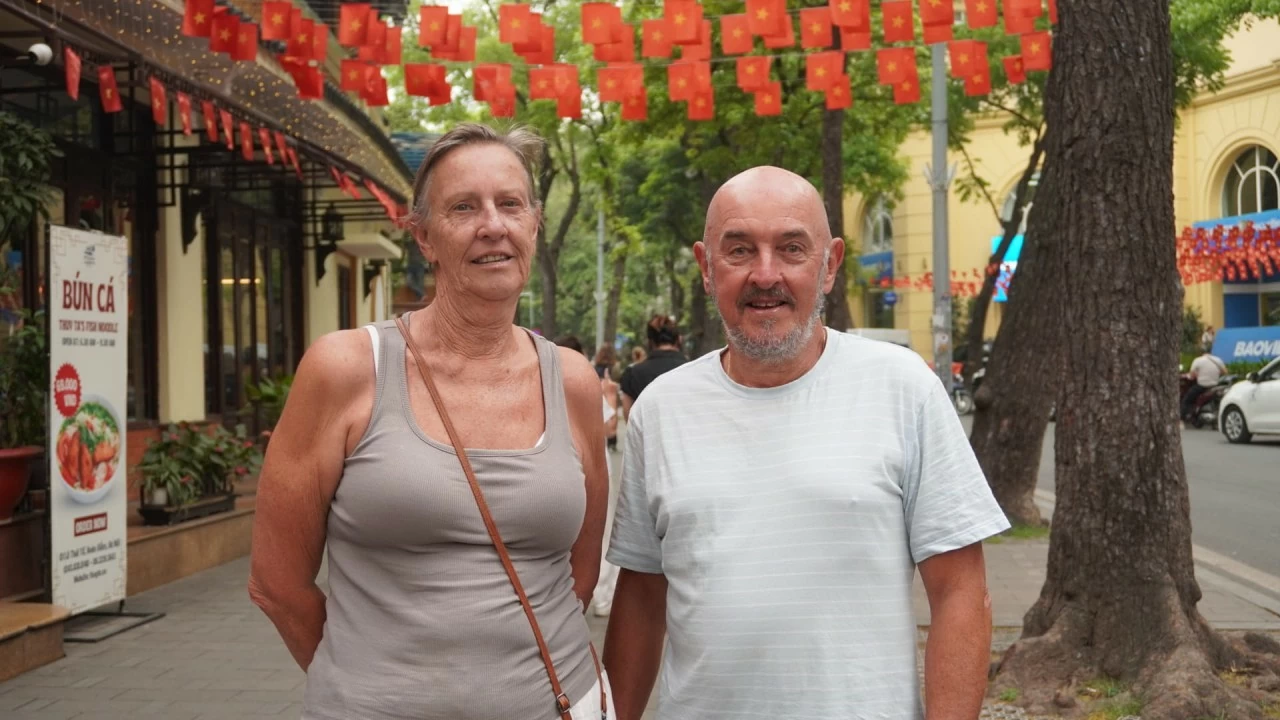 |
| Australian travelers Joycelyn and Glen, who have returned to Vietnam six times over the past two decades, anchored by their love for the local culture. (Photo: Linh Đan) |
By weaving together bold flavour profiles and silent historical footprints, Vietnamese cuisine effortlessly fulfills its role as the ultimate cultural diplomat.
It does more than introduce Vietnam to the global palate; it transforms the entire country into a shared space of human connection.
Here, every dish serves as an introduction, and every communal meal becomes a keepsake. Ultimately, gastronomy is what redraws the map for international travelers - turning Vietnam from a mere geographical destination into a permanent anchor of memory.