




Promoting Vietnamese language community classes in southeastern RoK
WVR - On April 14, a seminar titled “The Importance of Teaching and Preserving Vietnamese Language and Culture in the Vietnamese Community in Southeast Korea” was held at the Consulate General of Vietnam in Busan, Republic of Korea (RoK).
Latest
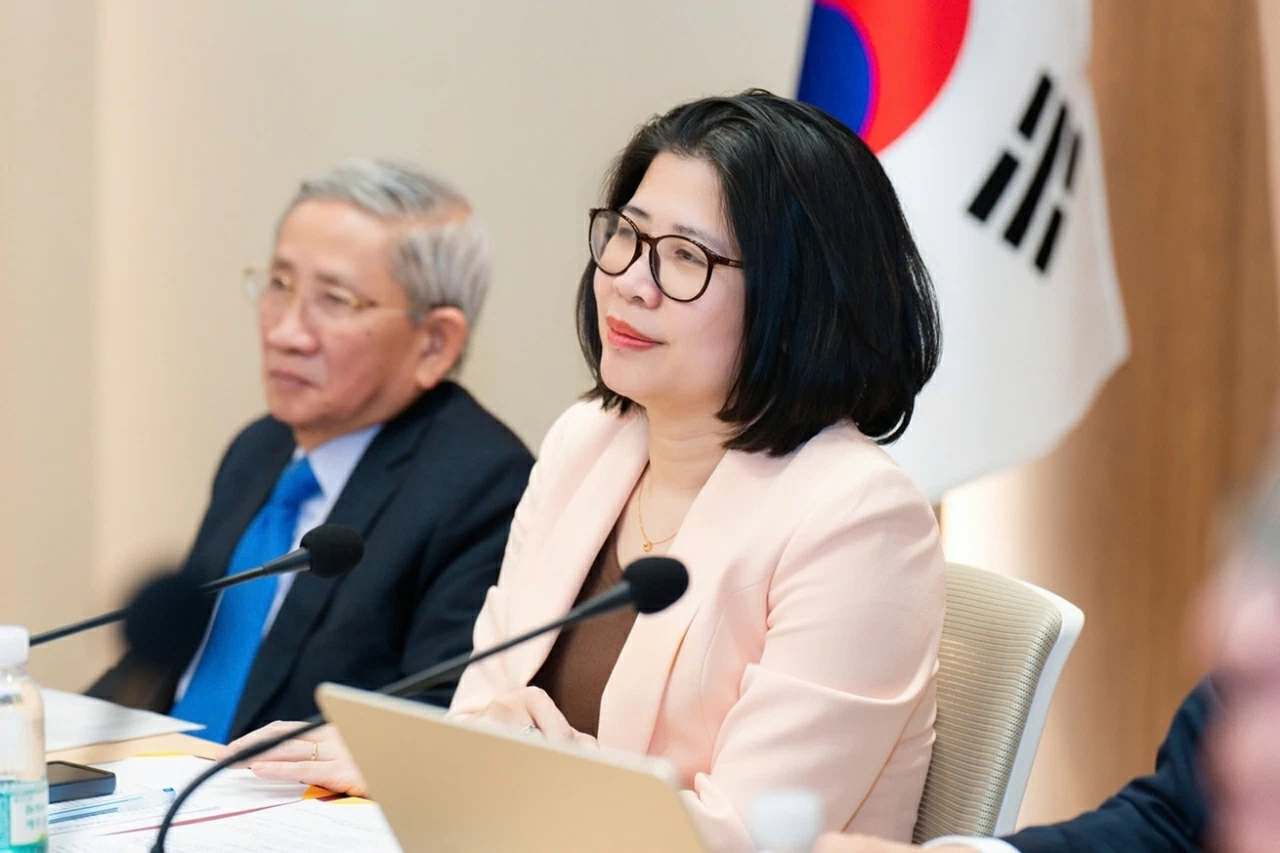 |
| Vietnamese Consul General in Busan Doan Phuong Lan delivers the opening speech. (Photo: Chu Van) |
The seminar saw the participation of numerous delegates, experts, teachers, parents, and the Vietnamese community in Busan, Ulsan, Daegu, Jeju, Gyeongsangnam, along with international attendees both in-person and online.
The event was organized by the Consulate General of Vietnam in Busan in collaboration with the Global Network for Teaching Vietnamese Language and Culture. It aimed to celebrate the Day of Honoring the Vietnamese Language in the Overseas Vietnamese Community and to create a forum to discuss the current situation, needs, and solutions to promote Vietnamese language teaching and learning in the region.
Diverse participation, connecting multinational experiences
The seminar was attended by many experts, managers, and community representatives with experience in education, language, and overseas Vietnamese affairs.
The delegation included: Prof. Dr. Nguyen Minh Thuyet, Chief Editor of the 2018 General Education Program, former Deputy Chairman of the National Assembly's Committee for Culture, Education, Youth, Adolescents, and Children, and Chief Editor of the book Vui hoc tieng Viet; Mr. Nguyen Duy Anh, Principal of GAG Japanese Language Academy (Japan), Member of the Central Committee of the Vietnam Fatherland Front, and Secretary-General of the Global Network for Teaching Vietnamese Language and Culture; Mr. Nguyen Duy Hung, Permanent Vice Chairman of the Vietnamese Association in Fukuoka (Japan); and Mr. Le Thanh Ha, former Director and Editor-in-Chief of the Ho Chi Minh City University of Education Publishing House.
The program also connected with international locations. In Malaysia, teacher Nguyen Thi Lien, Vietnamese Language Ambassador Abroad in 2023, Deputy Secretary-General of the Network, and Head of the Vietnamese Club in Malaysia, shared over 10 years of experience in organizing and teaching Vietnamese to Vietnamese children.
From the Fukuoka (Japan) location, the seminar welcomed Mr. Hoang Xuan Dung, Chairman of the Vietnamese Association in Fukuoka, and Ms. Nguyen Thi Minh Nguyet, Chairwoman of the Vietnamese Women's Association in Kyushu, who shared practical experiences in community mobilization, class establishment, and maintaining Vietnamese language teaching activities.
Placing Vietnamese at the heart of the community
In her opening remarks, Ms. Doan Phuong Lan, Vietnamese Consul General in Busan, emphasized: “We are here not just to talk about a language. We are talking about Vietnamese as the origin, the memory, the identity, and the bond connecting generations of Vietnamese people to their homeland.”
According to her, with a community of over 300,000 Vietnamese in Korea, with a significant portion in the Southeast region, preserving the Vietnamese language is no longer a private family matter but a long-term issue for the community and the future of the younger generation. If the second and third generations can no longer use Vietnamese, the gap with culture, family, and homeland will widen.
Following the opening speech, Mr. Nguyen Duy Anh, Member of the Central Committee of the Vietnam Fatherland Front, and Secretary-General of the Global Network for Teaching Vietnamese Language and Culture, emphasized the long-term significance of preserving Vietnamese in the overseas Vietnamese community.
He stated that Vietnamese is not just a communication tool but a cultural origin, a family memory, and a bond connecting each Vietnamese person to their homeland. In the context of the growing Vietnamese community in Korea, teaching Vietnamese cannot be isolated efforts but should be seen as a long-term journey, organized, connected, and involving multiple stakeholders.
“A class can be opened in a short time, but maintaining that class sustainably, with quality and influence, is more important,” Mr. Nguyen Duy Anh emphasized.
According to him, achieving this requires close connections between representative agencies, networks, associations, teachers, and parents; and building a sustainable Vietnamese teaching ecosystem, where each class is not only a place to impart language but also a space to nurture culture and national identity for the younger generation.
One of the program's focal points was listening to direct feedback from the community. Representatives from associations, teachers, and parents shared the reality: The demand for learning Vietnamese is very high, but organizing classes faces many challenges, from a lack of teachers, learning materials, and methods to maintaining stable classes.
Feedback indicated that many current classes mainly rely on individual volunteerism and dedication, lacking systematic connection, leading to difficulties in expansion and sustainable development.
Open seminar: Finding solutions for the "Open class - Maintain class" challenge
The discussion session titled “What Can Be Done to Open and Maintain Vietnamese Classes?” attracted many practical suggestions. Delegates focused on identifying core groups locally, selecting suitable models such as weekend classes, small-scale pilot classes, or Vietnamese clubs linked with cultural activities.
Additionally, the role of parents and associations was emphasized as a key factor in maintaining classes. Experiences from Fukuoka (Japan) and Malaysia showed that with community support and appropriate methods, building and maintaining Vietnamese classes is entirely feasible.
Within the program framework, the introduction of learning materials and teaching methods provided specific directions. Experts emphasized the need to shift from traditional teaching methods to flexible approaches, linking language with experiences, making Vietnamese more relatable and lively for children.
Speaking at the seminar, Mr. Nguyen Duy Anh, Member of the Central Committee of the Vietnam Fatherland Front, and Secretary-General of the Global Network for Teaching Vietnamese Language and Culture, emphasized: “Opening a Vietnamese class is commendable, but maintaining its persistent existence, steady development, and quality is even more important.”
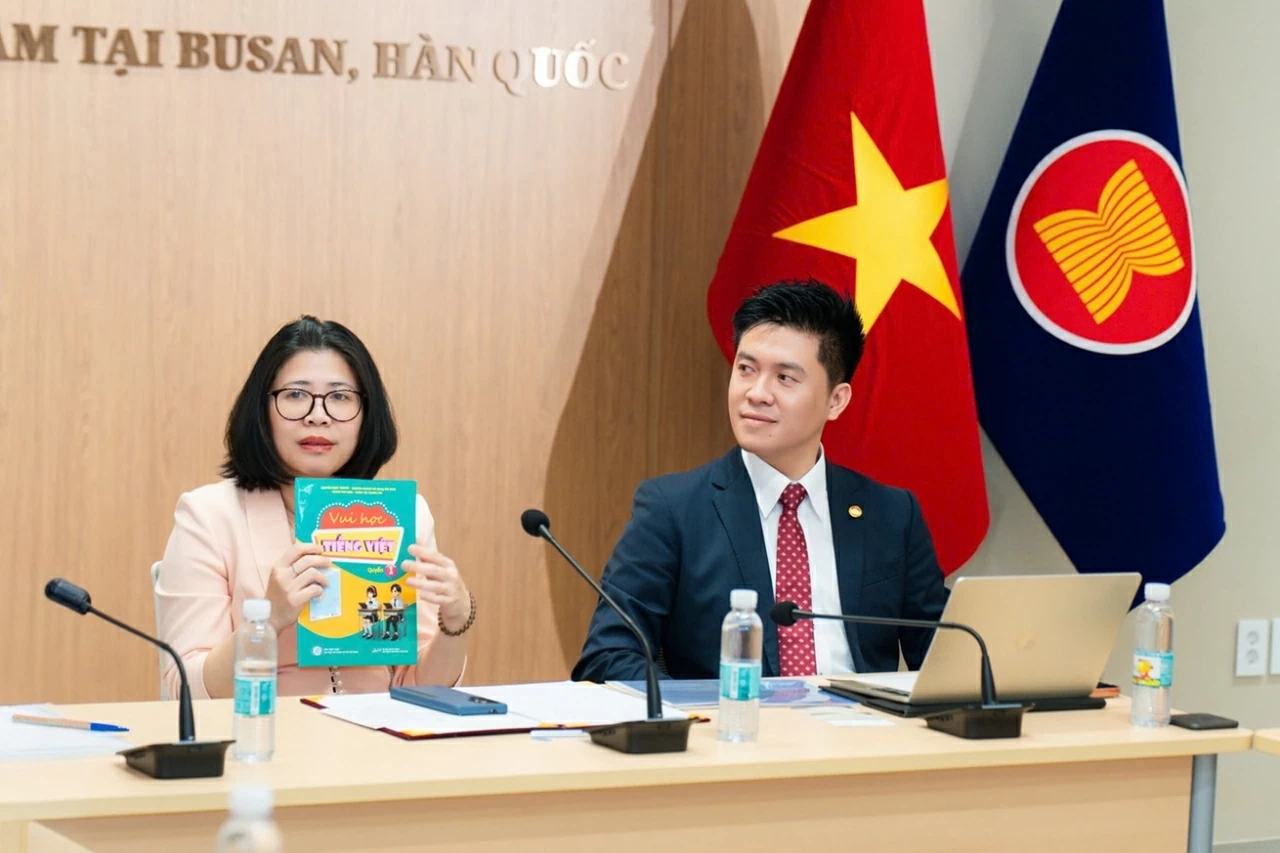 |
| Consul General Doan Phuong Lan and Mr. Nguyen Duy Anh, Member of the Central Committee of the Vietnam Fatherland Front, Secretary-General of the Global Network for Teaching Vietnamese Language and Culture, introduce the book series. (Photo: Chu Van) |
Guiding methods for teaching and learning Vietnamese
Besides discussions and method guidance, the program also allocated time for presenting the Vui hoc tieng Viet book series to representatives of teachers, parents, and associations in the area, directly supporting learning materials for teaching and learning in the community.
Notably, Prof. Dr. Nguyen Minh Thuyet, Chief Editor of the 2018 General Education Program and Chief Editor of the Vui hoc tieng Viet book series, directly guided the use of the curriculum, clarifying content structure, approach methods, and class organization suitable for Vietnamese children living in multilingual environments.
According to Prof. Dr. Nguyen Minh Thuyet, teaching Vietnamese to children abroad needs to shift from traditional approaches to flexible methods, focusing on the learner, linking language with experiences, culture, and life.
The curriculum should not only be a tool for imparting knowledge but should be used as a means to create interest, helping children “learn while playing, play while learning,” thereby naturally fostering a love for Vietnamese.
Immediately following the guidance, the program dedicated time for direct Q&A, where Prof. Dr. Nguyen Minh Thuyet and experts addressed concerns from teachers, parents, and association representatives about class organization, maintaining attendance, choosing suitable methods, and coordination between family, school, and community.
These specific, practical exchanges not only help resolve immediate difficulties but also contribute to shaping clearer ways to implement Vietnamese classes in Busan in the future, aiming to build effective and sustainable teaching models in the community.
From seminar to concrete action
Notably, in the program's conclusion, Ms. Doan Phuong Lan, Vietnamese Consul General in Busan, outlined specific directions to transform the discussions into practical actions. Accordingly, a Coordinating Committee will be established with the participation of relevant parties to develop a comprehensive proposal for Vietnamese language teaching development in Southeast Korea.
The Coordinating Committee will focus on reviewing existing issues, proposing solutions suitable for each area, and implementing specific steps in the near future, with a focus on gradually opening and launching community Vietnamese classes, aiming to build stable, effective, and community-influential class models.
The seminar in Busan was not only a professional activity but also the beginning of an organized, connected, and clearly directed implementation process.
In the context of the growing Vietnamese community in Korea, preserving the Vietnamese language is not only a cultural need but also a foundation for maintaining identity, enhancing connections, and looking towards the origin.