





Muong Bi: When heritage 'speaks' in the rhythm of Khai Ha gongs
WVR - Amidst the fertile valleys and the solemn stilt houses of Muong Bi, heritage vividly comes alive in every gong beat, festival, and everyday story of the Muong people.
Latest
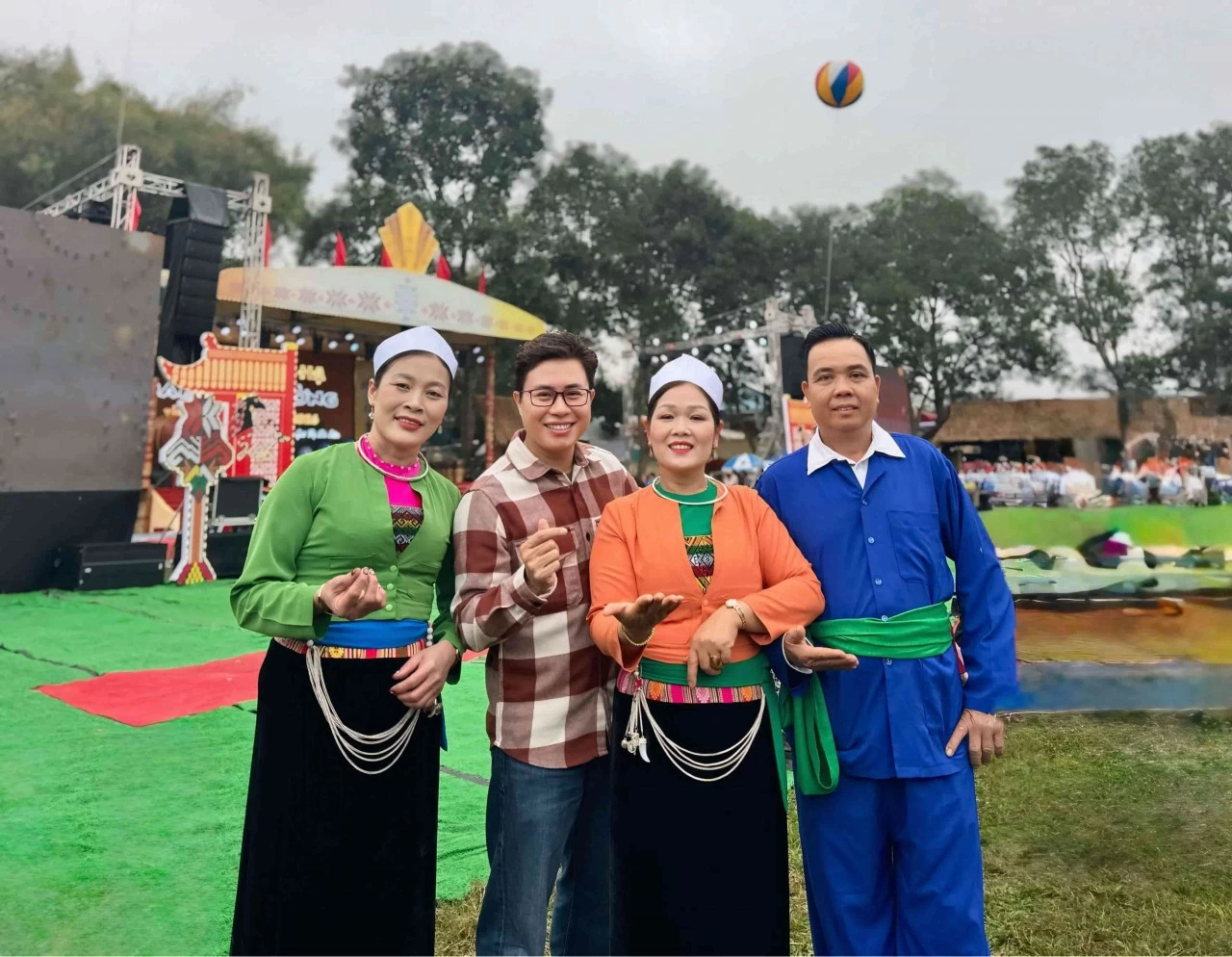 |
| Author Trinh Le Anh takes a commemorative photo with artisans at the festival. |
The stilt houses tell heritage stories
In the folk consciousness of the Muong people, the saying “Nhat Bi, nhi Vang, tam Thang, tu Dong” is not merely an administrative boundary but a cultural order firmly established since the ancient times of forming muong. After the administrative mergers in 2025, Muong Bi (Tan Lac - former Hoa Binh) is now a crucial part of the new Phu Tho province – a vast geographical entity encompassing the ancient sediments of the former Hoa Binh and Vinh Phuc regions.
Amidst the fertile valleys and winding limestone mountains, Muong Bi stands as a "big brother", a core area preserving the most primitive indigenous knowledge systems. Here, the legends resembling the epic De dat de nuoc still echo in the daily lives of the people. From a professional perspective, the administrative shift does not blur the identity; instead, it opens up a great opportunity for Dat To tourism to vigorously shift to capitalize cultural resources into sustainable strategic assets in the context of the experience economy.
To truly "touch" the soul of Muong Bi, I chose to stay in Luy Ai hamlet – a space likened to a "living museum" in real life. Luy Ai welcomed me with the dignified tranquility of 19 traditional stilt houses standing firm against the elements on an area of nearly 5 hectares. I stayed at Muong Bi Homestay, owned by Mr. Dinh Cong Lon – one of the pioneers of community tourism in the hamlet.
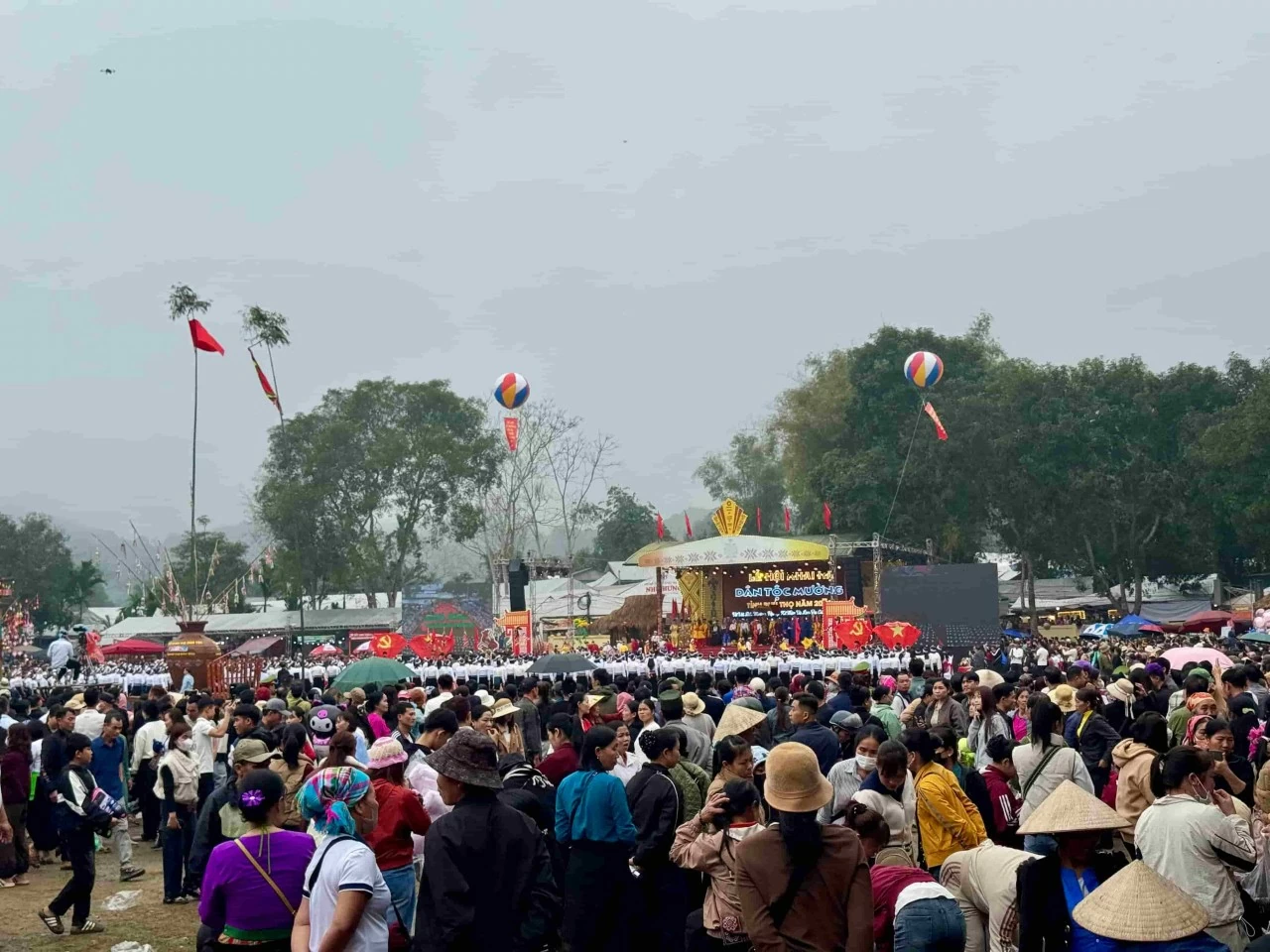 |
| The Khai Ha festival attracts a large number of locals and tourists. |
Here, I realized that the title "Heritage Destination Brand" (HDB) is not found in flashy signboards but is present in the meticulous bamboo weaving by the porch and the lingering kitchen smoke every afternoon. The people of Luy Ai are not merely service providers; they are "co-creators of value", as the theory by Pike and Page (2014) suggests.
Sitting beside a jar of can wine, listening to artisans recount how their ancestors relied on the great forest, the boundary between guest and host fades, giving way to a profound human connection. Heritage in Luy Ai is not a frozen entity but a continuous flow of life in harmony with nature.
The "Khuong mua" harmony at the start of Spring
The Khai Ha Festival (or Khuong Mua Festival) 2026 with the theme "Return to the Land of Muong - Converge, Inherit and Spread Heritage Values" is the most sacred milestone in the community's annual cycle. "Khuong Mua" in the local language means "opening the season" – the bell that awakens all things after the Tet holiday to kickstart a new cycle of production labor.
Associated with the sacred legend of the National Mother Hoang Ba and the Three Tan Vien Mountain Saints, the festival expresses deep gratitude to the ancestors who established the land and muong. The most emotional moment of the festival is the first plowing ceremony of the spring at Na Trung field. Watching the first furrow being decisively turned over on this heritage field, I deeply understood the true essence of a harvest prayer festival. It is a vivid real-life performance where spiritual beliefs blend with the hope for prosperity, clearly visible on the reverent faces of thousands attending the festival.
In the bustling festival atmosphere, I found a Muong gong exhibition tucked away at the edge of the festival ground. Here, beside the gray bronze gongs aged by time, I was fortunate to converse with an elderly artisan. Receiving the fabric-wrapped mallet from him, listening to his explanations on maintaining breath and rhythm, I tried striking a note.
The sound resonated long, gently vibrating beneath my palm, allowing me to touch the simplest emotional layer of heritage. The artisan smiled, saying that the Muong people wake up to the sound of gongs, and the most sacred during Tet and festivals is the Sec bua melody. Sec bua (or Xac bua) is not merely an ancient tune but the sound of blessings, a wish to ward off bad luck and invite good fortune for the new year for the muong. When played correctly, the Sec bua gong sound is not harsh but deep and resonant, echoing against the limestone valley walls, becoming a sacred connection between human consciousness and the divine realm.
From the simple personal experience beside that small stall, I stepped out to the central stadium and was completely captivated by a large-scale performance. It was when the "Mo dang chieng" ritual solemnly began to invoke the deities, awaken the spirit of the gongs, and initiate the mass performance of over 400 artisans. The image of nearly 400 Muong girls dressed in traditional attire – long black skirts, short colorful panzan blouses with intricately woven waistband patterns – lining both sides of the procession route from the Temple gate created a profoundly striking visual impression.
When hundreds of bronze gongs simultaneously resonated, the sound seemed to thicken the entire limestone valley space of Tan Lac. Seeing the faces of young girls and even children standing alongside the elders, persistently keeping rhythm, I understood that this blessing sound does not belong only to the past. It is flowing into the present, a clear testament to a living heritage being continuously and naturally passed down through generations.
Besides the sound of gongs, Muong Bi also preserves another unique intellectual treasure: the Lich Doi (or Bamboo Calendar). With just 12 meticulously carved bamboo sticks, the ancient Muong people long ago established an accurate folk astronomical system to manage time and agricultural seasons. This calendar operates based on observing the lunar cycle, the movement of planets, and especially the direction of the Doi star (Pleiades).
Watching artisans demonstrate how to determine auspicious days and weather forecasts from the small carved lines on the bamboo sticks, I immediately thought of the strategic "IP commercialization" puzzle – capitalizing intellectual property assets for heritage destinations. The Lich Doi is not merely a timekeeping tool; it is evidence of the deep thinking and harmonious dialogue of the ethnic group with the universe.
In the current trend of knowledge tourism development, if we apply the "Emotive Digital Storytelling" method as outlined by Perry et al. (2017), using interactive technology to animate and vividly interpret ancient astronomical stories instead of merely displaying static artifacts in glass cases – the Lich Doi can completely become a unique and valuable cultural tourism product.
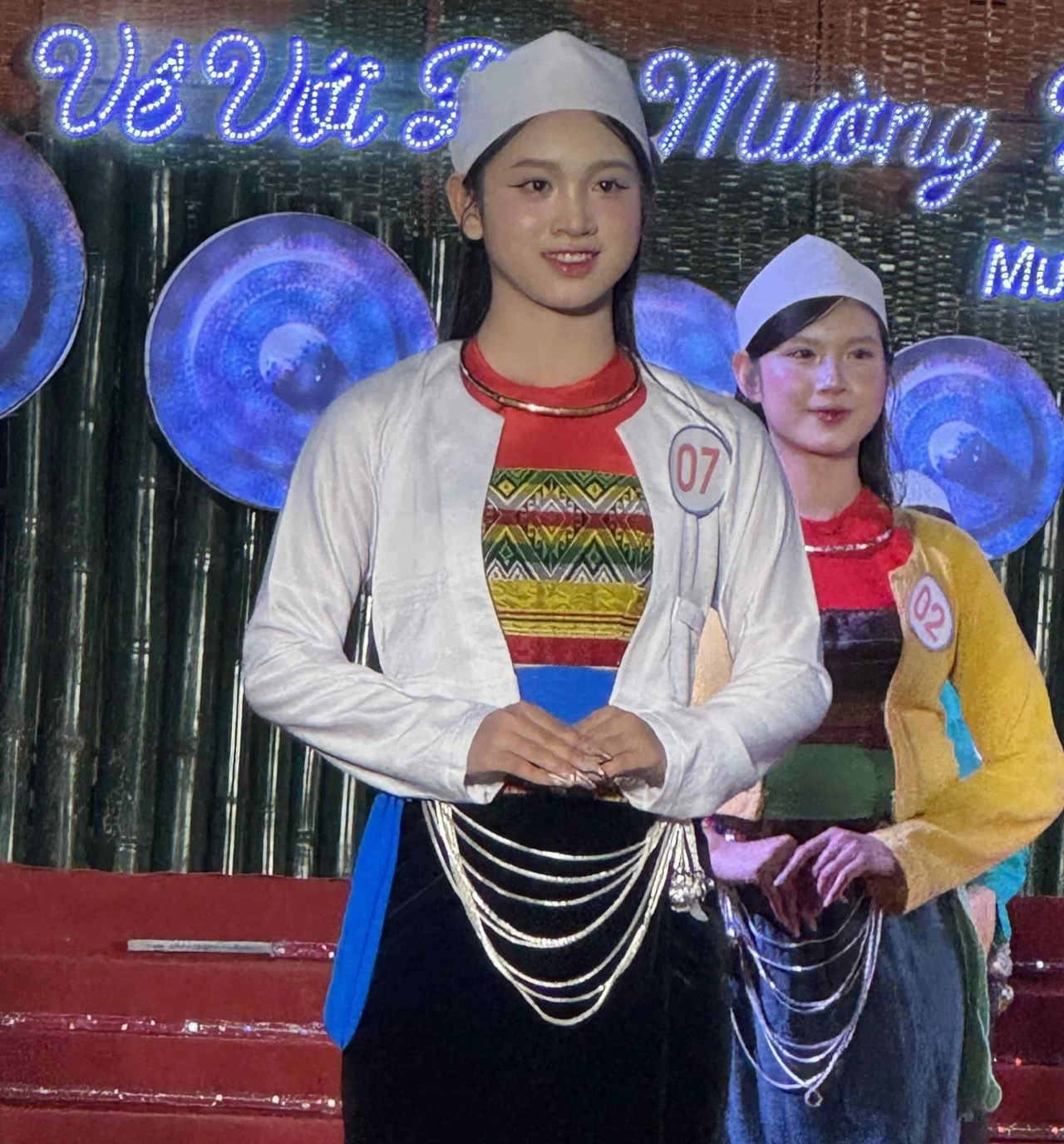 |
| The image of Muong girls in traditional attire creates a natural aesthetic touch for tourists. |
Muong attire and the longing eyes of the Spring Festival
In the bustling atmosphere of the Spring Festival 2026, the image of Muong girls in traditional attire creates a natural aesthetic touch for tourists. The short, form-fitting Panzan blouse harmoniously paired with the long black skirt with intricately woven waistband patterns – a testament to the skill and sophistication of the women here.
At the "Traditional Costume" contest stage, which I would love to call "Beauty of Muong Land", every step, every smile contains a whole spring sky of Dat To. The vibrant attire harmonizes with the gong rhythm, but perhaps what touches the hearts of tourists the most is the longing, sincere eyes of those "heritage ambassadors" when the festival ends. It is a genuine welcoming attitude, not "commercialized", creating a friendly and deeply understanding tourism environment.
Leaving Muong Bi as the evening descends, the gong sound still resonates in my chest, carrying with me a belief: Heritage only truly becomes a strategic asset when managed with a systematic vision.
From a professional perspective, the mismatch between the Digital Heritage Destination Brand (DHDB) shining on the online space and the execution capacity, physical infrastructure at the actual site remains a significant challenge for destinations on the rise.
To elevate the status of intangible heritage tourism in Phu Tho, transitioning from a short-term "event organization" mindset to a "system management" mindset is a strategic requirement. The locality needs to soon study the model of a specialized Destination Management Organization to act as the nucleus coordinating the multi-entity service supply chain. Hopefully, each initial furrow at Na Trung field will not only herald a bountiful rice season but also the beginning of professional, sustainable heritage tourism journeys, where local identity always serves as the guiding beacon for the destination's future.