






Phong Nha – Ke Bang earns UNESCO World Biosphere Reserve status
The recognition marks the third UNESCO accolade for Phong Nha – Ke Bang, which was inscribed as a World Natural Heritage Site in 2003 and again in 2015. The latest designation highlights the park's global ecological significance while opening new prospects for conservation and sustainable development.
Latest
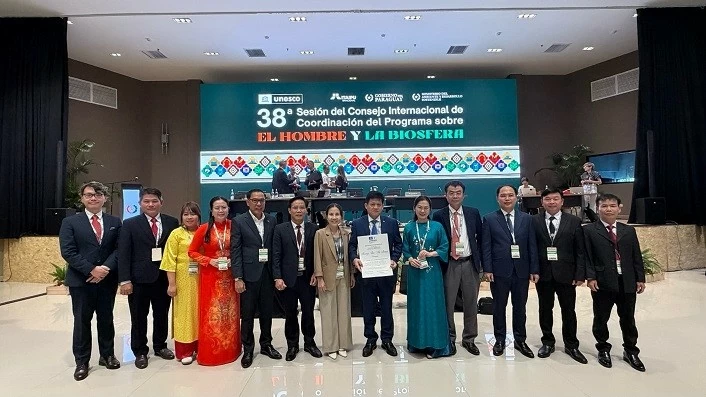 |
| Leaders of Quang Tri province and the Management Board of Phong Nha–Ke Bang National Park receive UNESCO’s certificate recognising Phong Nha–Ke Bang as a World Biosphere Reserve. (Photo: Department of External relations and Cultural diplomacy, Ministry of Foreign Affairs) |
Phong Nha–Ke Bang National Park has been recognised as a UNESCO World Biosphere Reserve after the decision was approved on June 5 at the 38th session of the International Coordinating Council of UNESCO’s Man and the Biosphere (MAB) Programme in Hernandarias, Paraguay.
The recognition marks the third UNESCO accolade for Phong Nha – Ke Bang, which was inscribed as a World Natural Heritage Site in 2003 and again in 2015. The latest designation highlights the park's global ecological significance while opening new prospects for conservation and sustainable development.
Pham Hong Thai, Director of the Phong Nha–Ke Bang National Park Management Board, described the recognition as a landmark achievement for both Quang Tri province and Vietnam. He said the designation acknowledges the park’s rich biodiversity, unique limestone rainforest ecosystems, striking natural scenery, and exceptional geological and geomorphological values.
According to Thai, the recognition also reflects international appreciation for Vietnam’s ongoing efforts to preserve natural resources, safeguard biodiversity and pursue sustainable development. It is expected to strengthen conservation work, improve resource management and support community-based and sustainable tourism initiatives.
The UNESCO-approved biosphere reserve spans 515,830 hectares, comprising a core zone of 123,326 hectares, a buffer zone of 220,055 hectares, and a transition zone of 172,449 hectares. The area is home to more than 159,300 residents.
Phong Nha – Ke Bang joins UNESCO’s World Network of Biosphere Reserves, which includes 759 sites across 136 countries. The addition brings the total number of UNESCO-recognised biosphere reserves in Vietnam to 11.
The new status is expected to boost socio-economic development in Quang Tri, particularly in the tourism sector, while raising the province’s international profile in nature conservation and sustainable tourism and contributing to Vietnam’s broader green growth objectives.
(Source: VNA)