


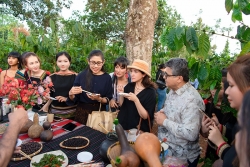

Vietnamese Coffee on the path to becoming a 'shared living heritage of humanity'
At the World Coffee Heritage Forum (Buon Ma Thuot, Dak Lak), coffee is recognised not just as an agricultural product but as a "living heritage" embodying cultural value, indigenous knowledge, and global connectivity.
Latest
 |
| “Coffee is a treasure of the Earth, a heritage of humanity, a solution for the future", Founder, cum Chairman of Trung Nguyen Legend Group Dang Le Nguyen Vu. |
With its distinctive Robusta foundation, combined with knowledge of coffee cultivation and processing, indigenous practices passed down within communities, and the cultural identity of the Central Highlands, along with new innovations from Vietnam, Vietnamese coffee is gradually establishing its position on the global coffee map.
Coffee Promotes Intercultural Dialogue – Connecting Global Communities
Throughout the World Coffee Heritage Forum with the theme "From Diverse Traditions to Shared Living Heritage of Humanity" held from April 17-19, 2026, at the World Coffee Museum in Buon Ma Thuot, Dak Lak, through diverse, expert, and practical perspectives from leaders of central and local agencies in Dak Lak, ambassadors, consuls general, international organizations, and experts from both inside and outside the country, there was a consensus: coffee is not just an agricultural product or an economic sector, but a "living heritage" – a convergence of history, culture, commerce, and deeply intertwined with the spiritual life and social interactions of human civilizations.
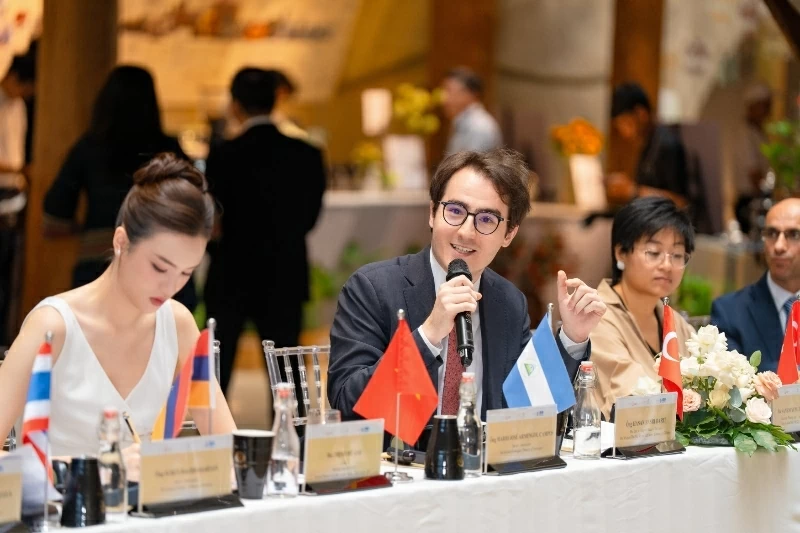 |
| Mr. Hasan Barit, Deputy Head of the Turkish Embassy Delegation in Vietnam, shared about the role of coffee as a "space for social interaction and knowledge exchange" at the World Coffee Heritage Forum. |
In the presentation "From the Ottoman Empire to Modernity: Turkey's Role in the Development Journey of World Coffee", Mr. Hasan Barit, Deputy Head of the Turkish Embassy Delegation in Vietnam, shared the long historical journey of coffee from Ethiopia to Yemen, spreading to the Islamic world and flourishing in the Ottoman Empire. It was not just the movement of a plant but a journey of global dissemination through empires, trade activities, and cultural exchanges. Coffee houses in Istanbul became "vibrant spaces for social interaction and knowledge exchange", where people met, debated, and shared ideas.
This journey continued to Europe, reaching major cities like Venice, London, and Paris. Here, coffee houses were likened to "schools for the intellectuals", contributing to the nurturing of enlightenment thinking and promoting the development of modern society. From a Middle Eastern perspective, Mr. Saadi Salama, Ambassador of Palestine to Vietnam, referred to coffee as "a cultural memory in liquid form, "where each cup of coffee is a ritual with deep civilisation.
In the presentation "From Innovation to Connection: Italy and the Global Language of Espresso", Mr. Renzo Moro, Head of Agriculture at the Italian Embassy in Vietnam, argued that the birth of espresso was not just a technical innovation but a transformation of coffee into a "global cultural language". Practices such as "caffè sospeso" – paying for oneself and pre-paying for a stranger's coffee – symbolise the "spirit of sharing" of coffee in society.
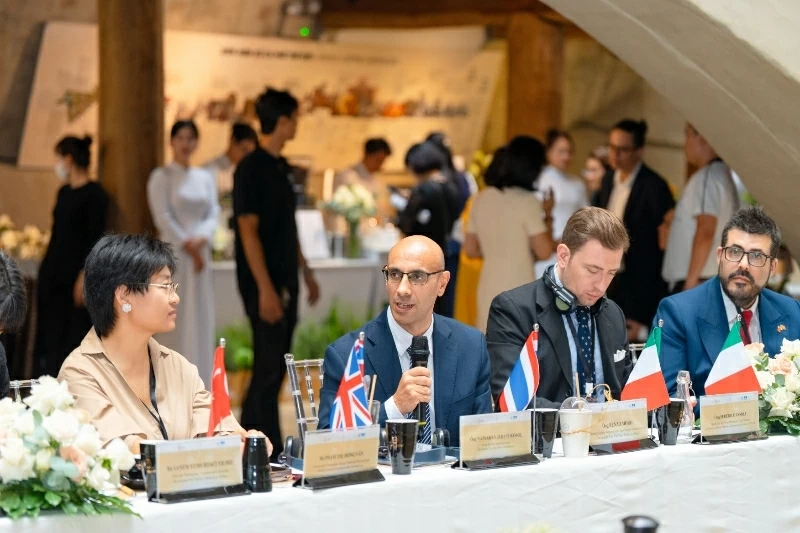 |
| Mr. Renzo Moro, Head of Agriculture, Italian Embassy in Vietnam, asserts that coffee is not just a simple beverage but a "global cultural language". |
Sharing sustainable agricultural practices, at the forum, Ms. Camila Polo Florez, Ambassador of Colombia to Vietnam, introduced the "Cultural Coffee Landscape of Colombia" – where cultivation, environment, and community life are intertwined, recognized by UNESCO as a world heritage site. In the context of climate change, the country is promoting sustainable agriculture, applying AI, organic fertilisers, and resource reuse to protect the ecosystem and enhance coffee value.
Discussing the topic of value chains and responsibility in the coffee industry, Miss Bao Ngoc, representing the younger generation, shared the presentation "The Coffee Ecosystem in the Global Green Transition", emphasizing that under the pressure of climate change, the coffee industry needs to shift from a linear model to a circular and green development ecosystem. Accordingly, coffee production should not only focus on productivity but also integrate technology, value chain transparency, by-product utilisation, and environmental protection, while placing farmers at the centre.
From historical, cultural, consumer to sustainable development perspectives, the Forum clarified the recognition that coffee is not just a consumer product, but a special cultural-social institution capable of connecting people, communities, and civilisations, bringing multiple values from economic, cultural, social, and sustainable development aspects.
"Awakening" Vietnamese Robusta and the Vision of a "Shared Living Heritage of Humanity"
In this context, Vietnam is gradually shaping its approach to coffee – not just based on output or exports, but transitioning towards "cultural, intellectual, and deep identity values".
Not only is it one of the world's leading coffee producers and exporters, but Vietnam also possesses unique conditions to form a rich identity coffee value system, capable of increasingly contributing to the future of the global coffee industry. Among these, Vietnamese Robusta, especially Buon Ma Thuot Robusta, is seen as a concentrated expression of the land, climate, and people of Vietnam: strong, resilient, enduring; harmonious, integrating without dissolving; from creativity to enhancement.
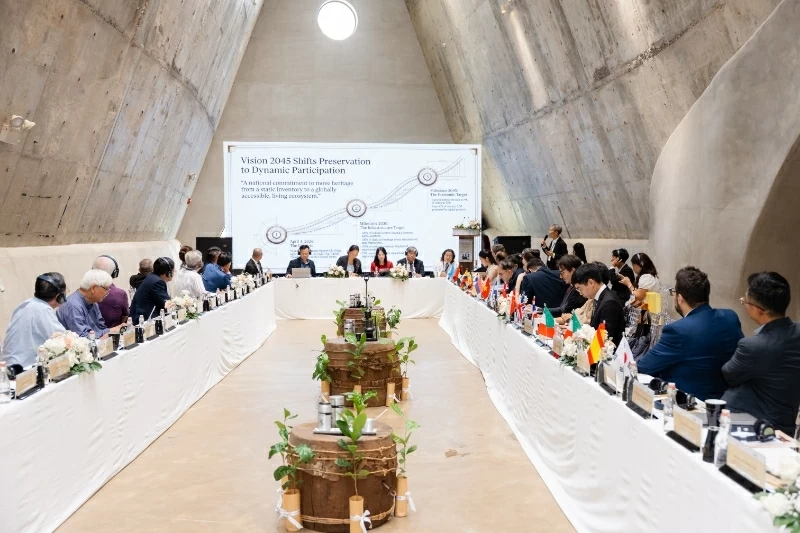 |
| The World Coffee Heritage Forum in Buon Ma Thuot, Dak Lak, gathered central and local agencies, ambassadors, consuls general, representatives of international organisations, and many experts to promote Vietnamese coffee as a "Shared Living Heritage of Humanity". |
From a historical-cultural perspective, at the program, historian Duong Trung Quoc stated that the journey of Vietnamese coffee is a transformation through many cultural layers in history: from when coffee was introduced by the French in the Central Highlands, to the Doi Moi period, which truly brought Vietnamese coffee beans to the world, carrying unique cultural stories that are increasingly recognized and appreciated internationally.
From an economic-social perspective, Assoc. Prof. Dr. Tran Dinh Thien, former Director of the Vietnam Institute of Economics, noted that the development journey of Vietnamese coffee has undergone an "extraordinary" transformation: from exporting raw Robusta coffee beans with low value to now becoming an industry generating about 9 billion USD and continuing to grow. According to him, coffee is a "gateway" to introduce Vietnam to the world, "not just as a producer but as a culture with depth".
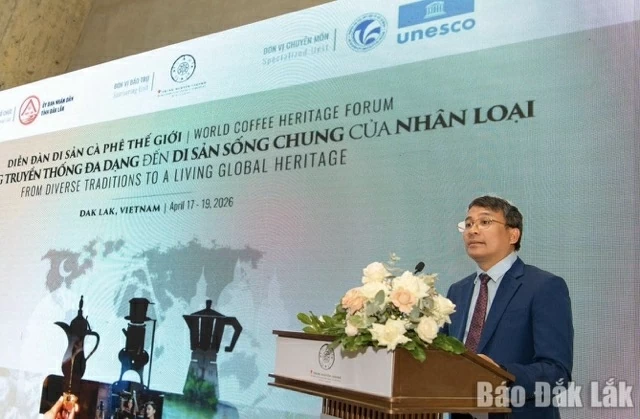 |
| Mr. Nguyen Minh Vu – Member of the Party Central Committee, Deputy Secretary of the Party Committee, Permanent Deputy Minister of Foreign Affairs, emphasised the direction "introducing the knowledge of coffee cultivation and processing in Dak Lak to the world, contributing to promoting multicultural dialogue and the aspiration for sustainable development". |
Speaking at the Forum, Mr. Nguyen Minh Vu – Member of the Party Central Committee, Deputy Secretary of the Party Committee, Permanent Deputy Minister of Foreign Affairs, emphasised the direction "introducing the knowledge of coffee cultivation and processing in Dak Lak to the world, contributing to promoting multicultural dialogue and the aspiration for sustainable development".
For "The Knowledge of Coffee Cultivation and Processing in Dak Lak" to be listed among UNESCO's best practices for safeguarding intangible cultural heritage, domestic and international experts believe that the core lies not in output or export position, but in the ability to transform coffee from a "static heritage" into a "living heritage" – practiced, created, and spread in contemporary life.
At the forum, many international references to best practices were also presented. Ms. Urawadee Sriphiromya, Ambassador of the Kingdom of Thailand to Vietnam, shared the successful model from Thailand with the "Doi Tung" project, where coffee became a tool for livelihood transformation, contributing to poverty reduction and sustainable development for the community. She emphasised: "The philosophy of putting people at the centre, a complete value chain, policies, and the government's companionship with local communities are the factors that create the success of the model".
Mr. Vinod Ahuja, FAO Representative in Vietnam, stated that the future of the coffee industry does not lie in expanding acreage, but in the ability to enhance the quality, value, and sustainability of the entire ecosystem. In this, farmers are the nucleus, while technology, finance, and policy are important levers.
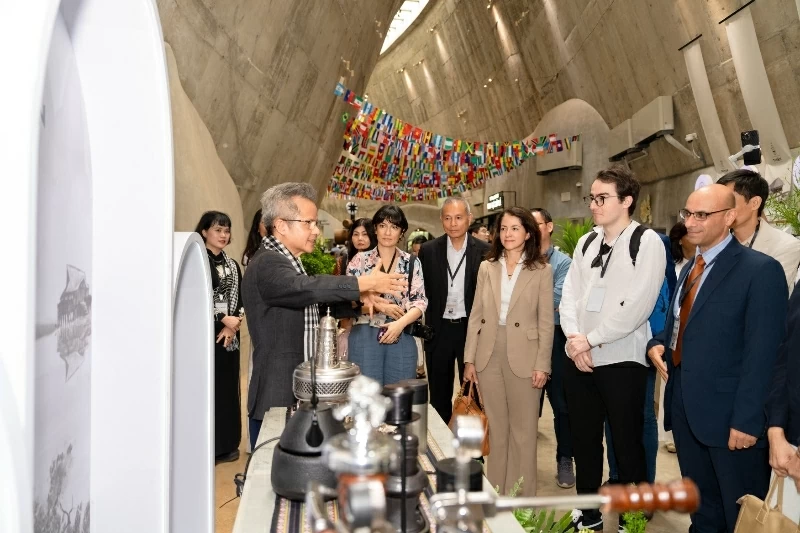 |
| International delegates, Mr. Renzo Moro, Head of Agriculture, Italian Embassy, Mr. Hasan Barit, Deputy Head of the Turkish Embassy Delegation in Vietnam, Ms. Camila Polo Florez, Ambassador of Colombia to Vietnam (from right to left) visit the World Coffee Museum - the iconic structure of the coffee capital Buon Ma Thuot, Dak Lak - the Coffee City of the World.
|
On this foundation, the vision to develop Buon Ma Thuot, Dak Lak, into the "Coffee City of the World" is seen by delegates as not just a local goal but a national and international strategy. According to Assoc. Prof. Dr Tran Dinh Thien, "Dak Lak should not only be a coffee production site but also a place that gathers coffee and cultural essence at a level capable of attracting the global community - transitioning from a raw material region to a creative centre, from an economic destination to a vibrant cultural space". To realise this aspiration, the collaboration of the State, localities, businesses, communities, and international friends is essential.
From Philosophy to Practice: Shaping Vietnamese Coffee as a "Living Heritage"
In the process of integrating Vietnamese coffee into the global coffee culture with a worthy position, along with the interest and support of Government leaders, localities, ministries, and businesses, are becoming an important force in realising the approach of "coffee as a living heritage".
Among them, Trung Nguyen Legend is mentioned as "a business as a heritage agent" (according to Dr. Nguyen Thi Thu Trang, in the presentation "Knowledge of Coffee Cultivation and Processing in Dak Lak: Approaching from a Best Practice Perspective to Protect and Sustainably Develop") and as a pioneering Vietnamese brand approaching coffee "not just as a commodity, but as a cultural story and national message". According to Assoc. Prof. Dr. Tran Dinh Thien, the concept of "enlightened coffee" by Trung Nguyen Legend is not an abstract notion but a specific development direction to "connect coffee with economy, culture, material, spirit, and community".
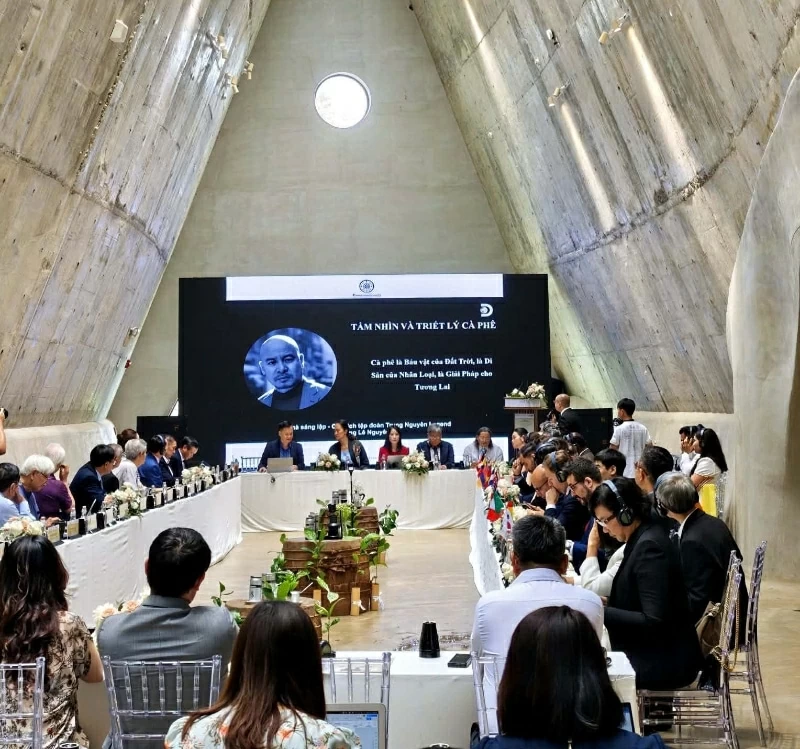 |
| Representatives of Trung Nguyen Legend share the philosophical foundation that forms a comprehensive coffee ecosystem on three dimensions: physical, social, and spiritual, contributing to spreading the value of coffee and Vietnamese coffee culture globally. |
During the forum, representatives of Trung Nguyen Legend emphasised the consistent philosophical foundation originating from the thought of the Founder and Chairman of Trung Nguyen Legend Group, Dang Le Nguyen Vu: "Coffee is the treasure of Heaven and Earth, the Heritage of Humanity, the Solution for the Future". Accordingly, a development axis is established: from product to heritage; from static heritage to living heritage; and from living heritage to the capacity to contribute to the future of humanity and the world.
On this foundation, the company has gradually built a comprehensive coffee ecosystem in which coffee is present across all three dimensions: physical, social, and spiritual. Not only in the product system, but also in the spaces for experiencing the essence of the three world coffee civilisations, projects, and cultural activities have contributed to making Vietnamese coffee a vibrant practice in contemporary life and to its strong global influence.
Especially, the philosophy of Coffee Tao - "The Tao of Coffee" from Vietnam, realised and created by the Founder and Chairman, Dang Le Nguyen Vu, aims towards a humanistic and humane lifestyle, opening up a sustainable future for the human community, and has been spread globally. Trung Nguyen Legend is recognised by international media such as Discovery, CNN, and Bloomberg as the symbol of "The Tao of Coffee".
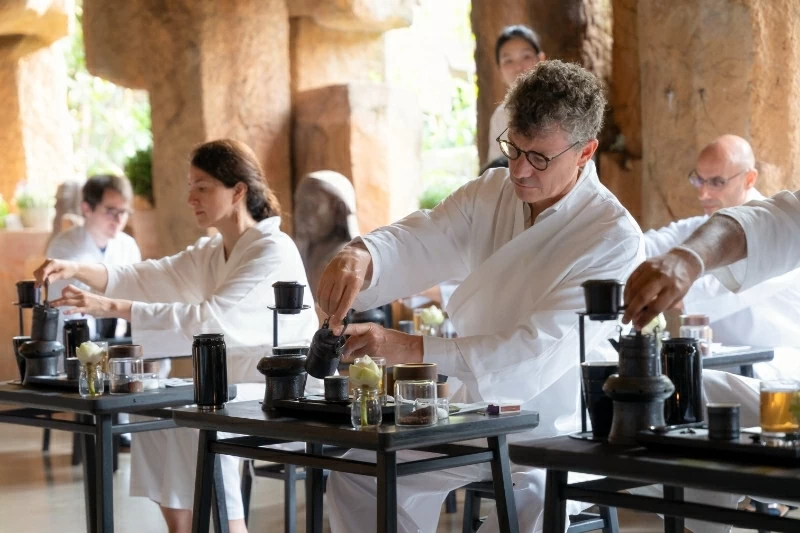 |
| Mr. Jonathan Baker – UNESCO Representative in Vietnam and Ms. Camila Polo Florez, Ambassador of Colombia to Vietnam (from right to left) experience "Coffee Meditation" at the Coffee Village (Buon Ma Thuot). |
Within the framework of the World Coffee Heritage Forum, on the morning of April 19, ambassadors and consuls general experienced "Coffee Meditation", a foundational practice of Coffee Tao at the Coffee Village and had special experiences and insights into the philosophy and culture of Vietnam. Mr. Renzo Moro shared his impression: "Unlike the quick espresso coffee style of Italy, 'Coffee Meditation' opens up a tranquil space where coffee energy is felt from within and spreads to connect people. This is an experience I will never forget in my lifetime".
For Mr. Hasan Barit, "the Coffee Meditation experience reminds me of returning to my inner self, gratitude, and inner contemplation". Mr. Jonathan Baker, UNESCO Representative in Vietnam, stated that "Coffee Meditation" offers "an experience and perspective on coffee in a completely different way".
Activities at the World Coffee Heritage Forum from April 17-19 in Dak Lak contributed to providing a comprehensive experience of the value of Vietnamese coffee from Physical Coffee - Social Coffee - Spiritual Coffee, beyond the framework of "an agricultural product or economic sector" to be recognised as a "living heritage" associated with identity and community lifestyle.
In the context of the world facing many challenges in social connectivity and sustainable development, positioning Vietnamese coffee as a "shared living heritage of humanity" will contribute to steering Vietnamese coffee towards becoming a common language of harmony, creativity, and sustainable development, becoming a solution for the future of humanity and a symbol of national identity globally.
| New chapter expected in China–Vietnam community with shared future: CGTN producer WVR - The state visit to China by General Secretary and President To Lam has attracted widespread attention from the Chinese media. The World and ... |
| World Coffee Heritage Forum – A space for dialogue connecting global coffee culture and knowledge On April 18, at the World Coffee Museum (Buon Ma Thuot), the World Coffee Heritage Forum with the theme “From Diverse Traditions to the Shared ... |