





Vietnam-France station twinning: Heritage of the past, connecting the future
WVR - On May 7, the French Embassy in Hanoi organized a twinning ceremony between Da Lat Station and Trouville-Deauville Station to honour these iconic structures symbolizing the unique architectural, cultural, and historical exchange and a shared vision for the future of the Vietnam-France railway sector.
Latest
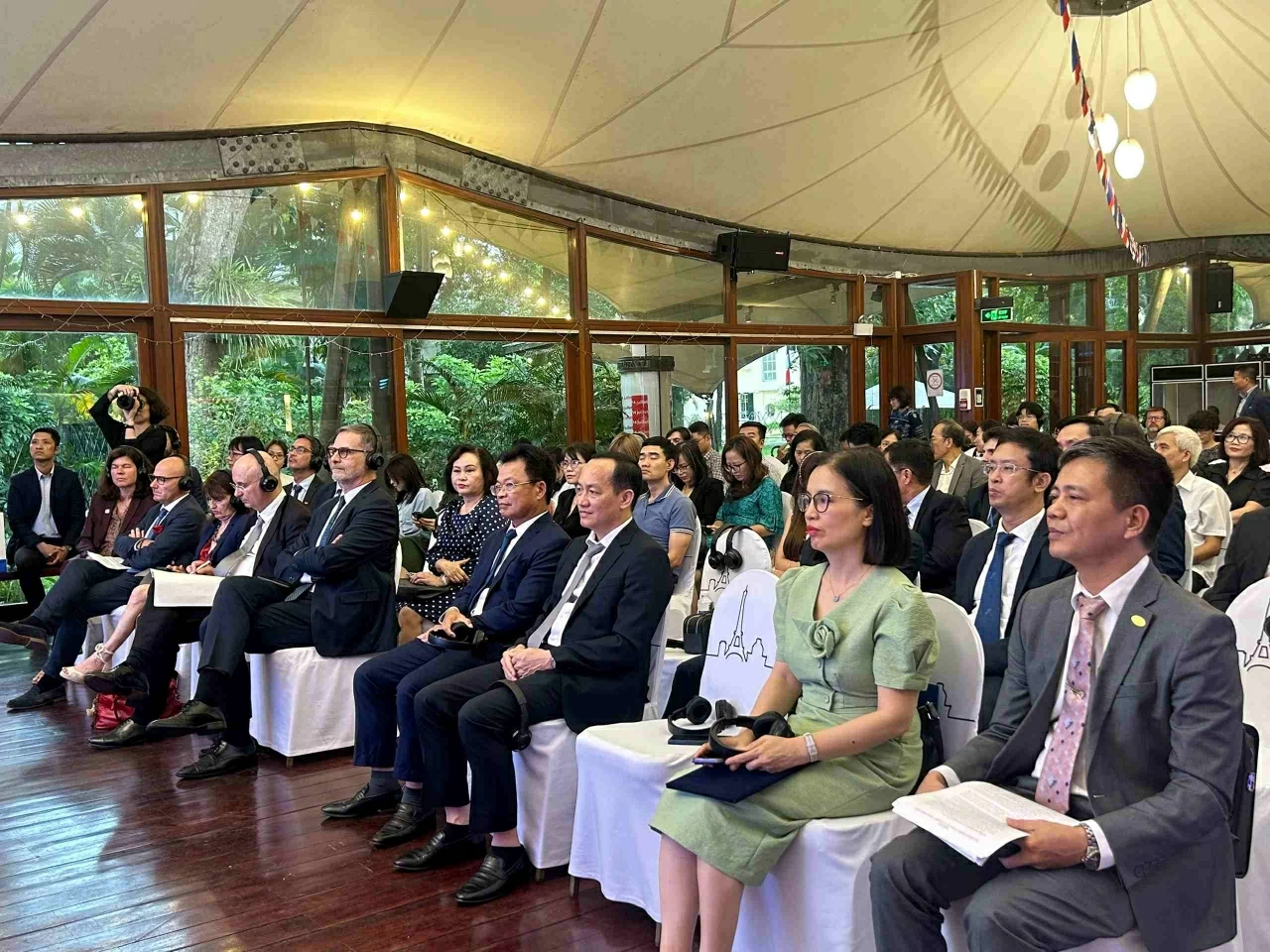 |
| View of the ceremony. (Photo: Yen Vi) |
In France, station twinning is a cherished cultural tradition and an initiative introduced by the French National Railway Company (SNCF).
To date, SNCF has established a network of twinned iconic stations worldwide, such as Paris-Est Station (France) with Moscow-Belorussky Station (Russia) or Paris-Gare-de-Lyon Station (France) with Seoul Station (Republic of Korea).
This tradition is being implemented in Vietnam for the first time, linking a masterpiece that combines Western Art Deco style with traditional Central Highlands communal house architecture, built in the 1930s. Accordingly, Da Lat Station—dubbed the "most beautiful station in Southeast Asia"—along with its "sibling" reflecting Normandy architecture—Trouville-Deauville Station—has been honored to continue this cultural tradition.
The event is a vivid testament to the comprehensive strategic partnership between Vietnam and France, where the heritage of the past becomes the foundation for a shared vision of sustainable and innovative transportation in the future.
Attending the ceremony on the French side were Mr. Olivier Brochet, French Ambassador to Vietnam; Mr. Diego Diaz, President of SNCF International; Mr. Fabrice Morenon, International Director of SNCF Gares & Connexions; and Mr. Julien Seillan, Director of the French Development Agency (AFD) in Vietnam.
On the Vietnamese side were Mr. Dang Sy Manh, Chairman of the Members' Council of Vietnam Railways Corporation (VNR); Mr. Nguyen Chinh Nam, Deputy General Director of Vietnam Railways Corporation (VNR); and Mr. Tran Thien Canh, Director of the Vietnam Railway Authority.
Railways – A heritage connecting two cultures
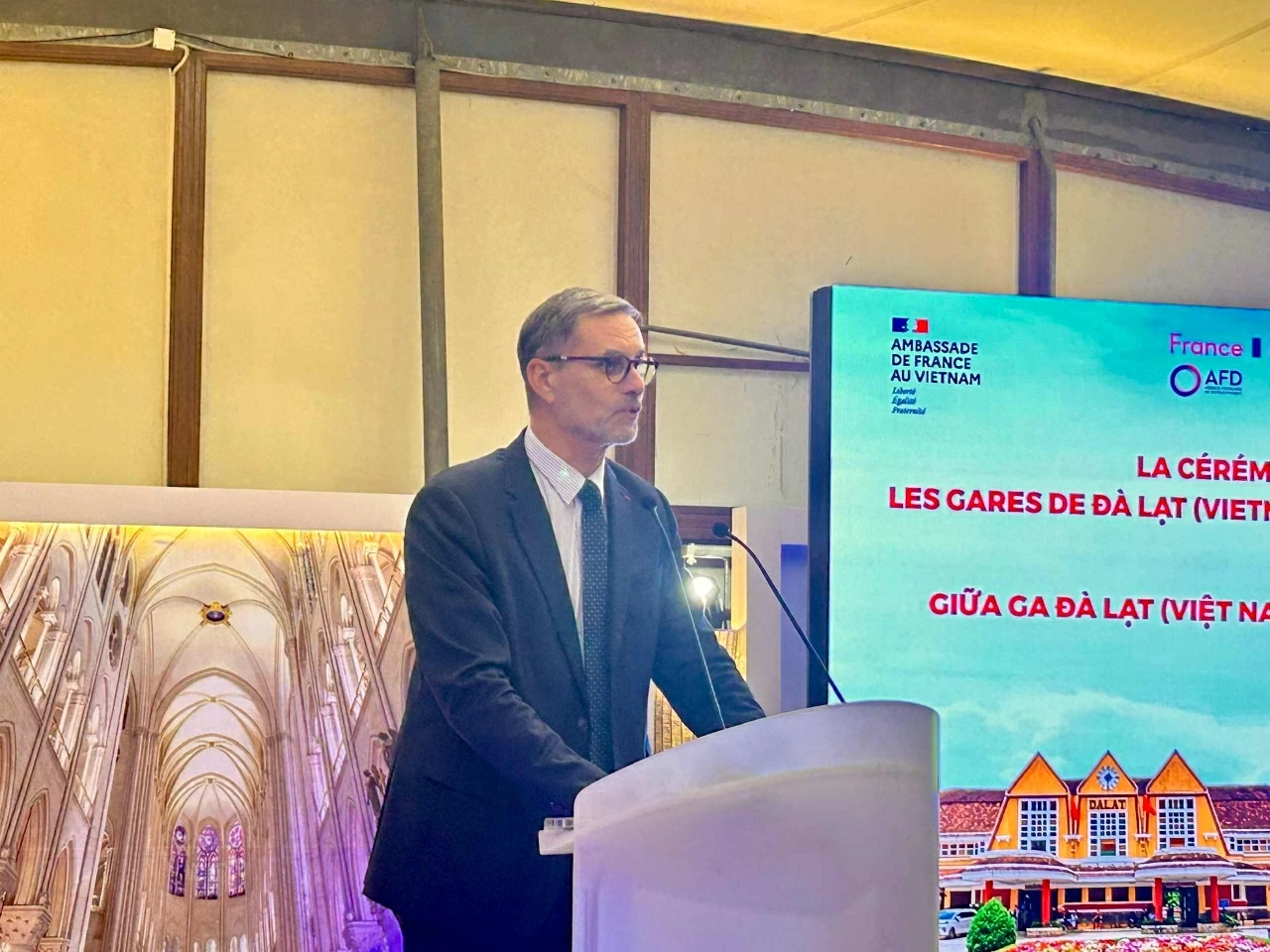 |
| French Ambassador to Vietnam Olivier Brochet delivers the opening speech. (Photo: Yen Vi) |
In his opening remarks, French Ambassador to Vietnam Olivier Brochet affirmed that since the two countries established a comprehensive strategic partnership in 2024, railways have become the most evident field reflecting the aspiration for cooperation between France and Vietnam, particularly in infrastructure and green transition.
“Railways are a part of our shared heritage, a bond between two cultures, between the peoples of the two countries, and between the two nations themselves,” the Ambassador expressed confidence.
He emphasized that France will continue to support Vietnam through the assistance of the French Development Agency (AFD) and leading enterprises such as SNCF, Systra, Alstom, etc., to share experiences, transfer technology, and train human resources for Vietnam's railway sector as the country enters a new era of railway connectivity, notably the North-South high-speed railway project.
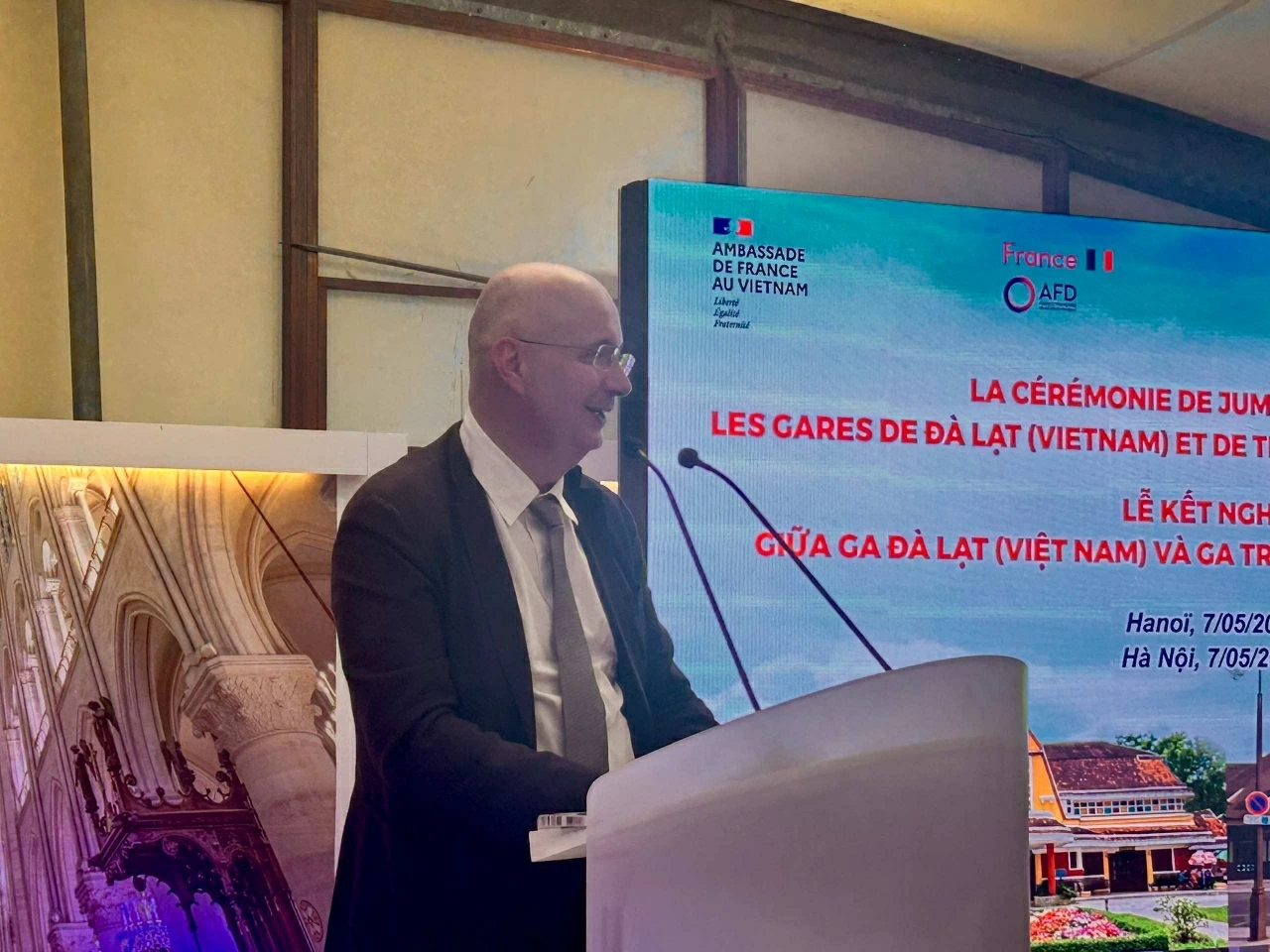 |
| President of SNCF International Diego Diaz shares his desire to make railways a driver of sustainable development in both countries. (Photo: Yen Vi) |
President of SNCF International Diego Diaz also pointed out special similarities: “Despite geographical distance, both Da Lat and Trouville-Deauville have chosen tourism as their direction, both possess elegant architectural beauty, and share a desire to make railways a driver of sustainable development, enhancing local appeal.”
The cooperative relationship between the two countries is being concretized through many practical projects, such as SYSTRA's involvement in various urban transport projects in Hanoi and Ho Chi Minh City, including Hanoi Metro and the BRT system.
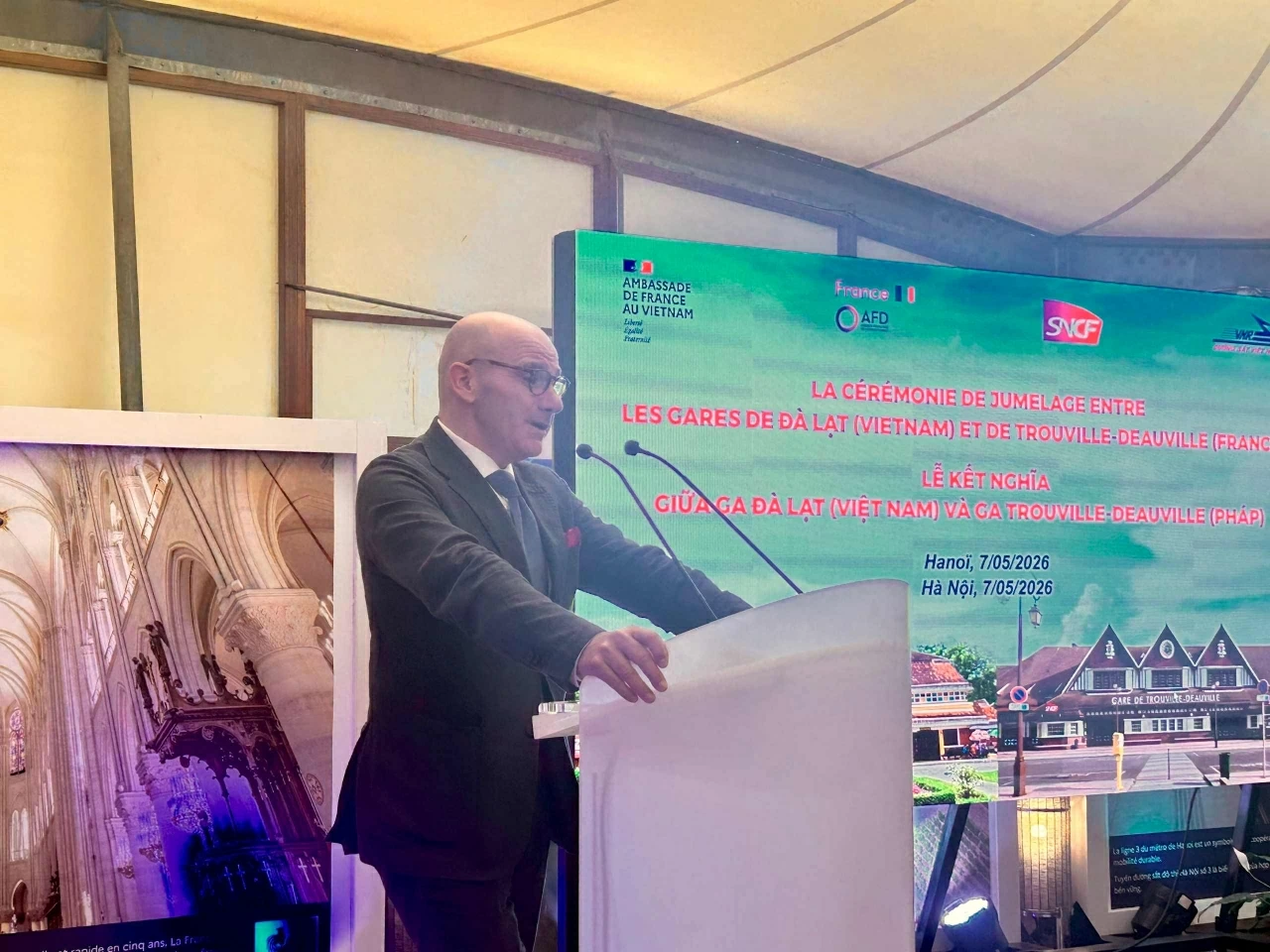 |
| International Director of SNCF Gares & Connexions Fabrice Morenon expresses his impression of Da Lat Station. (Photo: Yen Vi) |
At the ceremony, International Director of SNCF Gares & Connexions Fabrice Morenon shared: “A station is not just a transport facility; it is where people exchange the most hugs and kisses. It is where vacations are bid farewell, loved ones are welcomed back, and it is the most beautiful symbol of the connection between peoples.”
He expressed a special impression of Da Lat Station. Having attended many station twinning ceremonies worldwide, he noted that it is rare to find two stations with so many similarities.
Recalling the historical relationship between the two countries, the fact that the ceremony took place on May 7 holds even deeper significance for Director Morenon. However, he believes that the heritage of the past is the foundation for closing old chapters and opening new journeys.
A beginning for future collaborations
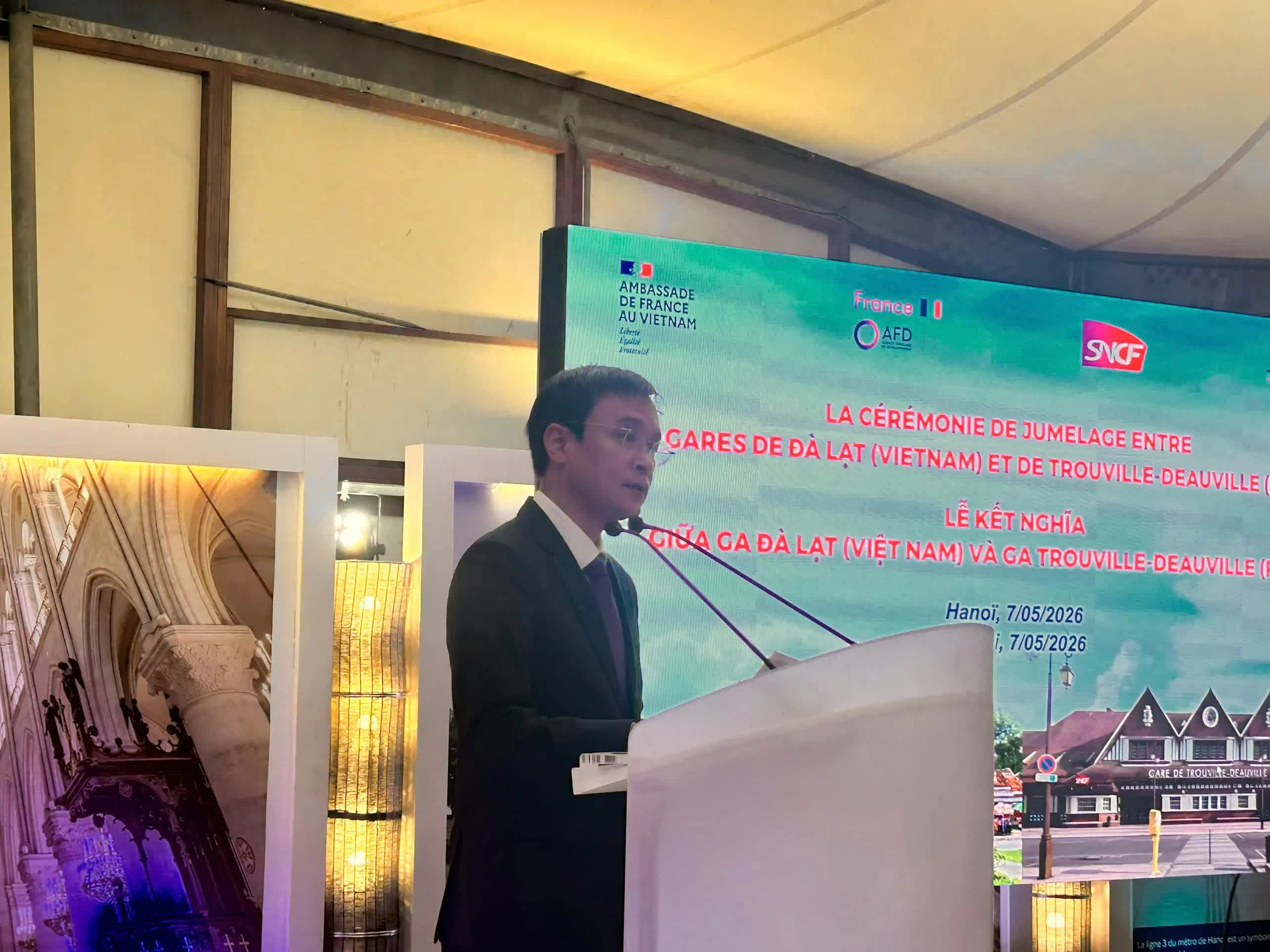 |
| Mr. Nguyen Chinh Nam, Deputy Director General of VNR, shares unique features of Da Lat Station. (Photo: Yen Vi) |
Representing Vietnam Railways Corporation (VNR), Mr. Nguyen Chinh Nam, Deputy Director General of VNR, stated that Trouville-Deauville Station inspired French architects to create the beauty of Da Lat Station nearly a century ago.
“Today's twinning is not just about linking two architectural works, but about connecting the past and the future, the hearts of railway workers, and the peoples of the two countries,” he expressed.
Currently, Da Lat Station is being preserved almost intact by VNR with the message: “Each railway line a flower, each station a destination.”
Mr. Nguyen Chinh Nam also provided information about the revival of the Da Lat - Trai Mat railway section, launching the “Da Lat Night Journey” train with unique cultural activities such as art events and weddings on vintage train cars.
He expressed confidence that the twinning of Da Lat and Deauville-Trouville stations will be the beginning of many more extensive cooperative projects, contributing to deepening the strong friendship between Vietnam and France.
Over 145 years of formation and development, Vietnam's railway sector currently manages, operates, and exploits over 3,222 km of railways with 7 main lines and over 300 stations nationwide.
Among them, many stations bear historical significance and play a particularly important role in the national transportation system, such as Hanoi Station, Hai Phong Station, Hue Station, Da Nang Station, Nha Trang Station, and Saigon Station.
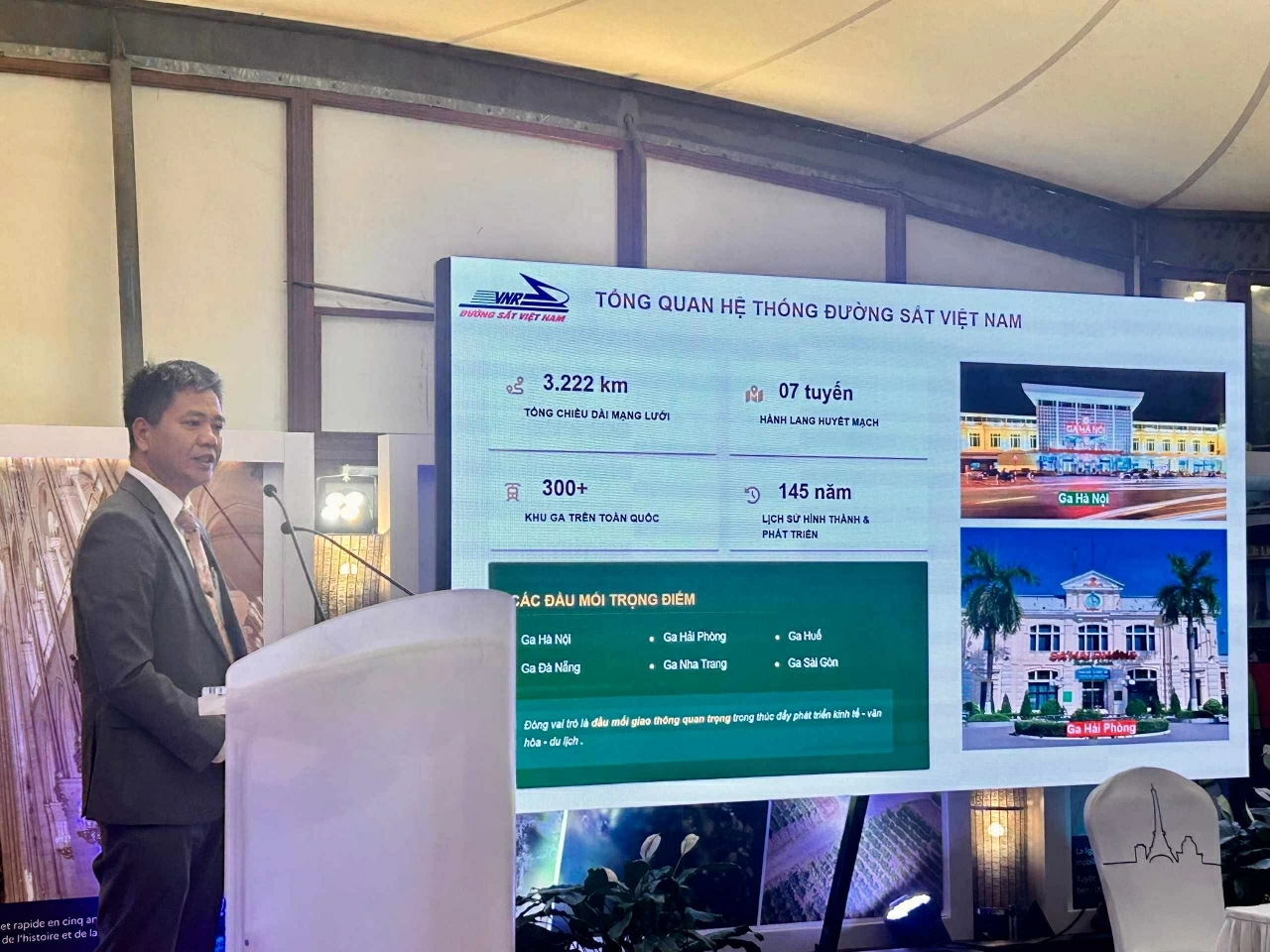 |
| Mr. Pham Viet Hung, Head of VNR's Business Planning Department, introduces Vietnam Railways Corporation and Da Lat Station. (Photo: Khanh Linh) |
Regarding Da Lat Station, Mr. Pham Viet Hung, Head of VNR's Business Planning Department, noted that the station currently welcomes nearly 500,000 visitors annually and about 200,000 tourists experiencing train travel.
Vietnam Railways Corporation is also developing a project to restore and enhance Da Lat Station with an estimated investment of nearly 100 billion VND to preserve historical value and develop railway tourism in the near future.
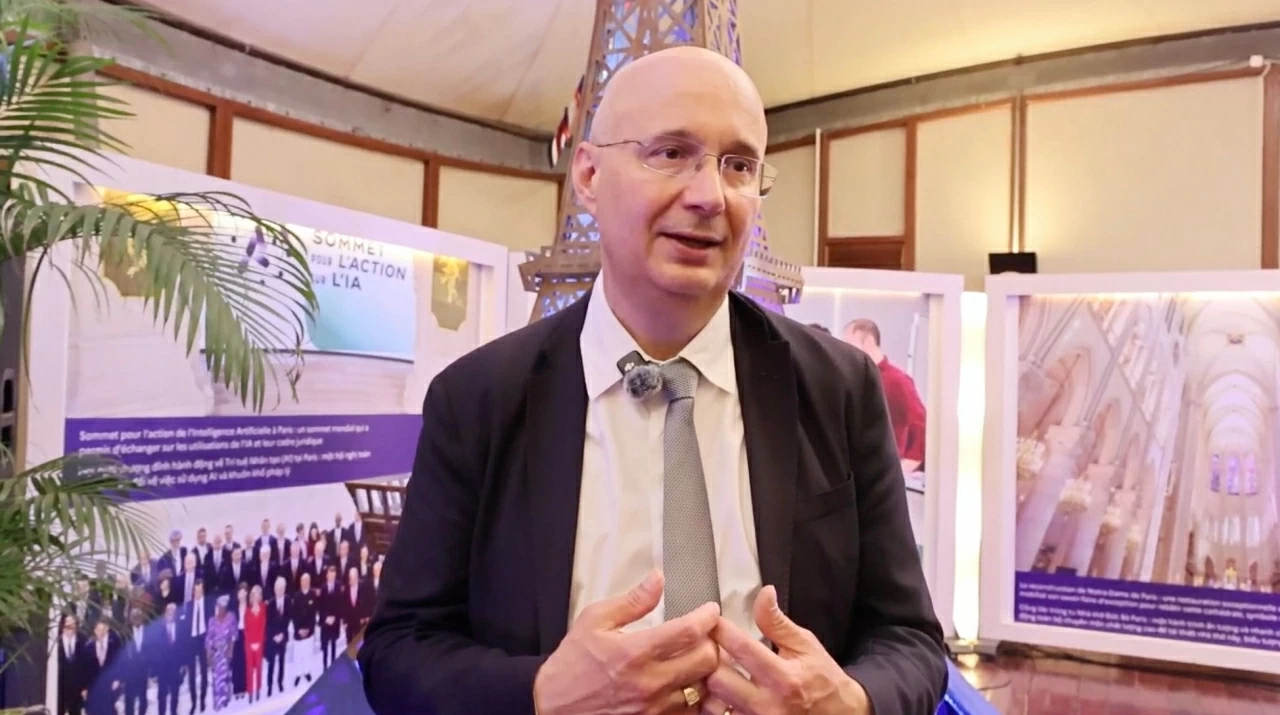 |
| President of SNCF International Diego Diaz appreciates the expertise of Vietnamese railway specialists. (Photo: Khanh Linh) |
In response to World and Vietnam Report about specialized training programs for Vietnam in the railway sector, Mr. Diego Diaz, President of SNCF International, highly praised the expertise of Vietnamese specialists: “We are organizing high-speed railway training courses. Vietnamese experts are well-prepared and eager to learn.”
According to Mr. Diaz, the current task is to both preserve historical values like Da Lat Station and focus on climate impact when constructing new stations.
“Our goal is to make future stations carbon neutral,” he emphasized.
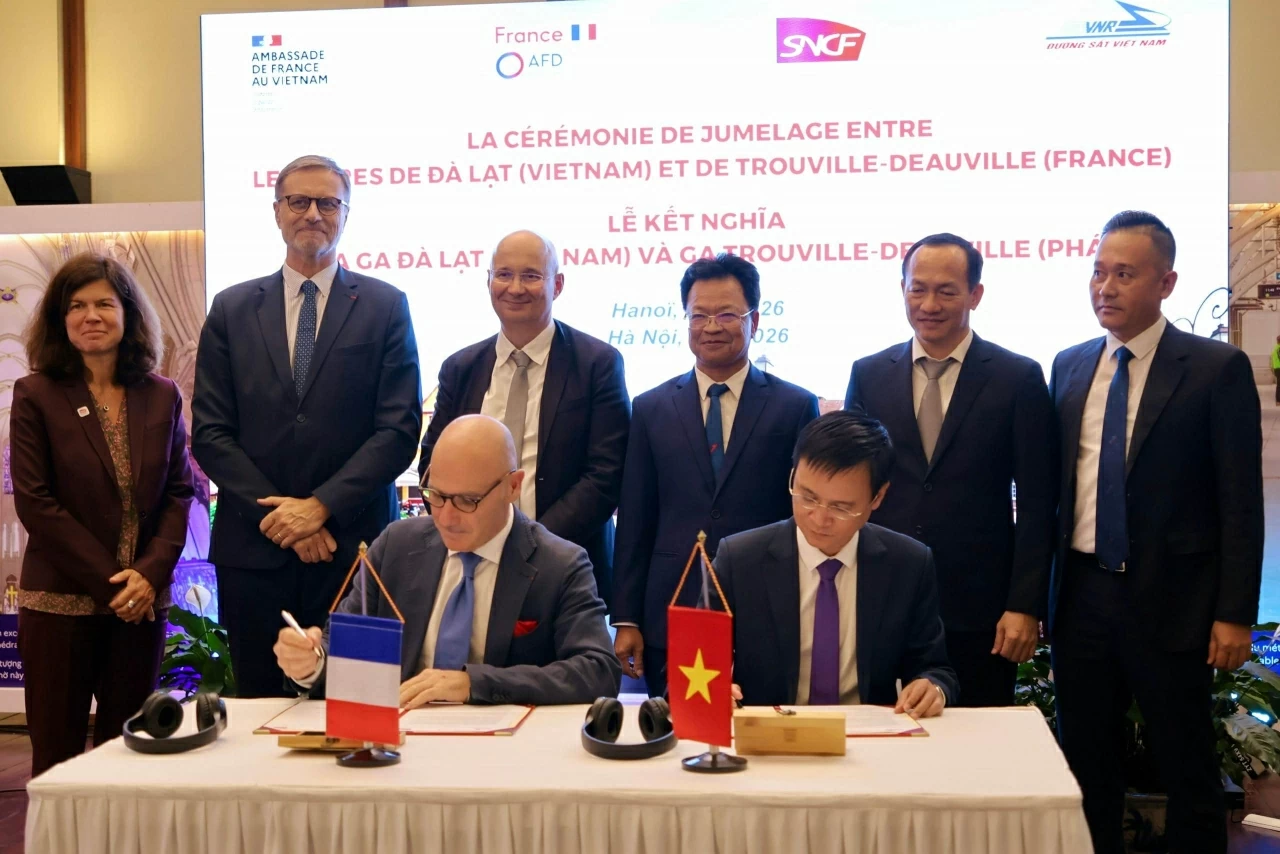 |
| Representatives of Vietnam Railways Corporation and SNCF sign the twinning agreement. (Photo: Khanh Linh) |
As part of the program, representatives of the railway companies from both countries signed the twinning agreement between Da Lat Station and Trouville-Deauville Station.
SNCF presented a unique 3D model of the two stations, entirely recreated from satellite image data by the company's internal technical team.
Vietnam Railways Corporation also offered a hand-designed souvenir to its French partner.
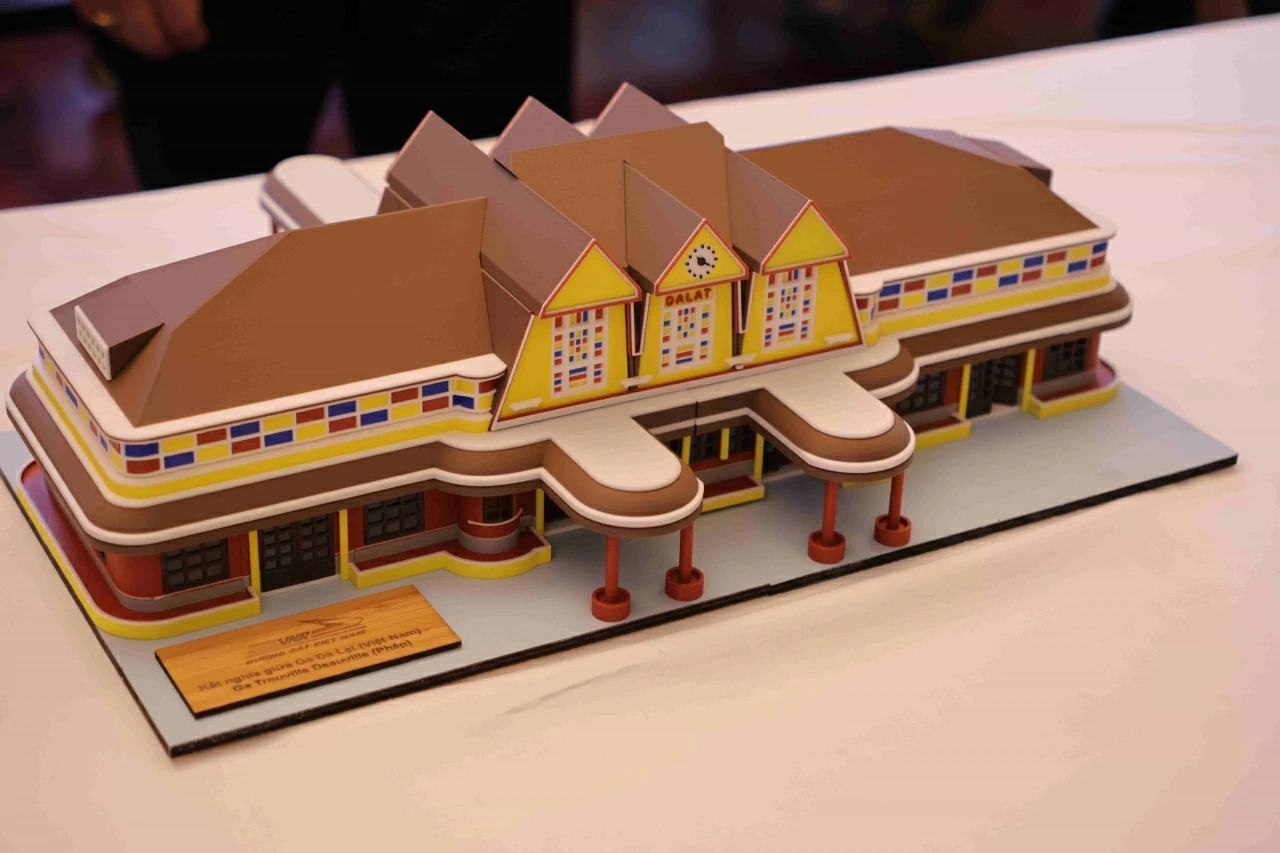 |
| Model of Da Lat Station. (Photo: Khanh Linh) |
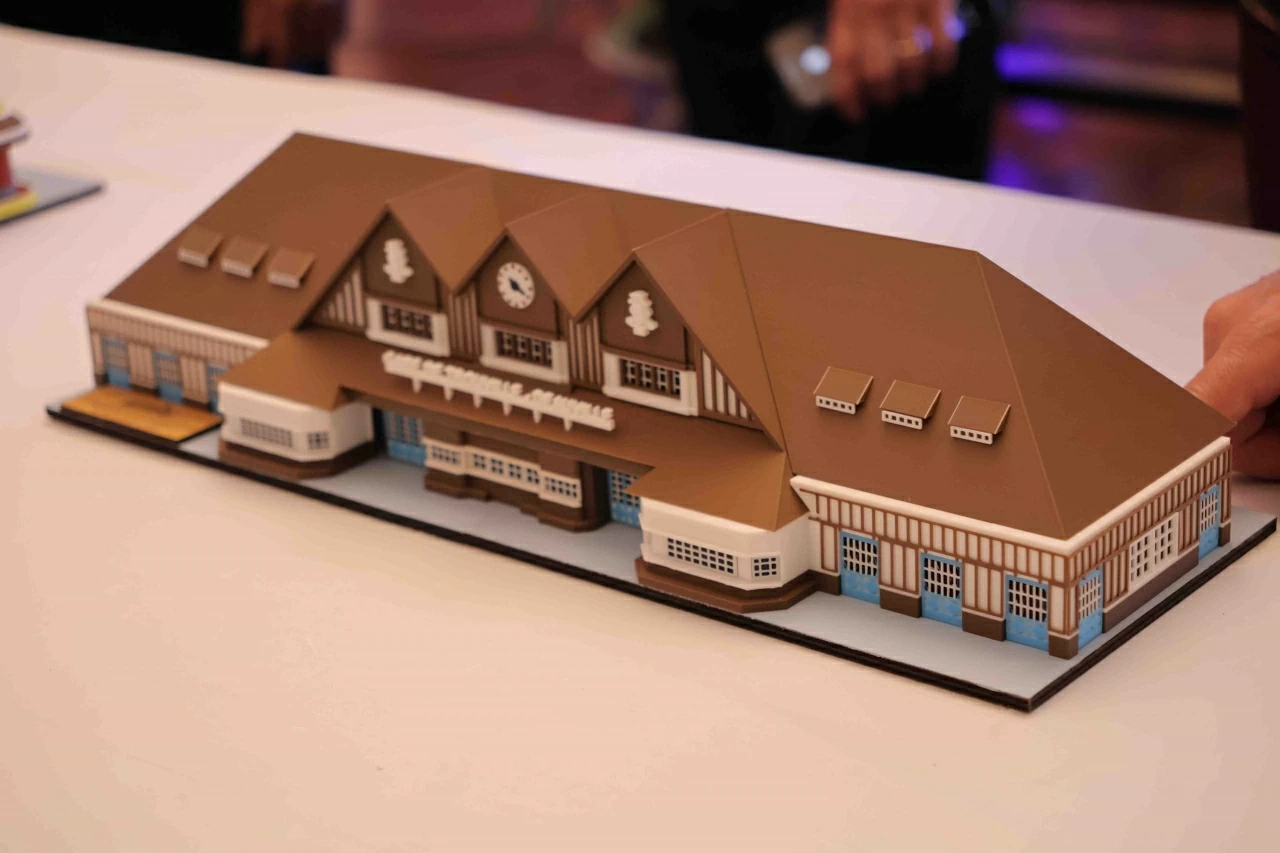 |
| Model of Trouville-Deauville Station. (Photo: Khanh Linh) |
The collaboration between Vietnam's railway sector and France's SNCF promises to open up many opportunities in promoting the heritage of Da Lat Station while enhancing the exchange of experiences in managing heritage stations and developing railway tourism between the two countries.