


International financial centre should prioritise quality over scale
According to Dr. Nguyen Thi My Linh, CFA, Senior Program Manager in Finance at RMIT Vietnam, the success of an international financial centre should not be measured solely by the size of its assets or capital flows, but also by its ability to create value for the real economy, develop human capital, and drive innovation.
Latest
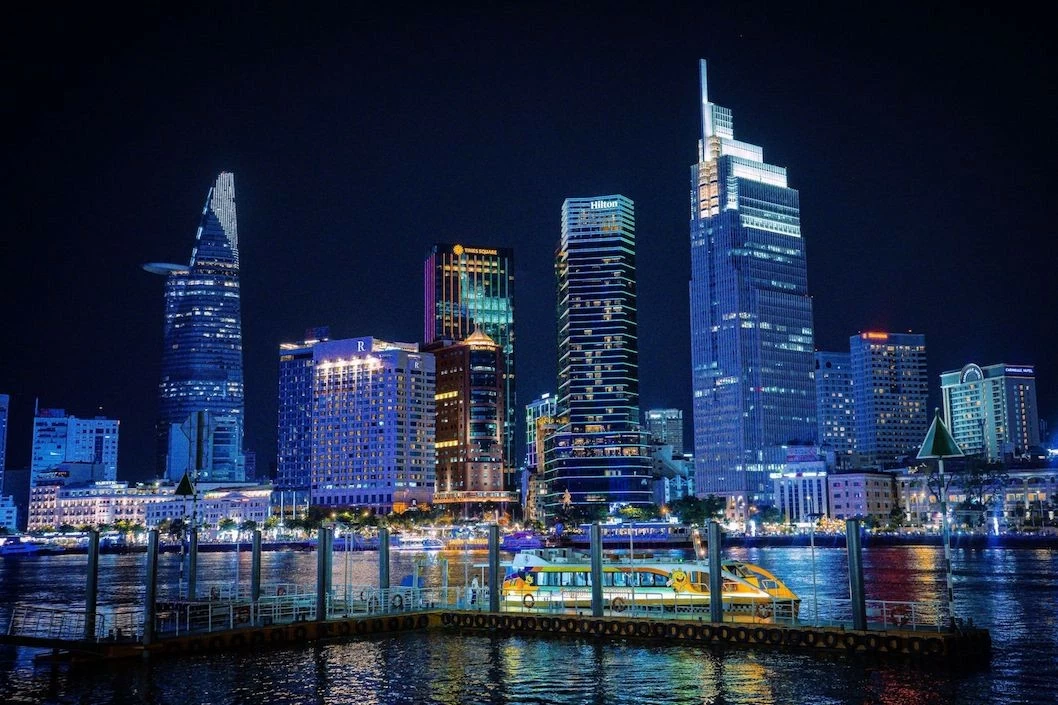 |
| The success of an international financial centre should not be measured solely by the size of its assets or capital flows, but also by its ability to create value for the real economy, develop human capital, and drive innovation. (Source: Pexels) |
Sharing with The World and Vietnam Report, Dr Nguyen Thi My Linh said that these foundations will also be critical for Vietnam to build a sustainable competitive advantage as the global financial sector shifts towards green finance and financial technology.
Building a sustainable financial center
The success of an international financial centre (IFC) is assessed across multiple dimensions. Some, such as market size and capitalisation, are relatively easy to measure, while others, such as the quality of human capital, are much harder to quantify. Success also depends on a country's economic, social and cultural context. Therefore, although indicators such as asset size, capital flows, liquidity and the number of financial institutions are important, relying solely on these figures may not provide a complete picture of an IFC's success.
Traditional indicators remain important but are insufficient to fully capture the quality of an IFC.
Vietnam could draw on the Global Financial Centres Index (GFCI), which assesses financial centres across five key areas: business environment, human capital, infrastructure, financial sector development, and reputation.
As an initial step, Vietnam could use the GFCI's main dimensions as a benchmark for assessing the competitiveness of its IFC. However, these dimensions also need to be considered within Vietnam's specific context, development stage and available resources. We could prioritise areas where Vietnam has the potential to build a competitive advantage, such as green finance, sustainable finance and fintech. Most importantly, we need to invest in human capital alongside these sectors. Advancing human development will provide a solid foundation for building a sustainable IFC.
 |
| Dr Nguyen Thi My Linh is aSenior Program Manager in Finance at RMIT Vietnam. (Source: RMIT Vietnam) |
A financial centre must create value for the real economy
An IFC should be evaluated not only by the volume of transactions it attracts, but also by the tangible value it creates for the domestic economy.
The primary purpose of an IFC is to facilitate cross-border trade and investment, thereby creating value for businesses and society. An IFC may attract a large volume of transactions without generating meaningful value for the local economy. This can lead to the risk of economic bubbles, where speculative activities outweigh investments that create genuine value for businesses and society.
To achieve this, Vietnam should develop a comprehensive financial ecosystem that brings together domestic and international banks, investment funds, insurers and other financial institutions. At the same time, the country should strengthen its regulatory framework, improve transparency, and encourage businesses to adopt international standards such as IFRS and Basel to enhance integration and capital mobilisation.
Green finance and fintech: Vietnam's competitive edge
It can be believed that Vietnam should prioritise sectors where it has competitive strengths and where global demand is growing.
Sectors identified under Decree No. 323/2025/ND-CP, including green finance, sustainable finance and financial technology (fintech), offer significant potential to attract investment and establish Vietnam's position on the global financial map. These sectors align closely with the United Nations Sustainable Development Goals (SDGs) and continue to attract strong interest from investors, businesses and governments worldwide.
Vietnam has potential advantages in these fields. The country ranks among the world's most biodiverse nations, has seen rapid growth in green credit issuance, and has recorded Southeast Asia's fastest-growing digital economy for three consecutive years.
Besides that, Vietnam could differentiate itself by focusing on niche areas and could also concentrate on specific segments such as green finance for renewable energy or biodiversity finance (biofin) to create a distinctive competitive advantage.
However, achieving this vision would require coordinated efforts across regulation, infrastructure and workforce development.
For example, if Vietnam wants to develop green finance and sustainable finance, we need clear regulations and guidance, as well as training for businesses on preparing and assuring environmental disclosures, including emissions, ESG and biodiversity reporting.
Moreover, carbon assurance plays a critical role in improving companies' credit ratings, thereby strengthening their capacity and ability to raise capital. And strengthening governance to manage emerging risks, including greenwashing, cybersecurity and personal data protection, is also important in this process.
Definition of IFC in the future
Looking ahead, Dr Linh believes that in the next five to ten years, “the definition of a successful financial centre will shift from the traditional model towards one centred on smart finance and sustainable finance, aligned with the United Nations SDGs.”
She expects new indicators such as smart cities, green bonds, fintech, biodiversity finance, artificial intelligence and AI governance in finance to become increasingly important measures of competitiveness.
According to Dr Linh, by staying focused on these emerging priorities, Vietnam could build an internationally competitive financial centre while creating a strong foundation for sustainable economic growth, innovation and long-term national competitiveness.
| Prime Minister: International Financial Centre will play a role in elevating Vietnam’s position in the global value chain Prime Minister Pham Minh Chinh on August 2 instructed Ho Chi Minh City and Da Nang city to mobilise resources and lay the groundwork for ... |
| Building an International Financial Centre: Co-developing with the 'Giants' WVR - Building an International Financial Centre is not just about infrastructure or policy incentives, but primarily about choosing a development model. |
| Ensuring efficient and reliable operation of financial centres WVR - International Financial Centres (IFCs), if effectively designed, can significantly boost innovation, entrepreneurship, professional services, and higher education, thus becoming a crucial component in ... |
| International Financial Centre, infrastructure boost Da Nang's appeal The central coastal city of Da Nang is entering a promising new phase of development as modern infrastructure investments converge with the establishment of an ... |

| Vietnam seeks stronger cooperation with the UK in the capital market and green finance development WVR - Vietnam hopes to further strengthen cooperation with the UK in capital market development, green transition, green finance, and the establishment of the Vietnam ... |