




Ensuring efficient and reliable operation of financial centres
WVR - International Financial Centres (IFCs), if effectively designed, can significantly boost innovation, entrepreneurship, professional services, and higher education, thus becoming a crucial component in Vietnam's strategy to become a developed, high-income nation by 2045.
Latest
 |
| On January 9, IFC Vietnam in Da Nang City was inaugurated, marking the official start of the IFC model in Vietnam under Government Decree No. 323/NĐ-CP. (Source: Shutterstock) |
By the end of 2025, the political and administrative foundations for these centres had been vigorously promoted. The conference announcing the establishment of the International Financial Center in Vietnam on December 21, 2025, affirmed the strong commitment of the Vietnamese Government to build a stable, transparent, safe, and investor-friendly financial environment. On January 9, 2026, the International Financial Center in Da Nang City was officially inaugurated under Government Decree No. 323/2025/NĐ-CP issued on December 18, 2025, marking the beginning of the IFC model in Vietnam.
The question now is not whether an IFC is needed, but how to operate the centre efficiently, reliably, on a large scale, and in accordance with international standards.
Human resources as the core
Despite the rapid development of artificial intelligence (AI), human resources remain crucial to the development of IFCs. A high-quality workforce not only meets international standards but also effectively handles cross-border transactions and builds trust with international partners.
To operate efficiently, IFCs require a workforce with specific competencies: working in an international environment, understanding and managing legal and cultural differences, and quickly adapting to technological changes. Vietnam increasingly has young experts with an international mindset, especially graduates from top economic and financial universities.
However, it would be unrealistic to say that Vietnam is fully ready in terms of human resources. The most apparent gap lies in practical experience, as many students have a strong academic foundation and high discipline but lack experience working in an international environment.
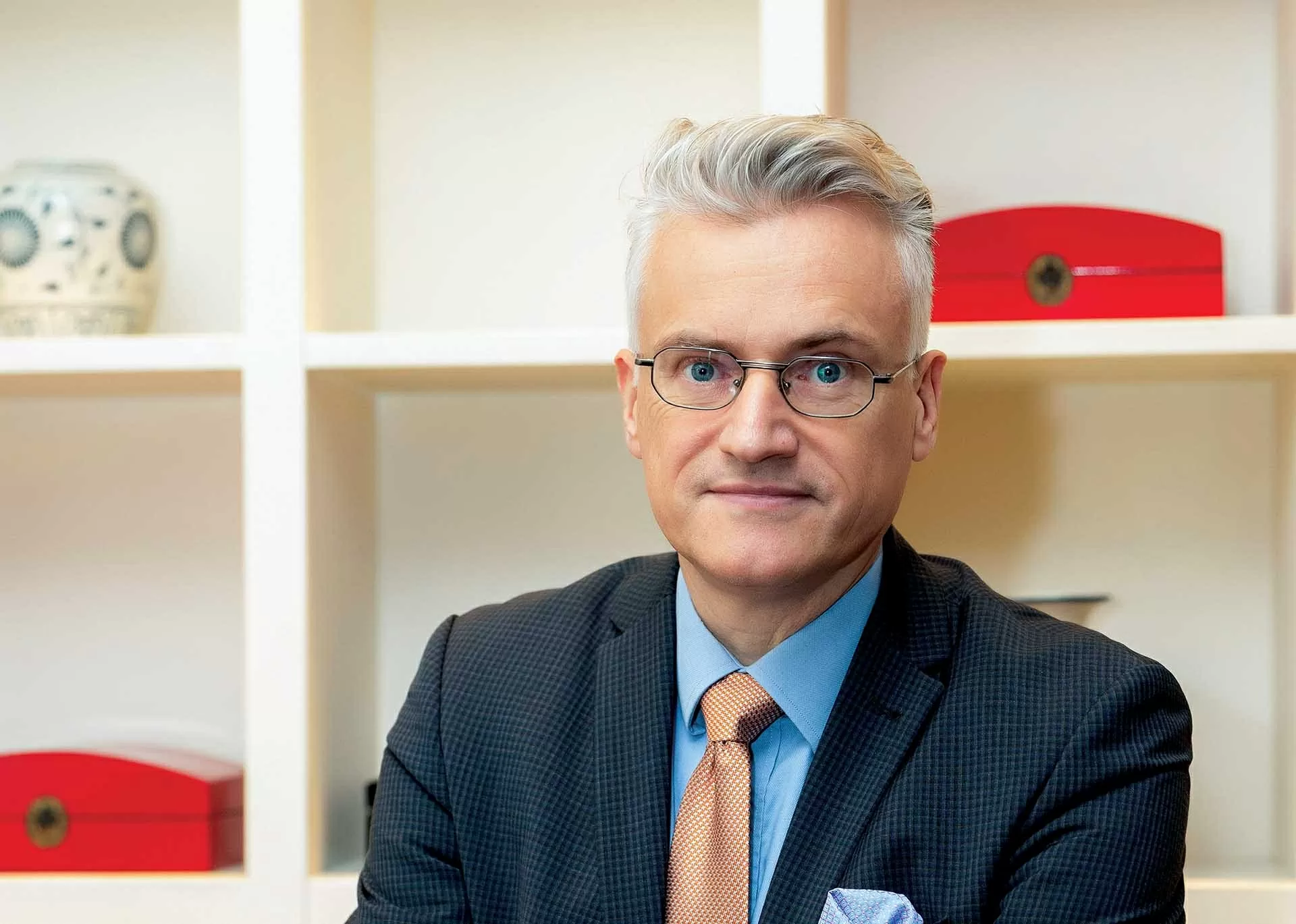 |
| Prof. Dr. Andreas Stoffers at FOM University of Applied Sciences, Essen, Germany. (Photo courtesy of NVCC) |
In an IFC, the difference between a top student and a trusted professional is not just about having more knowledge. More importantly, it's about the ability to make sound judgments, weigh pros and cons, communicate effectively with personnel from different cultures, handle situations, and work according to strict regulations and standards. Therefore, education and training of human resources play a crucial role.
Vietnam's higher education system has seen significant improvements, especially among top-tier schools with an increasingly clear international orientation. However, the international mindset has not yet spread evenly throughout the entire educational ecosystem, while IFCs require a stable, large-scale supply of human resources with diverse capabilities at multiple levels.
For example, in Germany, they always value training programs linked to practice as this is a very distinctive part of their education system and working method. I noticed this very clearly when I was Head of Retail Banking at Deutsche Bank in Bavaria 20 years ago. At that time, among the 18 retail banking directors in the region, only 3-4 had university degrees, including myself.
The others all pursued vocational training programs in banking. However, in terms of leadership ability, work efficiency, and promotion opportunities, there was almost no significant difference. Therefore, in my opinion, a university degree can be useful, but it is not a prerequisite for career success in banking. This is also true for Vietnam.
A successful IFC requires a balanced "talent architecture", not only with academic excellence but also with a skilled practical workforce with strong operational capabilities. Vietnam needs not only theoretically well-trained managers but also experts capable of solving real-world problems.
Shaping AI-supported processes
A pressing issue for universities and policymakers is AI. The Digital Technology Industry Law passed by the National Assembly in June 2025, covering areas such as AI, semiconductors, and digital assets, has sent a clear signal that Vietnam wants to elevate its position in the global value chain and considers digital capabilities as strategic infrastructure.
In the near future, many jobs currently handled by graduates may be fundamentally changed by AI. The human element remains essential, but the value of humans will shift from repetitive processing to judgment, interpretation, building trust with customers, and making strategic decisions.
For an IFC, this is not a theoretical discussion but directly impacts competitiveness. An IFC that trains professionals capable of shaping AI-supported processes, understanding model risks, building governance frameworks, managing data quality, and integrating AI into compliance and risk management will quickly build credibility and significantly reduce learning costs.
Localizing talent: Practical, but not insular
Vietnam's policy of localizing the workforce for IFCs instead of relying on foreign experts is practical and reasonable. Vietnam has a rich domestic human resource pool with a high-performance orientation. This is a significant advantage.
However, localization should not be misunderstood as insularity. In the early and medium stages of IFC development, foreign experts still play an essential role. The deliberate combination of domestic and international expertise will accelerate institutional learning, strengthen credibility, and minimize experimentation.
Over the past decade, Vietnam has become much more attractive to foreign experts, not only in Ho Chi Minh City and Hanoi but also in other localities. Simplifying visa procedures, work permits, and citizenship for high-level experts and overseas Vietnamese strongly supports this process.
One of Vietnam's strategic assets is the overseas Vietnamese community. Many overseas Vietnamese have returned in recent years, bringing with them international experience, professional standards, and global networks. This potential needs to be systematically integrated into education and training, with roles as lecturers, advisors, visiting professors, program designers, and bridges between Vietnam and international financial markets.
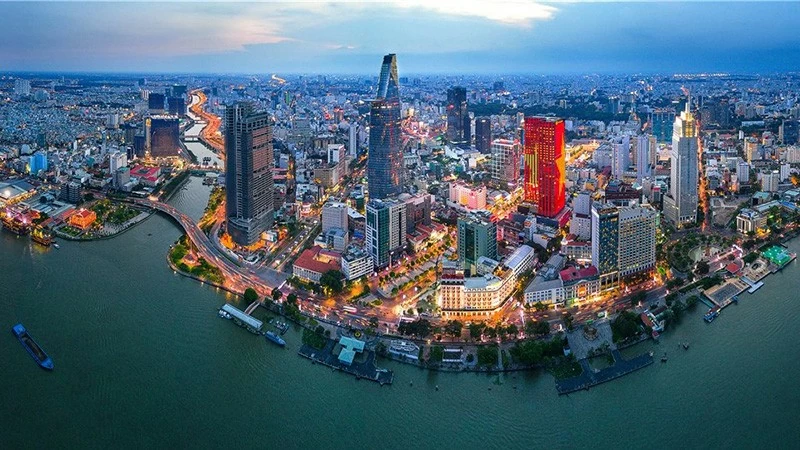 |
| IFCs can become a crucial component in the strategy to make Vietnam a developed, high-income nation by 2045. Illustrative photo. (Source: Phap Luat TP. Ho Chi Minh Newspaper) |
Five key priorities
If IFCs are to succeed, education and human resource development must move from discussion to concrete implementation. Accordingly, there will be five key priorities:
First, enhancing practical orientation in higher education. Internships, case-based teaching, and programs linked with banks, fintech companies, law firms, and auditing firms should become standard in university training. An IFC cannot operate solely based on theoretical capabilities.
Second, developing dual training programs and structured career paths. Vietnam will benefit if it adapts and applies some elements of Germany's dual training model, connecting academics with paid work from the outset. This is not about mechanical copying but about building reliable pathways to create a work-ready workforce and elevate the status of practical skills.
Third, adjusting training programs for the digital economy. Financial programs need to integrate AI, data management, cybersecurity, digital identity, fintech legal frameworks, and ESG (Environmental - Social - Governance) reporting not as electives but as core content.
Fourth, substantive international academic cooperation. Partnerships need to go beyond symbolic memorandums to operational forms such as joint degree programs, faculty exchanges, visiting professors, and joint research centers focusing on financial innovation, risk, and governance.
Fifth, building an academic career path attractive enough to draw practicing professionals. If Vietnam wants to have a truly international academic environment, salaries and career paths in academia need to be more competitive and flexible.
Well-designed IFCs will create powerful ripple effects: innovation, entrepreneurship, professional services, and higher education, potentially becoming a crucial component in the strategy to make Vietnam a developed, high-income nation by 2045.
And if the S-shaped country successfully addresses the "education and human resources" equation, IFCs will not just be a financial project but could become one of Vietnam's most important development platforms in the next two decades.