


Building an International Financial Centre: Co-developing with the 'Giants'
WVR - Building an International Financial Centre is not just about infrastructure or policy incentives, but primarily about choosing a development model.
Latest
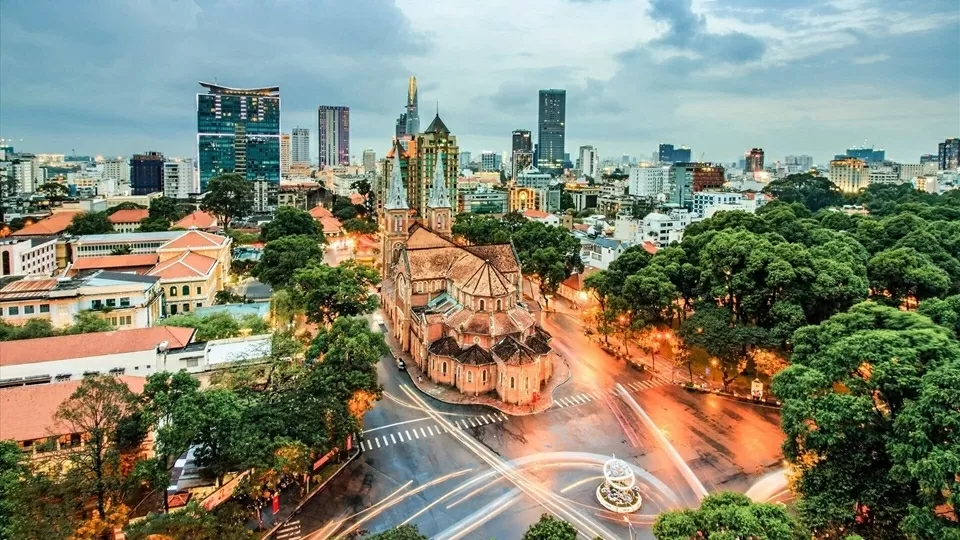 |
| Ho Chi Minh City continues to strengthen and expand its strategic international partner network selectively, focusing on key pillars othe International Financial Centre. (Source: Phap Luat Ho Chi Minh City Newspaper) |
The International Financial Centre in Ho Chi Minh City (IFC-HCM) showcases a different mindset: proactively integrating, learning, and co-developing with the "giants". This approach shortens the experience accumulation process and gradually transforms integration into the intrinsic capability of the economy.
Standing on the "shoulders of giants"
On December 21, the Government announced the establishment of the International Financial Centre (IFC) in Vietnam, following the "one centre – two destinations" model, with two operational hubs in Ho Chi Minh City and Da Nang.
This is one of the most notable economic events in Vietnam in 2025, attracting significant attention from the investment community, international organizations, and financial institutions. It also highlights the clear expectations for Vietnam's new role on the global financial map.
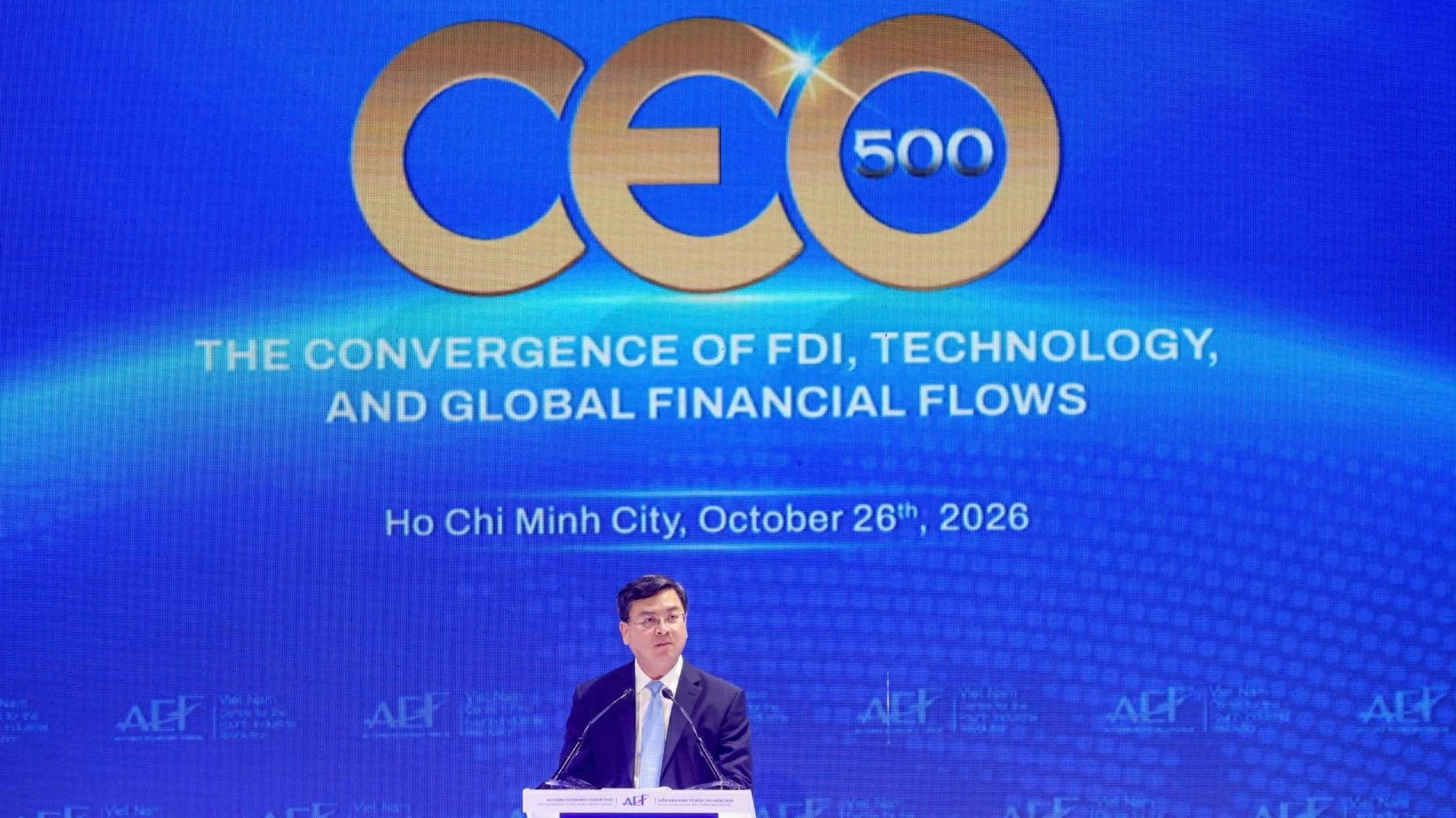
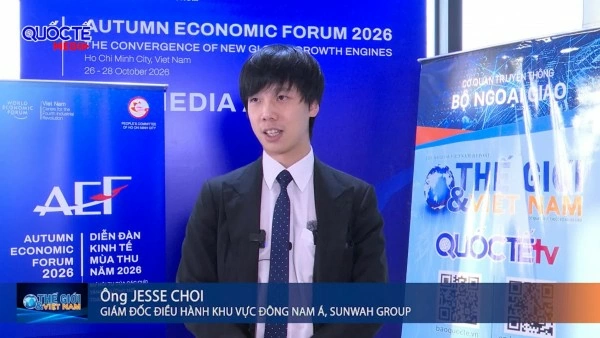
On December 31, at the closing conference of the Autumn Economic Forum 2025 held in Ho Chi Minh City, Deputy Prime Minister Bui Thanh Son stated that the announcement of the International Financial Centre, along with accompanying legal documents, has created a "fever" of interest from investors and international organizations.
According to Deputy Prime Minister Bui Thanh Son, the International Financial Centre is not a new model globally. However, Vietnam's choice to implement this model comes at a time when the global and regional economies are facing downturns, while Vietnam is entering a new development cycle with a dynamic economy.
Beyond policy messages, Vietnam has concretized this determination by announcing a series of special mechanisms and policies specifically for the International Financial Center. Experts evaluate these policies as distinctive, even superior to some existing financial centers in the region, thereby laying the institutional foundation for a breakthrough development model.
On this legal framework, the two chosen locations, Ho Chi Minh City and Da Nang, are gradually shaping the development space and functional roles for the International Financial Center. Ho Chi Minh City, the country's economic locomotive, is identified as the core for implementation, with a cautious yet decisive approach, using international integration as a continuous axis from the initial stage.
According to Associate Professor Dr. Nguyen Huu Huan, Vice Chairman of the IFC-HCM Executive Agency, from the outset, IFC-HCM has been placed within the logic of deep international integration, viewing global linkage and cooperation not just as supportive factors but as decisive pillars for the center's formation, operation, and long-term positioning.
"In the initial phase, international linkage allows Ho Chi Minh City to significantly shorten the experience accumulation process, avoiding the costly and risky 'trial-and-error' path in a highly complex and fiercely competitive field," Mr. Huan shared.
In recent times, Ho Chi Minh City has established cooperation with important international partners such as Nasdaq, Binance, TikTok, New York Institute of Finance... These partners are identified as "anchor partners" – strategic anchors that help IFC-HCM quickly establish operational standards, access core technology, and build an initial ecosystem.
Nasdaq represents the capital market infrastructure and international operational standards; Binance reflects the rapidly developing digital financial space and on-chain infrastructure; TikTok demonstrates the growing role of the digital economy, data, and global community connectivity; while the New York Institute of Finance plays a key role in training and standardizing financial human resources according to international practices.
Through these partnerships, IFC-HCM has the opportunity to directly access international standards in market governance, transaction – payment – clearing infrastructure operations, supervision mechanisms, and proven financial sandbox models. This foundation allows IFC-HCM to be "right on standard" from the start, while flexible enough to adapt to new trends such as digital finance, crypto assets, green finance, and sustainable finance.
"More importantly, IFC-HCM does not approach international cooperation in a formalistic manner but ties it closely to specific goals and products: market infrastructure design consultancy, training program – certification development, policy experimentation support, technology ecosystem and developer connectivity. These are the initial 'tracks' that help the International Financial Center operate substantively, rather than just existing on paper," Mr. Huan emphasized.
Transforming into the economy's intrinsic capability
Experts believe that strengthening international linkage only truly proves effective when placed within a balanced development strategy, where external integration goes hand in hand with strengthening intrinsic capability. This is considered a consistent principle in Ho Chi Minh City's approach to building the International Financial Center.
In the short term, Ho Chi Minh City continues to consolidate and expand its strategic international partner network selectively, focusing on key pillars of the International Financial Center such as capital markets, digital finance, green finance, and human resource training. International cooperation needs to be concretized through clear programs, projects, and outputs, avoiding dispersion, formalism, or symbolic tendencies.
On this foundation, in the medium term, the city shifts from the "attracting partners" mindset to the "co-developing ecosystem" mindset. This requires IFC-HCM to proactively design international policy and technology experimentation spaces, where major financial institutions, investment funds, payment – clearing organizations, rating agencies, auditors, and international consultants can co-create, share risks, and enjoy long-term benefits.
Alongside deepening international cooperation, strengthening regional linkage is seen as an important step to position IFC-HCM as an indispensable link in the Asia-Pacific financial chain. This approach allows for a close connection between financial activities and trade, logistics, and production – areas where Vietnam has clear competitive advantages, thereby creating a foundation for a financial center model linked to the real economy.
"Throughout both short and medium terms, the core principle is that international linkage must go hand in hand with enhancing intrinsic capability. Cooperation is not intended to replace the role of domestic enterprises and institutions but to create conditions for domestic entities to gradually participate more deeply in the global financial value chain, 'standing on the shoulders of giants' for sustainable development," Associate Professor Dr. Nguyen Huu Huan emphasized.
From a market perspective, the domestic business community is also placing high expectations on the early operation of IFC-HCM. The center is expected to become an important tool to help businesses enhance intrinsic capability, expand access to capital, technology, and international standards, while also creating new growth space for the economy in the next development phase.
According to Mr. Nguyen Ngoc Hoa, Chairman of the Ho Chi Minh City Business Association (HUBA), businesses expect the International Financial Center to soon operate substantively, thereby becoming a medium and long-term capital channel for public investment projects as well as long-cycle capital projects of enterprises.
Analyzing further, Mr. Hoa believes that if the IFC operates as expected, the economy can simultaneously achieve three major goals. Accordingly, it will allocate capital flows suitable to the characteristics and cycles of each type of project, especially public investment projects and long-term projects.
Additionally, it will reduce pressure on the banking system, thereby creating more space for commercial banks to expand credit to the small and medium enterprise sector. Importantly, it will help control inflationary pressures when long-term capital is "anchored" into long-term projects instead of being compressed into short-term credit.
Due to these widespread benefits, the business community is placing great expectations on the International Financial Center not just stopping at institutional completion, but soon being put into effective and substantive operation. IFC-HCM is expected to become a new financial pillar, contributing to enhancing the intrinsic capability of the economy and laying the foundation for sustainable growth in the upcoming development phase.