


Former Pakistani Ambassador to Vietnam shares expectations for the 14th National Party Congress
WVR - Mr. Tariq Osman Hyder, former Pakistani Ambassador to Vietnam from 1974-1976, shared his insights with The World and Vietnam Report on the significance and expectations for the 14th Party Congress.
Latest
Ambassador, as someone who worked and was closely associated with Vietnam during the pivotal years (1974-1976), how do you assess the preparations for the 14th National Congress of the Communist Party of Vietnam? In your view, what is the significance of this Congress for Vietnam's development amid the current regional and global upheavals?
During my tenure in Hanoi, when the Vietnamese people continued their struggle to achieve national reunification in April 1975, I have always believed that with unity, the Vietnamese people would become an economic powerhouse in the region and beyond.
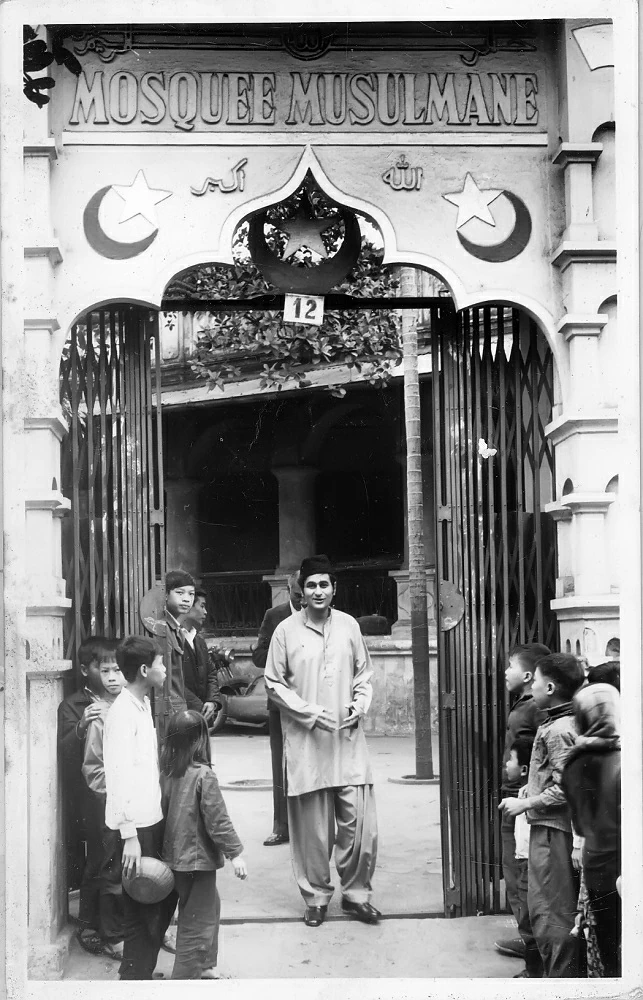 |
| Mr. Tariq Osman Hyder, former Pakistani Ambassador to Vietnam (1974-1976), attending the inauguration of a mosque in Hanoi. (Photo: Courtesy by author) |
Time has proven my belief to be correct.
I still remember the image of Hanoi's citizens joyfully celebrating the victory. At the moment of reunification over 50 years ago, the first fireworks celebrating in Hanoi were launched from the balcony of the Pakistani Embassy at the Thong Nhat Hotel.
More than 50 years later, during these festive days in Hanoi, it is evident that the preparations for Vietnam's 14th National Party Congress are comprehensive and deeply historical.
Notably, the Communist Party of Vietnam continues to review policies based on practical outcomes and plans for the future aligned with the nation's long-term resilience.
I believe the 14th Congress holds special significance as it takes place amid regional and global strategic competition, economic decoupling, and supply chain disruptions...
For Vietnam, this Congress is an opportunity to adjust its development model, maintain growth, combat corruption, and deliver tangible social and educational benefits to the people – as emphasized by General Secretary To Lam in a recent interview, while also strengthening national unity in the face of increasing external pressures.
In this sense, the Congress embodies the continuity of overarching goals combined with strategic adaptability – a principle that has long shaped Vietnam's development process. In the spirit of adaptability, I recall in 1975, when I proposed reopening the only mosque in Hanoi for Muslim diplomats from Indonesia, Algeria, Pakistan, and other countries, the proposal was immediately accepted by the Vietnamese side.
Reflecting on the 13th National Party Congress and 40 years of Doi Moi, what do you consider Vietnam's most outstanding achievements in foreign relations and economic development? What do these results reflect about Vietnam's growing position and role on the international stage?
Looking back at the 13th National Party Congress and four decades of Doi Moi, Vietnam's most notable achievement lies in the successful combination of economic reform and political stability, along with an increasingly confident foreign policy.
Economically, Vietnam has transformed from a centrally planned economy into a dynamic manufacturing and export hub, with expanding technological capabilities and human resources.
In foreign relations, Vietnam has demonstrated balance by deepening ties with all major powers and regional partners, playing an active role in ASEAN, and asserting itself as a reputable voice in multilateral forums.
These achievements indicate that Vietnam is no longer a peripheral nation but has become a confident middle power, proactively shaping its strategic space while maintaining independence and balance in its foreign policy.
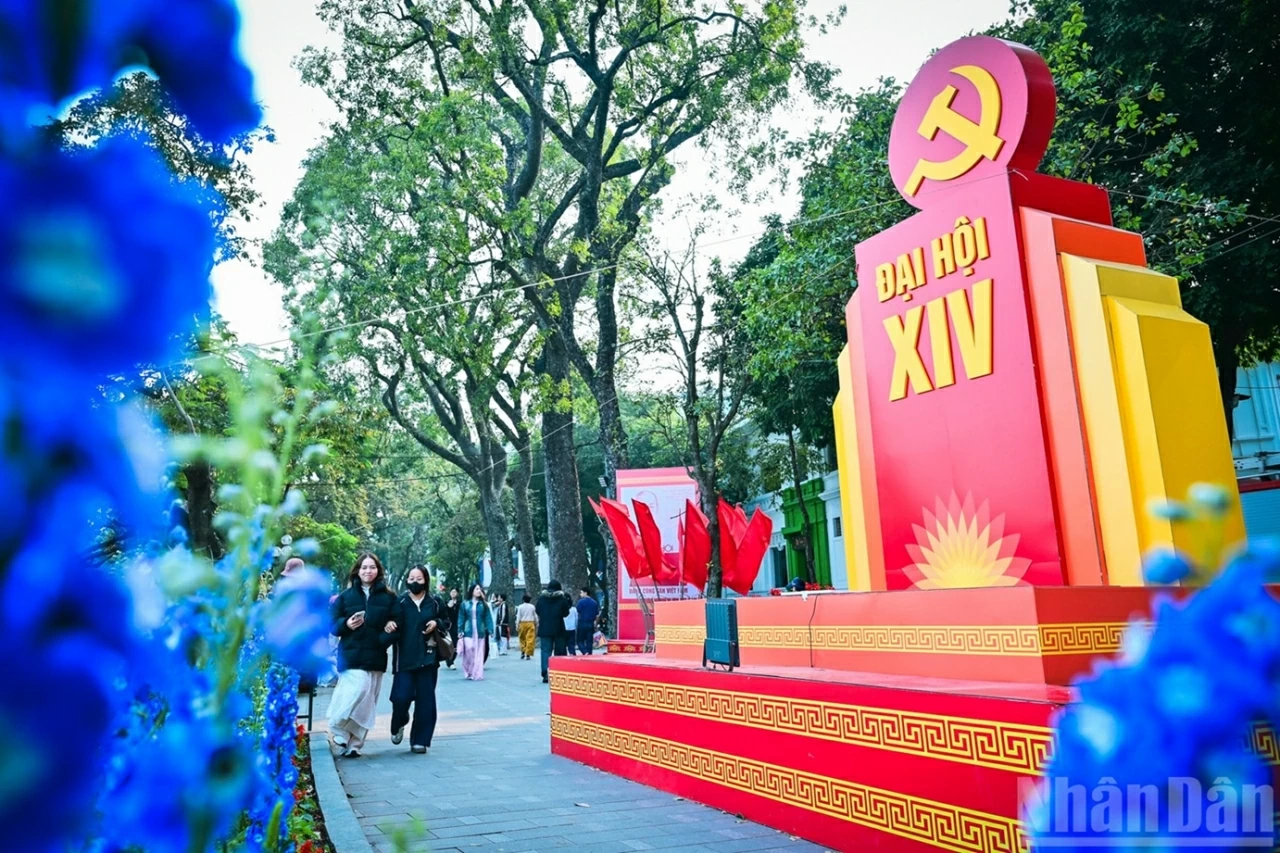 |
| Hanoi brightly welcomes the significant political event. (Source: Nhan Dan Newspaper) |
How do you assess the leadership role of the Communist Party of Vietnam in policy formulation, maintaining socio-political stability, and guiding the country to achieve these accomplishments? In your opinion, what are the key factors that will help the Communist Party of Vietnam continue to lead the country's development in the coming years?
The leadership role of the Communist Party of Vietnam is the central factor leading to the impressive achievements Vietnam has attained in recent years, particularly during the 13th Congress.
The Communist Party of Vietnam has ensured strategic coherence in policy formulation, maintained continuity of long-term goals, and upheld socio-political stability during rapidly changing periods.
Importantly, the Communist Party of Vietnam has demonstrated the ability to learn from experience, adjust policies when necessary, and adapt governance mechanisms to new realities.
Looking beyond the 14th Congress, the leadership of the Communist Party of Vietnam will depend on key factors such as maintaining internal unity and discipline, nurturing a capable and ethically strong next generation of leaders, enhancing the ability to meet societal expectations, and effectively managing the State-market-society model.
With the combination of these factors, the Communist Party of Vietnam will undoubtedly be the pioneering force continuing to lead the country through external challenges while firmly protecting national sovereignty and Vietnam's development priorities.
As the former Pakistani Ambassador to Vietnam, how do you view the recent developments in Vietnam-Pakistan friendship? In your opinion, how will the directions and outcomes of the 14th Congress impact the prospects for cooperation between the two countries in the future?
From the perspective of a Pakistani diplomat who witnessed Vietnam at a crucial historical moment, when the country was fully unified over 50 years ago, I find the recent advancements in Vietnam-Pakistan relations very encouraging.
However, there remains ample potential for economic and technological cooperation between the two countries to be more effectively harnessed. Therefore, the embassies of both countries should continue to play their bridging roles, extending efforts to promote economic trade and elevate bilateral relations to a new level.
The directions and strategies set forth from the 14th Congress – such as continuing the open-door policy, modernizing the economy, and actively engaging in regional issues – will create favorable conditions for expanding bilateral cooperation.
Additionally, areas such as trade, investment, technology transfer, defense dialogue, education, and people-to-people exchanges hold significant potential for development.
If implemented with focused strategy and persistent attention, Vietnam-Pakistan relations can evolve from a close friendship into a comprehensive, practical, and mutually beneficial partnership, encompassing cooperation in multiple fields in the coming years.
Thank you, Ambassador!