



The trajectory taken by Viet Nam after the 14th National Party Congress appears to be the right path: Philippine Ambassador
In an interview with The World & Vietnam Report, Philippine Ambassador to Vietnam Francisco Noel R. Fernandez III shared his impressions of Vietnam’s foreign affairs, highlighting the country’s dynamic diplomacy, growing international stature, and steadfast commitment to peace, cooperation, and regional prosperity.
Latest
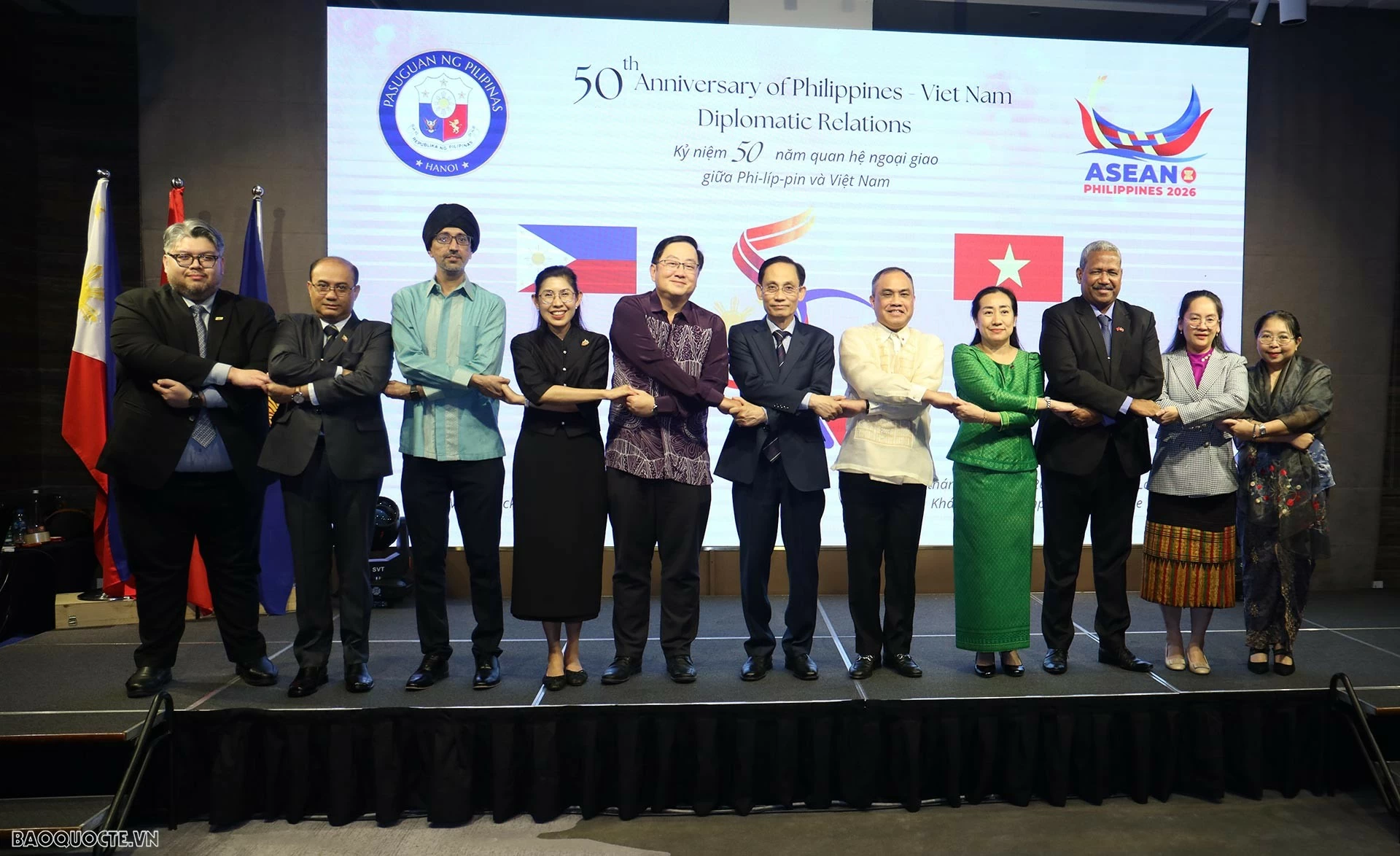 |
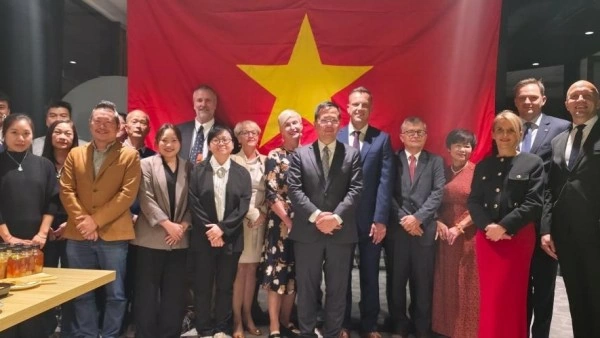
| Delegates pose for a group photo at the ceremony marking the 50th anniversary of diplomatic relations between Viet Nam and the Philippines. (Photo: Thanh Long) |
How do you assess the key directions of Vietnam’s foreign policy following the 14th National Party Congress, particularly its emphasis on independence, self-reliance, resilience, and responsible contributions to addressing issues of common concern to the international community?
I welcomed the elevation of foreign relations to an important level of Vietnam’s national development goals. As the primary government agency responsible for promoting and protecting the interests of Vietnam overseas, this acknowledgement of the importance of foreign relations in the life of the country is only logical as no country in the world can properly exist without engaging with the international community of nations.
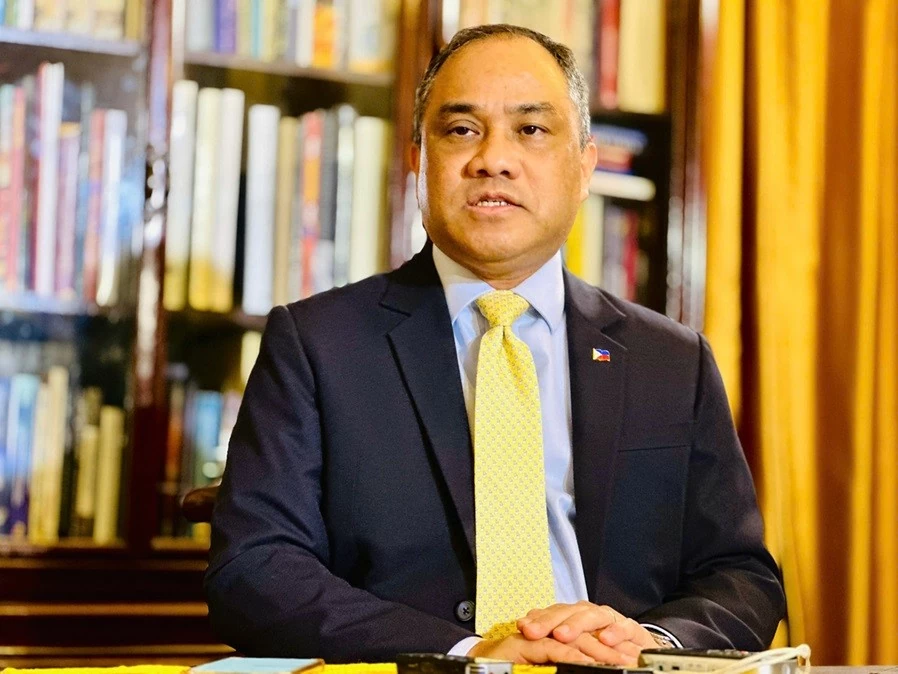 |
| Philippine Ambassador to Vietnam Francisco Noel R. Fernandez III. (Photo: Anh Duc) |
Since my arrival in Ha Noi last January 2026, I have read and seen the consistent effort made by Viet Nam in contributing to regional and international engagements, consistent with its adherence to international law and its support of international organizations like the United Nations and ASEAN. This clearly demonstrates the readiness and ability of Viet Nam to participate in the conversation taking place on the world stage, bringing into this discussion its experiences and sharing the story of its economic success to other countries. There have been no reported incidences of Viet Nam imposing its views on others. On the contrary, Viet Nam has been exchanging views with other countries in accordance with mutual respect and for mutual benefit.
As a middle power, Viet Nam has an obligation to continue to be actively involved in the global stage, plugging gaps in international law and policies which would favor developing countries of which it is an important component. Amidst its effort to be an active actor in international relations, I appreciate the importance Viet Nam places on ASEAN centrality and its effort to promote the importance of ASEAN as the fulcrum on which the political, security, and economic progress of the region must hinge. Consequently, the trajectory taken by Viet Nam after the 14th National Party Congress, which emphasizes international engagement and the promotion of regional and global security and economic progress, appears to be the right path and should continue.
In the context of the country’s new stage of development, Vietnam’s diplomatic sector plays a fundamental and enduring role, making important contributions to realizing the nation’s development vision and objectives. What are your expectations for Vietnam’s diplomatic sector as it takes on these new responsibilities?
Answer: Like the Philippines, Viet Nam has been recognized as an upper middle-income country by the World Bank. With this recognition comes an expectation that Vietnam could play an important role in advancing regional and global peace and economic prosperity. Recently, we saw Vietnamese volunteers travelling to Venezuela to assist in the search-and-recovery efforts of victims of the earthquake which struck that country.
Its ability to send an urban search-and-rescue team demonstrates an important characteristic of a country which is able to extend assistance to other countries which have been hit by natural calamities. Vietnam, like the Philippines, has faced numerous calamities. Through its experience, Vietnam can play an important role in promoting best practices for other states to follow to avoid or mitigate the impact of natural disasters.
The Philippines has been doing the same as it remains the most vulnerable country in the world to natural disasters. It is in the area of economic progress where Vietnam would play an invaluable role as it shares its best practices with other ASEAN Member States and other countries on how the country is able to sustain its economic development notwithstanding the periodic conflict in the Middle East and fast-evolving changes in the security environment around the world. This economic progress demonstrates resilience and an ability to focus on what is important as the country continues to elevate the standard of living of its people.
Amidst this desire to sustain its economic progress, the country’s diplomatic service carries an important burden of expanding access for Vietnamese products to penetrate foreign markets, attract more foreign direct investments in the country, and promoting Vietnamese culture as a demonstration of the country’s rich history and ability to contribute to the preservation of important cultural heritages of the global community.
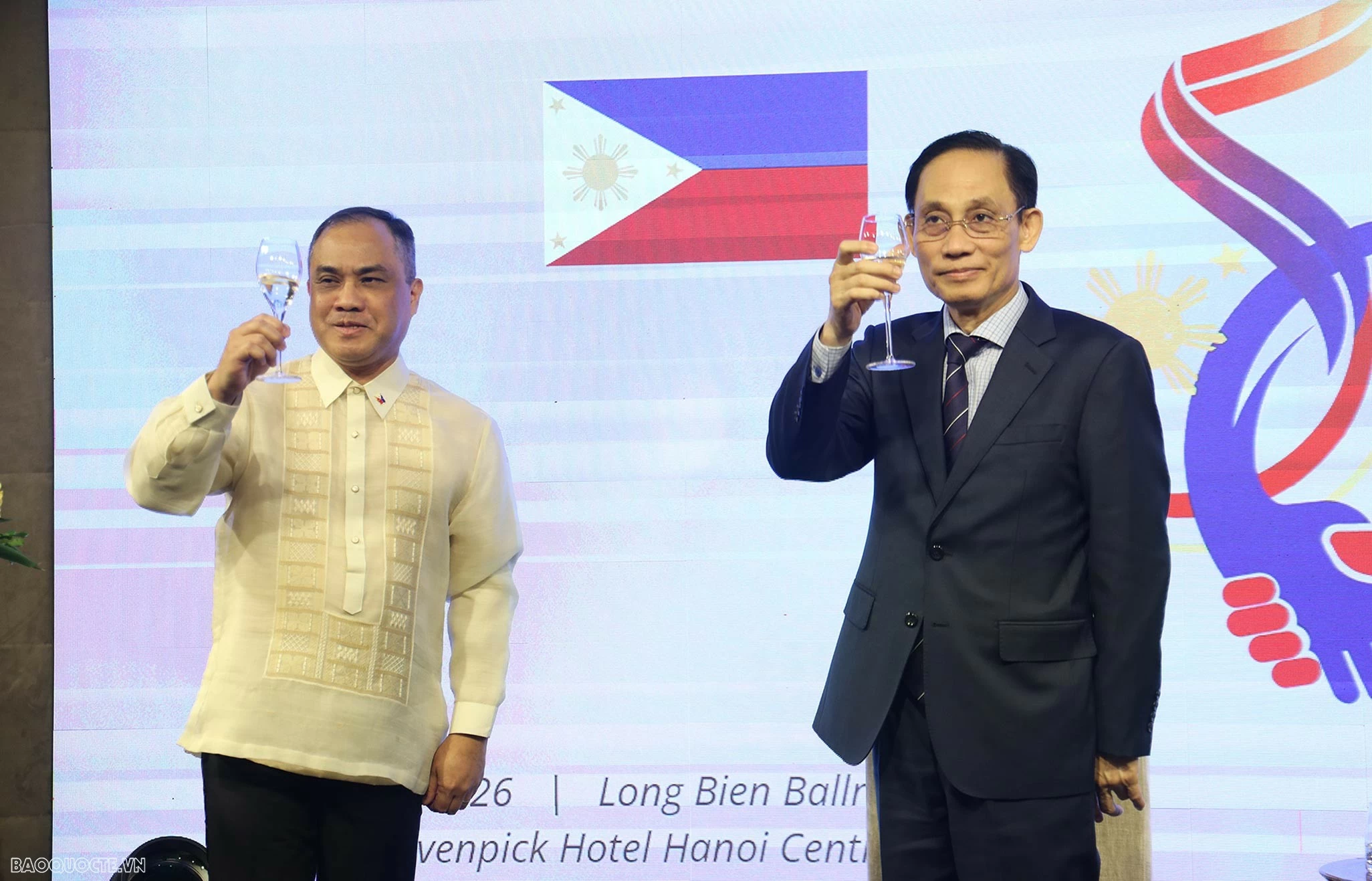 |
| Politburo Member and Minister of Foreign Affairs Le Hoai Trung and Philippine Ambassador to Vietnam Francisco Noel R. Fernandez III attend the ceremony marking the 50th anniversary of diplomatic relations between Vietnam and the Philippines. (Photo: Thanh Long) |
As Vietnam continues to play an increasingly proactive role in addressing issues of common concern to the international community, how do you assess the country’s role, stature, and international standing?
Answer: One of the initial observations I have during the first few weeks of my arrival in Ha Noi was the special relationship shared among the peoples and governments of Viet Nam, Lao PDR, and Cambodia. This sub-regional group with the bigger ASEAN family highlights the importance Vietnam places on its relations with its immediate neighbors.
Its readiness to impart its ideas and strategies to its immediate neighbors will hopefully see this sub-region of ASEAN becoming important engines of economic growth in the region and position it as important advocates to promote ASEAN policies. The commitment demonstrated by Vietnam of sustaining its engagement overseas and with international organizations are necessities of its role as a middle power in the region.
Together with other middle powers belonging to ASEAN, Vietnam would be in a strategic position to ensure that the political and economic progress in the region continue to rotate around ASEAN, thereby sustaining the principle of ASEAN centrality. It is, therefore, expected that Vietnam will continue with this external engagement as this responsibility comes with the role of middle powers in the world.
What impressions have Vietnam’s diplomats left on you, and are there any memorable experiences or lasting impressions you would like to share about them?
ASEAN diplomatic missions always benefit from having ASEAN committees in many of the important global capitals where our diplomats are deployed. In my postings in Beijing, London, and Ottawa, I have exerted efforts to organize and sustain the engagements of political officers from ASEAN diplomatic missions. These regular gatherings, usually over lunch, creates an opportunity to share information and guidance to each other. Vietnamese diplomats which whom I have had the privilege of sharing these platforms have consistently demonstrated professionalism and support for this initiative to sustain interaction among ASEAN colleagues.
Further, upon commencing my tenure in the Philippine Embassy in Ha Noi and during my initial visit to the Temple of Literature, I admire the commitment to higher learning by Vietnamese mandarins in the past and Vietnamese diplomats in the present. This scholarly trait now carried by many Vietnamese diplomats demonstrates an aspiration to be well-read and well-educated, important attributes any diplomat must possess to be able to contribute positively and wisely in any international engagement. I see this commitment to higher education as shared only among a limited number of diplomatic services in the world. Vietnamese diplomats belong to this small circle of diplomat-scholars.
Thank you, the Ambassador!