






Experts and intellectuals collaborate on strategic technology solutions for the nation
WVR - Vietnam is gradually forming networks of Vietnamese experts and intellectuals worldwide, aiming to mobilize high-quality resources for strategic technology challenges.
Latest
Experts suggest that for the network to be effective, a robust ecosystem is needed, encompassing incentives, a research-friendly environment, protection of rights, and expanded international cooperation.
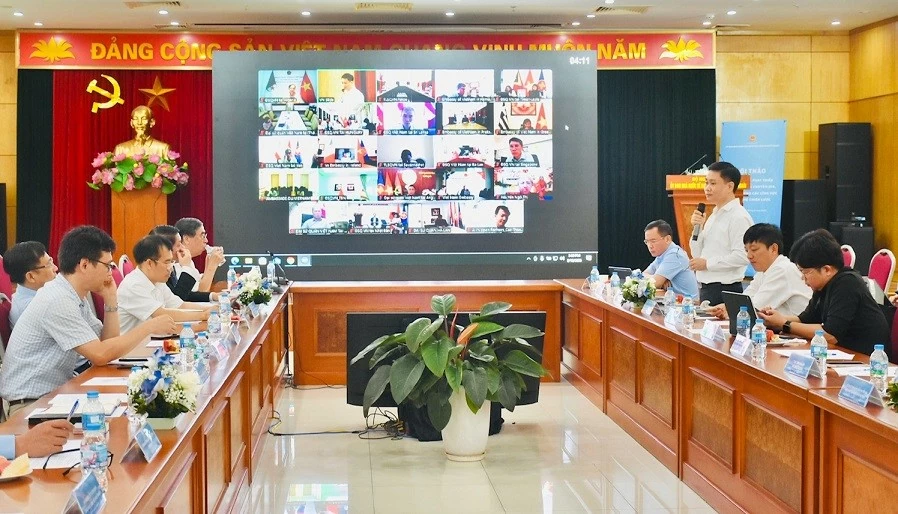 |
| The seminar “Building and Developing Networks of Experts and Intellectuals in Strategic Technology Fields” was organized by the State Committee for Overseas Vietnamese (Ministry of Foreign Affairs) on August 10. (Photo: Duong Tieu) |
Role of the “Chief architect”
Nguyen Phu Binh, Deputy Director of the National Foundation for Science and Technology Development (NAFOSTED - Ministry of Science and Technology), stressed that among the 10 strategic technology groups, artificial intelligence (AI) is not only part of the two main groups but also a method and technology that permeates most other fields.
In early August, the Ministry of Science and Technology established the Global Vietnamese AI Expert Network to gather Vietnamese AI experts worldwide, mobilizing talent for national science and technology programs.
The Ministry has also submitted to the Government a model of technology clusters/chains, progressing from research to testing, market introduction, and real-world competition.
According to Nguyen Phu Binh, each strategic technology is divided into specific challenges. Therefore, Vietnam needs experts to play the role of “chief architect”, assisting ministries, sectors, and localities in designing and constructing specific challenges from major orientations.
“During the implementation of strategic technologies, we sought opinions from ministries and sectors. The remuneration for the chief architect position, currently under ministerial approval, is 300 million VND/month. Although this figure may not fully correspond to the expertise, it is a commendable effort by domestic units,” Binh shared.
Alongside the role of chief architect, experts can participate in critique, contribute to scientific and technological councils, advise on policies, and transfer knowledge to domestic scientists.
NAFOSTED will be the focal point for receiving proposals from ministries, sectors, localities, and enterprises to find and invite suitable experts.
However, according to Binh, attracting talent goes beyond remuneration. Vietnam needs to clarify issues related to intellectual property, security, and conflict of interest management. Building a specialized expert database and expert bank is also crucial to connect the right people with the right challenges.
Cross-national cooperation ecosystem
Nguyen Phuc Binh, President of the Vietnam Innovation Network in Australia, proposed expanding joint research programs between Vietnam and international partners in strategic technologies. This is also a way for overseas Vietnamese scientists to engage more deeply and contribute practically to the country's development programs.
Notably, at the TechConnect Forum on August 10, during a State visit to Australia, General Secretary and President To Lam suggested that the two countries could promote the formation of bilateral mechanisms, share experiences, and connect the “three houses” – the State, academia, and enterprises.
Discussing the potential implementation of the cross-national “three houses” model, Nguyen Phuc Binh noted that when Vietnam encounters significant challenges and demands, it can directly commission Australian enterprises, while also setting conditions to enhance research and training connections.
For instance, enterprises involved in solving challenges may be required to recruit a certain number of Vietnamese research students. According to him, this is a solution to connect the “three houses” across nations, rather than being limited to Vietnam.
Meanwhile, Nguyen Thi Ngoc Dung, Chief of Staff of the National Data Association and Standing Vice President of the Global Data Expert Network (VDEN), emphasized the role of gathering overseas Vietnamese experts – those who can bring back experience, methods, and tools suitable for effectively exploiting the vast data resources Vietnam possesses.
According to Dung, many experts return with the desire to contribute intellectually to the country, hoping to create breakthroughs in the data industry. Progress made at home can sometimes be far more valuable than continuing to work abroad.
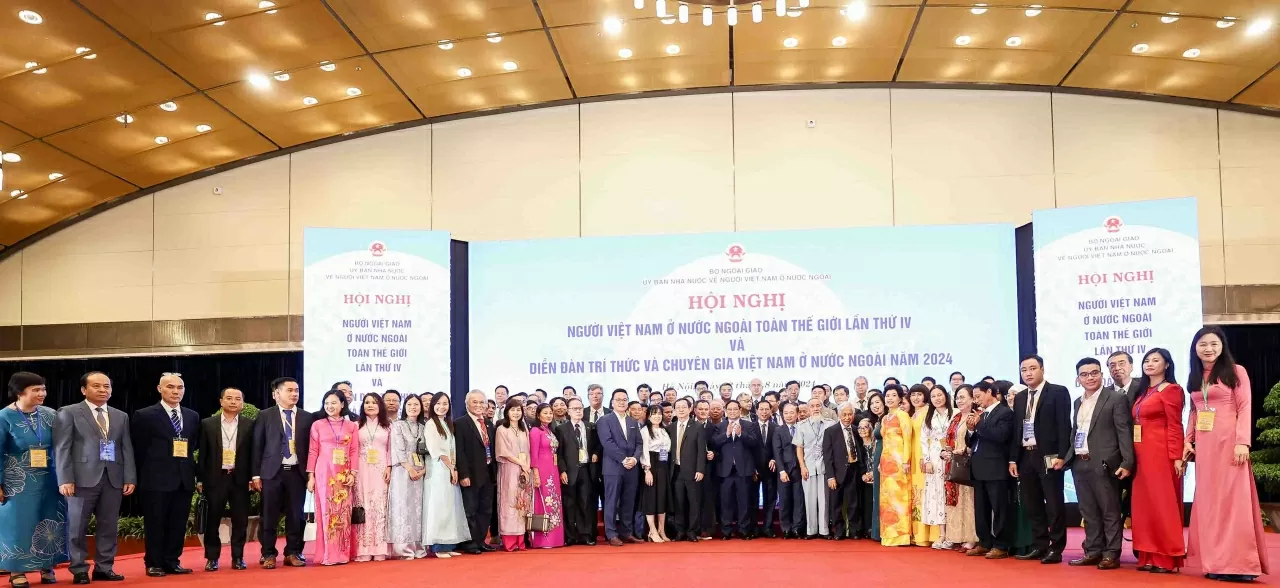 |
| Overseas Vietnamese attending the Fourth Global Conference of Vietnamese Abroad and the 2024 Forum of Vietnamese Intellectuals and Experts Abroad in Hanoi. (Photo: Tuan Anh) |
Building an environment for Overseas intellectuals to maximize their potential
To attract and retain Vietnamese experts abroad, Nguyen Thi Ngoc Dung believes Vietnam needs to build a comprehensive ecosystem.
Accordingly, besides machinery, internet infrastructure, supercomputers, and material conditions for research, overseas Vietnamese experts are also concerned about the quality of the living environment, working conditions, and the ability to maximize their professional potential.
More importantly, the policy framework should allow experts the freedom to innovate, equivalent to the research and work environment they experienced abroad.
The proposals at the seminar indicate that forming global networks of Vietnamese experts and intellectuals is not just about gathering human resources. It also requires building mechanisms to connect intellectual resources with specific national challenges, from research, training, policy advising to technology transfer and market introduction.
Connecting domestic expert networks with the overseas Vietnamese intellectual community, while expanding cooperation between the State, academia, and enterprises internationally, is expected to create additional channels for global Vietnamese resources to engage more deeply in Vietnam's scientific, technological, and innovative development.