


Creating additional momentum for high-level strategic exchanges between Vietnam and China
WVR - Journalist Wei Wei assesses that the visit to China by National Assembly Chairman Tran Thanh Man strengthens political trust at the legislative level and enhances channels for conveying shared strategic perceptions.
Latest
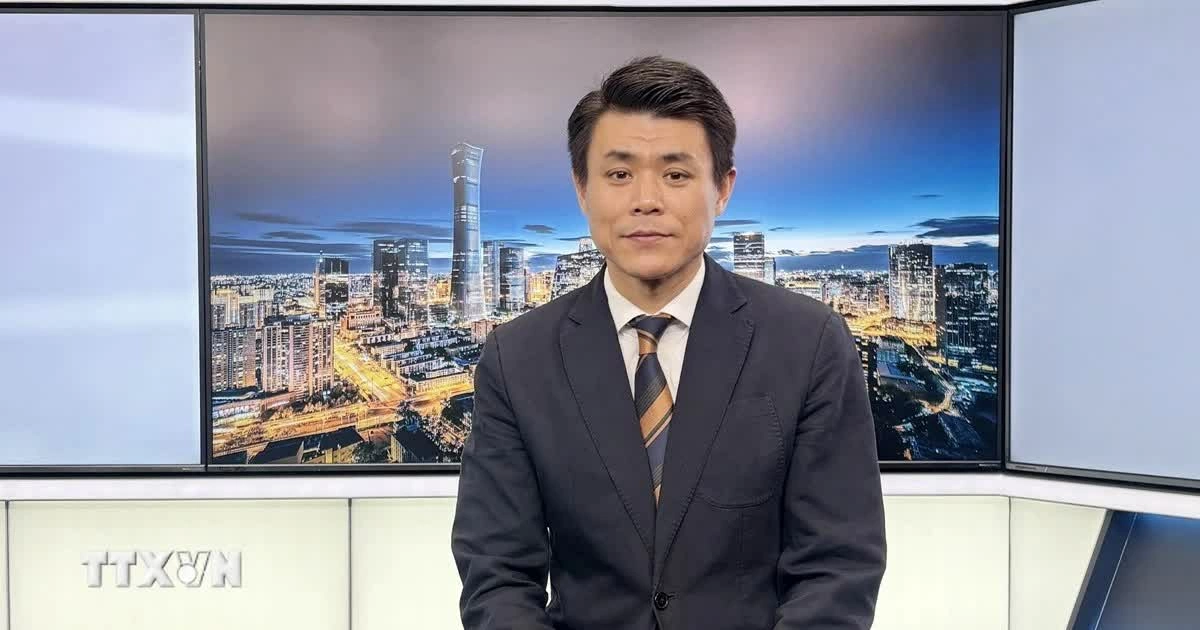 |
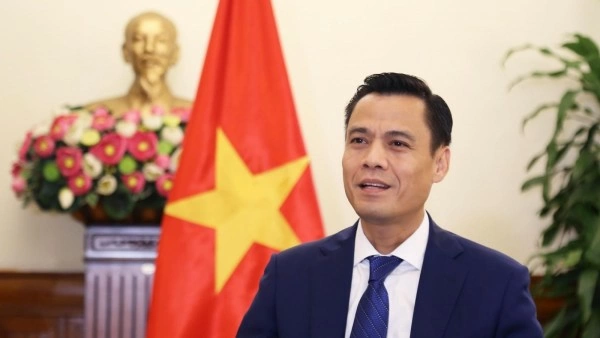
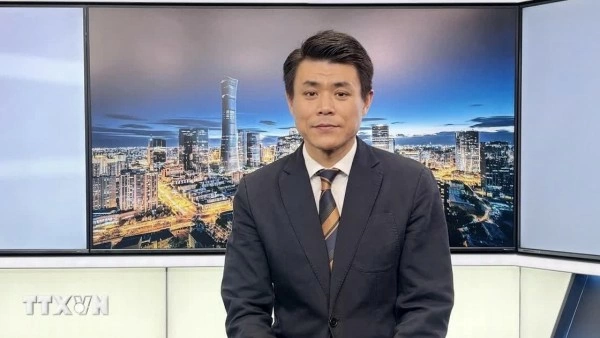
| Journalist Wei Wei, an expert on Vietnam, Head of the Vietnamese Department, China Central Radio and Television. (Source: VNA) |
Ahead of the official visit of National Assembly Chairman Tran Thanh Man to China, journalist Wei Wei, an expert on Vietnam and Head of the Vietnamese Department at China Central Radio and Television, evaluated the visit of Chairman Tran Thanh Man and his co-chairing of the second meeting of the Joint Committee between the legislative bodies of the two countries as an important institutional activity. This aims to implement the shared perceptions of the high-level leaders of the two Parties, completing the high-level exchange chain between Vietnam and China, with outstanding strategic value.
According to expert Wei Wei, the significance of the visit can be viewed from three perspectives. Firstly, it consolidates political trust at the legislative level and strengthens channels for conveying shared strategic perceptions. Both Vietnam and China are socialist countries, and exchanges between legislative bodies are an important supplement to high-level strategic exchanges.
This meeting follows the first session to transform the shared perceptions between the General Secretaries of the two Parties about building a Vietnam-China Community with a Shared Future of strategic significance into shared perceptions at the parliamentary level of the two countries.
The two sides exchange experiences in national governance, building democracy and the rule of law; continue to affirm political stances such as mutual respect, adherence to the “One China” principle, and appropriately manage and handle disagreements; strengthen the political relationship of “comrades and brothers,” ensuring the bilateral relationship develops stably and in the right direction.
Secondly, the visit lays a legal foundation for economic-trade cooperation, connectivity, and emerging industries. Currently, Vietnam-China trade maintains a high level. By 2025, bilateral trade turnover is expected to ensure a scale of over 250 billion USD, with increasingly tight links between the industrial and supply chains.
The National Assemblies of the two countries focus on key areas such as cross-border trade and economy, customs clearance, digital economy, new energy, and agriculture; through legislative exchanges, they aim to remove institutional barriers and promote the implementation of related cooperation agreements. The Joint Committee mechanism encourages the two countries to perfect legal regulations related to investment protection, border cooperation, intellectual property...
Thirdly, Mr. Wei Wei believes the visit contributes to expanding channels of exchange with the people, promoting deeper and more substantive cultural exchanges. The legislative body represents the people of each country. Both sides leverage the Joint Committee platform to promote regular exchanges between local elected bodies, youth, media, and cultural organizations; inherit the memory of revolutionary history, thereby enhancing mutual understanding between the peoples of the two countries, especially the younger generation.
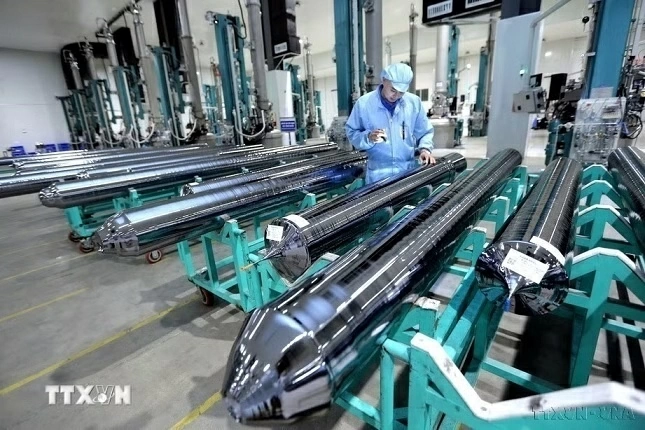 |
| Manufacturing solar panel materials at JA Solar Vietnam Co., Ltd., with investment from Hong Kong (China) in Quang Chau Industrial Park (Bac Giang). |
He emphasized the role of the legislative body in strengthening the people's foundation for bilateral friendship, so that the Vietnam-China friendship becomes increasingly close to the peoples of the two countries.
Expert Wei Wei affirmed that the results achieved during this visit of National Assembly Chairman Tran Thanh Man to China and the second meeting of the Joint Committee will continue to create additional momentum for the comprehensive strategic cooperative partnership between Vietnam and China in three aspects: mechanism and institution, substantive cooperation, and regional coordination, thereby providing new impetus for building a Vietnam-China Community with a Shared Future of strategic significance.
Firstly, perfecting the regular cooperation mechanism between legislative bodies and completing the institutional structure of the bilateral relationship. This meeting strengthens the regular and long-term dialogue mechanism between the National People's Congress of China and the National Assembly of Vietnam, forming a multi-layered exchange network between high-level leaders, governments, legislative bodies, and the Chinese People's Political Consultative Conference - Vietnam Fatherland Front.
As a specialized dialogue mechanism, the Joint Committee can periodically exchange views on major issues in the bilateral relationship, conduct exchanges at the legislative oversight level on border management, security, and economic-trade cooperation, forming a complete closed cycle from “high-level shared perceptions - institutionalization through legislation - local implementation.”
The Vietnam-China relationship will gradually shift from the shared perceptions of leaders to sustainable and inheritable institutional cooperation, enhancing the stability of the bilateral relationship.
Secondly, improving quality, promoting the upgrade of substantive cooperation in various fields, thereby exploiting benefits from common development. Based on the results of this parliamentary dialogue, the two sides will continue to promote the upgrading of border gates, cross-border logistics, agricultural trade, and industrial chain cooperation in the manufacturing sector.
In emerging fields such as “three new generation items” and the digital economy, the legislative bodies of the two countries can promote the issuance of synchronized support policies, attract more two-way investment enterprises, expand the scale of cooperation between border provinces, thereby contributing to increasing income for people in border areas.
Legislative coordination will help appropriately handle economic-trade disputes, improve the business environment, so that the benefits from bilateral trade and investment bring more benefits to the peoples of the two countries, achieving common development and prosperity.
Thirdly, enhancing multilateral coordination in the region, maintaining regional peace and stability. In the current complex and unpredictable regional situation, the legislative bodies of the two countries strengthen coordination of positions, maintain exchanges on regional issues within the framework of the Association of Southeast Asian Nations (ASEAN) and other issues, persist through dialogue and consultation to manage and appropriately handle disagreements. Both sides maintain ASEAN's central role.
According to Mr. Wei Wei, the legislative bodies of the two countries support and coordinate with each other in multilateral mechanisms, jointly promoting the rights and interests of developing countries, contributing to maintaining a peaceful, secure, and favorable environment for development, while enhancing coordination on regional issues.