






Managing religious communication crises from a human rights perspective in the context of digital transformation
WVR - In the context of national digital transformation and the robust development of cyberspace, religious communication activities are increasingly expanding in scale, methods, and social impact.
Latest
 |
| General Secretary To Lam visits the exhibition space of books, photo exhibits, and digital transformation achievements in journalism in December 2025, in Hanoi. (Photo: Nhan dan Newspaper) |
Besides the positive values in spreading ethical and humanitarian standards, the digital environment also increases the risk of emerging forms of religious communication crises, posing new challenges in ensuring human rights, especially the right to freedom of belief and religion.
New challenges in ensuring human rights
Implementing the resolutions of the Party and the National Assembly on religious work and policies, Vietnam has recently focused on broadcasting and digitizing programs, increasing the duration of news/articles, information, and propaganda directed towards the grassroots, enhancing the quality of radio and television in ethnic languages; promoting the dissemination of the Party and State's viewpoints and policies to officials, people, and especially religious dignitaries and followers.
In addition to specialized publications on religion, each religion now has its own publications; many official religious media models such as the electronic portal of the Vietnam Buddhist Sangha, the Archdiocese of Hanoi, the Vietnam Bishops' Conference, or the official communication channels of religious organizations have significantly contributed to providing accurate and timely information, limiting rumors, and preventing the misuse of religion for distortion and incitement.
| Building a healthy religious information ecosystem in the digital age. The ultimate goal of managing religious communication crises in the digital age is not to restrict freedom of expression or freedom of belief and religion, but to build a healthy, transparent, humane, and self-regulating religious information ecosystem. |
It is evident that in the context of national digital transformation, cyberspace has become an integral part of social life, including religious life. Increasingly, religious preaching, activities, and community connections are being conducted on digital platforms, contributing to expanding the space for religious practice and facilitating the exercise of freedom of belief and religion in new conditions.
However, along with these opportunities, the digital environment also gives rise to non-traditional forms of religious media crises. Misinformation, distortion, manipulation, exaggeration, or exploitation for political purposes can quickly spread at a large scale and wide scope, directly impacting religious faith, social order, and the environment for exercising human rights.
Therefore, religious communication crises are not merely an issue of information management but have become a complex problem balancing multiple fundamental rights such as freedom of belief, freedom of expression, the right to access information, and the right to protect dignity and honor, while also ensuring social security and human safety. This is a new challenge requiring modern governance thinking, a multidisciplinary approach, and placing humans at the center of policy formulation and implementation.
The traditional management model focused on "management and control" is no longer suitable and needs to shift strongly towards a "creation and service" mindset, placing human rights at the center and as the overarching goal. State management of belief and religion in the digital environment is not aimed at restricting freedom of belief and religion but at establishing a safe and healthy legal and social environment for these rights to be fully, sustainably, and responsibly exercised. This is particularly important as cyberspace increasingly becomes a religious activity space with a profound impact on the spiritual life of the people.
On this basis, state management of religion in the digital age must ensure respect and protection of every citizen's freedom of belief and religion, in accordance with the Constitution, laws, and international human rights commitments. At the same time, it must ensure that all religious activities in cyberspace are conducted within the legal framework, without infringing on the legitimate rights and interests of other organizations and individuals.
Moreover, there needs to be transparency of information and enhanced accountability of entities participating in the digital media environment to protect the right to access accurate information for the people. Additionally, the coordination mechanism between the State, religious organizations, the press, and the social community in preventing and handling media crises should be promoted. Implementing these requirements in a synchronized manner not only contributes to improving the effectiveness and efficiency of state management of belief and religion in the digital transformation context but also has practical significance in ensuring human rights in a substantial and sustainable way.
| From a human rights perspective, it can be affirmed that managing religious communication crises is not about restricting freedom of expression or freedom of belief, but about creating a safe, healthy legal and social environment for these rights to be fully, sustainably, and responsibly exercised. |
Enhancing management of religious communication crises in the digital age
Based on the requirements set for state management of belief and religion in the digital transformation context, building a comprehensive, strategic, and feasible solution system is a prerequisite for enhancing the capacity to prevent, identify, and effectively respond to religious media crises. The focus should be on several key solutions as follows:
Firstly, perfecting the legal framework for religious information in cyberspace. First and foremost, it is necessary to continue reviewing, supplementing, and perfecting the legal system related to religious information and communication activities in the digital environment, focusing on the implementation guidelines of the Law on Belief and Religion, the Cybersecurity Law, and related legal documents.
In this regard, it is essential to clarify the legal responsibilities of individuals and organizations when posting and disseminating false, distorted information that infringes on the honor and dignity of religious organizations and individuals; at the same time, specific regulations for online preaching, fundraising, and sponsorship activities should be established to protect the legitimate rights and interests of followers, contributing to building a healthy religious activity environment in cyberspace.
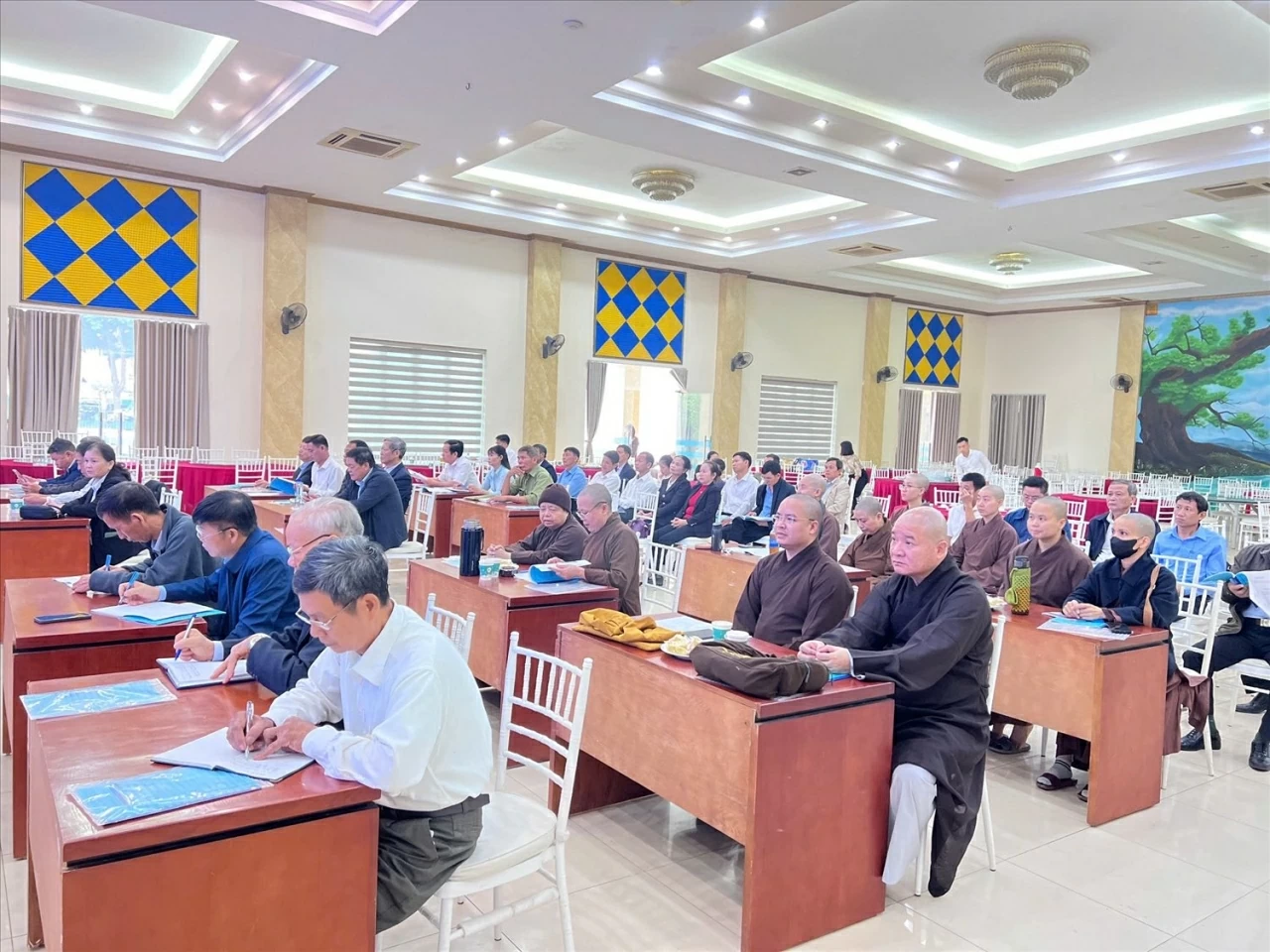 |
| Religious delegates and ethnic affairs personnel attend a training course on science - technology, innovation, and digital transformation organized by the Ministry of Ethnic and Religious Affairs in collaboration with the Ministry of Science and Technology, November 2025. (Photo: VietNamnet) |
Secondly, building a monitoring and early warning system for media crises. Along with perfecting the institution, it is necessary to invest in technology infrastructure, apply artificial intelligence, and analyze big data to build a "social listening" system in the religious field.
This system allows for real-time monitoring and analysis of public opinion trends, thereby detecting potential risks early from the outset. Proactively identifying early media "hot spots" is an important basis for functional agencies to timely advise on handling plans, limiting the risk of widespread crisis outbreaks.
Thirdly, establishing an inter-agency communication and crisis management mechanism. In practice, delays or lack of consistency in providing information when religious-related communication incidents occur can create information gaps, increasing rumors and negative interpretations.
Therefore, it is necessary to establish an inter-agency coordination regulation between state management agencies on religion, propaganda - mass mobilization agencies, police agencies, and the press system. Crisis management must ensure the principle of "quick - accurate - targeted", promptly providing official information to society during the "golden time", thereby guiding public opinion and protecting the right to access accurate information for the people.
| More from WVR |
 Human rights communication: Harnessing the 'hearts and minds' of the people Human rights communication: Harnessing the 'hearts and minds' of the people |
Fourthly, strengthening policy communication on religion and human rights. Alongside management measures, policy communication work needs to be strengthened to build a "spiritual immune system" for society against false and distorted information. Accordingly, it is necessary to proactively spread the ethical and humanitarian values of religion, honor exemplary religious dignitaries and followers, contributing to strengthening social trust and creating a solid cultural foundation to prevent media crises.
Fifthly, promoting the self-management role of religious organizations. Besides the State's management role, religious organizations need to strongly promote the spirit of self-management and responsibility in communication activities. It is necessary to proactively build a code of ethics for communication, enhance digital communication capacity for the clergy and religious practitioners to prevent potential crisis risks early.
Strict self-management, social responsibility, and legal compliance awareness of religious organizations are important factors contributing to protecting religious credibility, the legitimate rights and interests of the religious community, and strengthening the environment for exercising freedom of belief and religion in the digital age.
Sixthly, building a healthy religious information ecosystem in the digital age. The ultimate goal of managing religious media crises in the digital age is not to restrict freedom of expression or freedom of belief and religion, but to build a healthy, transparent, humane, and self-regulating religious information ecosystem.
This approach aligns with the spirit of Article 24 of the 2013 Constitution, the 2016 Law on Belief and Religion, and international human rights commitments to which Vietnam is a member, affirming that freedom of belief and religion must be respected and exercised within the legal framework and for the common good of society.
In this ecosystem, the State plays the role of institutional creator, protecting human rights, and ensuring a safe information environment; religious organizations are self-managing entities responsible for communication activities; the press and media guide public opinion, spreading the ethical and humanitarian values of religion; and the people are the beneficiaries of freedom of belief, while also exercising social oversight over religious activities in cyberspace.
| The formation of a "cultural green zone" in cyberspace, where the ethical and humanitarian values of religion are spread in a standard manner, is therefore not only an effective solution to prevent media crises but also an important foundation to strengthen social trust and ensure freedom of belief and religion in the current digital transformation context. |

| Digital transformation – A milestone in diplomatic achievements WVR - “Digital transformation is not just a tool to support professional activities; it is increasingly becoming a new method of organization and operation for ... |

| Human rights efforts 2025: Transforming for breakthroughs WVR - In the context of profound global changes in 2025, Vietnam remains steadfast and consistent in its development path, maintaining political and social stability, ... |

| Vietnam's expectations for its UN Human Rights Council membership term 2026-2028 WVR - Vietnam's outstanding completion of its term as a member of the United Nations Human Rights Council (UNHRC) for 2023-2025 and its re-election for ... |

| Promoting the value of socialist human rights WVR - The aspiration for a prosperous, happy, and powerful nation by the mid-21st century necessitates a strong renewal in theoretical thinking and practical development. ... |

| Proactively shaping the rules in the digital era: Placing human rights at the center Artificial Intelligence (AI) is increasingly intervening in every aspect of social life, posing challenges to legal sovereignty, social governance, and ensuring human rights. |