



World Human Rights Day: Ensuring human rights as 'the breath of life'
From the Hanoi Convention to its Human Rights Council seat, Vietnam continues to affirm its strong commitment to protecting human rights as everyday essentials.
Latest
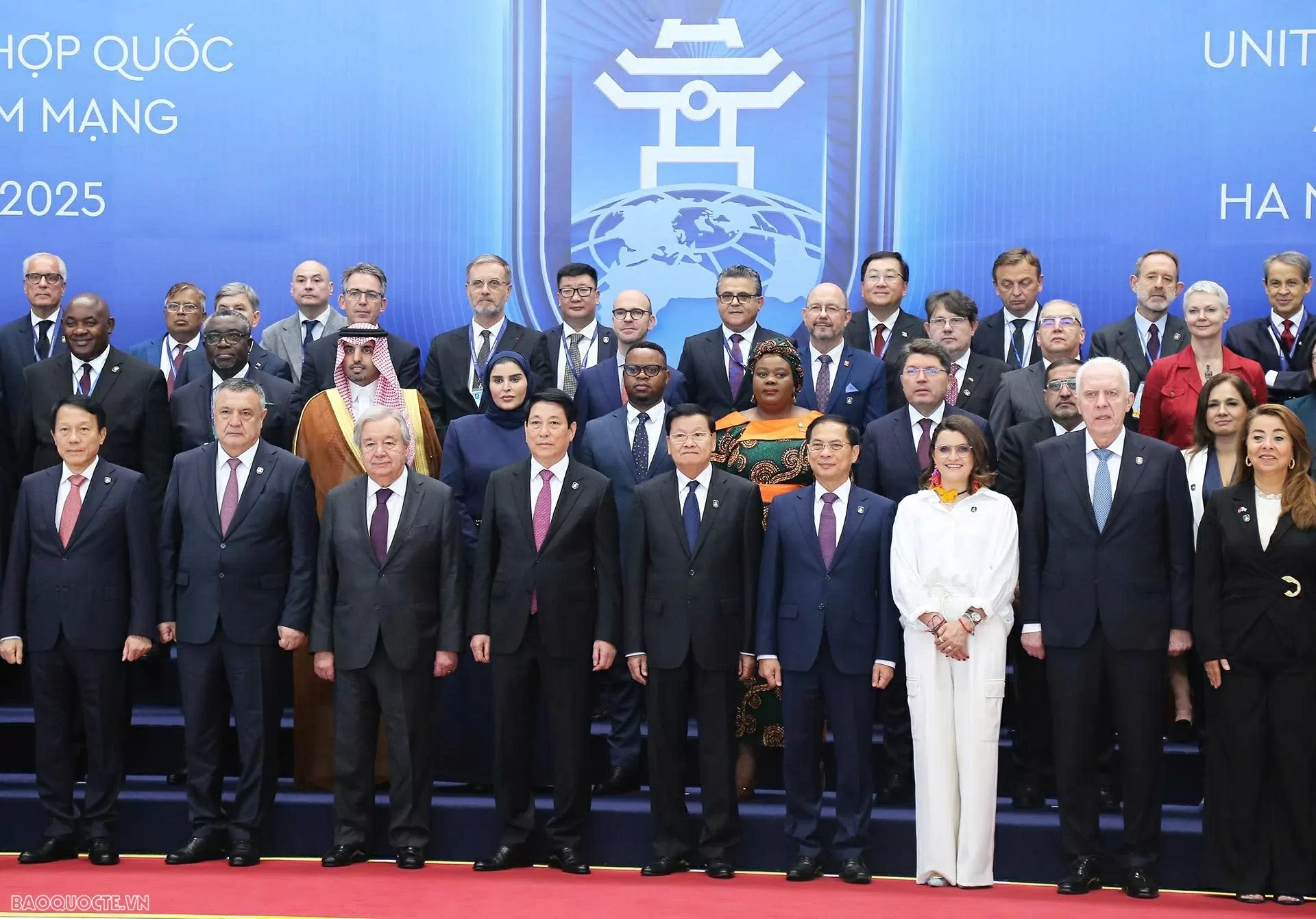 |
| Official welcoming ceremony for heads of delegation at the signing ceremony of the he UN Convention against Cybercrime, October 25, in Hanoi. (Photo: Thanh Long) |
The two recent milestones of Vietnam, the hosting of the signing ceremony of the UN Convention against Cybercrime (Hanoi Convention) and its re-election to the UN Human Rights Council with one of the highest vote counts, have affirmed the country’s commitment to safeguarding human dignity amid digital-era challenges.
Human rights as “the breath of life”
In Vietnam, this year’s World Human Rights Day (December 10) theme "Human rights, our everyday essentials" is translated into inclusive development policies aimed at ensuring security, well-being, and opportunities for the 100 million people.
Vietnam remains among countries with high human development. Its Human Development Index (HDI) reached 0.766 in 2023, ranking 93rd out of 193 countries and territories, with the HDI rising 53.5% over 1990–2023 thanks to advances in health care, education, and income.
Vietnam was the first Asian country to ratify the UN Convention on the Rights of the Child. After 35 years, the under-five mortality rate has dropped from 58‰ in 1990 to 16.9‰ in 2024. Such achievements underpin Vietnam’s foreign policy credibility and contributed to its election to the UN Human Rights Council for 2026–2028 with the highest vote in the Asia-Pacific group.
Deputy Foreign Minister Dang Hoang Giang said this result reflects the international community’s strong recognition of the Party and State’s correct policies on human rights.
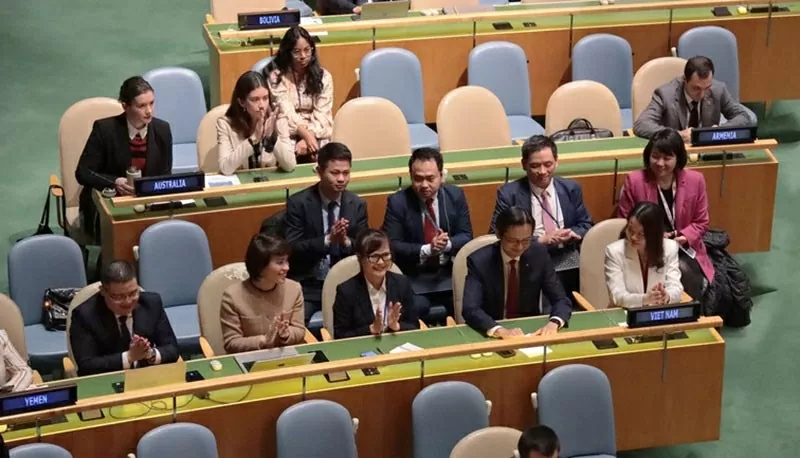 |
| The moment Vietnam was announced as re-elected to the United Nations Human Rights Council in New York, October 14. (Source: Vietnam's Permanent Mission to the UN) |
Safety as core right in digital age
Human rights now extend to cyberspace, where 78.8% of Vietnamese use the Internet and over 95% engage on social media. Along with benefits, new legal and ethical challenges have emerged.
Assoc. Prof. Dr Tuong Duy Kien, Director of the Institute of Human Rights at the Ho Chi Minh National Academy of Politics, noted that digital technologies blur the boundary between public and private life.
Personal data can be collected and analysed with “virtually no limits”, raising issues such as the constitutional status of the “right to Internet access”, the feasibility of the “right to be forgotten”, and what constitutes meaningful consent in data use. He emphasised that AI must “serve humans, not the reverse”.
Child online safety is a growing concern. In 2024, the Ministry of Public Security recorded 381 cases of online child exploitation, while the US’s National Centre for Missing & Exploited Children (NCMEC) reported a 1,325% surge in AI-generated child abuse content.
Facing that fact, Vietnam has strengthened its legal framework. On June 17, 2025, the Prime Minister issued Decision No. 1172/QD-TTg approving the plan to implement UPR Cycle IV recommendations, prioritising legal reforms on human rights and protection of vulnerable groups online. The “Not Alone” campaign, involving ministries, sectors, and cross-border platforms, has enhanced child online protection.
Internationally, Vietnam’s hosting of the signing ceremony for the Hanoi Convention – the first global UN treaty on cybercrime – is considered a historic milestone. Vietnamese President Luong Cuong affirmed that the ultimate goal of all efforts is to ensure technology serves life, development generates opportunities for all, and no one is left behind in the global digital transformation process.
As a Human Rights Council member for 2026–2028, Vietnam will promote eight priority areas, including human rights in climate change and digital transformation, a strategic direction aligning national interests with global progressive trends.
UN Assistant Secretary-General Kanni Wignaraja stressed that Vietnam’s most valuable asset is its people, adding that sustained investment in human development will drive future breakthroughs.
Protecting human rights in the digital age is a vital mission. From the Hanoi Convention to its Human Rights Council seat, Vietnam continues to affirm its commitment to peace, technological progress and the well-being of all citizens.
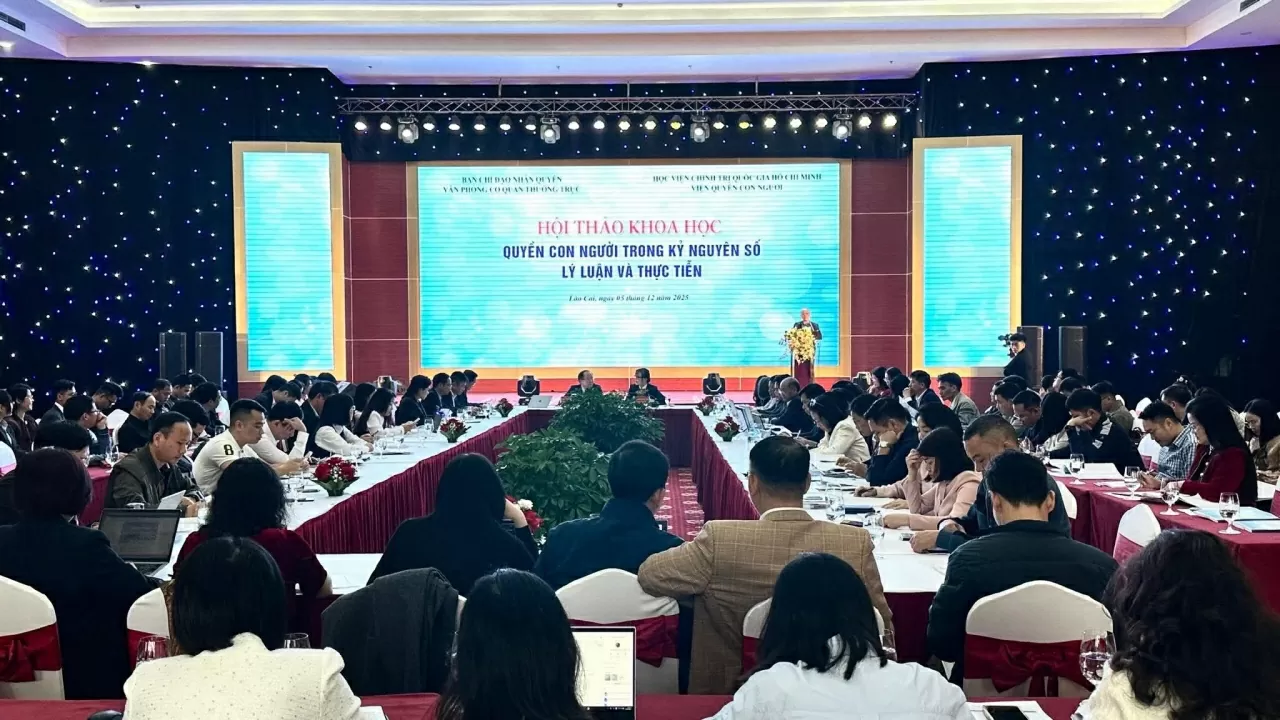 |
| The conference "Human rights in the digital era: Theory and practice", December 5 in Lao Cai. (Source: Organizing Committee) |
(Source: VNA)