





Significance of the Universal Declaration of Human Rights in promoting and protecting human rights in Vietnam
WVR - After 77 years under the guidance of the Universal Declaration of Human Rights (established on December 10, 1948), the promotion and protection of human rights in Vietnam have made significant strides across various fields.
Latest
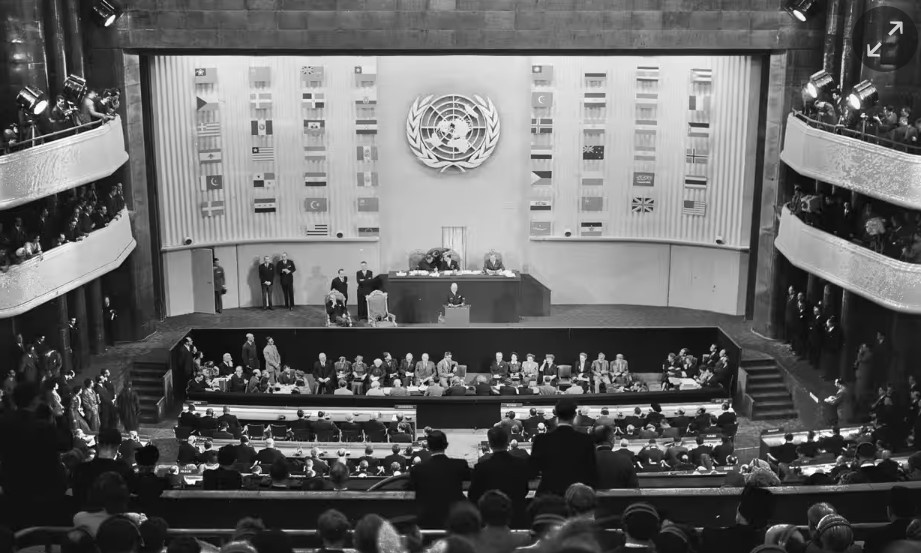 |
| The United Nations General Assembly adopted the Universal Declaration of Human Rights in Paris on December 10, 1948. (Source: Getty Images) |
Firstly, the Party and State of Vietnam focus on building and perfecting the legal framework for human rights.
Human rights and citizens' rights are identified as central issues in the development and completion of the legal system on human rights. From the very first Constitution (1946 Constitution) of the Democratic Republic of Vietnam, fundamental human rights and freedoms were established.
To date, after nearly 40 years of renovation, the Vietnamese State has developed a legal system regulating social relations, with a focus on building comprehensive human rights laws that align with the country's development realities and gradually conform to international human rights standards.
Based on international norms and the specific conditions of the country, the legal system has been constructed and refined to create the most crucial legal foundation for all state activities, ensuring respect, protection, and promotion of human rights by state officials and civil servants.
Currently, human rights laws regulate most of the country's critical areas across all aspects of economic, political, and social life. The 2013 Constitution, passed by the 13th National Assembly, is the culmination of nearly 30 years of renovation and is considered a pinnacle in constitutional history for human rights protection. It comprises 120 articles, with 36 dedicated to human rights and citizens' rights and obligations. These provisions are not only found in a separate chapter (Chapter 2) but also in various other chapters of the Constitution. Human rights provisions in the Constitution represent the highest legal guarantees by the State to respect, protect, and implement human rights. Based on constitutional principles, a series of specialized laws and codes have been enacted to concretize constitutional provisions, creating a comprehensive legal foundation to ensure civil, political, economic, social, and cultural rights, as well as the rights of vulnerable social groups.
Secondly, the Party and State focus on improving human rights protection mechanisms.
The Party and State of Vietnam recognize that alongside the legal system, state agencies play a crucial role in promoting and protecting human rights. For the first time, the role and responsibility of the State are explicitly defined in Article 3 and Clause 1, Article 14 of the 2013 Constitution, acknowledging the State's responsibility/obligation to “recognize, respect, ensure, and protect human rights and citizens' rights”.
From this provision, the 13th National Congress (2021) of the Party clearly defined the role of state agencies. For the National Assembly, “Continue to innovate and improve the quality of the legislative process, focusing on building and perfecting the socialist-oriented market economy institution; respect, ensure, and protect human rights and citizens' rights; perfect the mechanism for constitutional protection...”.
For state administrative agencies, they must build a public administration that serves the people, transitioning from a “governing administration to a serving administration”, “Building a public administration that serves the people, democratic, rule of law, professional, modern, clean, strong, open, and transparent”. Following the Party's renovation perspective, the tasks and powers of the Government were also defined for the first time in the 2013 Constitution, stating that the Government has the task and authority to: Protect human rights and citizens' rights; ensure social order and safety (Clause 6, Article 96); the 2015 Law on Government Organization also stipulates the Government's tasks and powers: Decide on specific measures to protect the rights and interests of the State and society, human rights, and citizens' rights (Clause 2, Article 21).
For the activities of judicial agencies, the Party's directive is to “continue building a professional, fair, strict, honest judiciary that serves the Fatherland and the people. Judicial activities must have the responsibility to protect justice, protect human rights, citizens' rights, protect the socialist regime, protect the interests of the State, and the legitimate rights and interests of organizations and individuals”.
Previously, judicial activities focused on protecting the socialist regime, but now, under the Party's renovation guidelines, especially by approaching international standards and good practices from other countries, the Party and State have shifted the mission of judicial activities, prioritizing the protection of justice and human rights, as enshrined for the first time in the 2013 Constitution, the 2015 Law on People's Court Organization, and the 2015 Law on People's Procuracy Organization. Accordingly, the People's Court has the duty to protect justice, human rights, and citizens' rights; the People's Procuracy has the duty to protect the law, human rights, and citizens' rights, followed by the duty to protect the socialist regime, the interests of the State, and the legitimate rights and interests of organizations and individuals.
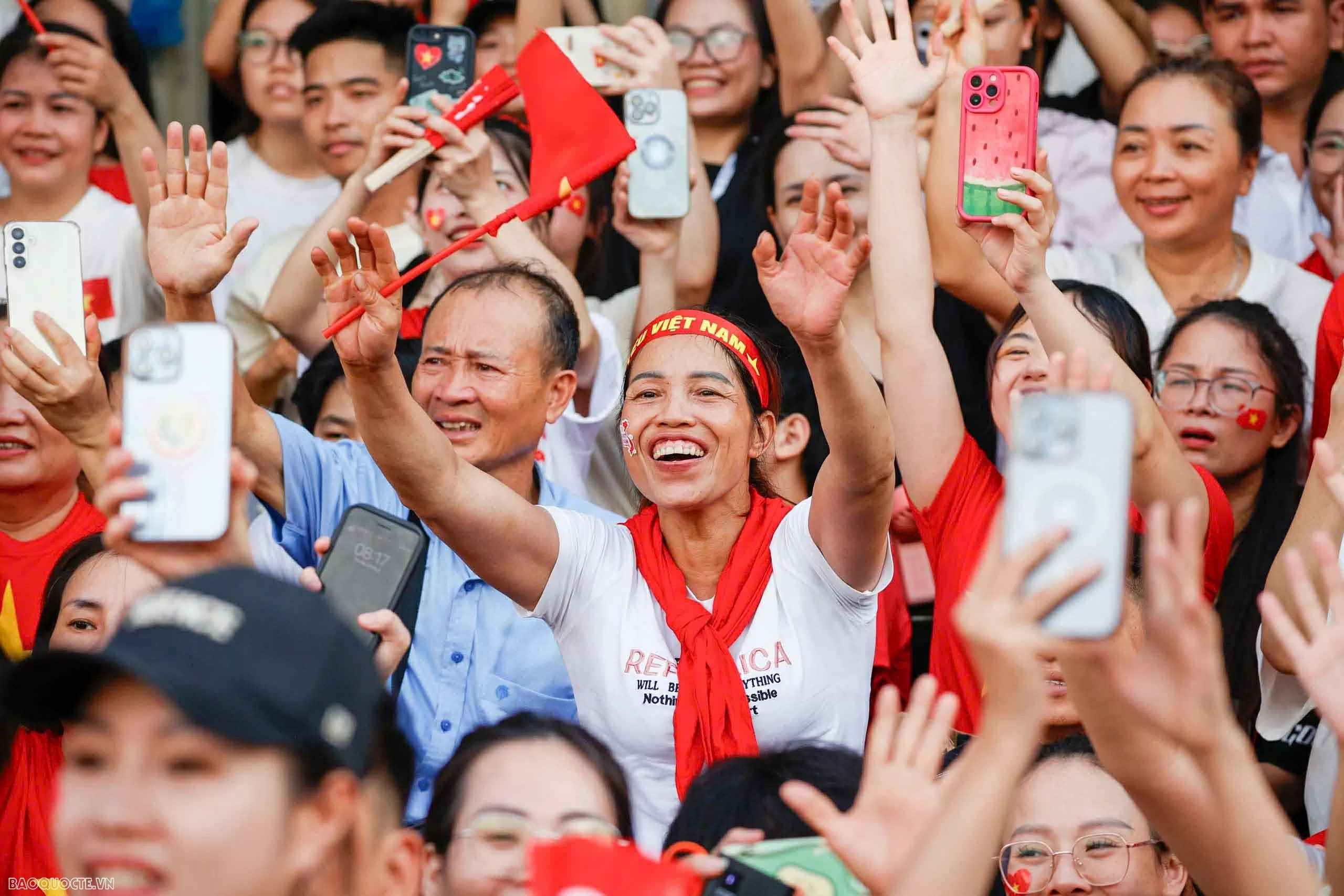 |
| After nearly 40 years of renovation, the living standards of the majority of Vietnamese people have significantly improved, with continuous improvements in key human-related indices. (Photo: Nguyen Hong) |
Thirdly, results in respecting, ensuring, and protecting human rights in specific areas.
Under the guidance and resolutions of the Party, and the State's legal policies, human rights in civil, political, economic, cultural, and social areas, as well as the rights of vulnerable social groups, have achieved significant outcomes across all civil, political, economic, social, and cultural fields. The protection of vulnerable groups' rights has been strengthened in the implementation of policies and laws.
For instance, in civil and political areas, thank to the right direction set in the Party's resolutions and documents on judicial rights, judicial activities in recent years have aimed to protect justice and human rights, respect, protect, and ensure human rights in judicial activities, achieving significant results such as “investigation, prosecution, trial, execution, arrest, detention, and rehabilitation being conducted more strictly, democratically, and fairly, reducing wrongful convictions and omissions of criminals, contributing to socio-economic development and international integration”.
In implementing economic, social, and cultural rights: Looking at the overall picture, after nearly 40 years of renovation, the living standards of the majority of Vietnamese people have significantly improved, with continuous improvements in key human-related indices such as the Human Development Index (HDI) (Vietnam currently scores 0.766, belonging to the high human development group), Gender Inequality Index (GII), average life expectancy, per capita income, happiness ranking index... Vietnam is also one of the countries that completed the United Nations Millennium Development Goals (MDGs) early. According to the United Nations' 2020 ranking on SDGs implementation, Vietnam ranks 51st out of 193 UN member countries, achieving higher results than many countries in the region.
Ensuring the rights of vulnerable social groups, such as women, children, the poor, the elderly, people with disabilities, ethnic minorities, and people with HIV/AIDS, always holds an important position in the implementation of the Party's perspectives, policies, and laws of the State.
Fourthly, promoting social awareness through human rights education.
In response to the Vienna Declaration and Programme of Action and the United Nations General Assembly Resolution on the Decade for Human Rights Education (1995 - 2004), the Party and State have directed all levels and sectors in the political system to synchronously implement human rights education and incorporate human rights content into the national education system's curriculum.
The Prime Minister issued Decision No. 1309/QĐ/TTg on September 5, 2017, approving the project to integrate human rights content into the national education system's curriculum; Directive No. 34/CT-TTg on December 21, 2021, on strengthening the implementation of the project to integrate human rights content into the national education system's curriculum. The goal is that by 2025, 100% of educational institutions in the national education system will organize human rights education.
Fifthly, Vietnam has proactively and actively participated in common activities for human rights and initially contributed to shaping mechanisms to promote and protect human rights in the region and the world.
With the Party's viewpoint of “proactively participating, actively contributing, enhancing Vietnam's role in building and shaping multilateral institutions and the international political-economic order, fully implementing international commitments and signed trade agreements”, Vietnam in recent years has not only strived to fulfill international commitments but also actively and proactively contributed significantly to promoting and protecting human rights in the region and the world. This is clearly demonstrated by the high level of trust and consensus votes in Vietnam's membership in the United Nations Human Rights Council and as a non-permanent member of the United Nations Security Council. Recently, Vietnam was re-elected as a member of the Human Rights Council for the 2026-2028 term. Vietnam has been actively participating effectively in the Council's activities and has introduced many initiatives to promote and protect human rights, such as participating in drafting the Council's resolutions on human rights and climate change; the resolution commemorating the 75th anniversary of the Universal Declaration of Human Rights and the 30th anniversary of the Vienna Declaration and Programme of Action in 1993...
Sixthly, some orientations on respecting, ensuring, and protecting human rights in the new development phase.
In the new development phase, implementing the Party's guidelines and perspectives identified at the 11th Party Congress as “people are the center of the development strategy and the subject of development” and the 13th Party Congress identified “people are the center and the subject of the renovation, construction, and protection of the Fatherland; all guidelines and policies must truly originate from the people's lives, aspirations, rights, and legitimate interests, taking the people's happiness and prosperity as the goal”. The Communist Party of Vietnam considers respecting, ensuring, and protecting human rights as crucial to building a socialist-oriented market economy; building a socialist rule of law state and a socialist democracy.
With the role, mission, and responsibility of the rule of law state to respect, ensure, and protect human rights, the 13th Central Committee of the Party, at the 6th Conference, passed Resolution No. 27-NQ/TW on November 9, 2022, on continuing to build and perfect the socialist rule of law state in the new phase, identifying the overall goal of upholding the Constitution and the law, effectively respecting, ensuring, and protecting human rights and citizens' rights, and the specific goal by 2030, to basically complete mechanisms ensuring the people's mastery, ensuring and protecting human rights and citizens' rights. These are important orientations, perspectives, and visions for recognizing, respecting, ensuring, and protecting human rights in the process of building and perfecting a truly people's socialist rule of law state, by the people and for the people in the new phase.


