


Counselor and writer Chu Thu Phuong: The soft bridge of cultural diplomacy
WVR - For Counselor and writer Chu Thu Phuong, translation and diplomacy are not just about conveying language; they are journeys of connecting people and cultures. From literary pages to diverse cultural exchange activities, she views each task as a way to build a soft bridge fostering understanding and trust between nations.
Latest
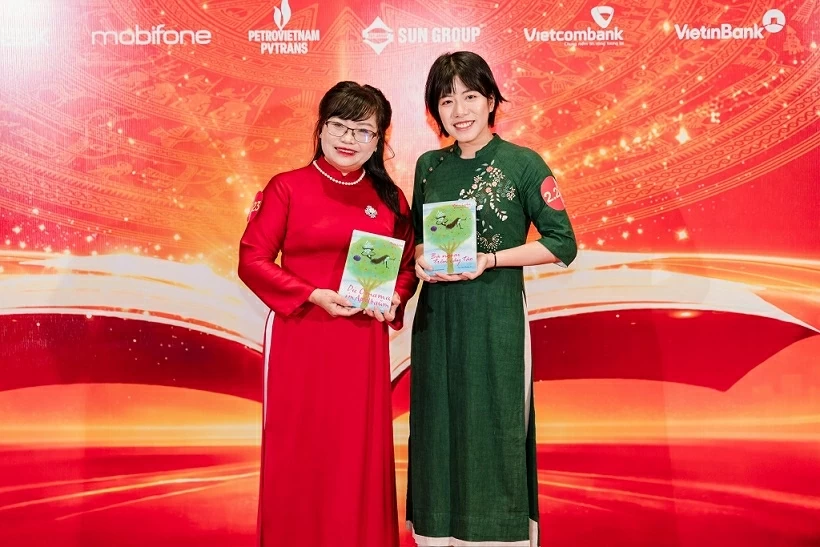 |
| Counselor and writer Chu Thu Phuong (left) receives the C Prize at the 8th National Book Awards 2025. |
What serendipity led translation to gradually become an important part of your career journey?
Translation can be understood as bringing people closer to one another, bringing two cultures closer together. Since childhood, I have lived between two cultures and have always wondered why there is a "gap" in perception and behavior with the world between the two sides.
For example, why is the German world precise to the minute, while Vietnamese people have a significant time flexibility in appointments? Why are Germans strict about the arrangement in their homes, while Vietnamese people often "temporarily place" an item somewhere? Is there a way to make both sides understand each other more easily?
Growing up between two cultures, I recognized the strengths and beauty of each culture and have always pondered how to convey to others the beauty of the other culture. Perhaps that was the first thing that made me want to connect the two cultures.
Later, whenever I lived and worked in another country, another culture, absorbing the beauty of those places, I silently carried a debt in my heart, which I later understood could only be eased when I translated a worthy work to help Vietnamese people better understand the people of that country.
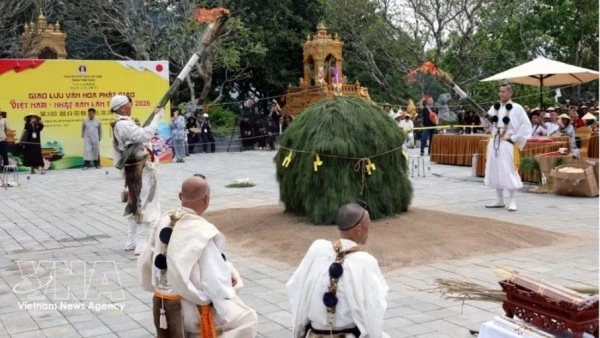
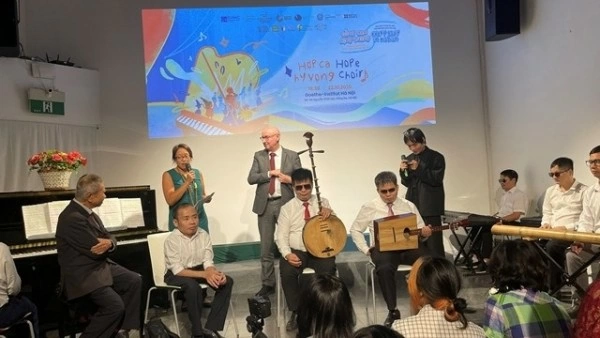
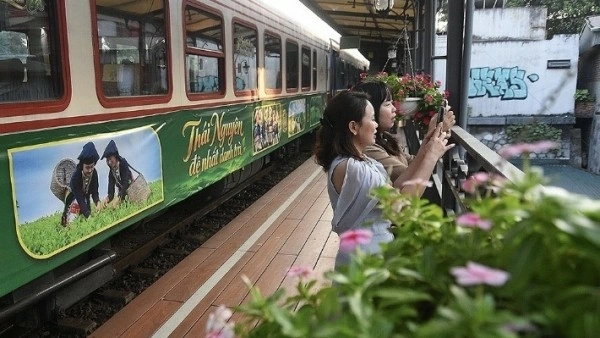
Similarly, I have always yearned to bring the beauty of Vietnam to international friends. For over 20 years, I have continuously introduced Vietnamese culture abroad, starting with traditional opera, folk songs, quan ho, hat van, to Vietnamese literature, information heritage, cultural heritage, and Vietnam's geoparks.
I hope international friends will see a Vietnam with thousands of years of civilization while sharing concerns about the world today.
As both a translator and a diplomat, how do you perceive the potential of literature in its role of connecting nations?
Translation and diplomacy share a common point, being the intersection of language, culture, and people. The role of the translator, like that of the diplomat, does not stop at conveying text from one language to another, but more profoundly, it is about conveying the spirit, emotions, and cultural layers hidden behind each word.
As a diplomat engaged in translation work, I am aware that I need to contribute to building bridges of understanding and trust between nations.
Literature is one of the pathways that opens the door to understanding and trust between people, different cultures, and different nations in the most gentle and effective way.
While political or economic diplomatic channels are formal, literature touches people's hearts with emotions, with very ordinary stories that reach universal human values such as love, pain, hope, or the aspiration for freedom.
A good literary work can help readers from a foreign culture understand and empathize with the spiritual life of another nation, thereby bringing mutual understanding, contributing to erasing prejudices and distances.
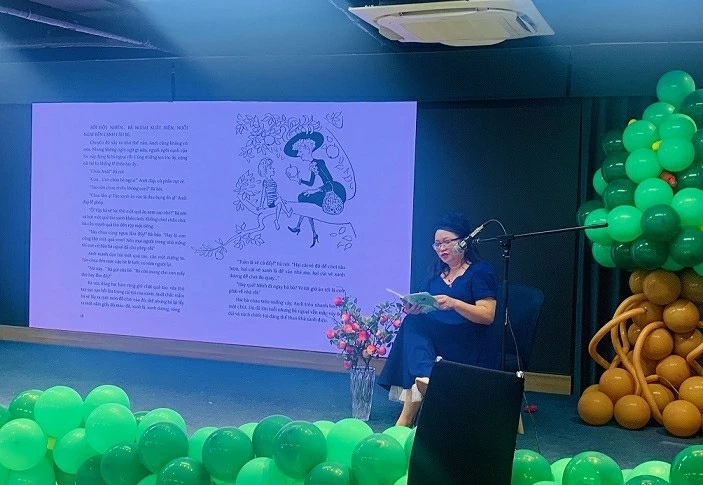 |
| Writer Chu Thu Phuong introduces books at Kim Dong Publishing House. (Photo: Le An) |
The potential of literature in increasing understanding and connecting nations is immense, especially in the era of globalization. To harness this important role of literature, translators need to select and introduce valuable works while ensuring honesty and subtlety in translation so that each work, when entering another culture, retains its soul and beauty.
In your opinion, what shifts are needed in translation and international publishing to bring Vietnamese literature closer to global readers, in response to Resolution No. 80-NQ/TW of the Politburo on developing Vietnamese culture?
Resolution No. 80 has set forth the policy to "Support/sponsor the translation and publication of Vietnamese literary, cultural, and artistic books abroad in multiple languages and facilitate the introduction of foreign language publications in Vietnam," showing that our Party and State have paid attention to translation and international publishing, recognizing the role of translation as a cultural bridge to bring Vietnam's cultural values to the world while absorbing the world's cultural quintessence into Vietnam, creating favorable conditions for the development of Vietnamese literary translation.
This is a step to create conditions and a framework for Vietnam's translation and international publishing to move from spontaneous steps to more proactive, coordinated steps, with a more strategic approach, and particularly, the need for a class of skilled translators.
In my opinion, we need to shift from the mindset of "translating whatever is available" to "selectively introducing." Currently, translating Vietnamese literature abroad is still serendipitous, dependent on the chance encounters of translators. Therefore, it is necessary to build a professional framework for authors and publishers to proactively introduce representative works that can touch universal values, with cooperation between creators, critics, and cultural-diplomatic agencies.
Additionally, strong investment is needed in the team of translators, who are not only proficient in foreign languages but also culturally knowledgeable and creative; encouraging collaboration with native translators to effectively "localize" the works.
International publishing also needs to shift from being passive to actively participating in the market through book fairs, partner networks, literary representatives, and digital platforms, to professionalize the buying and selling of copyrights and promoting authors.
Moreover, cultural diplomatic agencies play the role of "gateways" to bring Vietnamese literature to the world through exchange events. Finally, state support mechanisms such as translation funds, publishing funds, and awards are needed to create a "leverage" to help Vietnamese literature reach out and stand firm in the international market.
If literature is considered a component of "soft power," then international translation and publishing is a path for that power to spread. And that path needs to be built with a clear, sustainable national strategy combined with the dedication of each individual.
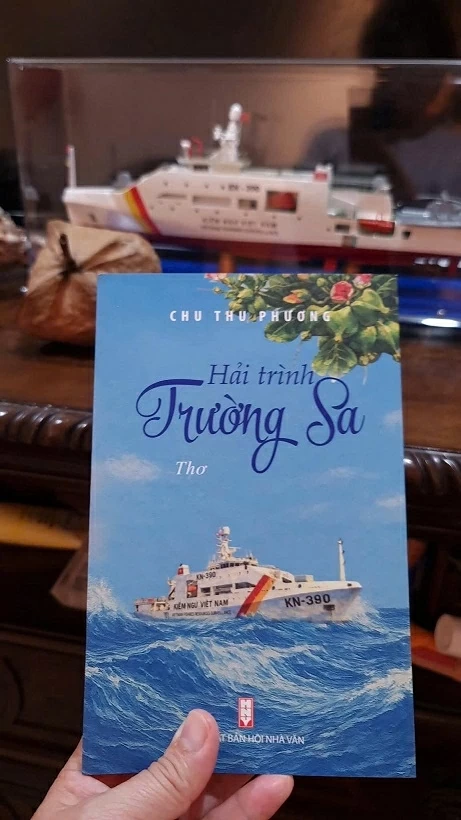 |
| The poetry work "Hai trinh Truong Sa" by Counselor and writer Chu Thu Phuong. |
Along with the success of your translated books, you recently released a special poetry book titled "Hai trinh Truong Sa"?
"Hai trinh Truong Sa" can be seen as a special milestone in my creative journey. The book is not just a collection of 30 poems written from a field trip, but also a multi-dimensional cultural space where poetry, music, painting, calligraphy, and collective memories coexist.
Through slices of island life from soldiers, engineers to fishermen, from emotions and knowledge about geology to plants and creatures at sea, I want the world to know that Vietnam's islands are lands with history, tradition, culture, and people living there, thereby asserting that this is a sovereign territory of the homeland.
From this passionate project, do you have any further plans in the publishing field?
Building on that foundation, I am continuing to nurture several publishing projects in the direction of storytelling for children and memoirs. I also hope to bring "Hai trinh Truong Sa" and subsequent projects to participate more in exchange activities and book introductions abroad, so that stories about Vietnam's islands are told in an emotionally rich and accessible language to international friends.
Along with the book, I hope to contribute to creating cultural bridges connecting readers in different parts of the world, aiming to spread the beauty, depth, and spirit of the Vietnamese people, especially the love and responsibility for the homeland's islands.
| Counselor and writer Chu Thu Phuong (pen names: Dan Phong Diep, Dinh Huong, Chu Thu Phuong), currently working at the Department of Foreign Affairs and Cultural Diplomacy (Ministry of Foreign Affairs). She is a member of the Vietnam Writers' Association, a member of the Hanoi Writers' Association, and a member of the Translation Literature Council of the Hanoi Writers' Association. Awards: C Prize at the 8th National Book Awards 2025; Encouragement Prize at the Art Festival and Songwriting Contest for Diplomacy celebrating the 80th anniversary of the Ministry of Foreign Affairs 1945-2025. |