







Ministry of Foreign Affairs: The vitality of digital diplomacy
WVR - The Ministry of Foreign Affairs is striving to transform itself within the nation's digital transformation flow, aiming to lay the foundation for enhancing the effectiveness of foreign affairs in the new era.
Latest
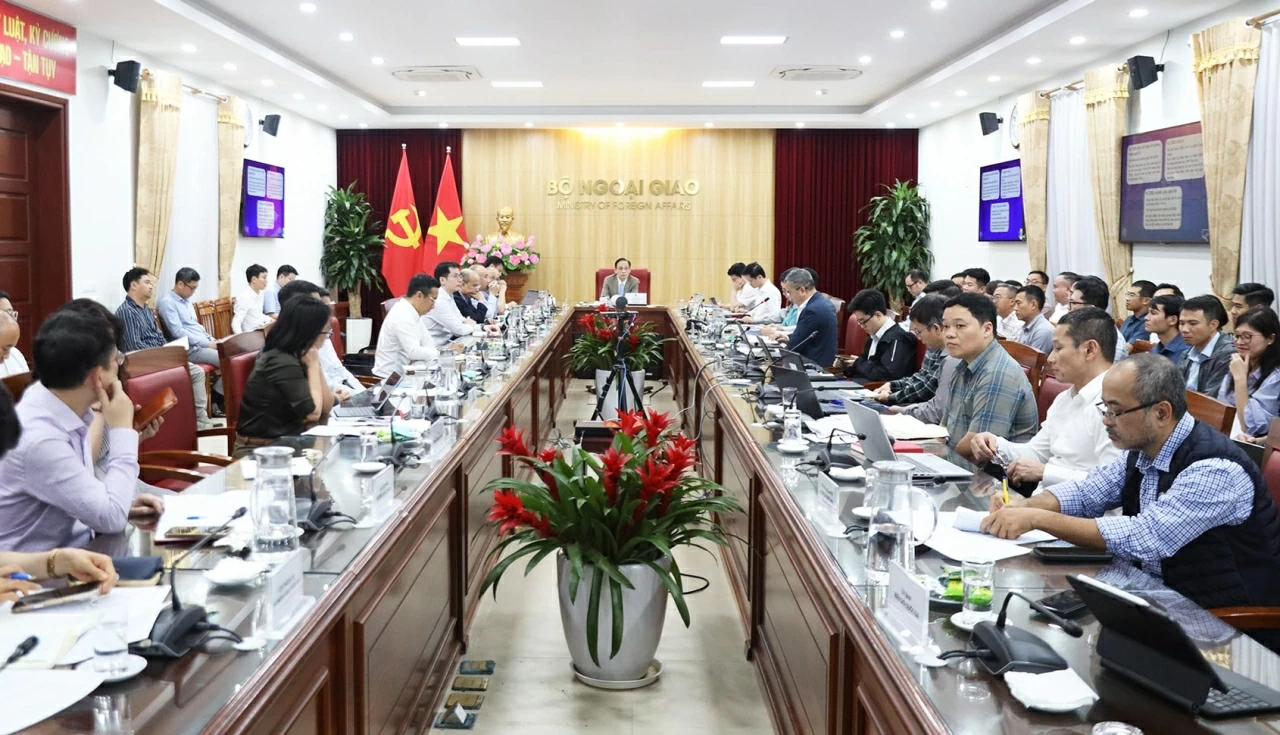 |
| The Ministry of Foreign Affairs synchronously implements digital transformation tasks across the sector. (Photo: Thanh Long) |
The Ministry of Foreign Affairs has set its vision for digital diplomacy by 2030 as building a modern digital diplomacy framework that operates efficiently and seamlessly from the central to local levels and Vietnamese representative agencies abroad. Data is considered the core asset, and digital technology is applied to enhance analytical and forecasting capabilities, serving the foreign policy in the nation's era of advancement.
Aiming to build a modern, professional digital diplomacy, under the decisive direction of the Ministry's leadership, digital transformation tasks have been synchronously implemented, closely following the government's policies and orientations on building a digital government, contributing to improving management efficiency and service quality for citizens and businesses.
Speaking at the conference introducing the Ministry of Foreign Affairs' digital architecture framework in January 2026, Minister Le Hoai Trung instructed the Ministry's units to unify their understanding and approach to digital transformation; strictly adhere to the digital architecture framework in all investment activities; prioritize building and exploiting shared data; promote digitization linked with business process restructuring; cautiously and controlledly apply new technologies, including artificial intelligence; enhance cybersecurity; focus on training digital human resources and prioritize financial resources for digital transformation.
Following these directives, digital transformation efforts have been seriously and synchronously implemented, with clear responsibilities assigned to each level and unit, achieving notable results.
The foundation gradually completes
In the first quarter of 2026, the digital transformation efforts of the Ministry of Foreign Affairs continued to be synchronously implemented across pillars including institutions, infrastructure, data, and applications, achieving many positive results.
The Department of Cryptography and Information Technology (CY-CNTT) has led the advisory process to develop and issue the 2026 digital transformation plan, clearly defining objectives, tasks, and implementation timelines across the Ministry. Additionally, the establishment of a Data Steering Committee reflects a strong shift in management thinking, gradually transitioning from isolated technology applications to data-driven management.
Information technology infrastructure continues to be upgraded towards centralization and synchronization. The quality of backbone and wireless networks has been improved to meet the increasing demand for data transmission. Essential information systems are maintained in stable operation, effectively serving command and management tasks.
Information security and safety measures have been enhanced, especially for systems handling confidential information, meeting the specific requirements of the foreign affairs sector. Additionally, the establishment of a Cybersecurity Subcommittee contributes to strengthening the capacity to protect information systems amidst robust digital transformation.
Notably, the digital platforms and information technology systems serving foreign affairs operations deployed by the CY-CNTT Department clearly reflect the transition from traditional working methods to a digital environment.
Specifically, the system for monitoring and supervising the implementation of foreign affairs tasks allows for real-time updates and progress monitoring, assisting leaders at all levels in command and management tasks. The module for monitoring the implementation of high-level commitments and agreements is integrated with the system for monitoring the implementation of Central resolutions, contributing to enhanced oversight efficiency.
The document management and administration system on the Internet for handling routine administrative tasks has also been deployed, creating flexible working conditions for officials and civil servants.
Overall, these systems have been designed for interoperability and integration, gradually forming a shared digital platform across the Ministry of Foreign Affairs, contributing to improved coordination efficiency and minimizing information dispersion.
More importantly, the vitality of digital transformation has spread throughout the Ministry of Foreign Affairs, reflected in the continuous efforts to build and complete specialized databases, considered the core element of digital transformation.
Specifically, the Consular Department has implemented online administrative procedures and developed related databases such as consular legalization, diplomatic passports, and official passports, contributing to improved service quality for citizens and businesses.
The Department of International Law has developed a database on international treaties and agreements, effectively serving research, advisory, and implementation of Vietnam's international commitments.
Meanwhile, the Department of Foreign Policy has implemented a module for monitoring and urging the implementation of high-level commitments on a digital platform, contributing to improved coordination and oversight efficiency.
Additionally, databases on foreign non-governmental organizations, foreign press and journalists, foreign affairs protocol, migration, etc., are being implemented, gradually completed and ready for connection and sharing.
In the coming time, the Ministry of Foreign Affairs will continue to implement two important tasks, including the model of part-time information technology officers at units and operating the confidential document management and operational information system on the intranet, aiming for comprehensive digital transformation, thereby enhancing the effectiveness of foreign affairs in the new era.
 |
| Delegates attend the conference introducing the Ministry of Foreign Affairs' digital architecture framework, January 13, 2026. (Photo: Nguyen Hong) |
Overcoming challenges
With the synchronous and effective implementation of operational systems and specialized databases, the Ministry of Foreign Affairs is gradually forming a digital ecosystem in the field of foreign affairs, laying the foundation for effective data connection, sharing, and exploitation, thereby better supporting the implementation of foreign affairs tasks.
However, alongside the achievements, there are still some challenges being addressed during implementation, such as limited financial resources, non-standardized data, and the need to enhance interconnectivity between systems. Additionally, implementing information technology projects under public investment regulations requires lengthy preparation time, affecting implementation progress. These challenges necessitate continued innovation in approach, increased coordination between units, and maximizing existing resources.
To overcome these challenges and effectively implement digital transformation, in the coming time, the Ministry of Foreign Affairs identifies the need to continue promoting digital transformation towards depth, with data as the center and work efficiency as the measure.
The key work orientations for 2026 will focus on five task groups:
First, accelerate the synchronized development of specialized databases, while completing the system for urging the implementation of high-level commitments on a digital platform.
Second, promptly issue the architecture framework and shared data dictionary to ensure seamless, integrated connectivity across systems.
Third, complete the connection of the administrative procedure resolution information system with the National Public Service Portal, implementing the roadmap for infrastructure transition to the National Data Center;
Fourth, ensure information security.
Fifth, enhance the Digital Transformation Index, closely linking digital transformation with administrative reform.
It is evident that digital transformation is a central, continuous task. With the achievements made so far, along with high political determination and the synchronized involvement of units, the digital transformation efforts of the Ministry of Foreign Affairs are expected to continue to be strengthened, achieve new breakthroughs, and create significant changes, contributing to enhancing state management capacity in foreign affairs, improving advisory and management effectiveness, and meeting the increasingly deep international integration requirements of the country.


