



Ambassador Do Hung Viet highlights Vietnam's contributions at 11th NPT Review Conference
WVR - Although the final document was not adopted, the 11th NPT Review Conference reaffirmed the foundational commitments of the Treaty, paving the way for dialogue efforts and nuclear risk control in the future, according to Ambassador Do Hung Viet.
Latest
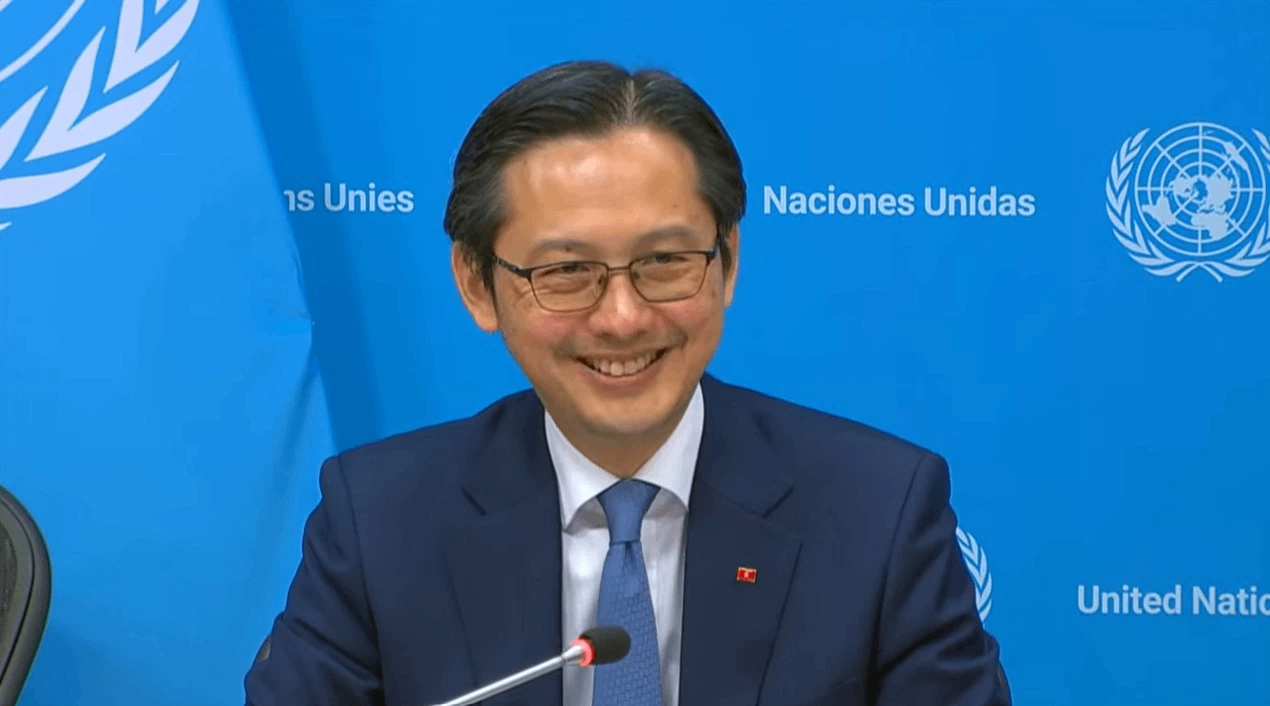 |
| Ambassador Do Hung Viet, Head of the Permanent Mission of Vietnam to the United Nations, shares the results of the 11th NPT Review Conference. (Source: Permanent Mission of Vietnam to the United Nations) |
On June 4, in an interview with The World & Vietnam Report, Ambassador Do Hung Viet, Head of the Permanent Mission of Vietnam to the United Nations, shared his assessments of the Conference's outcomes, Vietnam's coordinating role, and the mark of Vietnam's multilateral diplomacy in one of the most complex international negotiation processes today.
Mr. Ambassador, taking on the role of President of the 11th Review Conference of the Treaty on the Non-Proliferation of Nuclear Weapons (NPT) is a significant and challenging responsibility. Looking back at the preparation and participation in the Conference, could you share your assessment of the results of this Conference?
To fully and accurately assess the results of the Conference, perhaps we need to place it in the overall context of the highly complex global and regional situation. In reality, we are witnessing increasing geopolitical competition, as well as growing friction among major powers. An arms race is underway as defense budgets over the past decade have continuously reached record levels, including investments in nuclear forces, both in terms of quality upgrades and increased warhead numbers.
We are also witnessing at least two hot conflicts with the direct involvement of two of the current nuclear powers. At the same time, international law, multilateralism, and the spirit of multilateral cooperation are showing signs of erosion. All these factors made the overall context of the Conference, from the outset, extremely challenging.
In such a context, the fact that the Conference concluded without adopting a final document is perhaps not surprising. It is regrettable, but not unexpected.
I say this because the Conference is a periodic activity aimed at reviewing the implementation of the NPT over the previous five years. With such a nature, this Conference achieved its set objectives: deeply analyzing and evaluating the implementation of the Treaty's provisions over the past five years; identifying the common goal of maintaining the effectiveness and vitality of the NPT; and recognizing many points of consensus among nations, particularly the strong commitment to continue implementing the Treaty in the future.
The process of negotiating the draft document was also conducted transparently and inclusively, with the broad participation of all member countries. Through this, the parties engaged in substantive and constructive exchanges and sought compromise solutions acceptable to all parties.
From that perspective, although the final document was not adopted due to disagreement on a specific issue, I believe the Conference achieved positive results and created a favorable foundation for the international community and member states to continue implementation efforts in the future.
The Conference took place in a complex international context, with many conflicts and disagreements. Could you share more about the moments inside the closed sessions, where countries, including those in intense conflict, demonstrated cooperation and trust in Vietnam's leadership? What advantages or challenges did the Vietnamese delegation face in coordinating and balancing differences among countries?
Throughout the Conference, we clearly felt the trust that countries placed in Vietnam, as well as the positive spirit of cooperation and coordination with Vietnam.
This trust stems first from the respect that countries have for Vietnam, a nation with a heroic history, victorious in the struggle for national liberation, and successful in its renewal and development efforts to achieve significant accomplishments today.
It is trust in Vietnam's independent, self-reliant, multilateral, and diversified foreign policy; always maintaining principles but being flexible and balanced in conduct.
It is also trust in our ability to implement diplomatic activities, engage in frank, constructive, and substantive exchanges, and act as a bridge to resolve differences.
We are truly pleased and proud to receive this trust from countries. This is a significant advantage when Vietnam assumes the position of President of the Conference. This trust allowed us to engage in frank exchanges with all countries and groups, especially on deep-seated differences; conduct "shuttle diplomacy" to seek solutions or support the organization of direct exchanges.
However, we also faced significant challenges, the greatest being the particularly difficult international context I mentioned. Additionally, we have certain limitations in resources and experience in this specific field.
Previously, we have chaired many multilateral activities, but in the field of security related to the strategic and vital interests of countries, especially major powers, this is the first time we have participated in managing such a large-scale process. We have made every effort to study, both fundamentally and practically, to meet the requirements and earn the respect and trust of the international community throughout the Conference.
At the closing session of the Conference, some countries stated they could accept the draft document proposed by the President earlier, but felt the Conference lacked the political will to reach consensus. From the perspective of someone directly chairing the Conference, how do you assess this outcome? Were there other scenarios or risks considered at the Conference?
Indeed, in statements and direct exchanges with me as the Conference President, countries expressed their readiness and willingness to accept the final draft of the document this time. Of course, not all countries were satisfied with the draft content, but generally, countries could accept it.
However, the final obstacle was directly related to two parties in an ongoing conflict, and it can be said that this difference was irreconcilable. Despite nearly 20 contacts, lobbying, and "shuttle diplomacy" between delegations on the last day of the Conference to seek a solution, unfortunately, the two sides could not narrow their differences, leading to the Conference's inability to reach consensus to adopt the document.
During this process, several scenarios were considered. One scenario was for the President to present the draft document while knowing for sure that side A would not accept it. The second scenario was to present the draft document while knowing for sure that side B would not accept it.
In both cases, if we presented the document for one of the two sides to officially voice opposition, it would certainly create deep divisions. The closing session of the Conference could then become a forum for mutual criticism, increasing confrontation between countries.
Therefore, we chose not to present the draft document to force countries to declare a breakdown in consensus. Instead, we proactively announced that the Conference did not reach consensus to adopt the document.
This approach was highly appreciated by countries as it demonstrated composure and balance in handling differences. At the same time, it helped maintain the atmosphere of dialogue, construction, and cooperation established throughout the four weeks of the Conference, avoiding a tense or confrontational closing session.
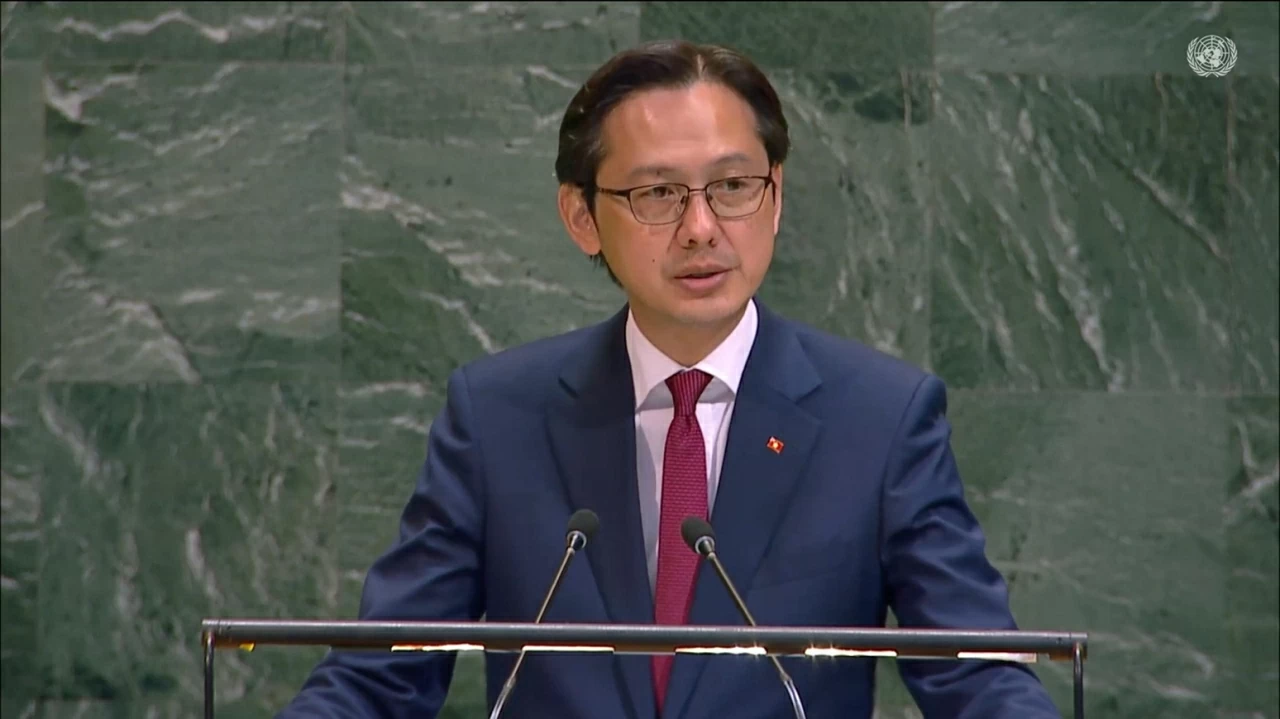 |
| Ambassador Do Hung Viet assesses that the success of the NPT Conference lies not only in the content outcomes but also in maintaining dialogue and cooperation among nations amid many differences. (Source: Permanent Mission of Vietnam to the United Nations) |
The NPT Review Conference is an intensive diplomatic activity that took place over nearly a month. Could you share the achievements and content that received consensus from countries throughout the negotiation process? What will be the foundation for the next NPT Review cycle, expected in 2031?
After four weeks of the Conference in New York City, along with many months of preparation beforehand, this Conference achieved several specific results in both content and process.
In terms of content, the most important thing is that all member states of the Treaty reaffirmed that the commitments made at the 1995, 2000, and 2010 Review Conferences remain important and valid. This is a very important foundation for implementing the next steps.
The second point is that nuclear-armed states have affirmed their readiness to engage in direct dialogue with each other to reduce tensions, build trust, create stability in relations, and move towards discussions on nuclear arms control. This can be considered a very important step forward, with the potential to significantly contribute to reducing tensions among major powers today.
The third result is that nuclear-armed states reached consensus on discussing and implementing measures to mitigate nuclear risks. In the context of existing tensions between countries, this is an important measure to enhance trust and limit risks arising from miscalculations or inaccurate information during operations, thereby reducing the risk of nuclear weapons being used.
Parties can conduct direct dialogues between military forces or establish mechanisms to ensure that nuclear weapons are not aimed at each other's targets. These are very specific measures that nuclear-armed states have affirmed they will implement in the near future.
The final point is that nuclear-armed states have essentially agreed to report on their nuclear policies at the next Review Conference.
This will be an opportunity for non-nuclear-armed states to gain more comprehensive access to doctrines, policies, and the readiness levels of nuclear forces, thereby reinforcing trust that nations are restraining and limiting the use of nuclear weapons and preventing nuclear war, which could have extremely serious humanitarian consequences for each nation and the international community.
In terms of process, as the Conference President, we implemented many innovative measures in organizing the event. Notably, we developed a reasonable work program, minimizing parallel meetings to allow all delegations, large or small, to fully participate in the Conference's activities.
We also developed a specific roadmap and adhered to it. For example, the draft document was introduced very early, in the second week of the Conference, instead of waiting until the final week as was customary before. Subsequently, draft versions were continuously updated and adjusted based on negotiation results among countries.
I am very pleased that we fulfilled our commitments according to the proposed roadmap, helping countries be more proactive in planning, negotiating, seeking opinions from their capitals, and participating in the Conference most effectively.
These are very important improvements in this process. I hope these innovations will continue to be applied to further enhance the effectiveness of future Review Conferences.
How have international friends and partners evaluated Vietnam's role as President? Could you share more about the atmosphere at the closing of the Conference at the United Nations?
I must say that we were quite surprised by the positive atmosphere at the closing session of the Conference, even though the Conference did not adopt a final document.
I was truly delighted and moved when, at the end of the Conference, countries gave us prolonged applause. Many delegations lined up to congratulate and thank Vietnam, as the Conference President, for conducting the Conference professionally, effectively, impartially, fairly, with composure, and maintaining principles.
This is a great joy for us, those directly involved in managing the Conference. In discussions, many countries particularly appreciated Vietnam's principled stance, independent spirit, composure; consistency in handling remaining differences; and creative approaches to proposing compromise solutions acceptable to all parties.
With this approach, we contributed to maintaining a positive, constructive, dialogue, and cooperative atmosphere, rather than allowing the Conference to fall into division or confrontation. Countries highly appreciated these efforts by Vietnam.
Finally, through this responsibility, what mark do you think Vietnam in general and Vietnam's multilateral diplomacy, in particular, have left on the international community?
I believe that through this Conference, along with the success of a series of important foreign activities implemented recently, we have demonstrated the new position of Vietnam's diplomacy, especially multilateral diplomacy.
It is a professional, principled, flexible diplomacy in conduct, with sufficient capacity to act as a bridge in addressing major strategic differences among nations.
We have also clearly demonstrated our ability to seek solutions to resolve major differences, thereby creating a positive atmosphere with a spirit of dialogue and cooperation among nations.
In the context of the highly complex global situation and the current difficulties in multilateral cooperation, this may be a small but meaningful contribution by Vietnam to the international community.
We hope to continue to build on the achievements to contribute even more in the future. This also requires diplomats like us to continue researching, learning, and honing our skills to better promote Vietnam's role in the next phase.