



Building corporate culture in sustainable development strategy
WVR - Corporate culture is increasingly recognized as an intrinsic resource that shapes management capabilities, innovation, and competitiveness for Vietnamese enterprises. The challenge is to integrate cultural values into practical activities, aligning with business efficiency, social responsibility, and sustainable development goals.
Latest
On October 13 in Hanoi, Bao Van Hoa (under the Ministry of Culture, Sports and Tourism) collaborated with related units to organize the Vietnam Corporate Culture Forum 2026, themed “Corporate Culture – An Intrinsic Resource for Sustainable Development”.
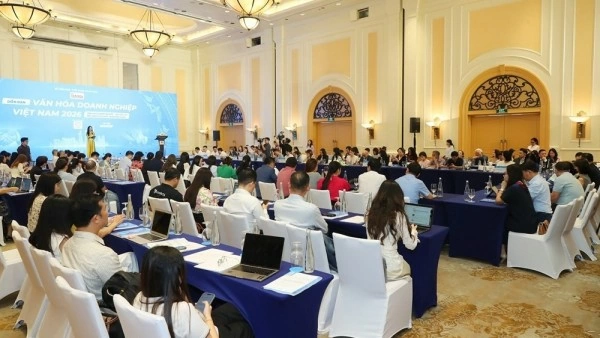
Coinciding with Vietnam Entrepreneurs' Day (October 13) and leading up to Vietnam Culture Day (November 24), the event attracted around 300 delegates, focusing discussions on the necessity of transforming culture from declared values into operational capacity, innovation, and real value creation.
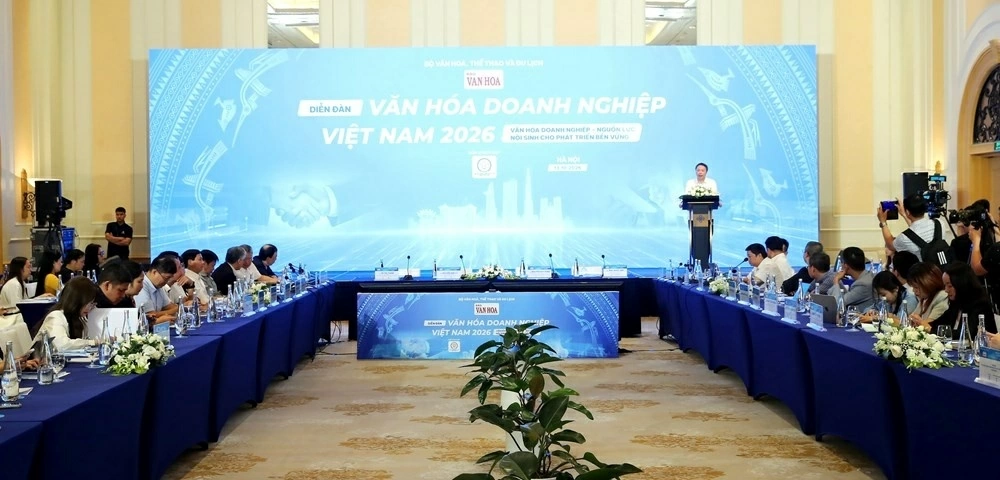 |
| Overview of the forum. (Photo: Tran Huan) |
At the forum, two discussion sessions titled “Corporate Culture in the New Era of Development” and “Building Corporate Culture in the New Era and Digital Transformation” provided direct insights into a pressing concern for the business community: How to transform culture from declared values into a true capability of enterprises.
The sessions were chaired and moderated by Nguyen Huy Dung, Alternate Member of the Party Central Committee and Deputy Minister of Culture, Sports and Tourism; Nguyen Anh Vu, Editor-in-Chief of Bao Van Hoa; Mac Quoc Anh, Vice Chairman and General Secretary of the Hanoi Small and Medium Enterprises Association; and Dr. Vo Tri Thanh, Director of the Institute for Brand and Competitiveness Strategy.
Establishing identity, building a suitable value system
In his opening speech, Deputy Minister of Culture, Sports and Tourism Nguyen Huy Dung reiterated the message from General Secretary and President To Lam at the National Conference on the implementation of Resolution No. 79-NQ/TW and Resolution No. 80-NQ/TW of the Politburo: “If the economy determines the ability to move quickly, then culture determines the ability to go far.” According to the Deputy Minister, culture holds significant importance for the rapid and sustainable development of both enterprises and the economy.
Deputy Minister Nguyen Huy Dung proposed eight values: Integrity, rule of law, trustworthiness; creating real value for customers; respecting and developing people; innovation, learning, adaptability; responsible use of data and AI; exemplary leadership; preserving Vietnamese identity; linking development with community responsibility.
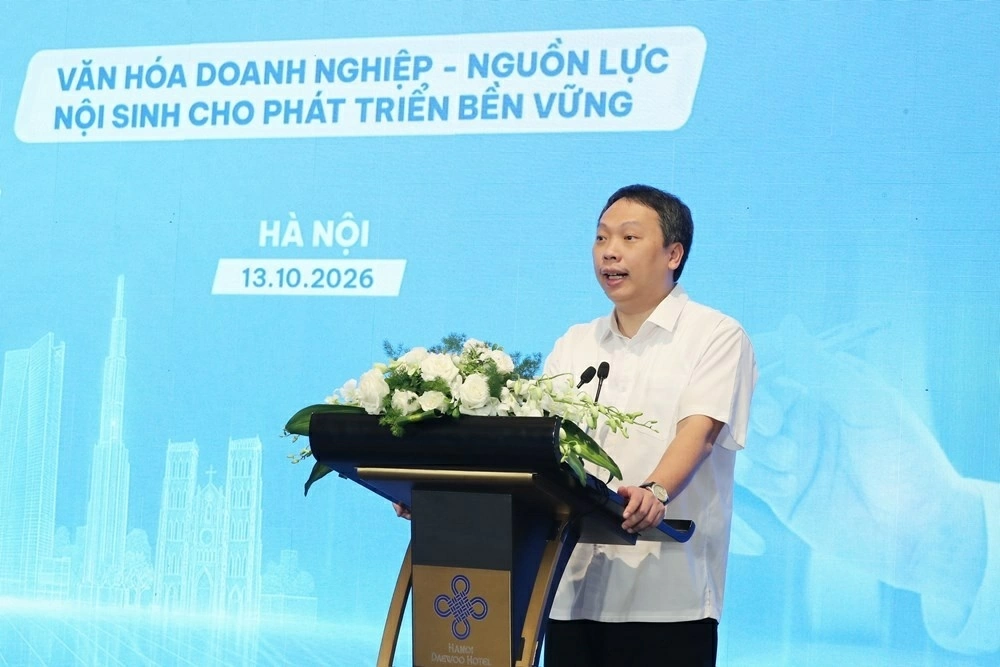 |
| Alternate Member of the Party Central Committee and Deputy Minister of Culture, Sports and Tourism Nguyen Huy Dung delivering the opening speech at the forum. (Photo: Tran Huan) |
These values need to be tested through behavior: Upholding principles over immediate benefits, ensuring product quality, fulfilling commitments, and taking responsibility when issues arise. Customer service culture is also reflected in how feedback is received and complaints are handled.
The Deputy Minister emphasized that leaders must set an example, keep their word, take responsibility, and accept criticism. If leaders act contrary to declared values, it is difficult to build trust; business aspirations should also be linked with community and national responsibilities.
Dr. Tran Dinh Thien, former Director of the Vietnam Institute of Economics, believes that building corporate culture requires answering three questions: “Who are we?”, “What era are we in?”, and “Who do we want to become?”. According to him, Vietnam's economic culture possesses qualities such as self-reliance, resilience, diligence, flexibility, and resourcefulness; however, parochial mindset, narrow vision, laxity, and short-term thinking can be obstacles. Enterprises need to promote suitable values and address limitations.
Dr. Tran Dinh Thien proposed a corporate value system based on three pillars: entrepreneurial spirit and patriotism as orientation; free and equal competition as guiding principles; and national cultural essence as the foundation. Enterprises need to have courage, intelligence, a global vision, and self-reliance, while being ready for international competition. This requires a transparent business environment, clear establishment of property rights, corporate rights, and labor rights, as well as encouraging dialogue and criticism.
Integrating culture into management and innovation
Addressing the issue of resources determining the long-term strength of enterprises, Nguyen Anh Vu, Editor-in-Chief of Bao Van Hoa, affirmed that capital, technology, human resources, market, and business models are all important, but culture directly influences how actions are organized, crises are overcome, and development is achieved. “Trust is also capital; reputation is also an asset; ethics also create economic value,” he emphasized.
A study by the Enterprise Development Institute under VCCI and Blue C, published at the end of 2025, showed that among a sample of 505 enterprises, the average corporate culture maturity score was 43.84, equivalent to level 4/6, an increase of 4.12 points compared to 2024. About 48.51% of enterprises reached level 4 or higher, and 27.9% achieved the top two levels, indicating that the gap between awareness and practice still needs to be bridged.
In 2025, nearly 297,500 enterprises were newly established or resumed operations, while 227,200 enterprises exited the market. Despite being affected by various factors, adaptability, resource coordination, and maintaining trust remain aspects of management culture that can have an impact.
Addressing this topic, Ho Anh Tuan, Chairman of the Vietnam Corporate Culture Development Association, also stated that a contract can be signed due to the ability to present an offer, but for customers to return, enterprises must prove quality and reliability. Technology can be purchased, but its effective use depends on coordination discipline, a learning spirit, and innovation capacity.
According to Ho Anh Tuan, culture transforms into competitive capability through four mechanisms: reducing costs due to lack of trust; enhancing coordination quality; increasing learning and innovation capacity; creating valuable differentiation. To achieve this, enterprises need to connect declared values with standards, management mechanisms, and daily behavior; authority must come with responsibility; contributions should be recognized; mistakes must be fairly addressed, focusing on rectification rather than merely finding fault.
Dr. Chu Duc Hoang, Chief of Office of the National Technology Innovation Fund, Ministry of Science and Technology, also suggested viewing innovation culture through five elements: leadership commitment; learning and proposal capacity of people; management processes; responsible experimentation; open connections with partners. These elements need to appear in daily work, not just in introductory documents or internal communication campaigns.
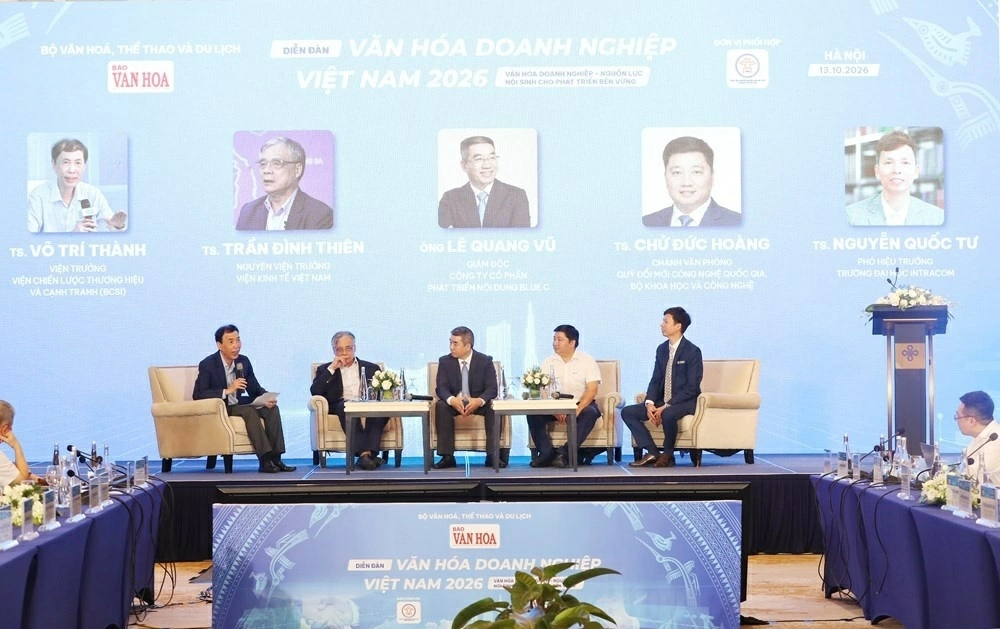 |
| Delegates discussing at the event. (Photo: Tran Huan) |
Dr. Chu Duc Hoang noted that when applying artificial intelligence, enterprises need to determine who is trained, who checks the results, what data is allowed to be used, and the responsibility when errors occur. He proposed five action groups: Do it, try it, fund it, network it, and spread it; each initiative needs a person in charge, resources, and a measure of results.
Measuring effectiveness through substantial changes
The Vietnam Corporate Culture Forum 2026 opens a more substantial approach to corporate culture. Accordingly, the value of culture is recognized through how enterprises act, how people work together, how products are created, promises are fulfilled, and responsibilities are assumed. This is also the foundation for cultural values to be transformed into economic strength and long-term competitive capability for Vietnamese enterprises.
In his closing remarks, Mac Quoc Anh, Vice Chairman and General Secretary of the Hanoi Small and Medium Enterprises Association, emphasized that the value of the Forum should be continued with specific actions within each enterprise and business environment.
He suggested that each enterprise choose a cultural issue directly affecting operations, such as customer service quality, internal coordination, transparency, or work environment; and identify who is responsible, deadlines, and how to evaluate results.
For small and medium enterprises, simple rules, suitable to resources but consistently implemented, can create change. Associations and training institutions need to support practice, provide advice, and share experiences; management agencies should improve the transparent environment, and the press should analyze effective models.
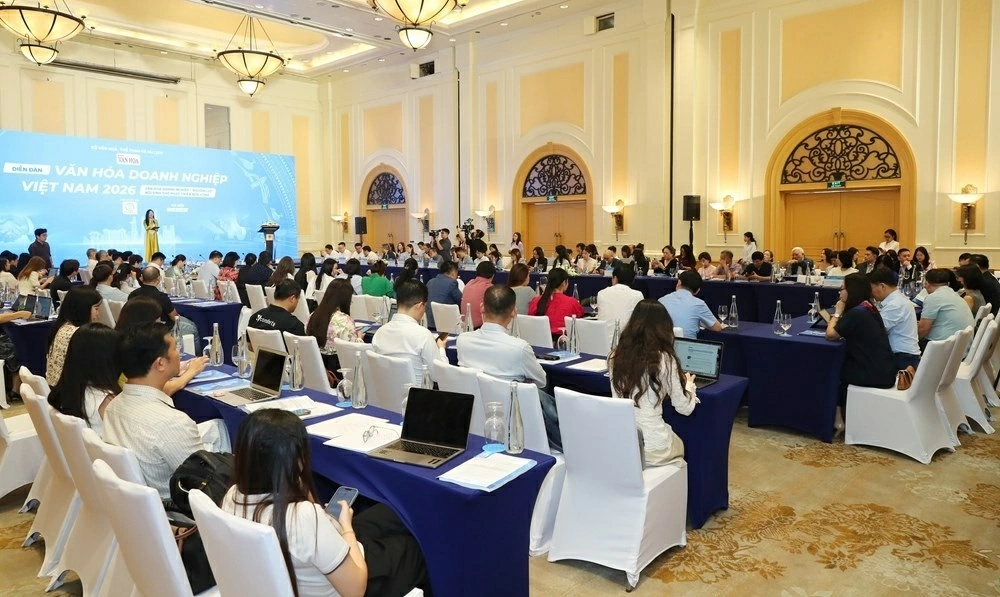 |
| The forum attracted around 300 delegates, including representatives from state management agencies, business associations, economic experts, researchers, media leaders, entrepreneurs, enterprises, and representatives from educational and training institutions. (Photo: Tran Huan) |
Within the framework of the Forum, Bao Van Hoa and Intracom University signed a Memorandum of Understanding for cooperation from 2026 to 2031, aiming to establish a comprehensive, sustainable relationship, maximizing the strengths of both units. Through this agreement, both parties commit to building a comprehensive partnership, maximizing each other's potential and strengths.
The cooperation focuses on promoting scientific research, boosting digital transformation, and developing modern multimedia communication products. Additionally, the two units will coordinate in organizing cultural-educational seminars and events, while implementing training, career orientation, and internship programs to create practical job opportunities for students.