




Vietnam’s position after 40 years of Doi Moi (Part I): From opening up, integration to building development foundations
WVR - Four decades of Doi Moi (Renewal), from 1986-2026, have enabled Vietnam to unlock resources, expand integration space, and elevate its international standing. The new phase requires transforming these achievements into institutional, enterprise, human resource, and adaptive capacity foundations for more proactive development.
Latest
I grew up in the South Central Coast, studied at university in Hanoi, worked in Ho Chi Minh City, pursued postgraduate studies in the United States, and conducted research in Germany. These experiences have allowed me to view Vietnam's Doi Moi journey not only through economic indicators but also through the perspectives of its people, businesses, and the country's position relative to other economies.
 |
| Nguyen Phuong Quynh - author of the article. (Photo: Courtesy by author) |
During business surveys in early 2026 in Hanoi, Da Nang, Hai Phong, and other localities, I noticed a significant increase in the number of foreign tourists, experts, and investors.
This demonstrates that Vietnam is increasingly becoming an attractive destination in the eyes of tourists, entrepreneurs, and international experts. This is the accumulated result of a long process of opening up, integrating, and creating new development opportunities.
Doi Moi measured by quality of life
When the Doi Moi initiative was launched in 1986, Vietnam faced a significant challenge: to liberate an economy in difficulty, remove barriers from a centrally planned mechanism, and overcome the prolonged consequences of war.
After four decades, Vietnam has risen from one of the poorest countries in the world to a middle-income economy. According to World Bank (WB) data, the per capita Gross Domestic Product (GDP) increased from under 700 USD in 1986 to over 5,000 USD in 2025. More importantly, tens of millions of people have gained more opportunities for education, employment, and improved quality of life.
As a lecturer, I clearly perceive this change through generations of students. For many young people born after 2000, studying with international curricula, participating in exchange programs, interning at multinational corporations, working in a global environment, or starting businesses on digital platforms have become very natural choices.
Perhaps, this is the most profound achievement of Doi Moi. Doi Moi not only changes economic indicators but also broadens the “opportunity space” for people, businesses, and the entire economy to choose, connect, and develop.
Opening markets, upgrading capabilities
While Doi Moi helped unlock domestic resources, diplomacy and international integration have expanded the space for these resources to develop. Over nearly four decades, Vietnam has gradually built an extensive network of foreign relations with 195 countries and 42 partners at various levels of cooperation, from comprehensive partners to comprehensive strategic partners.
| 40 years of Doi Moi have transformed Vietnam from a closed economy into one of the most open economies in the world. This journey has helped the country unlock resources and integrate to expand development space. |
Alongside this is the process of deep economic integration, from joining the World Trade Organization (WTO) in 2007 to participating in 17 Free Trade Agreements (FTAs). According to the Organization for Economic Cooperation and Development (OECD), these FTAs cover 53 countries, equivalent to about 87% of global GDP.
More importantly, integration has changed how Vietnamese businesses participate in the global economy. Previously, advantages primarily came from labour costs and market access, but new-generation FTAs set higher requirements for rules of origin, traceability, environmental standards, data governance, and transparency.
In advising businesses, I have observed that many face challenges in meeting these new standards. New-generation FTAs, therefore, are both a foreign commitment and a pressure to reform the capabilities of domestic businesses.
 |
| After four decades, Vietnam has risen from one of the poorest countries in the world to a middle-income economy. (Source: Nhan dan) |
Building foundations for a new phase
The results achieved in the first half of 2026 have proven that Vietnam's economy still maintains positive growth momentum. According to the General Statistics Office (Ministry of Finance), GDP in the first half of 2026 increased by 8.18% compared to the same period last year, 0.55 percentage points higher than the first half of 2025.
Merchandise export turnover reached 266.52 billion USD, up 21%; registered foreign direct investment (FDI) capital reached 34.65 billion USD, up 61%, while implemented FDI was estimated at 13.03 billion USD, up 11.2%.
However, the gap between registered and implemented FDI, faster import growth than export, resulting in a trade deficit of 16.65 billion USD, along with a bank credit ratio of about 155% of GDP according to Fitch Ratings, indicates that the growth model primarily based on investment capital, low-cost labor, and credit expansion is approaching its limits, requiring new, higher-quality, and more sustainable development drivers.
In this context, in July 2026, the Central Committee of the Communist Party issued Resolution 19-NQ/TW on renewing Vietnam's development model, marking an important shift in development thinking: Placing people at the centre, promoting innovation, sustainable development, and transitioning from management thinking to creative thinking, leading development.
In my opinion, to realize this goal, Vietnam needs to simultaneously strengthen three core foundations.
First is a predictable institution. In working with businesses, I have noticed that many investment opportunities are not missed due to a lack of capital or ideas, but because of the uncertainty of the implementation environment. Businesses need to know which regulations will be applied, how long the processing of documents will take, and whether policies will be implemented consistently. Therefore, the quality of reform is measured not only by the number of procedures reduced but also by the predictability and effectiveness of institutional implementation.
The second foundation is the private economic sector and capital market. After four decades of Doi Moi, private enterprises have become the most important endogenous driver of the economy. FTSE Russell's upgrade of Vietnam's stock market to Secondary Emerging Market is a positive milestone in the financial integration process.
However, more important is building a transparent, efficient capital market capable of allocating long-term resources for innovation, helping Vietnamese businesses not only grow in size but also move up to higher value-added stages in the global value chain.
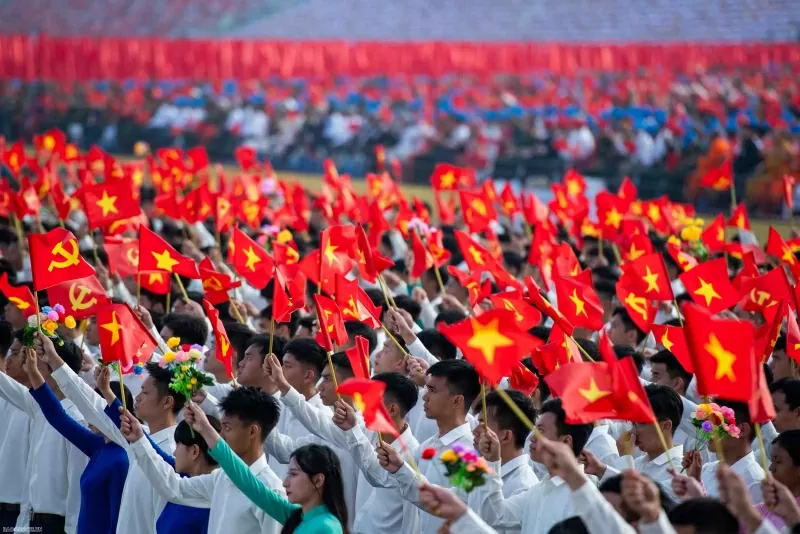 |
| Vietnam's advantage lies not only in its ability to attract capital but also in its ability to connect and mobilize intellectual capital from the global Vietnamese community. (Photo: Nguyen Hong) |
Human resources and intellectual capital are the third decisive foundation. According to the WB, Vietnam's Human Capital Index (HCI) is among the highest in lower-middle-income countries. This is an important advantage as the global economy shifts from competition based on low costs to competition based on knowledge and innovation.
In international cooperation, I have had the opportunity to exchange with many experts, scientists, and Vietnamese lecturers working in the United States, Germany, New Zealand, Australia, and many other countries. What I have observed is that most are eager to contribute to Vietnam, even if they do not necessarily return to work long-term. They are willing to participate in joint research, transfer knowledge, train human resources, or connect international academic networks if there is an open and reliable mechanism.
This proves that Vietnam's advantage lies not only in its ability to attract capital but also in its ability to connect and mobilize intellectual capital from the global Vietnamese community.
40 years of Doi Moi have transformed Vietnam from a closed economy into one of the most open economies in the world. This journey has helped the country unlock resources; integration has expanded development space; the next phase requires building capabilities to seize the opportunities that integration brings. This is both a condition for Vietnam to overcome the middle-income trap and a foundation to realize the aspiration of becoming a developed nation by 2045.


