




AFF 2026: Building an ASEAN where SMEs can thrive
AFF 2026 needs to become a forum not only to discuss the future of ASEAN but to affirm a commitment to action: Building an ASEAN that is closer to the people, closer to businesses, and more practical; an ASEAN where small and medium enterprises can thrive...
Latest
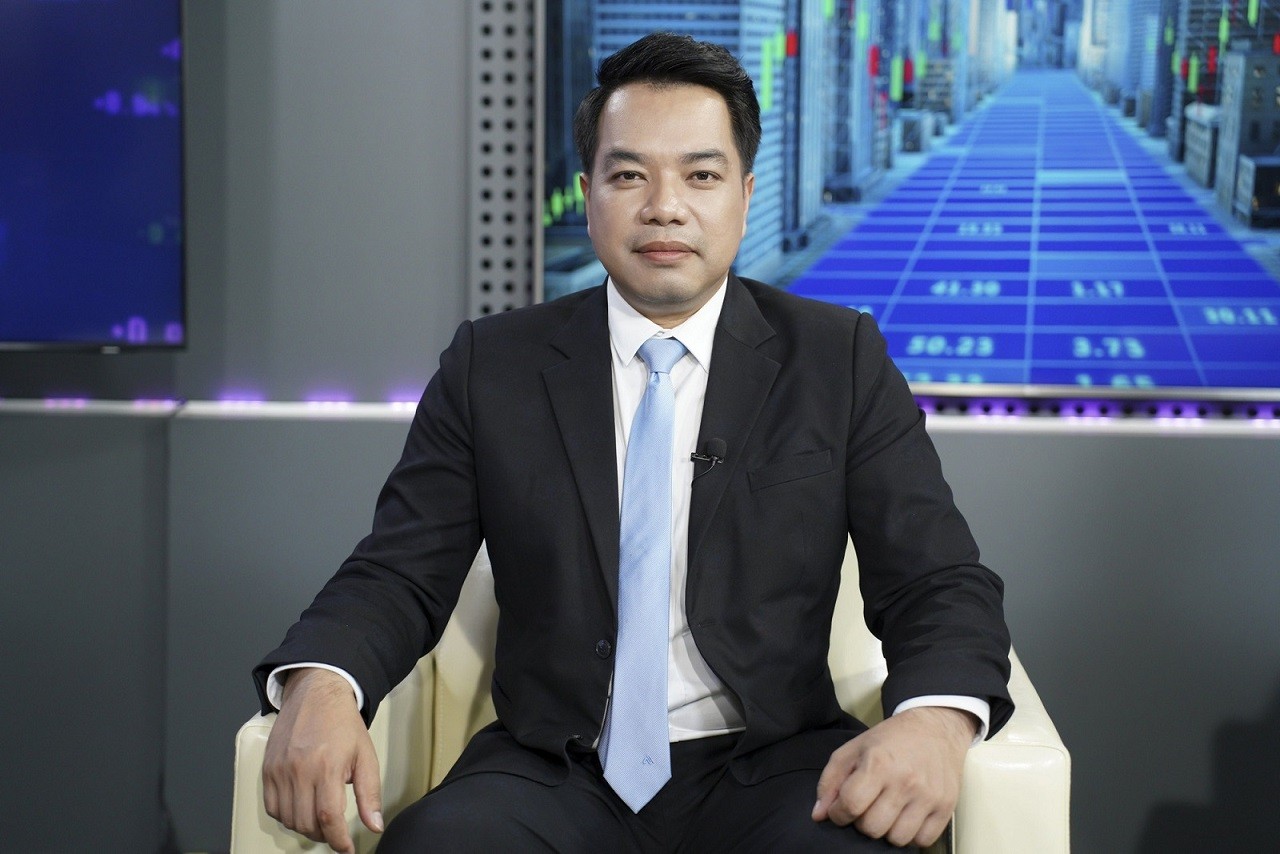 |
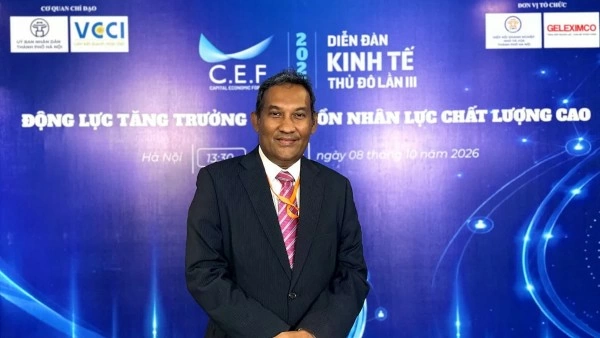
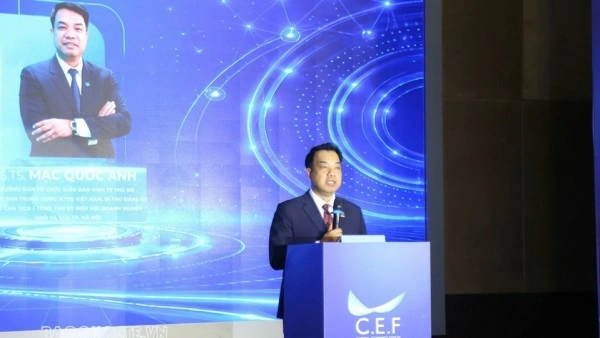
| Prof. Dr Mac Quoc Anh shared his expectations for AFF 2026 with World & Vietnam Report. (Photo: NVCC) |
Prof. Dr Mac Quoc Anh, Member of the Central Committee of the Vietnam Fatherland Front, Party Secretary, Vice Chairman, and General Secretary of the Hanoisme, shared his expectations for AFF 2026 with World & Vietnam Report. AFF 2026 will take place from September 9-10, 2026, with the theme “Shaping Our Common Future: Peace, Prosperity, and People-Centred”.
AFF 2026 emphasises building a people-centred ASEAN. In your view, what opportunities does this vision offer the small and medium enterprise community in Hanoi?
Firstly, when ASEAN emphasises building a people-centred community, the small and medium enterprise community in Hanoi sees a fundamental development opportunity: The opportunity to shift from a "selling products" mindset to a "serving people, serving living needs, consumption needs, employment needs, welfare needs, and sustainable development needs of society" mindset.
This is a strategically significant change, as small and medium enterprises are not only economic units but also vibrant cells of a socialist-oriented market economy, creating jobs, nurturing entrepreneurial spirit, promoting creativity, and directly contributing to people's lives.
With Hanoi being the political and administrative centre of the nation, as well as a major hub for economy, culture, education, and science and technology, the small and medium enterprise community has a special advantage in accessing this vision.
When ASEAN places people at the centre, the regional market is no longer viewed solely by its population of over 700 million, but also by the quality of demand, cultural diversity, the rising middle class, and new requirements for green, smart, and responsible consumption. This opens up significant opportunities for Hanoi businesses in services, trade, education, healthcare, tourism, cultural industries, safe food, creative handicrafts, digital technology, and data-driven business models.
Secondly, the opportunity to participate more deeply in regional value chains. A people-centred ASEAN will require supply chains to be more humane, transparent, safe, and socially responsible. This is the space for Hanoi's small and medium enterprises to transform from mere processing and trading to suppliers with standards, brands, responsibility, and cross-border connectivity.
Thirdly, the opportunity to elevate the position of Vietnamese enterprises in people-to-people economic diplomacy. Hanoi's small and medium enterprises can become a bridge to bring Vietnamese culture, products, intelligence, and values to the ASEAN region.
When Hanoi enterprises' products reach ASEAN consumers with quality, integrity, cultural identity, and sustainable standards, it is not just a commercial activity but also a form of national image dissemination.
However, this opportunity will only become a reality if enterprises undergo great changes. It is essential to understand that the ASEAN people are not a homogeneous block; each market has its own culture, tastes, laws, technical standards, and consumption methods.
Therefore, Hanoi's small and medium enterprises need to upgrade their market research capabilities, brand building, quality management, digital transformation, product standardisation, and customer-centric business model development.
The vision of "People-Centred ASEAN" is thus not just a political-diplomatic slogan but a very practical reminder for businesses: To go far in ASEAN, first, understand the ASEAN people, respect ASEAN consumers, and create real value for the ASEAN community.
From a business perspective, what advantages and barriers do Hanoi enterprises face when expanding into the ASEAN market?
Undeniably, Hanoi enterprises have many advantages when expanding into the ASEAN market, such as a central location, high-quality human resources, a developing innovation environment, a relatively dynamic association ecosystem, many products with distinct identities, and increasingly advanced service capabilities.
However, it must be frankly acknowledged that the path to the ASEAN market for Hanoi enterprises, especially small and medium enterprises, still faces many significant barriers.
The first barrier is the lack of in-depth market information. Many enterprises know that ASEAN is a large, geographically close market with many agreements and cooperation mechanisms, but they do not fully understand each specific market. Thailand is different from Indonesia, Indonesia is different from Singapore, and Singapore is different from Cambodia, Laos, Malaysia, or the Philippines.
| For Hanoi enterprises to successfully expand into ASEAN, it is not enough to call for an integration spirit; a substantial support ecosystem must be built. Then, ASEAN will no longer be a "near but far" market but will become a natural development space for Hanoi enterprises. |
Each market has different scales, consumption cultures, legal standards, distribution systems, payment methods, customer behaviours, and levels of competition. Hanoi's small and medium enterprises often stop at general information, lacking practical data to decide which products to prioritise, which channels are suitable, which partners are reliable, what the entry costs are, and where the legal risks lie.
The second barrier is limited standardisation capability. To "enter" the ASEAN market, enterprises cannot rely solely on products that are subjectively perceived as good; they must meet standards for quality, packaging, labelling, traceability, food safety, technical certification, intellectual property, environment, labour, and social responsibility.
This is a point at which many enterprises remain weak. They have good products but incomplete legal documentation; they have production capacity but have not standardised processes; they have domestic brands but have not registered protection in target markets; they want to export but do not know how to build documentation, contracts, payment systems, and controls to manage dispute risks.
The third barrier is the cost of logistics, marketing, and the development of the distribution channel. For small and medium enterprises, bringing goods abroad is not just about transportation costs but also market testing, warehousing, agency, legal, communication, trade fairs, e-commerce, customer care, and after-sales service costs. If enterprises go alone, these costs are very high, while financial endurance is limited. Therefore, many enterprises stop at the desire, lacking the resources to implement systematically.
The fourth barrier is limitations in foreign language skills, international personnel, and negotiation capabilities. Expanding into ASEAN requires a team that understands regional business culture, can work in English or local languages, understands trade laws and contract practices, and has partnership-building skills. This is a common weakness of many small and medium enterprises, especially those that have grown from family or traditional business models.
The fifth barrier is insufficient linkage thinking. Many enterprises still want to go it alone, while the ASEAN market requires going by industry clusters, chains, and ecosystems. A small enterprise finds it very challenging to open an office, handle logistics, manage legal matters, conduct marketing, and build distribution channels independently.
Therefore, the role of associations, trade promotion agencies, Vietnamese Representative Missions abroad, e-commerce platforms, banks, logistics companies, and leading chain enterprises is needed.
I believe that for Hanoi enterprises to expand into ASEAN successfully, it is not enough to call for an integration spirit; a robust support ecosystem must be built. This includes: accurate market information, in-depth legal advice, standardisation support, industry-led trade promotion, connecting reliable partners, export credit, risk insurance, and shared digital platforms. Then, ASEAN will no longer be a "near but far" market but will become a natural development space for Hanoi enterprises.
 |
| AFF 2026 will take place from September 9-10, 2026, with the theme “Shaping Our Common Future: Peace, Prosperity, and People-Centeredness”. |
In which fields can Vietnamese enterprises lead ASEAN in the next decade, sir?
In my view, the field in which Vietnamese enterprises can lead ASEAN in the next decade is technology applications for the green economy, particularly smart agriculture - food, deep processing, digital traceability, and green trade.
This field brings together many of Vietnam's fundamental advantages, such as agricultural resources, geo-economic location, a young workforce, a market of nearly 100 million people, the adaptability of small and medium enterprises, and alignment with the sustainable consumption trend in the region and the world.
| For Vietnam to become ASEAN's innovation hub, the most important thing is not just building more high-tech parks, research centres, or co-working spaces, but forming a national innovation ecosystem that is open, fast, reliable, and capable of connecting with the region and the world. |
I do not choose this field just because Vietnam is an agricultural nation. If we only stop at raw production, exporting raw materials, and competing on low prices, we will find it difficult to lead. What I want to emphasise is that a new generation of Vietnamese enterprises must transform agriculture - food into a knowledge economy, a technology economy, and a cultural economy.
That means from a grain of rice, a coffee bean, a fruit, a seafood product, or a medicinal product, we must create a value chain with research on varieties, regional planting standards, planting area codes, deep processing, smart packaging, traceability, green certification, national branding, cross-border e-commerce, and modern distribution systems.
ASEAN is a region with a strong demand for food security, safe food, natural-origin products, health-beneficial products, and climate-adaptive agricultural models.
Meanwhile, Vietnam has a rich agricultural base, diverse ecological regions, and products capable of building regional brands. The issue is that Vietnamese enterprises must move from "selling what we have" to "selling what the market needs"; from "selling products" to "selling standards, selling stories, selling trust, and selling sustainable values".
Hanoi and its small and medium enterprises can play a very important role in this field. Hanoi does not necessarily have to be a large-scale agricultural production area. Still, it can be a centre for designing business models, conducting market research, engaging in commerce, managing logistics, overseeing finance, ensuring quality control, building brands, and connecting Vietnam's agricultural and food value chains with ASEAN.
I believe that in the next decade, competition will no longer be about who has more raw materials, but who better controls data, standards, brands, and distribution channels. If Vietnamese enterprises know how to combine artificial intelligence (AI), big data, e-commerce, green finance, and circular economy into agriculture and food, we can certainly create a new position in ASEAN.
In your view, what reforms does Vietnam need to undertake to become ASEAN's innovation hub?
For Vietnam to become ASEAN's innovation hub, the most important thing is not just building more high-tech parks, research centres, or co-working spaces, but forming a national innovation ecosystem that is open, fast, reliable, and capable of connecting with the region and the world. Innovation cannot thrive in an institutional environment that is slow, with complex procedures, dispersed data, limited venture capital, and a wide gap between schools, research institutes, and enterprises.
First, Vietnam needs to continue strong institutional reforms towards creativity, flexibility, and controlled experimentation. In the new technology era, many business models emerge faster than legal documents can be drafted. If everything without regulation is considered risky and everything new requires permission, innovation will be slowed.
Therefore, there needs to be a real sandbox mechanism for AI, fintech, data, digital economy, digital assets, new energy, smart cities, digital education, digital healthcare, and green business models. A sandbox is not about loosening management but smarter management, allowing experimentation within controlled limits, with evaluation, adjustment, and scaling.
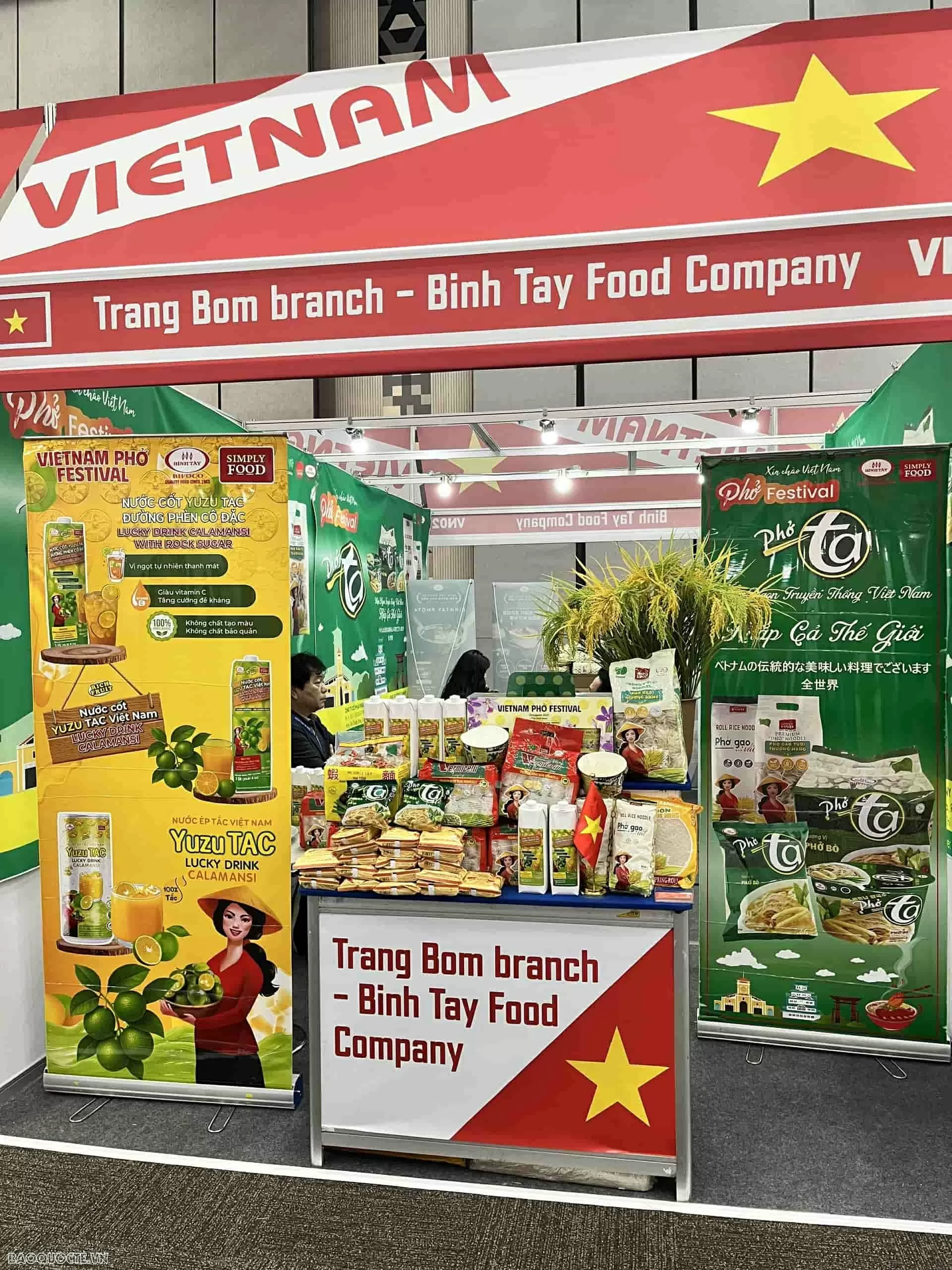 |
| Vietnamese enterprises' booth at the ASEAN Trade Fair 2025 in the Republic of Korea. (Photo: Minh Ha) |
Next, Vietnam needs strong data reform. Innovation in the AI era cannot lack data. Data must be considered a new development resource for the nation.
Alongside this, it is necessary to promote open data in the public sector in fields that can be safely shared; standardise enterprise data; develop cloud computing infrastructure, data centres, and cybersecurity, while protecting privacy, personal data, and national data sovereignty.
A nation aspiring to become an innovation hub but lacking clean, open, and exploitable data will find it very difficult to create high-value technology products.
Subsequently, financial mechanisms for innovation need reform. Startups, technology enterprises, and enterprises researching new products often have high risks, limited collateral, and unstable cash flows. Relying solely on traditional credit makes it very difficult to promote innovation.
Vietnam needs to strongly develop venture capital funds, innovation funds, public-private co-investment funds, tax incentives for R&D activities, public sector technology procurement, and public procurement mechanisms prioritising domestic innovative products.
Additionally, Vietnam needs to reform its education and workforce training systems. Innovation requires not only technology engineers but also a team capable of interdisciplinary thinking: technology, economics, management, law, design, communication, culture, and market. Vietnam needs to train a generation of workers who know how to learn continuously, work with AI, start a business, manage data, commercialise research results, and collaborate internationally.
Finally, enterprises must be placed at the centre of innovation. Innovation cannot reside solely in laboratories; it must also enter factories, stores, cooperatives, small and medium enterprises, and household businesses transitioning to enterprises. When enterprises pose the problems, institutes provide knowledge, the State creates institutions, and the market tests value, Vietnam can truly become ASEAN's innovation hub.
What do Vietnamese enterprises currently lack the most to compete fairly with leading ASEAN enterprises?
In my opinion, what Vietnamese enterprises currently lack most to compete fairly with leading ASEAN enterprises is not just capital, technology, or human resources, but also management capabilities that meet regional and international standards. Capital can be raised, technology can be bought or leased, human resources can be trained, but if management capabilities are not upgraded, these resources are difficult to transform into sustainable competitive advantages.
| To compete fairly with leading ASEAN enterprises, Vietnamese enterprises must first develop regional aspirations, adopt a standardised approach, and acquire modern management capabilities. |
Many Vietnamese enterprises have a strong entrepreneurial spirit, quick adaptability, diligence, flexibility, and great determination. These are valuable qualities. But when stepping into regional competition, enterprises cannot rely solely on spirit.
Enterprises must compete through systems: transparent financial management systems, professional human resource systems, customer data systems, quality control systems, legal systems, brand systems, risk management systems, and innovation systems.
A common weakness of many Vietnamese enterprises is small scale, weak linkages, heavy reliance on family management, unclear long-term planning, incomplete data, a low compliance culture, and limited international brand-building capabilities.
Meanwhile, leading ASEAN enterprises have gone further in process standardisation, supply chain management, modern finance, ESG (Environment, Social, Governance), digitisation, cross-border e-commerce, and international market development. Therefore, to compete fairly, Vietnamese enterprises must upgrade comprehensively rather than improve a few isolated aspects.
Additionally, Vietnamese enterprises lack linkage capabilities. Vietnamese enterprises are often very good at individual efforts but not strong in ecosystem cooperation. A small enterprise cannot do everything independently: market research, legal, logistics, distribution, international marketing, brand protection, standard certification, and dispute resolution.
To enter ASEAN, enterprises must know how to link across industries, value chains, business clusters, through associations, leading enterprises, and digital platforms. Modern competition is not about individual enterprises competing against each other but ecosystems competing against ecosystems.
Next is the lack of brand-building capabilities. Many Vietnamese products are good, but the brand is not strong enough, the story is not attractive enough, the packaging is not professional enough, the standards are not clear enough, and the communication is not long-term enough. Competing fairly in ASEAN is not just about getting goods into the market but about building consumer trust, helping consumers remember, choose, and be willing to pay more for Vietnamese products.
Forecasting and risk management capabilities are also what Vietnamese enterprises lack. The ASEAN market changes rapidly, influenced by geopolitics, exchange rates, logistics, green standards, tax policies, climate change, and changing consumer behaviour. Enterprises without forecasting capabilities will easily react passively.
Therefore, I believe the biggest task for Vietnamese enterprises now is to upgrade management. When management improves, enterprises will know how to use capital more effectively, leverage technology more appropriately, attract talent more effectively, manage risk more effectively, and build more sustainable brands. To compete fairly with leading ASEAN enterprises, Vietnamese enterprises must first have regional aspirations, standard thinking, and modern management capabilities.
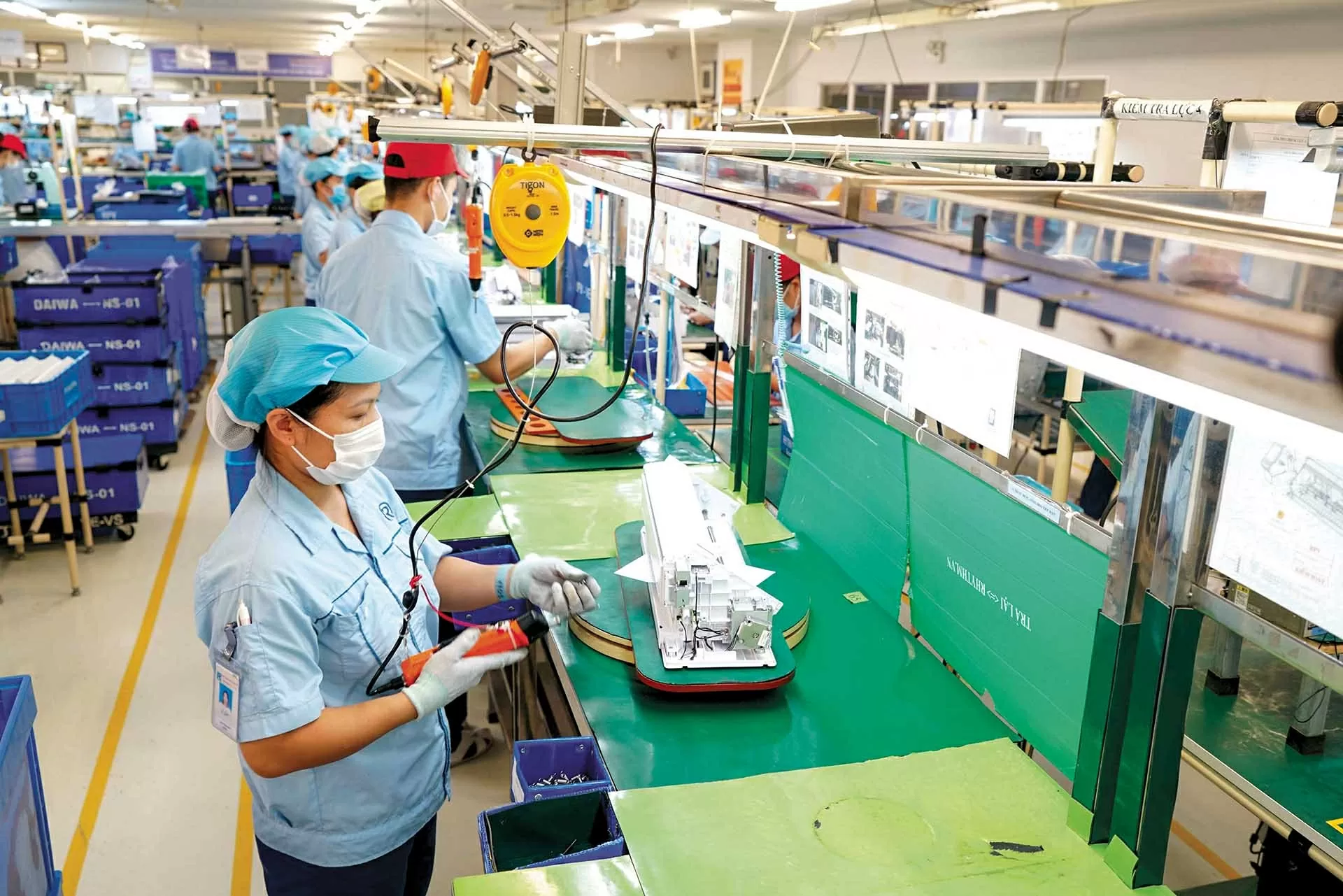 |
| A people-centred ASEAN must be an ASEAN where small and medium enterprises are placed in the right position. Illustrative photo. (Photo: Pham Hung) |
If you were to send a message to ASEAN policymakers at AFF 2026, what would you emphasise?
If I were to send a message to ASEAN policymakers at the ASEAN Future Forum 2026, I would emphasise that: The future of ASEAN is not only determined by high-level declarations but also by the ability to create conditions for millions of small and medium enterprises, hundreds of millions of workers, and people in the region to participate, benefit, and co-create prosperity.
A people-centred ASEAN must be an ASEAN where small and medium enterprises are placed in the right position. Small and medium enterprises are not peripheral to the economy, but the force that creates jobs, nurtures entrepreneurship, maintains market vitality, spreads innovation, and directly connects with people's livelihoods.
If regional policies only favour large corporations, while small and medium enterprises still struggle to access information, capital, standards, technology, markets, and legal frameworks, the spirit of "people-centeredness" will not truly enter economic life.
| A people-centred ASEAN must be an ASEAN where small and medium enterprises are placed in the right position. Small and medium enterprises are not peripheral to the economy, but the force that creates jobs, nurtures entrepreneurship, maintains market vitality, spreads innovation, and directly connects with people's livelihoods. |
The second message I want to emphasise is that ASEAN needs to shift strongly from formal to substantive integration. Enterprises do not just need agreements, but also simpler procedures, more harmonised standards, greater mutual recognition of certifications, cheaper logistics, more transparent market data, more convenient cross-border payments, and more effective dispute-resolution mechanisms.
A cooperation document, no matter how good, only has real significance when small enterprises can feel the convenience in each shipment, each contract, each transaction, and each market-expansion step.
The third message is that ASEAN must jointly build new competitive capabilities based on innovation, AI, green transition, and sustainable development. The world is changing very fast. If ASEAN continues to rely on cheap labour, resources, and investment incentives, this advantage will gradually diminish.
ASEAN needs to become a region of intelligence, technology, green standards, high-quality human resources, and value chains with higher added value. In this process, small and medium enterprises need support to avoid being left behind.
The fourth message is that development must go hand in hand with fairness and inclusiveness. AI, the green transition, ESG standards, and the digital economy can create significant opportunities. Still, they can also widen the gap between large and small enterprises, between urban and rural areas, and between skilled and unskilled workers.
Therefore, ASEAN policies need to focus on retraining workers, supporting small enterprises in the application of technology, expanding green finance, and creating mechanisms for disadvantaged groups to participate in the development process.
Finally, I want to send a message about trust. ASEAN can only go far if it maintains peace and stability, fosters dialogue, respects differences, and shares development benefits. For enterprises, peace is the foundation of investment; stability is the foundation of contracts; trust is the foundation of markets; and cooperation is the foundation of prosperity.
AFF 2026 needs to become a forum not only to discuss the future of ASEAN but to affirm a commitment to action: Building an ASEAN that is closer to the people, closer to businesses, and more practical; an ASEAN where small and medium enterprises can thrive, workers can enhance their skills, people can enjoy the fruits of development, and each member country can find opportunities in the region's shared future.
Thank you very much!

| Vietnam proactively supports and contributes to ASEAN community building process: Dr. Nguyen Hung Son WVR - Dr. Nguyen Hung Son, President of the Diplomatic Academy of Vietnam, shared with The World and Vietnam Report his insights on the key ... |
| ASEAN Future Forum 2026: Dialogue for peacebuilding and resilience Acting ASEAN SOM Leader of New Zealand, Alana Hudson, believes that the strength of ASEAN's future, as well as our shared future, will depend on ... |